Unitree Embodied Avatar V3.0 Guardian Lets an Operator Drive a Humanoid With 80 ms Delay, While the Unitree H2-X Shows the Power at Stake
Robot Details
Unitree H2-X • Unitree RoboticsPublished
November 27, 2026
Reading Time
4 min read
Author
Origin Of Bots Editorial Team
A Robot That Moves When You Move
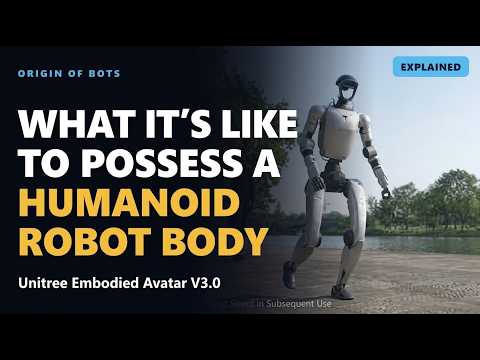
Unitree Robotics has released Embodied Avatar V3.0, which it calls Guardian, a system that lets a person control a full-size humanoid robot with their own body in real time. In the company's video, an operator in a black motion-capture suit crouches, kicks, spins and lands a flip, and the robot beside them mirrors each move. In an indoor scene, another operator wearing a headset and gloves raises both arms while the robot does the same.
Unitree gives two headline numbers: a maximum synchronization rate of 99.8 percent and a minimum end-to-end latency of 80 milliseconds. Synchronization describes how closely the robot's motion matches the operator's, and latency is the delay between the operator moving and the robot responding.
Two Modes, Two Sets of Numbers
The labels on screen show that the two headline figures do not come from the same mode. In Standard Mode, Unitree lists a synchronization rate of 99.8 percent and an end-to-end latency of 0.1 seconds. In Motion Mode, it lists 99.5 percent synchronization and 80 milliseconds.
In other words, the best accuracy and the lowest delay are each the best result of a different mode. That does not make either number less real, but it matters when you compare Avatar V3.0 with another teleoperation system: a fair comparison needs the latency and the synchronization figure from the same mode.
What 80 Milliseconds Means in Practice
Eighty milliseconds is less than a tenth of a second. Because Standard Mode is listed at 0.1 seconds, which is 100 milliseconds, Motion Mode trims about a fifth off the delay. That matters for the kind of motion in the video, which includes kicks, quick turns and a flip.
For a person wearing a suit, a short delay is the difference between feeling like you are steering a machine and feeling like you are wearing one. The shorter the lag, the less the operator has to slow down or anticipate, and the more natural fast, athletic movement becomes.
Why Unitree Cares About Teleoperation
Unitree says that, in addition to fully autonomous mode, real-time full-body teleoperation of robots has always been a major area of global interest. The company says it enables complex remote operations, data collection and other tasks.
The data collection point is worth underlining. A person doing a task through a robot body produces a recorded demonstration, and demonstrations are one way robots can be taught skills they later perform on their own. A teleoperation system is therefore both a way to work through a robot today and a way to train the robots of tomorrow.
The H2-X Shows the Hardware Side
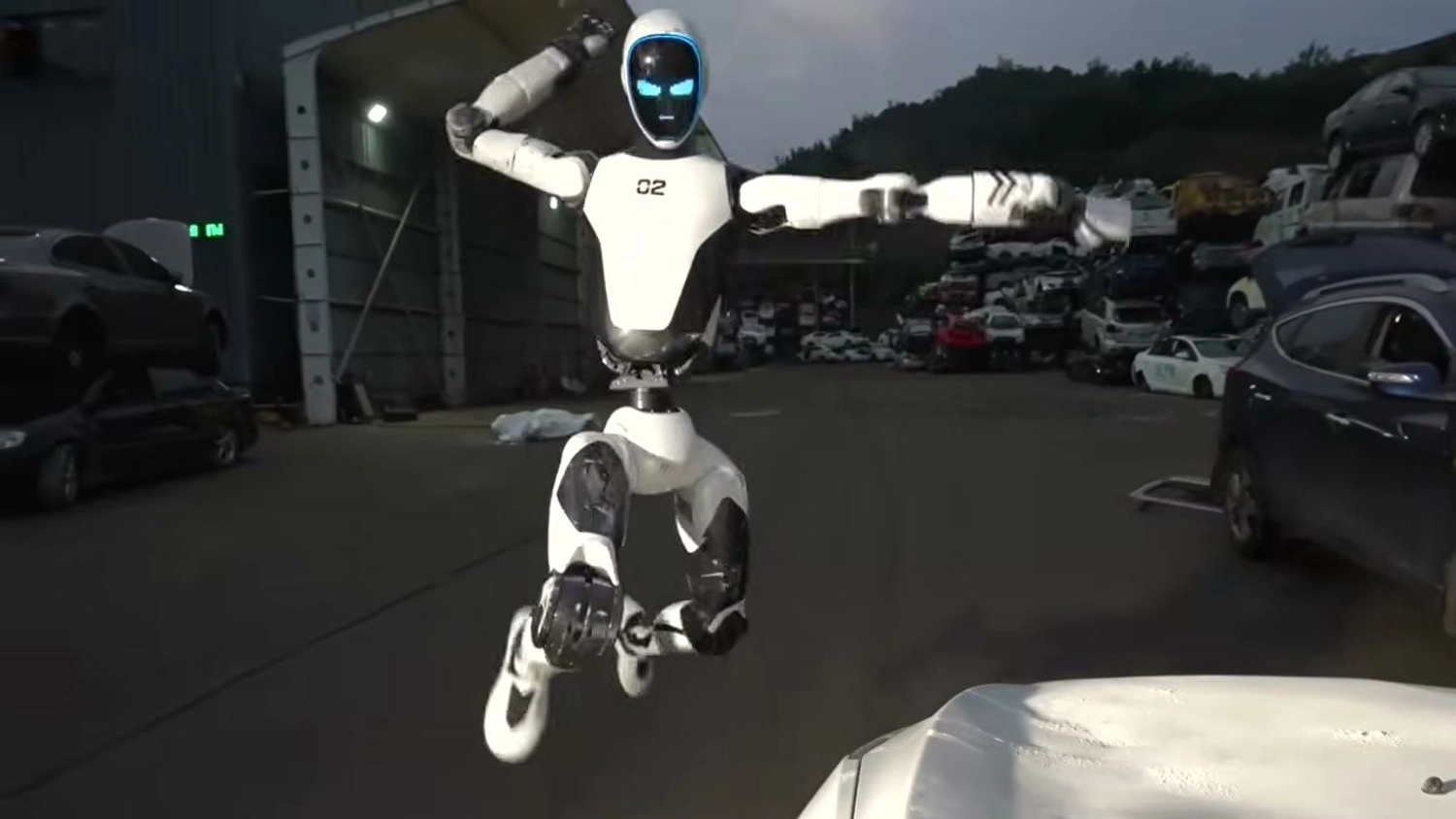
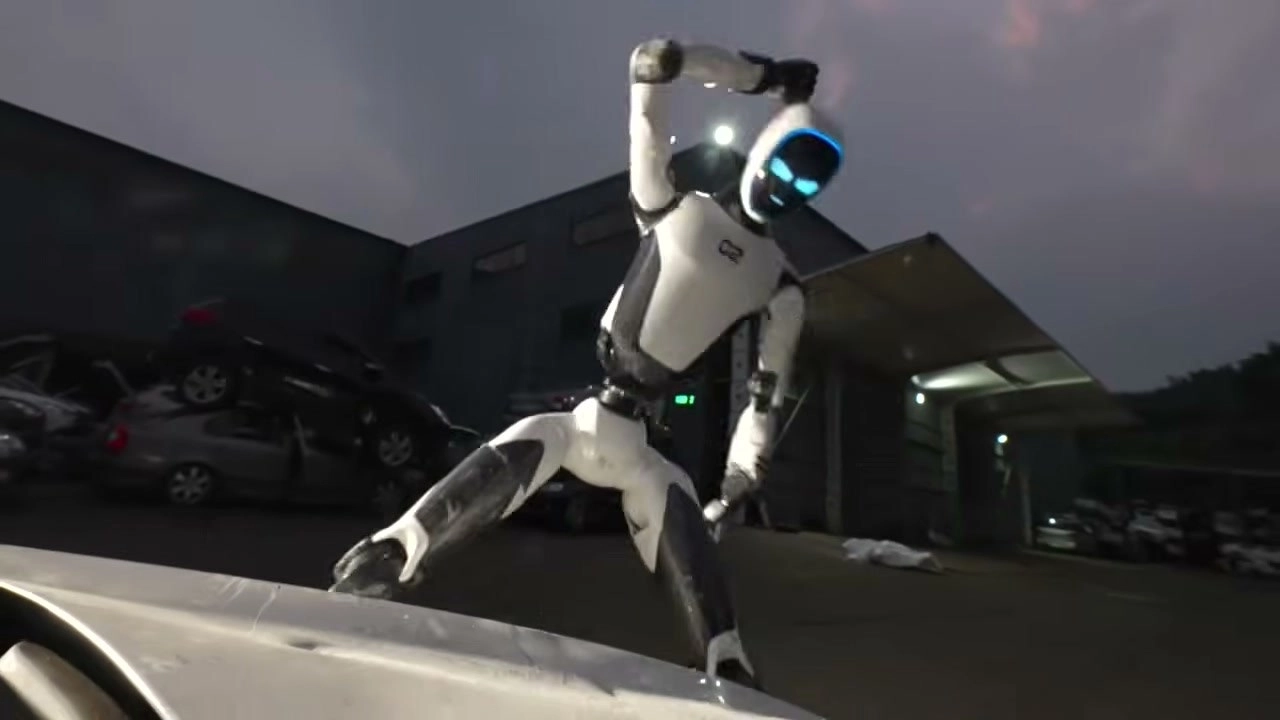
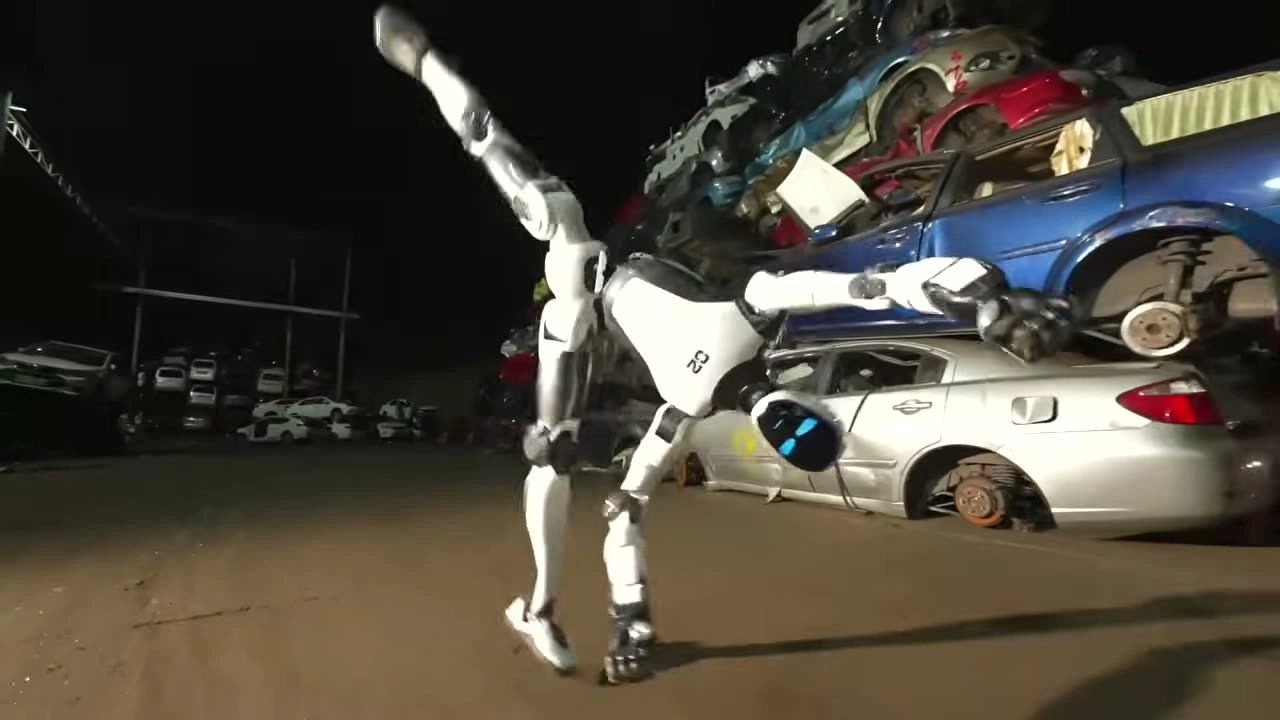
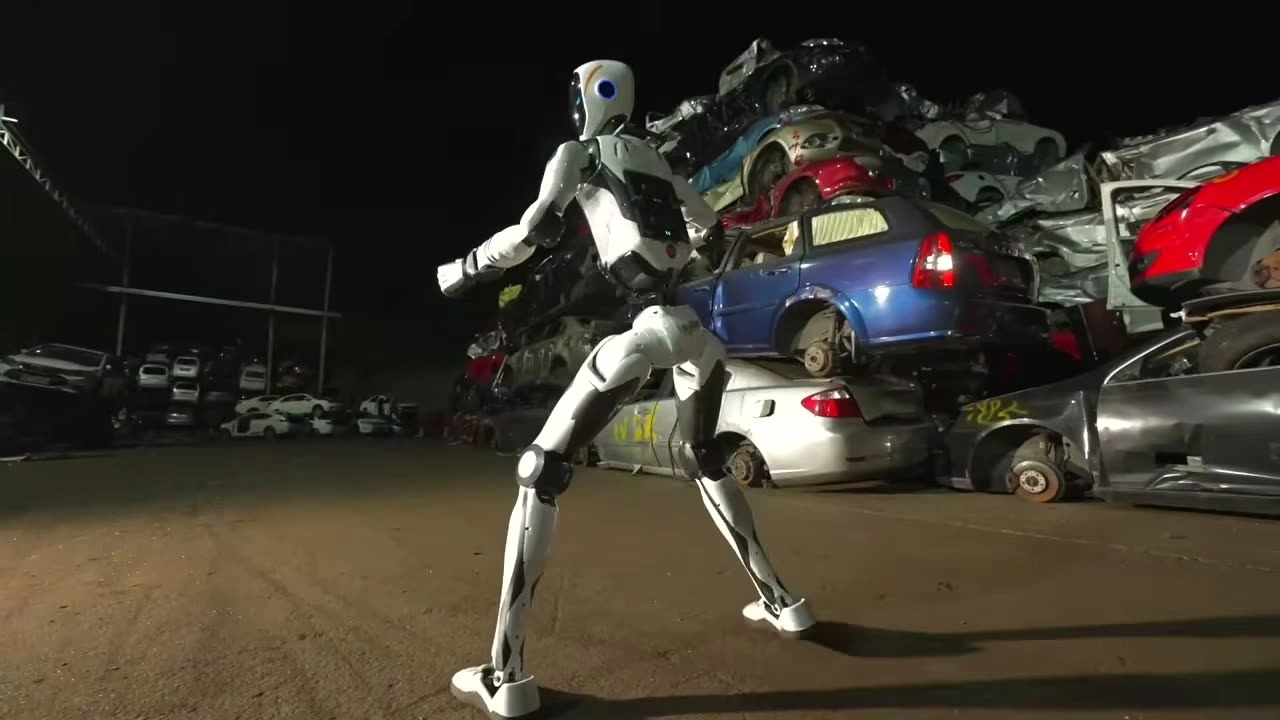
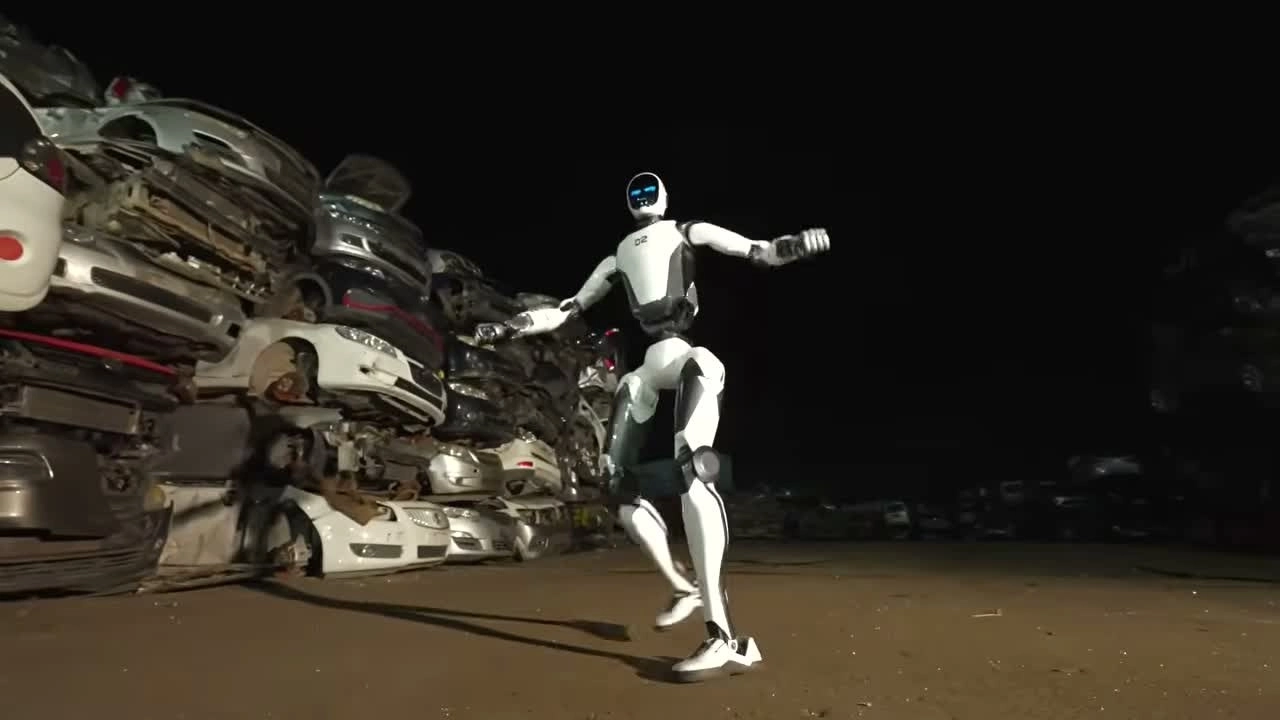
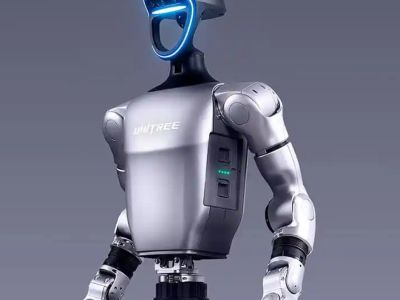
Unitree's separate H2-X humanoid, shown in its own video, is the kind of body a system like this can drive. It throws kicks and flips in a scrapyard at night, and the video labels the footage as real, with no speed-up.
These are Unitree's own demonstrations, but they point in one direction. Strong, fast full-size humanoids and low-latency whole-body control are developing side by side, and each makes the other more useful.
Safety Is Part of the Message
Unitree asks users to operate the function safely and in a friendly manner. The closing card of its videos asks customers to keep people and robots at least 2 to 5 meters apart, and not to make dangerous modifications or use the robot in a hazardous way.
That guidance fits the technology. When a robot follows a person's body at 80 milliseconds, the operator's mistakes become the robot's motion almost instantly, and a full-size humanoid doing a flip or a kick has real force. The system is only as careful as the person wearing the suit.
What It Means for Buyers and Labs
For research labs and companies, a full-body avatar system is a practical tool for remote tasks, demonstrations and collecting training data. The numbers Unitree publishes are its own, and they are best-case figures for each mode, so the useful question to ask any vendor is which mode a latency number belongs to and under what conditions it was measured.
The same question applies when comparing Unitree with other teleoperation setups. Match the mode, the type of motion and the measurement method before concluding that one system is faster than another.
What to Watch Next
Watch for independent tests of the 80 millisecond figure, for further detail from Unitree on how the Guardian release is delivered to customers, and for how often its teleoperated demonstrations turn into skills that robots perform without a person in the suit.
Teleoperation is how many robots gather the data they need to become autonomous, so a faster, tighter control loop is a step toward both better remote work and better-trained robots.
Explore Humanoids

Related Articles
Simplexity Robotics raises $100M led by Ant Group, unveils iX
XPENG IRON Humanoid Robot Mass Production Starts January 2027

UBTECH Walker S3 Debuts as the First Humanoid Built to Rappel Down a Wall
KUKA Humanoid Prototype Revealed: Germany's Robot Giant Shows a Legless, AI-Driven Humanoid
Related Comparisons
Compare Unitree H2-X with similar robots
Unitree H2 vs Booster T2
Unitree H2 vs Booster T2: the H2 is the bigger, stronger full-size humanoid, the T2 the lighter research platform. See the specs side by side.
Unitree H2 vs Atlas (Electric 2025)
Unitree H2 vs Boston Dynamics Atlas electric: size, battery, lifting, joints and sensors compared, with a clear pick by need.
Unitree H2 vs Unitree H1-2
Unitree H2 vs H1-2: the newer H2 adds 4 joints, a larger battery and about 3 hours of runtime; the H1-2 keeps its LiDAR and swappable pack.
Unitree G1 vs Unitree H1-2
Unitree G1 vs Unitree H1-2: the G1 is the 35 kg lab humanoid with optional hands; the H1-2 is a taller 70 kg robot with stronger arms.
Learn More About This Robot
Discover detailed specifications, reviews, and comparisons for Unitree H2-X.
View Robot Details →