KUKA Humanoid Prototype Revealed: Germany's Robot Giant Shows a Legless, AI-Driven Humanoid
Robot Details
KUKA Humanoid Prototype • KUKAPublished
November 26, 2026
Reading Time
4 min read
Author
Origin Of Bots Editorial Team
KUKA Joins the Humanoid Race
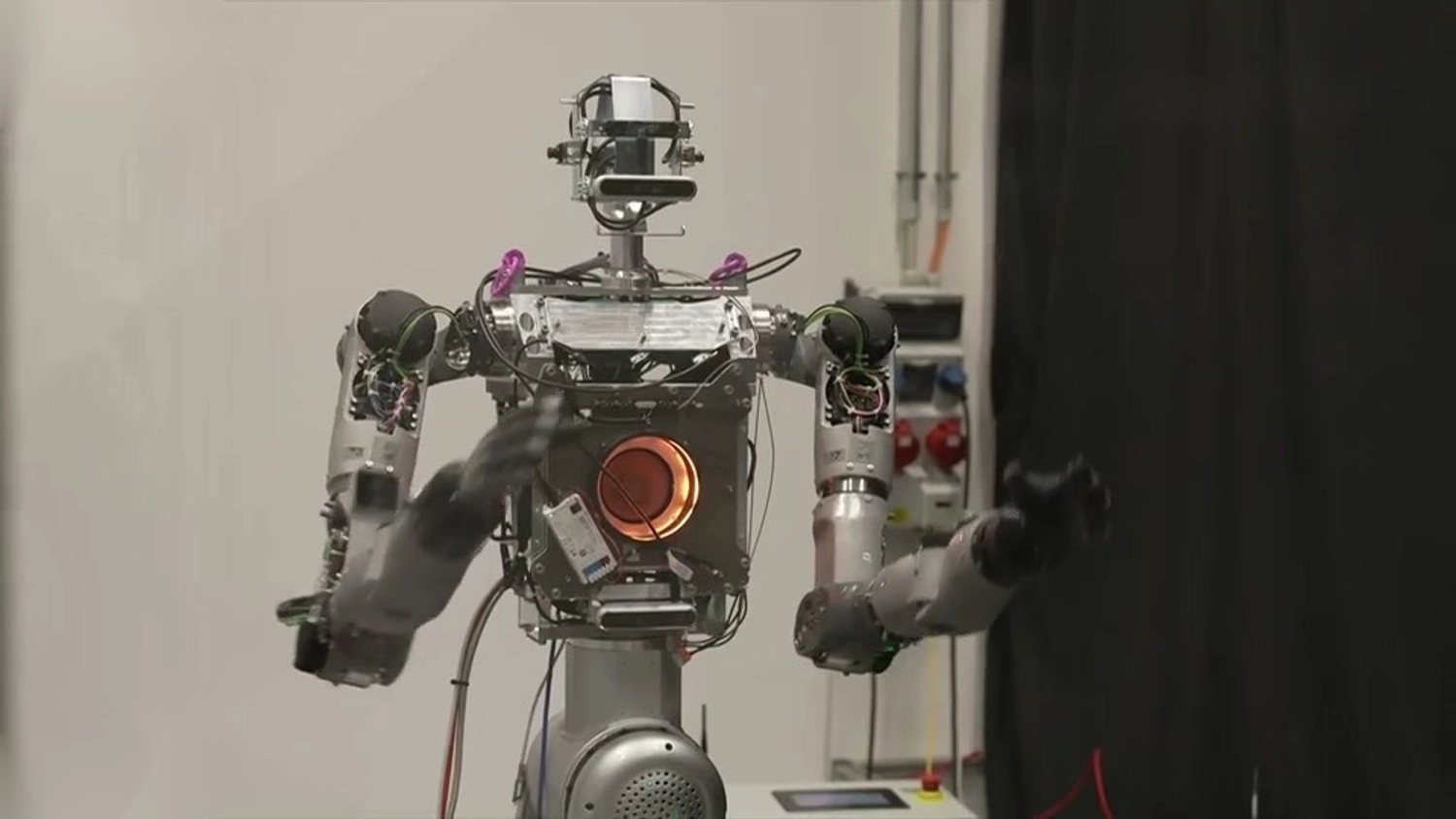
KUKA, the Augsburg robot maker best known for orange industrial arms, has shown its first humanoid. A KUKA team member announced on 25 November 2026 that the first official video snippets were out, writing that the company had been working on the project for a long time.
The robot has no name yet, so the company's own wording is simply a KUKA humanoid. What it does have is a clear job description: powered by AI-driven control, it grasps, transports and sorts objects fully on its own.
A Robot Without Legs, On Purpose
The most striking design choice is what the prototype leaves out. Reporting from German broadcaster ZDF says it has no legs because legs consume too much energy, a trade-off that puts the focus on arms, hands and intelligence instead of walking.
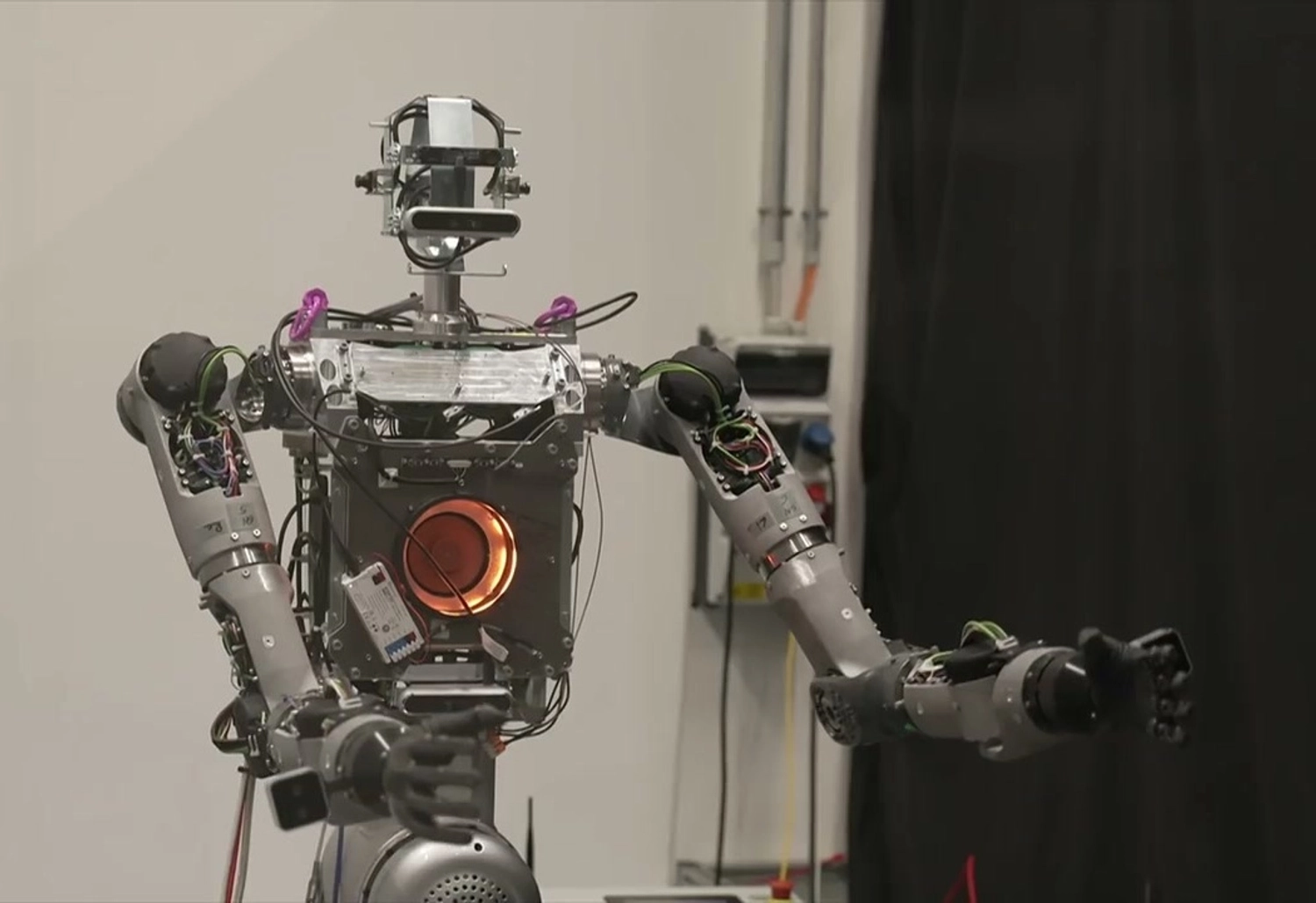
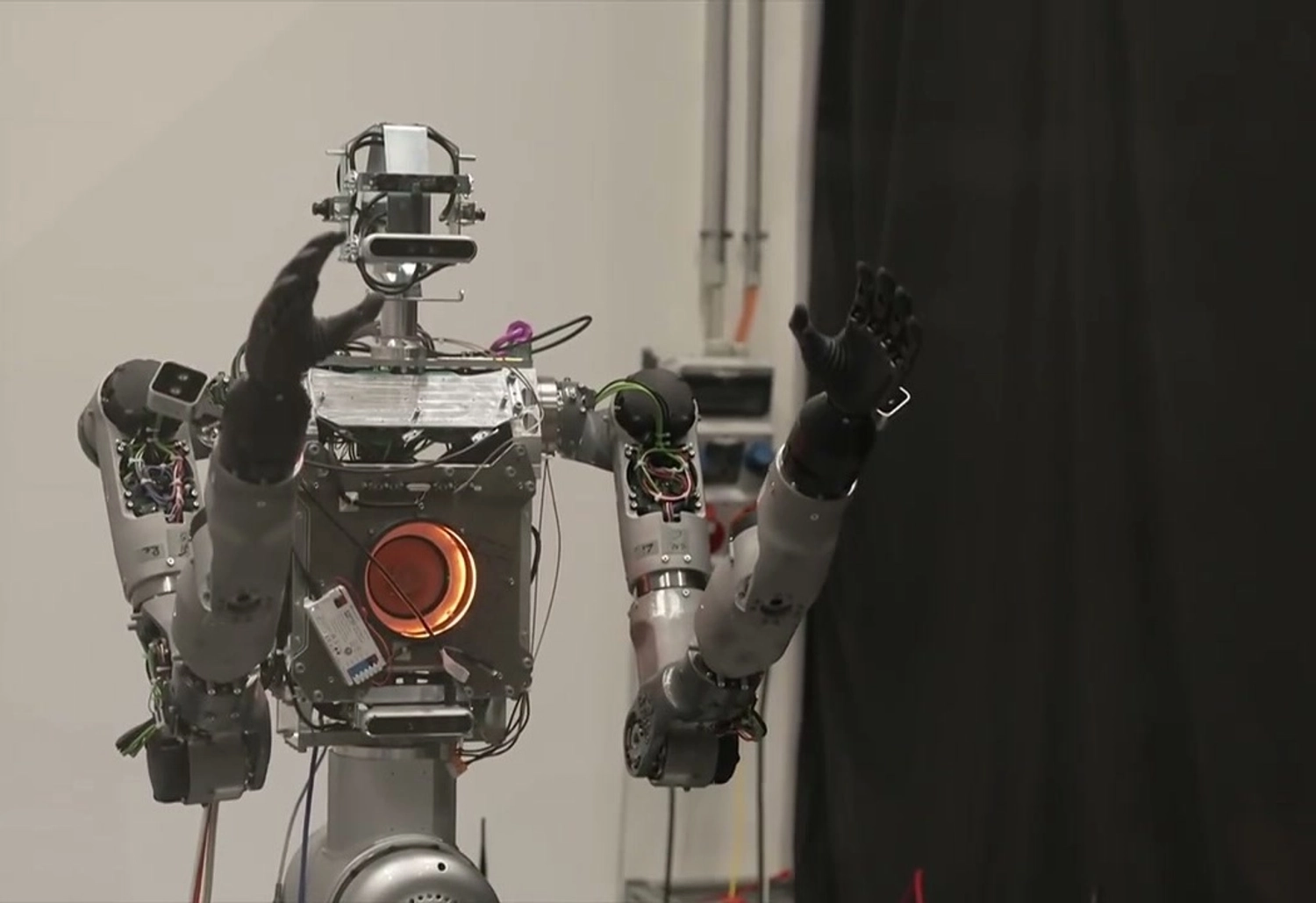
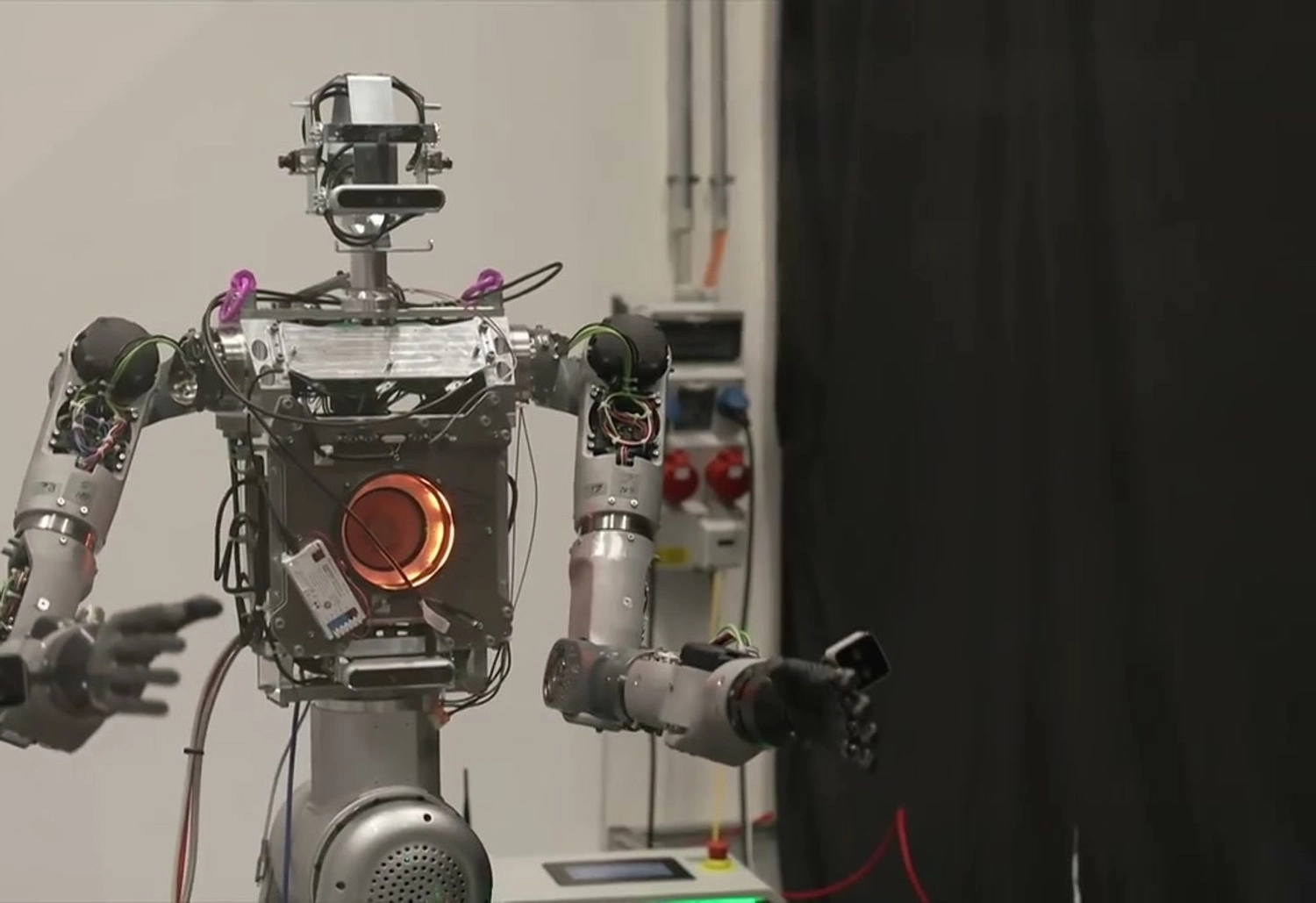
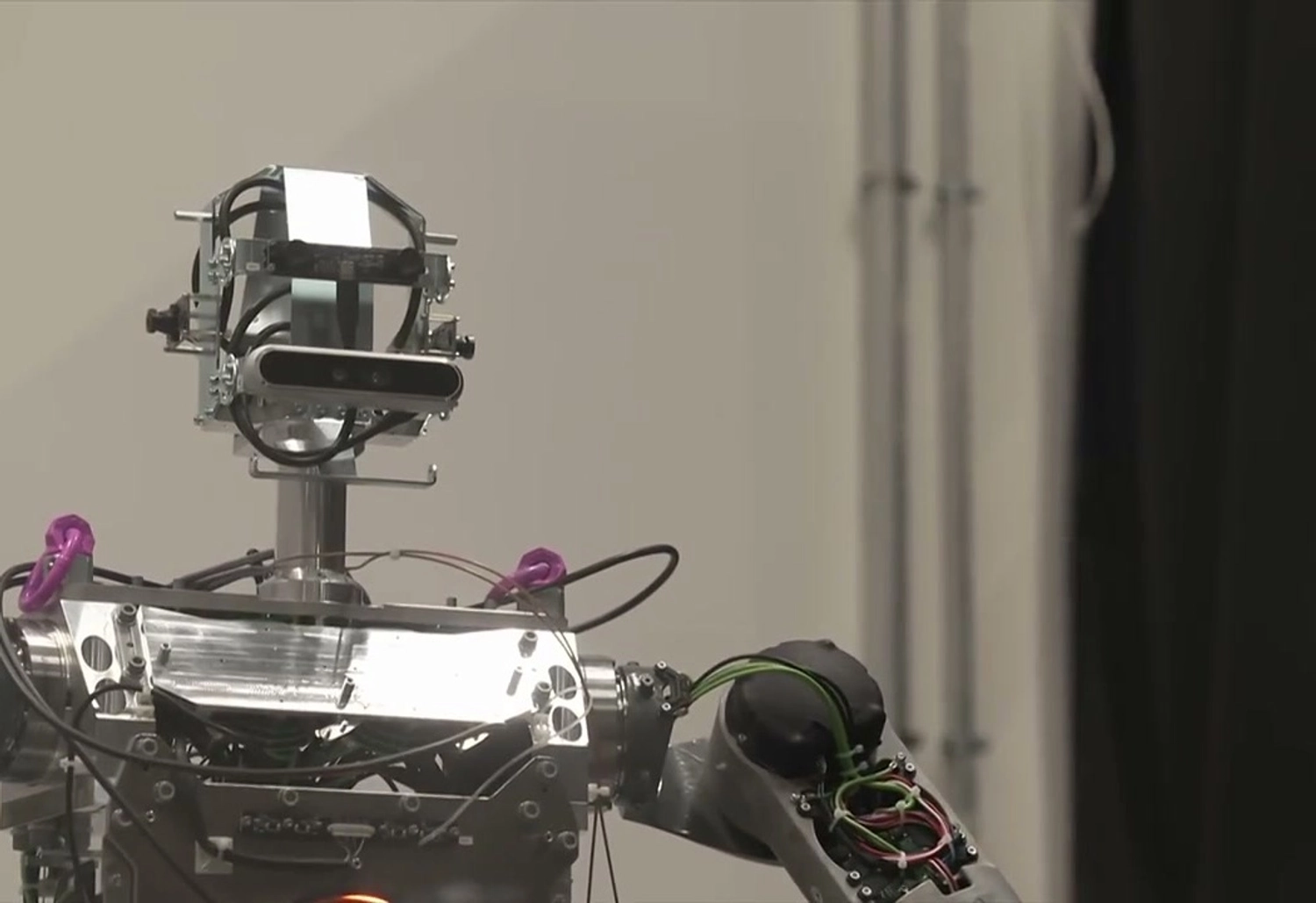
What remains is an upper-body humanoid: a head with a camera and sensor module, a torso with a glowing orange ring on the chest, two multi-joint arms and five-finger hands. The exposed joints and cabling make clear that this is an engineering prototype, not a polished product.
Grasp, Transport, Sort
The footage shows the arms and hands moving in coordinated sweeps, and KUKA says the robot can pick up objects, move them and sort them without being steered step by step. Sorting and handling are the daily bread of logistics and production lines.
For factories, that is a more useful promise than a humanoid that walks gracefully. Most plant work is done standing at a station or moving goods between points, and a legless torso with capable hands covers much of it.
Built in Augsburg
According to company statements reported by ZDF, the robot was developed largely in Augsburg. KUKA has belonged to the Chinese group Midea since 2017, and its chief executive, Christoph Schell, told ZDF that 78 percent of the research budget is spent outside China, most of it in Augsburg.
That detail carries weight in a debate about who leads humanoid robotics. KUKA wants the prototype read as German engineering with global ownership, a combination its leadership describes as an advantage.
A First Look Through ZDF's Camera
KUKA let outsiders see the prototype for the first time when a ZDF camera team visited its Augsburg headquarters in early October 2026. ZDF's report, published on 12 October, shows the robot waving its arms and moving its hands in a lab with a researcher nearby.
The order of the reveal is telling: a television crew first, company video weeks later, and no formal product launch. It introduces the robot as a work in progress that KUKA is willing to show.
KUKA's Physical AI Philosophy
KUKA's own explainer on humanoid robots says the company pursues them with a focus on autonomy, robustness and smooth integration into industrial workflows. It describes humanoids as part of a wider vision it calls physical AI, tied to its Automation Management Platform for robot fleets.
The same page says customers care less about a robot's shape than about cost, benefit and performance, and lists mobile platforms, AI vision, flexible grippers, open interfaces and simulation as the key ingredients. The legless prototype fits that thinking.
Why It Matters for German Industry
ZDF notes that almost 60 percent of the world's newly installed industrial robots went to China in 2025 and that the humanoid market is expected to grow quickly. It also points to German momentum, including Neura Robotics at a seven-billion-dollar valuation and the new unicorn RobCo.
A KUKA humanoid adds a household name to that list. For buyers in Europe, it hints that a long-standing supplier with factory service networks may offer humanoid-style automation alongside the robot arms it already sells.
What to Watch Next
Watch for a name, technical details and the first customer pilots, ideally in logistics, where KUKA says simple handling tasks lead today. The company itself calls humanoid robotics part of a broader vision rather than a short-term product goal, so a measured rollout is more likely than a fast launch.
For manufacturers, the practical test will be whether the robot's autonomy holds up on real parts, in real lighting and at real speed. If it does, a legless AI-driven humanoid from KUKA could become a flexible alternative to fixed cells and mobile manipulators.
Explore Humanoids
Sources
Related Articles
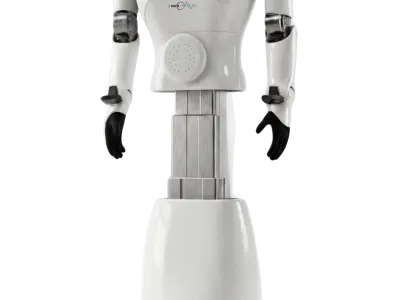
Foundation's Phantom MK-2 Is a 200-Pound Aluminum Humanoid Hardened for Factories and Battlefields, With a Lower Expected Lease Than Its Predecessor
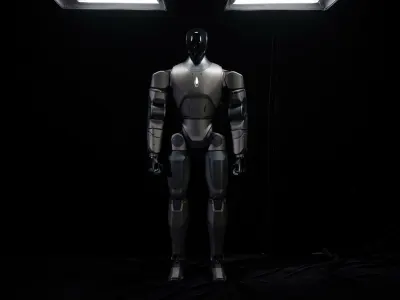
Genesis AI Raises $500M Series A for Its Eno Humanoid
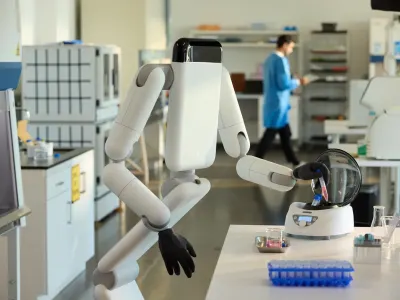
Simplexity Robotics raises $100M led by Ant Group, unveils iX

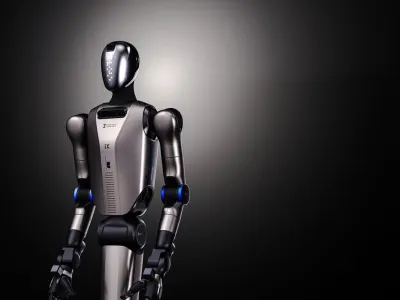
XPENG IRON Humanoid Robot Mass Production Starts January 2027
Related Comparisons
Compare KUKA Humanoid Prototype with similar robots
Unitree H2 vs Booster T2
Unitree H2 vs Booster T2: the H2 is the bigger, stronger full-size humanoid, the T2 the lighter research platform. See the specs side by side.
Unitree H2 vs Atlas (Electric 2025)
Unitree H2 vs Boston Dynamics Atlas electric: size, battery, lifting, joints and sensors compared, with a clear pick by need.
Unitree H2 vs Unitree H1-2
Unitree H2 vs H1-2: the newer H2 adds 4 joints, a larger battery and about 3 hours of runtime; the H1-2 keeps its LiDAR and swappable pack.
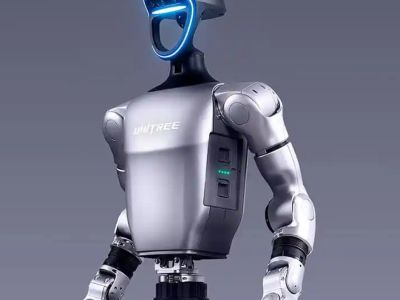
Unitree G1 vs Unitree H1-2
Unitree G1 vs Unitree H1-2: the G1 is the 35 kg lab humanoid with optional hands; the H1-2 is a taller 70 kg robot with stronger arms.
Learn More About This Robot
Discover detailed specifications, reviews, and comparisons for KUKA Humanoid Prototype.
View Robot Details →