AgiBot A2 Lite vs Kaleido 8.0 at a glance
Kaleido 8.0 is quicker, with a top speed of 1.1 m/s versus 0.8 m/s for AgiBot A2 Lite. AgiBot A2 Lite is lighter at 63 kg, compared with 80–86 kg for Kaleido 8.0.
Which one fits your use?
Based on the uses each robot is built and marketed for. Open a use to see the specs that matter for it.
| Comparing for… | AgiBot A2 Lite | Kaleido 8.0 |
|---|---|---|
| Not listed | Suited | |
| Not listed | Suited | |
| Not listed | Suited | |
| Suited | Not listed | |
| Not listed | Suited |
- Pick AgiBot A2 Lite for hospitality, retail and public-facing roles.
- Pick Kaleido 8.0 for warehouse and logistics work, factory and manufacturing work, research labs and hazardous or high-risk work.
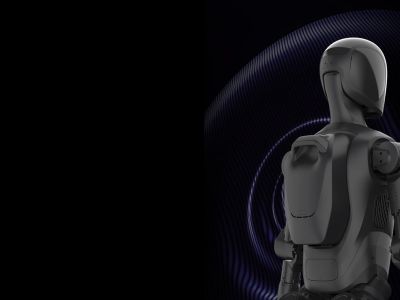
AgiBot A2 Lite is a performance-focused version of AgiBot's A2 bipedal humanoid, sold through AgiBot's global store at $44,560. It stands 169 cm tall, weighs 63 kg, has 23 degrees of freedom and walks at up to 0.8 m/s. It has no perception or speech AI; instead it ships with routines such as handshakes, tai chi and Peking opera for entertainment and commercial performances.
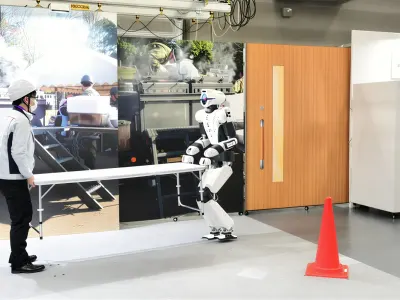
Kaleido 8.0 is Kawasaki Heavy Industries' eighth-generation Kaleido, from its Robust Humanoid Platform programme. The 180 cm, 80 to 86 kg biped gained direct-drive motors in its waist and elbows and a face projector in version 8, and it worked through a mock evacuation-centre scenario at iREX 2023.
Detailed Analysis

AgiBot A2 Lite
Design & Build Quality
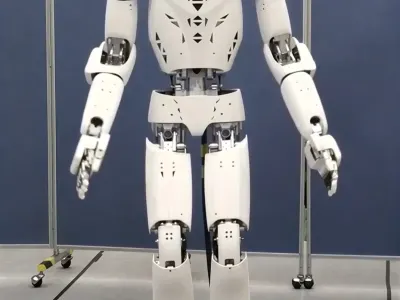
AgiBot A2 Lite and Kaleido 8.0 are both full-size bipeds, but built for opposite purposes. A2 Lite is 169 cm and 63 kg, with 23 degrees of freedom (five in each arm, six in each leg and one in the head), joints producing up to 270 N·m and soft prosthetic hands. Kaleido 8.0 stands 180 cm and weighs 80 to 86 kg, with direct-drive motors in its waist and elbows for durability. A2 Lite is shaped for graceful performance, while Kaleido 8.0 is built to be tough.
Kaleido 8.0
Mobility & Navigation
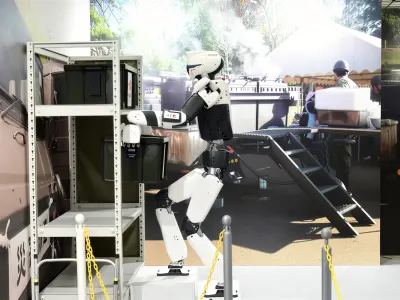
AgiBot A2 Lite walks at up to 0.8 m/s, or 0.6 m/s or less in daily use, on flat floors with steps of up to 20 mm and slopes of up to 8%. Kaleido 8.0 walks at about 4 km/h, roughly 1.1 m/s, and is built to survive falls and stand back up. Kaleido 8.0 is faster and designed for rough ground. A2 Lite needs a prepared, flat floor such as a stage.

AgiBot A2 Lite
Sensors & Perception
AgiBot lists perception as not supported on the A2 Lite, so it has no camera-based vision package. Kawasaki has not published a sensor list for Kaleido 8.0. A2 Lite performs routines without seeing its surroundings. For Kaleido 8.0, ask Kawasaki what perception it uses in its disaster-response demonstrations.
Kaleido 8.0
AI Capabilities
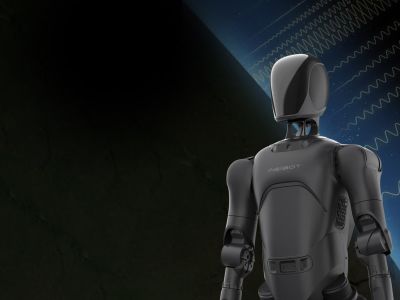
AgiBot A2 Lite has no perception or speech AI at all; it plays routines from an action library, and an optional VR teleoperation kit records new moves. Kaleido 8.0 is semi-autonomous and uses a head projector to show facial expressions while working with people. A2 Lite replays choreographed movements. Kaleido 8.0 is a research platform for robots that work in uncertain real-world conditions.
AgiBot A2 Lite
Battery & Power Efficiency
AgiBot A2 Lite's hot-swappable 14.4 Ah battery lasts about 1.5 hours of walking or 4 hours 35 minutes standing, and recharges in 2 hours. Kawasaki has not published Kaleido 8.0's battery details. A2 Lite's swappable battery keeps performances going with a spare pack. Ask Kawasaki for Kaleido 8.0's runtime.
Kaleido 8.0
Use-Case Suitability
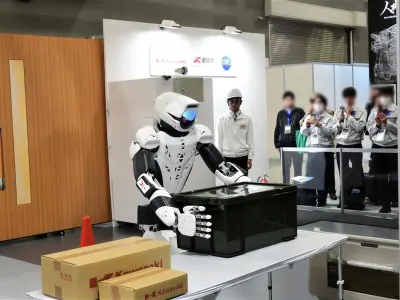
AgiBot markets the A2 Lite for entertainment, cultural and commercial shows, with routines such as handshakes, tai chi, Peking opera and optional dances. Kawasaki builds Kaleido for disaster response and heavy work alongside people, and version 8 demonstrated tasks in a mock evacuation centre at iREX 2023. These robots serve completely different buyers. Choose A2 Lite for scripted performances and entertainment, or Kaleido 8.0 for rugged disaster-response and heavy-duty research.
AgiBot A2 Lite
Safety Features
AgiBot A2 Lite has a low-power alarm, self-balancing, collision avoidance and a wireless emergency stop switch, and its joint modules are rated IP5X against dust. Kaleido 8.0 is designed to fall without damage and get back up, the main goal of Kawasaki's Robust Humanoid Platform. A2 Lite's wireless stop lets an operator halt a show from a distance. Kaleido 8.0's toughness is aimed at surviving accidents in hazardous settings.
Kaleido 8.0
Pricing & Value
AgiBot's global store lists the A2 Lite at $44,560, while Kaleido 8.0 is priced at around $50,000 to $150,000. Kawasaki presents Kaleido 8.0 as a development platform shown at exhibitions rather than a product on general sale. A2 Lite is the one you can simply order today. For entertainment it is the clear value pick, while Kaleido 8.0 is for research partnerships in heavy-duty robotics.
Capabilities & Operational Tasks
Head-to-head comparison of what AgiBot A2 Lite and Kaleido 8.0 can do, their applications, and capabilities.
What Can AgiBot A2 Lite & Kaleido 8.0 Do?
111 tasks listed for both, 2 only for AgiBot A2 Lite, 8 only for Kaleido 8.0.
Technical Specifications
AgiBot A2 Lite and Kaleido 8.0 differ on 35 of the 53 specifications listed for both.
Functional Utility & Use Cases
4 Comparative Metrics
Manipulation & Load Capacity
4 Comparative Metrics
Kinematic Architecture & Dexterity
4 Comparative Metrics
Related Comparisons

KUAVO 4PRO (KUAVO-MY) vs Kaleido 8.0
KUAVO-MY vs Kaleido 8.0: Leju's research and service humanoid against Kawasaki's robust bipedal humanoid, compared on size, mobility, sensors, AI and best uses.
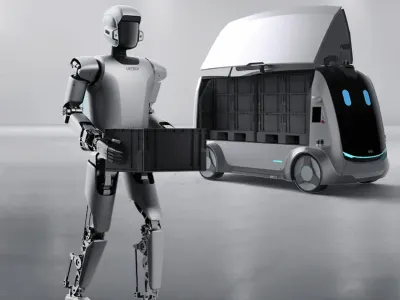
Walker S1 vs Kaleido 8.0
Walker S1 vs Kaleido 8.0: UBTECH's factory humanoid against Kawasaki's robust bipedal humanoid, compared on size, mobility, sensors, AI and best uses.
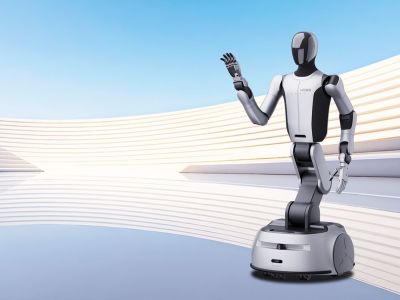
Cruzr S2 vs AgiBot A2 Lite
Cruzr S2 vs AgiBot A2 Lite: UBTECH's wheeled assembly and service humanoid against AgiBot's performance humanoid, compared on specs and uses.

Pudu D7 vs AgiBot A2 Lite
D7 vs AgiBot A2 Lite: Pudu's wheeled semi-humanoid against AgiBot's performance humanoid, compared on size, mobility, sensors, AI and best uses.
Verdicts reflect our research and opinion. Confirm specifications with the manufacturer before buying.