AgiBot A2 vs GR-2 at a glance
AgiBot A2 is quicker, with a top speed of 1.9 m/s versus 1.4 m/s for GR-2. GR-2 has more degrees of freedom (53 against 40 for AgiBot A2), which allows finer movement. GR-2 is lighter at 63 kg, compared with 69 kg for AgiBot A2.
| Key specs | AgiBot A2 | GR-2 |
|---|---|---|
| Price | — | $100,000–$150,000 |
| Height | 169 cm | 175 cm |
| Weight | 69 kg | 63 kg |
| Top speed | 1.9 m/s (stronger) | 1.4 m/s |
| Runtime | 2 hours | 2 hours |
| Degrees of freedom | 40 | 53 (stronger) |
| Payload | 2–3 kg | 3 kg |
| Availability | Order via sales quote | — |
Last updated:
Which one fits your use?
Based on the uses each robot is built and marketed for. Open a use to see the specs that matter for it.
| Comparing for… | AgiBot A2 | GR-2 |
|---|---|---|
| Suited | Suited | |
| Suited | Suited | |
| Suited | Suited | |
| Suited | Suited | |
| Not marketed | Suited | |
| Suited | Suited | |
| Not marketed | Suited | |
| Suited | Suited |
- Only GR-2 is marketed for home help and elder care and healthcare settings.
- Both suit warehouse and logistics work, factory and manufacturing work, research labs, education and training, hospitality, retail and public-facing roles and hazardous or high-risk work, so compare the specs for that use.
The AgiBot A2 by AgiBot represents a versatile humanoid robot positioned in the industrial and service robotics market, notable for its integration of advanced AI automation and multi-modal sensor arrays. It distinguishes itself through its higher speed, sophisticated navigation system including HIMUS 3D-SLAM, and a broad range of use cases from precision assembly to public interaction. Its software ecosystem features proprietary AimRT communication and WorkGPT AI, emphasizing seamless autonomy and interaction capability.
The GR-2 by Fourier Intelligence is a humanoid robot that targets research and industrial applications with a focus on precise motion control and modular build. It features advanced actuation with 53 degrees of freedom, dual-encoder systems, and a software stack built on ROS, Linux, and NVIDIA Isaac Lab, catering to developers and researchers. GR-2 emphasizes durable hardware design and rich integration with open robotics frameworks for flexible deployment and customization.
Detailed Analysis
Design & Build Quality
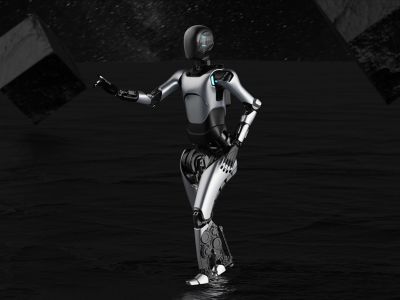
AgiBot A2
Both robots share similar dimensions (175 cm x 60 cm x 40 cm), but the GR-2 is heavier at 63 kg compared to AgiBot A2's 55 kg. The GR-2 employs a modular design and integrated cable management for tidiness and easier maintenance, while AgiBot A2 focuses on ergonomic design suited for customer-facing roles and precision tasks. AgiBot's lighter frame supports faster movement, whereas GR-2's build prioritizes robustness and component accessibility. AgiBot A2 stands 169 cm tall and weighs 69 kg. AgiBot A2's body is made from aluminum frame and composite panels. GR-2's body is made from aluminum alloy and engineering plastics.
Mobility & Navigation
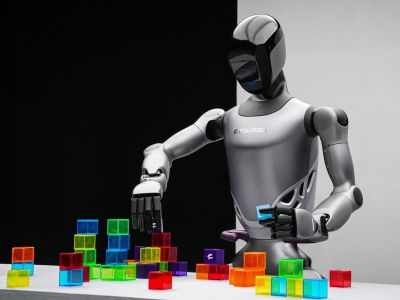
GR-2
AgiBot A2 offers a higher maximum speed of 7 km/h versus GR-2's 5 km/h, benefiting tasks requiring quicker locomotion. Navigation-wise, AgiBot uses HIMUS 3D-SLAM combined with VectorFlux planning algorithms, enhancing spatial awareness and path optimization. GR-2 integrates SLAM with LiDAR and vision-based navigation, supported by its control precision through dual encoders, favoring accurate, adaptive movements over speed. AgiBot A2 reaches 1.9 m/s. GR-2 reaches 1.4 m/s. AgiBot A2's mobility type is legged. GR-2's mobility type is legged. AgiBot A2 has 40 degrees of freedom and carries 2–3 kg per arm.
Sensors & Perception
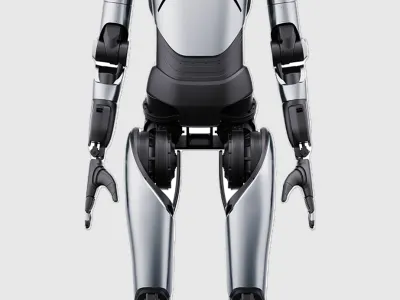
AgiBot A2
AgiBot A2 features a comprehensive sensor suite including microphone arrays, LiDAR, RGB-D and stereo cameras, visual-based fingertip sensors, force/torque sensors, IMU, and gyroscope. In contrast, GR-2 relies on 6 array-type tactile sensors, dual-encoder systems, IMU, gyroscope, and force sensors, focusing more on tactile feedback and joint monitoring for precise actuation. AgiBot's broader sensor types support enhanced environmental perception and interaction. GR-2 stands 175 cm tall and weighs 63 kg. AgiBot A2's safety features include obstacle detection, collision avoidance and emergency stop. GR-2's safety features include emergency stop, obstacle detection and collision avoidance.
AI Capabilities
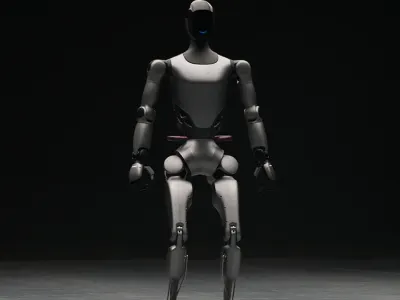
GR-2
AgiBot A2 operates on an AI automation framework powered by WorkGPT combined with AimRT for communication, enabling a blend of autonomous and manual controls with emphasis on interactive tasks. GR-2 supports AI automation alongside remote and manual control, leveraging open-source robotics platforms like ROS and NVIDIA Isaac Lab for flexible AI integration and development, which appeals to researchers and developers needing customizable AI workflows. AgiBot A2's control method is listed as AI automation, manual operation. GR-2's control method is listed as remote control, AI automation, manual operation.
Battery & Power Efficiency
AgiBot A2
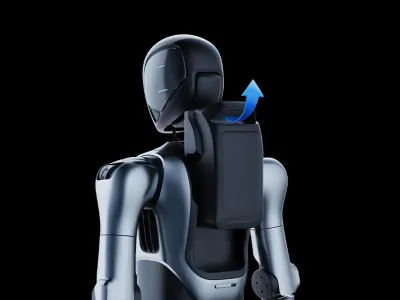
GR-2 offers a swappable battery design aimed at shorter operational bursts (notably around two hours per swap) to facilitate continuous use with reduced downtime. AgiBot A2's battery profile suggests longer endurance suited to sustained industrial or service tasks without frequent recharging. GR-2 has 53 degrees of freedom, carries 3 kg per arm and can deadlift 6 kg. AgiBot A2's sensors include microphone array, RGB-D cameras, stereo cameras and visual-based fingertip sensors. GR-2's sensors include 6 array-type tactile sensors, dual-encoder system and force sensors. AgiBot A2's listed uses include precision electronics assembly, machine tending, industrial kitting and guided commercial showroom tours. GR-2's listed uses include physical rehabilitation assistance, patient companion guidance, light medical item transport and laboratory manipulation.
Use-Case Suitability

GR-2
AgiBot A2 targets a wide range of applications including industrial automation, warehouse logistics, customer reception, research assistance, and public interaction, positioning it as a generalist with strengths in human-robot collaboration. GR-2 is specialized towards bipedal locomotion, adaptive grasping, object manipulation, research, and service tasks, often selected for research and advanced robotic control scenarios requiring modularity and precise actuation. AgiBot A2 navigates with HIMUS 3D-SLAM and VectorFlux planning algorithms. AgiBot A2 runs AimRT communication framework, WorkGPT AI system. GR-2 runs ROS, Linux, NVIDIA Isaac Lab, Mujoco.
Software Ecosystem

AgiBot A2
AgiBot A2 uses a proprietary software stack with the AimRT communication framework and the WorkGPT AI system for task programming, and its HIMUS 3D-SLAM and VectorFlux planning handle navigation. GR-2 builds on open, widely used platforms: ROS, Linux, NVIDIA Isaac Lab and Mujoco simulation, which eases customisation in research, education and development. A2 suits customers who want a packaged, work-focused stack, while GR-2 suits teams that want to modify the software themselves.
Safety Features
GR-2
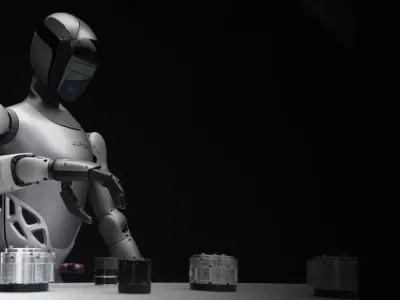
Both robots have obstacle detection, collision avoidance and an emergency stop. A2 adds IP5X-rated joint modules against dust, plus force and torque sensors and fingertip sensing, while GR-2 is rated IP54 for water resistance and carries six array-type tactile sensors and a dual-encoder system. Each runs about 2 hours per charge, and GR-2 recharges in 1.5 hours against A2's 2 hours. GR-2's tactile sensing is built for rehabilitation work near patients, while A2's sensing suits industrial assembly.
Pricing & Value
AgiBot A2
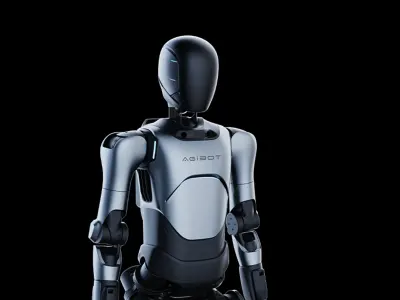
AgiBot A2 is listed at $100,000 to $190,000 and GR-2 at $100,000 to $150,000, with early-access GR-2 units at about $125,000. Both are sold through their makers' sales teams. At the top of its range A2 brings 40 or more active degrees of freedom, a swappable 700 Wh battery and a skill hand that can thread a needle. GR-2's 53 degrees of freedom, including 12 tactile hand joints, and its rehabilitation focus make it the better value for care and research.
Capabilities & Operational Tasks
Head-to-head comparison of what AgiBot A2 and GR-2 can do, their applications, and capabilities.
What Can AgiBot A2 & GR-2 Do?
2014 tasks listed for both, 4 only for AgiBot A2, 2 only for GR-2.
Both AgiBot A2 and GR-2
14Only AgiBot A2
4Only GR-2
2Technical Specifications
AgiBot A2 and GR-2 differ on 34 of the 41 specifications listed for both.
Manipulation & Load Capacity
3 Comparative Metrics
Kinematic Architecture & Dexterity
4 Comparative Metrics
Energy & Power Management
7 Comparative Metrics
Frequently Asked Questions
Which is lighter, AgiBot A2 or GR-2?
GR-2 is lighter at 63 kg, compared with 69 kg for AgiBot A2.
Which uses is each robot marketed for, AgiBot A2 or GR-2?
Only GR-2 is marketed for home help and elder care and healthcare settings. Both suit warehouse and logistics work, factory and manufacturing work, research labs, education and training, hospitality, retail and public-facing roles and hazardous or high-risk work, so compare the specs for that use.
How much does GR-2 cost?
GR-2 is listed at $100,000–$150,000.
Where can I buy AgiBot A2?
AgiBot A2 is sold through AgiBot's sales team; request a quote.
Related Comparisons
GR-2 vs Forerunner K2
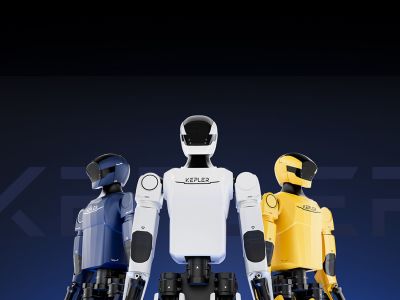
Fourier GR-2 vs Kepler Forerunner K2: payload, battery life, hands and software compared, with a clear pick for labs and for factories.

AgiBot A2 vs Martian
Compare AgiBot A2 and Martian. Detailed analysis of sensors, navigation, mobility, and battery life.
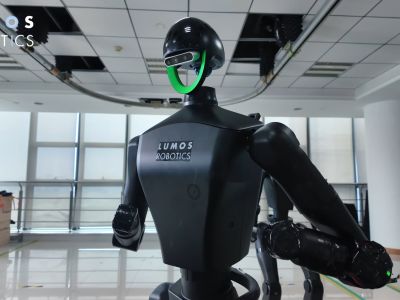
AgiBot A2 vs LUS2
Compare AgiBot A2 and LUS2. Detailed analysis of navigation, sensors, and battery life.
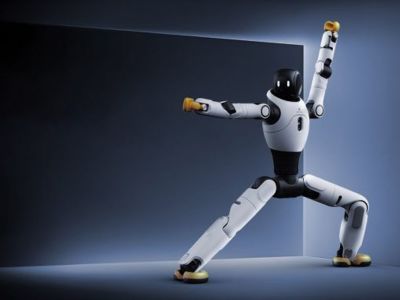
AgiBot X2 vs Unitree R1
AgiBot X2 vs Unitree R1 compared on speed, battery, hands, software and price, with a clear pick for shows, education and developers.
Verdicts reflect our research and opinion. Confirm specifications with the manufacturer before buying.