AgiBot G2 vs Green at a glance
AgiBot G2 is sold through a sales quote. There is no public way to buy Green as of Nov 2026. Green is lighter at 75 kg, compared with 185 kg for AgiBot G2. AgiBot G2 is quicker, with a top speed of 1.5 m/s versus 0.9 m/s for Green. Green has more degrees of freedom (41 against 26 for AgiBot G2), which allows finer movement.
| Key specs | AgiBot G2 | Green |
|---|---|---|
| Price | $100,000–$125,000 | — |
| Height | 180 cm | 180 cm |
| Weight | 185 kg | 75 kg |
| Top speed | 1.5 m/s (stronger) | 0.9 m/s |
| Runtime | 4 hours | — |
| Degrees of freedom | 26 | 41 (stronger) |
| Payload | 5 kg | — |
| Availability | Order via sales quote | — |
Last updated:
Which one fits your use?
Based on the uses each robot is built and marketed for. Open a use to see the specs that matter for it.
| Comparing for… | AgiBot G2 | Green |
|---|---|---|
| Suited | Not marketed | |
| Suited | Suited | |
| Suited | Suited | |
| Not marketed | Suited | |
| Suited | Not marketed |
- Only AgiBot G2 is marketed for warehouse and logistics work and hazardous or high-risk work.
- Only Green is marketed for hospitality, retail and public-facing roles.
- Both suit factory and manufacturing work and research labs, so compare the specs for that use.
AgiBot G2 is an industrial wheeled humanoid built for precision work. It has 26 active degrees of freedom (expandable to 50), 7-DOF force-controlled arms with sub-millimetre accuracy, and an omnidirectional base that reaches 1.5 m/s. It sees through two 3D LiDARs and several RGB-D, stereo and fisheye cameras, runs NVIDIA Jetson T5000 compute rated at 2,070 TFLOPS, and swaps between two batteries for about four hours of work each.
Green is Sber's first humanoid robot, unveiled at AI Journey 2025 in Moscow. It walks on two legs, stands 180 cm tall, weighs 75 kg and has 41 degrees of freedom, including 12 finger joints with force-torque sensing. Green runs on Sber's GigaChat and Green-VLA AI models and is aimed at retail, catering, manufacturing, labs and room service.
Detailed Analysis
Design & Build Quality
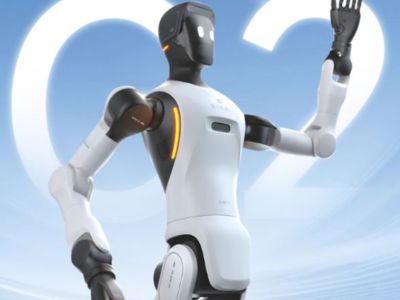
AgiBot G2
AgiBot G2 is a heavy industrial machine at 185 kg, with an adjustable height of about 123 to 180 cm on a wheeled base. Green is a 75 kg bipedal humanoid at 180 cm. Green has more joints in total (41 against the G2's 26 base) and dedicates 12 of them to its fingers. AgiBot G2's body is made from aluminum frame and automotive-grade composites. AgiBot G2's safety features include emergency stop, real-time force sensing, obstacle avoidance and impedance control. AgiBot G2's listed uses include sub-millimeter precision assembly, hole searching, machine tending and industrial kitting.
Mobility & Navigation
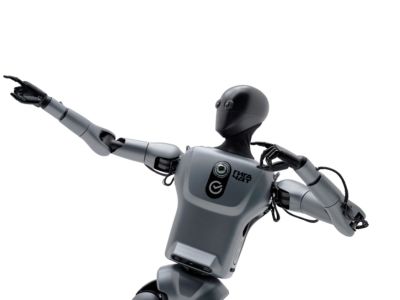
Green
The G2 rolls on an omnidirectional base at up to 1.5 m/s, faster than Green's 0.9 m/s walking speed, and its base suits flat factory floors. Green walks like a person and navigates unfamiliar indoor spaces on its own, steering around obstacles. AgiBot G2's mobility type is wheeled. Green's mobility type is legged. Green has 41 degrees of freedom. AgiBot G2 stands 180 cm tall and weighs 185 kg. Green stands 180 cm tall and weighs 75 kg. AgiBot G2's sensors include 3D LiDAR, stereo Camera, fisheye Camera and head RGBD Camera.
Sensors & Perception
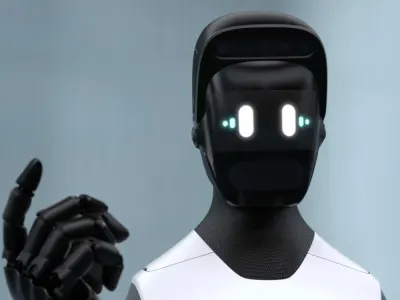
AgiBot G2
The G2 has one of the richest sensor sets in its class: two 3D LiDARs, a stereo camera, three fisheye cameras, a head RGB-D camera, two wrist RGB-D cameras, a microphone array and torque sensors. Green uses eight RGB cameras, two LiDARs, inertial sensors and force-torque sensors in its fingertips. AgiBot G2 has 26 degrees of freedom and carries 5 kg per arm. AgiBot G2 runs for 4 hours per charge and recharges in 1.5 hours. AgiBot G2 reaches 1.5 m/s. Green reaches 0.9 m/s.
AI Capabilities
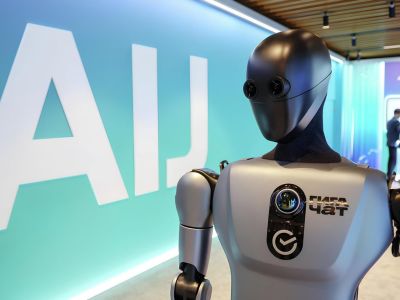
Green
Both use vision-language-action AI. The G2 runs AgiBot's GO-1 and GE-1 models on 2,070 TFLOPS of onboard compute, and it is listed as semi-autonomous with remote teleoperation and multimodal voice interaction. Green runs Sber's GigaChat for conversation and Green-VLA (about 1.3 billion parameters, open weights) for manipulation on one CPU and two GPUs, and it can correct its own mistakes. G2 is built for industrial precision with operator oversight, while Green is built for conversation and self-correction.
Battery & Power Efficiency
AgiBot G2
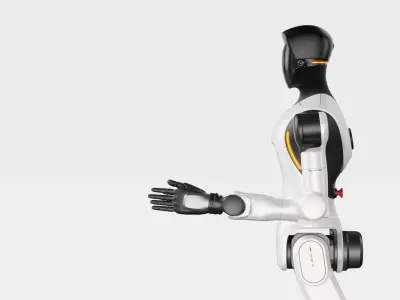
The G2 offers about four hours per battery and hot-swaps between two packs (1,652 Wh in total) for near-continuous operation, recharging in 1.5 hours with autonomous charging. Green runs on an onboard rechargeable 48 V battery. G2 weighs 185 kg on a wheeled base and Green 75 kg on two legs, so the G2's larger pack supports a much heavier machine. For round-the-clock uptime, G2 is the better-documented option.
Use-Case Suitability

Green
The G2 targets sub-millimetre precision assembly, hole searching, machine tending, industrial kitting and showroom tours. Green targets collecting items and stocking shelves, assembling and packing products, lab work with test tubes and bio samples, and room service and cleaning. For exacting factory assembly the G2 is better documented today, carrying 5 kg per arm on dual 7-degree-of-freedom force-controlled arms, while Green's roles reach shops, labs and hotels.
Software Ecosystem
AgiBot G2
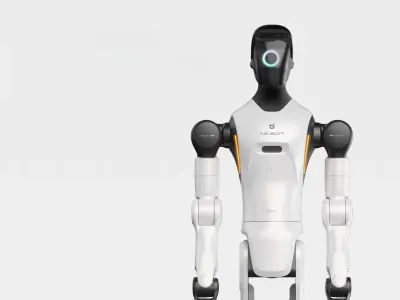
The G2 runs AgiBot's own AI operating system with its GO-1 and GE-1 models, supporting reinforcement learning and simulation. Green's software is Sber's GigaChat plus the open-weight Green-VLA model, and Sber's Green Challenge lets outside teams train controllers in a simulator of the robot. G2 suits industrial teams that want a managed AI stack, and Green's open weights suit researchers who want to inspect and extend the model.
Safety Features

Green
The G2 uses real-time force sensing and impedance control in its arms, along with obstacle avoidance and an emergency stop, and it has an IP42 rating for indoor industrial, logistics and commercial settings. Green relies on inertial and force sensors for balance and precise movement, avoids obstacles and can catch its own errors. At 185 kg the G2 carries far more mass near people than Green at 75 kg, so its impedance control matters most.
Pricing & Value
AgiBot G2
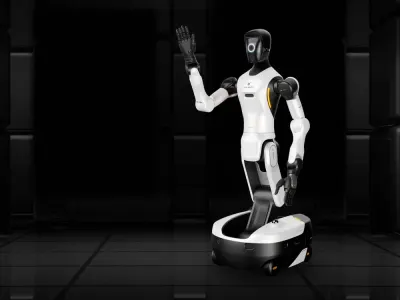
AgiBot G2 is listed at $100,000 to $125,000 and sold through AgiBot's store on contact. Green is listed at about $50,000 to $150,000, with no public sales yet; Sber plans business pilots and said in June 2026 that a line of Green robots would arrive by autumn 2026. G2 offers 2,070 TFLOPS of compute, IP42 protection and a dual hot-swappable battery for industrial work, while Green's range overlaps G2's at the low end.
Capabilities & Operational Tasks
Head-to-head comparison of what AgiBot G2 and Green can do, their applications, and capabilities.
What Can AgiBot G2 & Green Do?
216 tasks listed for both, 12 only for AgiBot G2, 3 only for Green.
Both AgiBot G2 and Green
6Only AgiBot G2
12Only Green
3Technical Specifications
AgiBot G2 and Green differ on 42 of the 43 specifications listed for both.
Manipulation & Load Capacity
4 Comparative Metrics
Kinematic Architecture & Dexterity
4 Comparative Metrics
Energy & Power Management
7 Comparative Metrics
Frequently Asked Questions
Can I buy AgiBot G2 or Green today?
AgiBot G2 is sold through a sales quote. There is no public way to buy Green as of Nov 2026.
Which is lighter, AgiBot G2 or Green?
Green is lighter at 75 kg, compared with 185 kg for AgiBot G2.
Which uses is each robot marketed for, AgiBot G2 or Green?
Only AgiBot G2 is marketed for warehouse and logistics work and hazardous or high-risk work. Only Green is marketed for hospitality, retail and public-facing roles. Both suit factory and manufacturing work and research labs, so compare the specs for that use.
How much does AgiBot G2 cost?
AgiBot G2 is listed at $100,000–$125,000.
Where can I buy AgiBot G2?
AgiBot G2 is sold through AgiBot's sales team; request a quote.
Related Comparisons
AgiBot G2 vs Cruzr Y1
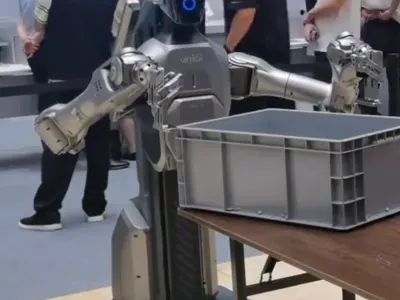
Compare AgiBot G2 vs Cruzr Y1 for humanoid mobility, dexterity, autonomy, and payload capacity.
K2 Bumblebee vs Green
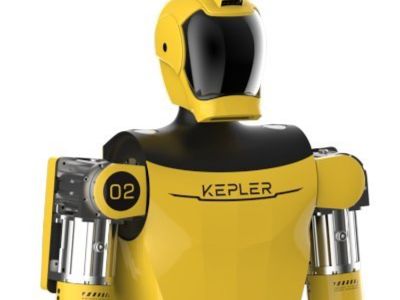
K2 Bumblebee vs Green: Kepler's 52-DOF industrial humanoid against Sber's GigaChat-powered Green, compared on hands, sensors, battery and price.

Optimus vs Green
Optimus vs Green: Tesla's humanoid against Sber's GigaChat-powered Green, compared on size, hands, AI, target jobs and availability.
AgiBot G2 vs Pudu D7
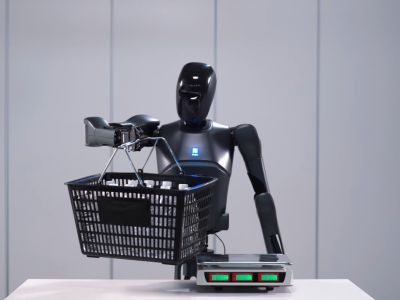
AgiBot G2 vs D7: AgiBot's wheeled precision-assembly humanoid against Pudu's wheeled semi-humanoid, compared on size, mobility, sensors, AI and best uses.
Verdicts reflect our research and opinion. Confirm specifications with the manufacturer before buying.