AlphaBot 2 vs Walker Tienkung at a glance
AlphaBot 2 lasts longer on a charge, about 6 hours against 3.5 hours for Walker Tienkung. AlphaBot 2 is the taller of the two at 240 cm, against 172 cm for Walker Tienkung. Walker Tienkung has more degrees of freedom (42 against 34 for AlphaBot 2), which allows finer movement.
Which one fits your use?
Based on the uses each robot is built and marketed for. Open a use to see the specs that matter for it.
| Comparing for… | AlphaBot 2 | Walker Tienkung |
|---|---|---|
| Suited | Not listed | |
| Suited | Not listed | |
| Suited | Suited | |
| Not listed | Suited | |
| Suited | Not listed | |
| Suited | Suited |
- Pick AlphaBot 2 for warehouse and logistics work, factory and manufacturing work and home help and elder care.
- Pick Walker Tienkung for education and training.
- Both suit research labs and hospitality, retail and public-facing roles, so compare the specs for that use.
AI² Robotics of Shenzhen unveiled AlphaBot 2 in April 2025 as a general-purpose humanoid. Its AlphaBrain platform and GOVLA vision-language-action model drive a body that can reach from 0 to 240 cm, and it can work for more than six hours at a stretch.
Walker Tienkung is UBTECH's full-size humanoid for research, education and proof-of-concept work. It stands 172 cm tall, weighs 73 kg, has up to 42 degrees of freedom and runs for more than 3.5 hours on quick-swap dual batteries.
Detailed Analysis
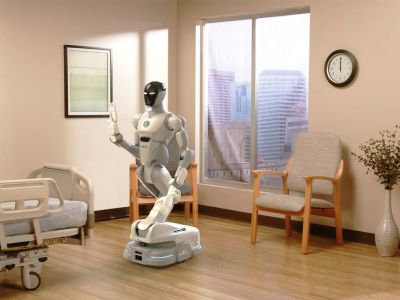
AlphaBot 2
Design & Build Quality
AlphaBot 2 puts a humanoid upper body with more than 34 degrees of freedom on a wheeled base, with a waist-and-leg lift that gives a vertical working range of 0 to 240 cm and 700 mm of reach per arm. Walker Tienkung is a 172 cm, 73 kg biped with up to 42 degrees of freedom, including configurable 7-DoF arms. AI² Robotics has not published AlphaBot 2's height or weight. AlphaBot 2 is built to reach high shelves and low bins, while Tienkung is built to walk like a person.
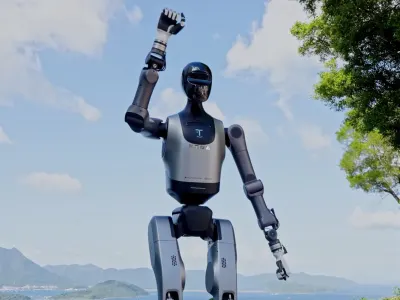
Walker Tienkung
Mobility & Navigation
AlphaBot 2 moves on a wheeled base and uses what AI² Robotics calls 360° × 360° full-space perception to get around; its speed has not been published. Walker Tienkung moves at up to 7 km/h and is built to handle stairs, slopes and uneven ground. Tienkung can go where wheels cannot. AlphaBot 2's wheels suit the flat floors of factories, labs and cleanrooms.
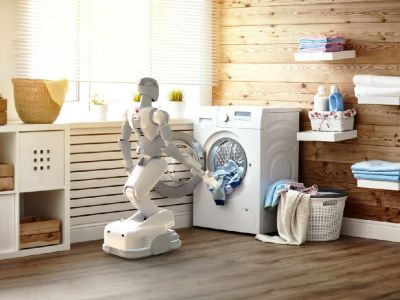
AlphaBot 2
Sensors & Perception
AlphaBot 2 sees through a 360° ring of cameras and stereo cameras, backed by force feedback sensors, a microphone array and proximity sensors. Walker Tienkung combines RGB and stereo cameras with LiDAR, ultrasonic sensors, an IMU and force sensors. Both carry force sensing for handling. Tienkung adds LiDAR and ultrasonic ranging, while AlphaBot 2 adds a microphone array.
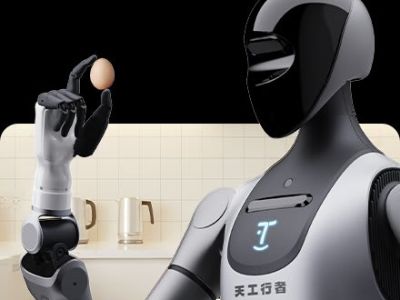
Walker Tienkung
AI Capabilities
AlphaBot 2 thinks with AI² Robotics' GOVLA model, in which a slow System 2 reasons through tasks step by step and a fast System 1 drives whole-body movement, with DeepSeek technology built in. AI² Robotics also says it learns on site from real industrial data without manual reprogramming. Walker Tienkung can run autonomously or semi-autonomously, leaving research teams free to try their own control methods. AlphaBot 2 is a ready-made autonomous worker; Tienkung is a platform for developing new AI.
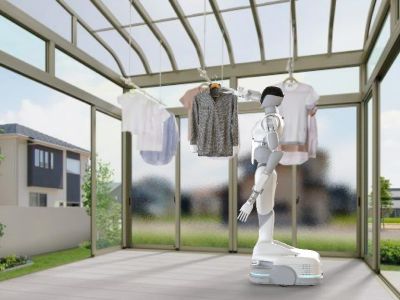
AlphaBot 2
Battery & Power Efficiency
AI² Robotics rates AlphaBot 2 for more than six hours of continuous work. Walker Tienkung lasts more than 3.5 hours per charge, quick-swaps between two batteries and recharges in 2 hours. AlphaBot 2 lasts longer on a charge. Tienkung's quick swap makes up for it in a lab with spare batteries.
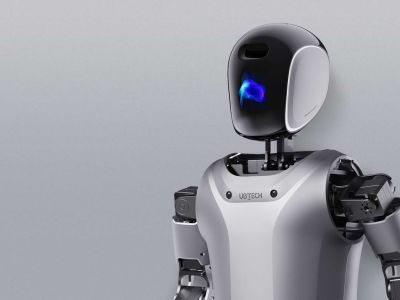
Walker Tienkung
Use-Case Suitability
AlphaBot 2 targets automotive, semiconductor and biotech manufacturing, with airports and residential communities planned, and has been shown cooking, doing sterile filling, packing and inspecting. Walker Tienkung is UBTECH's robot for scientific research, education, proof-of-concept projects, logistics trials and rescue research. AlphaBot 2 is a production robot and Tienkung a research one. Choose AlphaBot 2 for multi-step lab and factory tasks over long shifts, or Walker Tienkung for research, education and proof-of-concept projects.
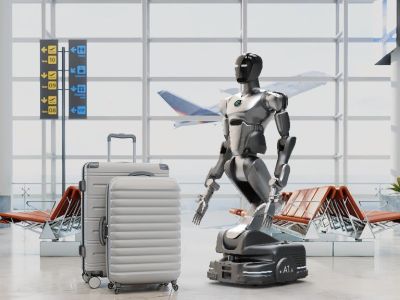
AlphaBot 2
Software Ecosystem
AlphaBot 2's software is AI² Robotics' AlphaBrain embodied-AI platform, updated over the air. Alongside UBTECH's own software, Walker Tienkung supports ROS 2, Python and C++. Tienkung is the more open choice for developers who want to write their own code. AlphaBot 2 improves through AI² Robotics' own model updates.

Walker Tienkung
Safety Features
For work near people, Walker Tienkung has force limiting, collision detection, an emergency stop and a collaborative mode. AlphaBot 2's safety features and certifications have not been published by AI² Robotics. Tienkung is therefore the easier robot to assess for shared spaces. AlphaBot 2's wheeled base does avoid the fall risk of a walking robot.
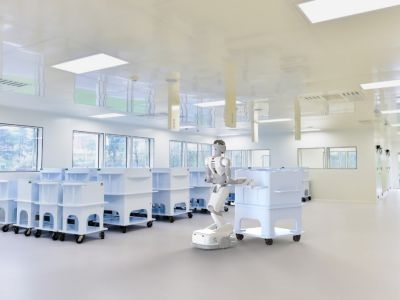
AlphaBot 2
Pricing & Value
Walker Tienkung is priced at around $65,000 to $115,000. AI² Robotics has not published a price for AlphaBot 2, so the two cannot be compared on cost directly. Tienkung's value lies in open software, terrain handling and quick battery swaps for research. AlphaBot 2 would need to be quoted against its six-hour runtime and factory task range.
Capabilities & Operational Tasks
Head-to-head comparison of what AlphaBot 2 and Walker Tienkung can do, their applications, and capabilities.
What Can AlphaBot 2 & Walker Tienkung Do?
163 tasks listed for both, 11 only for AlphaBot 2, 2 only for Walker Tienkung.
Technical Specifications
AlphaBot 2 and Walker Tienkung differ on 47 of the 53 specifications listed for both.
Functional Utility & Use Cases
4 Comparative Metrics
Manipulation & Load Capacity
4 Comparative Metrics
Kinematic Architecture & Dexterity
4 Comparative Metrics
Related Comparisons
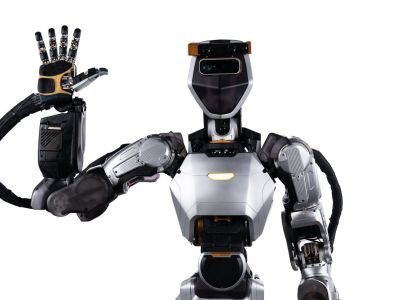
Phoenix vs Walker Tienkung
Compare Phoenix and Walker Tienkung. Detailed analysis of navigation, sensors, and speed.
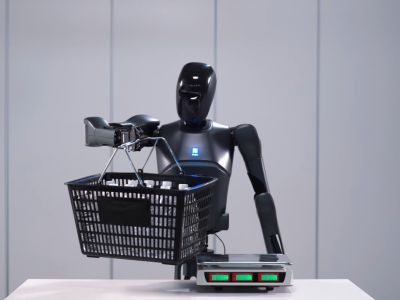
Pudu D7 vs Walker Tienkung
D7 vs Walker Tienkung: Pudu's wheeled semi-humanoid against UBTECH's full-size research humanoid, compared on size, mobility, sensors, AI and best uses.
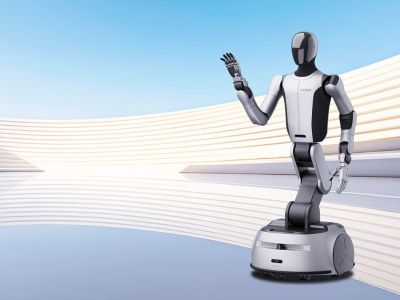
Cruzr S2 vs Walker Tienkung
Cruzr S2 vs Walker Tienkung: UBTECH's wheeled assembly and service humanoid against UBTECH's full-size research humanoid, compared on specs and uses.
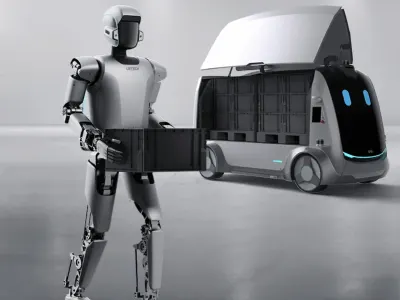
Walker S1 vs Walker Tienkung
Walker S1 vs Walker Tienkung: UBTECH's factory humanoid against UBTECH's full-size research humanoid, compared on size, mobility, sensors, AI and best uses.
Verdicts reflect our research and opinion. Confirm specifications with the manufacturer before buying.