EngineAI SE01 vs EngineAI PM01 at a glance
EngineAI SE01 is sold through a sales quote, while EngineAI PM01 can be bought now. EngineAI PM01 is lighter at 40 kg, compared with 55 kg for EngineAI SE01. EngineAI SE01 has more degrees of freedom (32 against 24 for EngineAI PM01), which allows finer movement. EngineAI SE01 is the taller of the two at 170 cm, against 138 cm for EngineAI PM01. EngineAI SE01 is priced at $20,000–$30,000 and EngineAI PM01 at $12,000–$25,500, so their price ranges overlap.
| Key specs | EngineAI SE01 | EngineAI PM01 |
|---|---|---|
| Price | $20,000–$30,000 | $12,000–$25,500 |
| Height | 170 cm | 138 cm |
| Weight | 55 kg | 40 kg |
| Top speed | 2 m/s | 2 m/s |
| Runtime | 2 hours | 2 hours |
| Degrees of freedom | 32 (stronger) | 24 |
| Payload | 15 kg (stronger) | 2 kg |
| Availability | Order via sales quote | Available to buy |
Last updated:
Which one fits your use?
Based on the uses each robot is built and marketed for. Open a use to see the specs that matter for it.
| Comparing for… | EngineAI SE01 | EngineAI PM01 |
|---|---|---|
| Suited | Suited | |
| Suited | Suited | |
| Suited | Suited | |
| Suited | Suited |
- Both are aimed at the same uses (warehouse and logistics work, factory and manufacturing work, research labs and education and training), so the spec differences decide it.
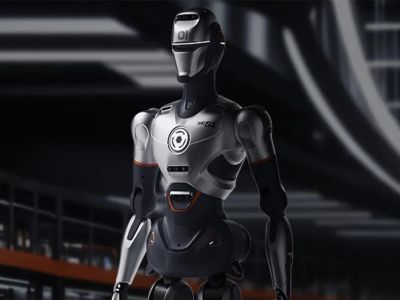
The EngineAI SE01 is the full-size humanoid from EngineAI, launched in October 2024 for industrial work. It stands 170 cm tall and has 32 degrees of freedom, meaning 32 separate joint movements. Its joints reach 330 N·m of torque, it has a five-finger hand, and it can lift 15 kg across its arms. A swappable battery gives it 2 hours of running time.
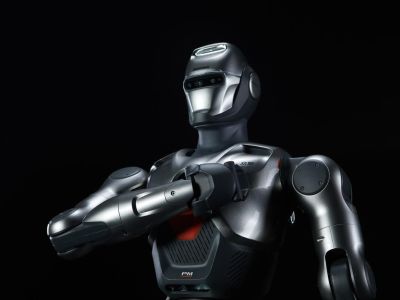
The EngineAI PM01 is the compact humanoid from EngineAI, on sale worldwide from December 2024 for developers, schools and researchers. It stands 138 cm tall and has 24 degrees of freedom, including a waist that turns 320 degrees. It walks at 2 m/s, runs on ROS 2 and Linux, and is open to secondary development. Its swappable battery also runs for 2 hours.
Detailed Analysis
Which should you choose, EngineAI SE01 or PM01?
EngineAI SE01
Choose the SE01 if you need a robot that handles parts and tools, because it carries 15 kg across its arms and has 32 degrees of freedom and a five-finger hand. Choose the PM01 if you build, teach or research, because it has 24 degrees of freedom, a 320 degree waist and dynamic moves such as jumping and flips at a smaller size. Both launched in 2024, the SE01 in October and the PM01 two months later. The SE01 is the work machine, and the PM01 is the platform for experiments.
Which robot can carry more, SE01 or PM01?
EngineAI PM01
The SE01 carries far more, with a 15 kg payload across its arms and a 15 kg deadlift, against 2 kg of carrying capacity and a 4 kg deadlift for the PM01. A deadlift is the weight a robot can lift from the floor. In practice the SE01 can move a crate of parts or feed a machine, while the PM01 is limited to light items such as a camera or a small sensor pack. If your task needs real lifting, only the SE01 qualifies.
Which robot has the stronger joints and more freedom of movement?
EngineAI SE01
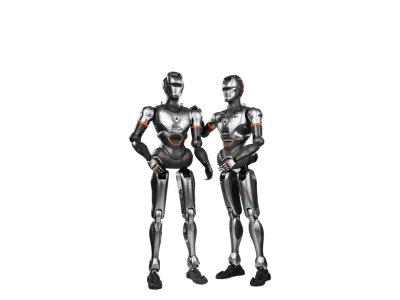
The SE01 has 32 degrees of freedom and joints rated up to 330 N·m, while the PM01 has 24 degrees of freedom. Degrees of freedom count how many separate ways a robot can bend or turn, and torque is the twisting force a joint can deliver. The extra eight movements on the SE01 mostly sit in its hands, which is why it can grip tools. The PM01 spends its movements on legs, arms and a 320 degree waist, which gives it the range for dance and acrobatic routines.
Which robot walks and moves better, SE01 or PM01?

EngineAI PM01
Both robots walk at 2 m/s, about 7.2 km/h, so speed does not separate them. The difference is style: the SE01 is built around a natural, straight-knee human gait learned by a neural network, while the PM01 is shown running, jumping, doing backflips and climbing stairs. Both use reinforcement learning, a method where the robot improves by trial and error in simulation. Choose the SE01 for calm, human-like walking around people, and the PM01 for showing off agile motion in demos, classrooms and research tests.
How long does the battery last on each robot?
EngineAI SE01
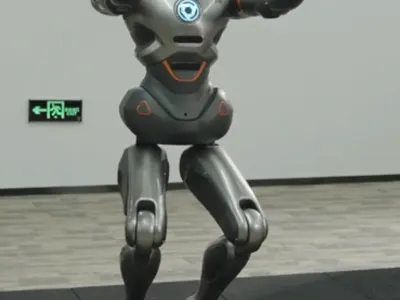
Both the SE01 and the PM01 run for 2 hours on a charge, and both use a quick-swap battery that takes about 2 hours to refill. That means a spare pack keeps either robot working through a shift. The SE01 has a larger body and heavier arms to power, and its maker lists an average draw of 273 W, while the PM01 lists 200 W while walking. Neither is built for a full shift without swaps, so plan on at least one spare battery for each.
What software and developer tools do SE01 and PM01 offer?

EngineAI PM01
Both robots are open to developers, but the PM01 is the one sold around that idea. The PM01 runs ROS 2 on Linux with an SDK and supports secondary development, so a lab can load its own walking or motion code. The SE01 runs EngineAI's own Engine Sense stack on Linux with a ROS-compatible API and SDK, and its joints are tuned by the maker. If your team writes its own software, the PM01 is the easier starting point. If you want finished behaviour, the SE01 is closer.
Is the PM01 worth choosing over the SE01 for the price?
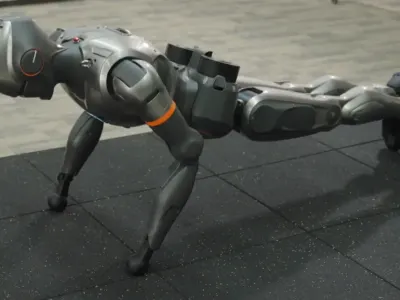
EngineAI SE01
The PM01 is the lower-cost route, with a listed price range of USD 12,000 to 25,500 against USD 20,000 to 30,000 for the SE01. The lower end of the PM01 range reflects its launch offer of 88,000 yuan, which the maker's own coverage put at USD 12,000. For that money you get a smaller robot with no heavy payload and less finger dexterity. If you want lifting and hand work, the SE01 is better value, because the PM01 cannot do those jobs at any price.
Capabilities & Operational Tasks
Head-to-head comparison of what EngineAI SE01 and EngineAI PM01 can do, their applications, and capabilities.
What Can EngineAI SE01 & EngineAI PM01 Do?
137 tasks listed for both, 2 only for EngineAI SE01, 4 only for EngineAI PM01.
Both EngineAI SE01 and EngineAI PM01
7Only EngineAI SE01
2Only EngineAI PM01
4Technical Specifications
EngineAI SE01 and EngineAI PM01 differ on 31 of the 36 specifications listed for both.
Manipulation & Load Capacity
3 Comparative Metrics
Kinematic Architecture & Dexterity
4 Comparative Metrics
Energy & Power Management
7 Comparative Metrics
Frequently Asked Questions
Do the SE01 and PM01 have hands that can grip objects?
The SE01 has a bionic five-finger hand with six degrees of freedom, built for gripping tools and parts. The PM01 maker page lists five joints per arm but does not describe a dexterous hand, so it suits motion and research more than grasping.
Can the SE01 and PM01 be programmed with ROS?
Yes. The SE01 offers a ROS-compatible API and SDK on its Linux-based Engine Sense stack. The PM01 runs ROS 2 on Linux with SDK support and is sold as open to secondary development, which makes it the easier of the two to customise.
Can the PM01 do backflips and jumps like the SE01?
The PM01 is the one shown jumping, running and doing backflips, thanks to its light frame and 24 degrees of freedom. The SE01 is built around a smooth, natural walking gait learned with a neural network rather than acrobatics.
How safe are the SE01 and PM01 around people?
Both list an emergency stop and obstacle detection. The SE01 adds collision avoidance and power disconnect interlocks, and the PM01 adds fall recovery. Both are meant for indoor use between 0 and 40 degrees Celsius.
How do the SE01 and PM01 see their surroundings?
The SE01 uses stereo cameras, a depth camera, infrared and 360 degree LiDAR. The PM01 uses an Intel RealSense depth camera and binocular cameras, with LiDAR as an option on its navigation edition.
Are the SE01 and PM01 autonomous or remote controlled?
Neither is fully autonomous. The SE01 is semi-autonomous with a teleoperation fallback and an end-to-end gait controller. The PM01 combines a learned walking controller with remote control and manual override from a handheld controller.
Can I buy EngineAI SE01 or EngineAI PM01 today?
EngineAI SE01 is sold through a sales quote, while EngineAI PM01 can be bought now.
Which costs less, EngineAI SE01 or EngineAI PM01?
Their prices are close: EngineAI SE01 is listed at $20,000–$30,000 and EngineAI PM01 at $12,000–$25,500.
Which is lighter, EngineAI SE01 or EngineAI PM01?
EngineAI PM01 is lighter at 40 kg, compared with 55 kg for EngineAI SE01. EngineAI SE01 is also taller, at 170 cm against 138 cm for EngineAI PM01.
Which uses is each robot marketed for, EngineAI SE01 or EngineAI PM01?
Both are aimed at the same uses (warehouse and logistics work, factory and manufacturing work, research labs and education and training), so the spec differences decide it.
How much does EngineAI SE01 cost?
EngineAI SE01 is listed at $20,000–$30,000.
How much does EngineAI PM01 cost?
EngineAI PM01 is listed at $12,000–$25,500.
Where can I buy EngineAI SE01?
EngineAI SE01 is sold through EngineAI's sales team; request a quote.
Where can I buy EngineAI PM01?
EngineAI PM01 is sold by EngineAI.
Related Comparisons

Optimus vs EngineAI SE01
Head-to-head: Optimus vs SE01. Explore differences in sensors, battery, navigation, speed, and AI capabilities.

EngineAI SE01 vs NEO Home Robot
EngineAI SE01 vs 1X NEO Home Robot: payload, battery, sensors, navigation, price and which humanoid suits industrial research or home help.

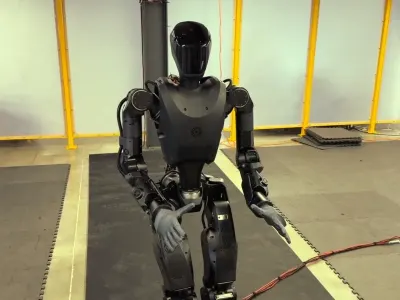
T800 vs Phantom MK1
Compare T800 by EngineAI vs Phantom MK1 by Foundation for humanoid mobility, dexterity, autonomy, payload, and industrial vs defense use cases.
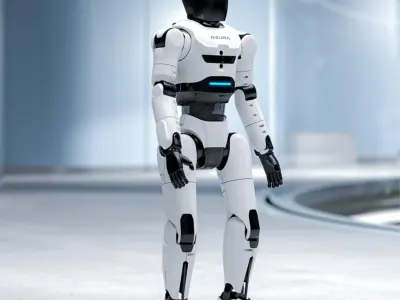
T800 vs 4NE-1 Mini
T800 or 4NE-1 Mini? See which humanoid robot performs better for manufacturing, logistics, and research with comparisons on dexterity, autonomy, and payload.
Verdicts reflect our research and opinion. Confirm specifications with the manufacturer before buying.