Figure 02 vs Figure 03 at a glance
Figure 03 has more degrees of freedom (60 against 44 for Figure 02), which allows finer movement. Figure 03 is lighter at 61 kg, compared with 70 kg for Figure 02.
Which one fits your use?
Based on the uses each robot is built and marketed for. Open a use to see the specs that matter for it.
| Comparing for… | Figure 02 | Figure 03 |
|---|---|---|
| Suited | Not listed | |
| Suited | Not listed | |
| Suited | Suited | |
| Suited | Suited | |
| Not listed | Suited | |
| Suited | Suited | |
| Suited | Suited | |
| Suited | Not listed |
- Pick Figure 02 for warehouse and logistics work, factory and manufacturing work and hazardous or high-risk work.
- Pick Figure 03 for home help and elder care.
- Both suit research labs, education and training, hospitality, retail and public-facing roles and healthcare settings, so compare the specs for that use.
Figure 02, introduced by Figure AI in August 2024, is positioned as an industrial humanoid robot designed for automotive assembly, repetitive industrial tasks, hazardous material handling, and logistics automation. It stands out with its robust build, six RGB cameras, and an Nvidia-powered AI system enabling autonomous operation with remote override. Its substantial size and weight reflect its industrial focus and task specialization.
Figure 03, launched in October 2025, represents a next-generation humanoid robot by Figure AI, aimed at broader use including home assistance and commercial environments. It features a lighter, more compact design with advanced sensory capabilities, a new AI system called Helix, and enhanced software architecture supporting voice commands and app integration. Its cost-effective manufacturing and expanded application scope distinguish it from the Figure 02.
Detailed Analysis
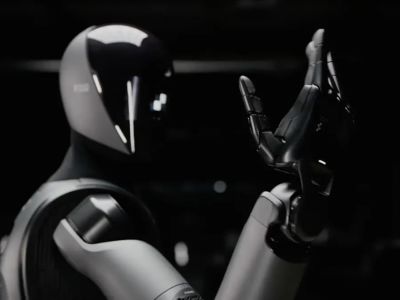
Figure 02
Design & Build Quality
Figure 02 has larger dimensions (168 x 50 x 30 cm) and weighs 70 kg, designed primarily for industrial environments with a focus on durability and compliance with industrial safety standards. In contrast, Figure 03 is 9% lighter and smaller (167 x 60 x 50 cm), with softer multi-density foam padding and textile covering to enhance safety for domestic and commercial settings. The manufacturing process for Figure 03 shifts from CNC machining to die-casting and injection molding, allowing for cost reduction and mass production.
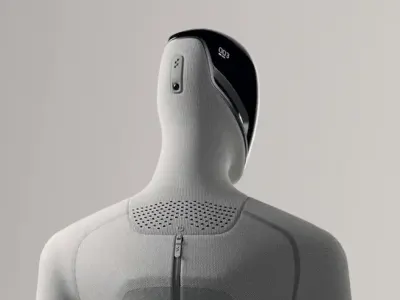
Figure 03
Mobility & Navigation
Figure 02 moves at 4.3 km/h (1.2 m/s) with vision-based SLAM navigation using onboard cameras, optimized for industrial tasks requiring precise autonomous movement. Figure 03 improves mobility speed to 4.2 km/h and employs the Helix AI system combining vision, language, and action, with SLAM and mmWave data offload, enabling better fleet learning and navigation in cluttered or dynamic environments like homes.
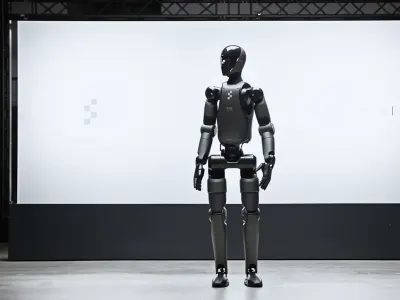
Figure 02
Sensors & Perception
Figure 02 is equipped with six RGB cameras, IMU, gyroscope, force sensors, a touchless human detection sensor, microphones, and speakers for perception and interaction in industrial settings. Figure 03 advances this suite with palm cameras, tactile fingertip sensors capable of sensing a few grams of pressure, an improved auditory system with more powerful speakers and repositioned microphones, and wider field-of-view cameras, enhancing real-time response and delicate manipulation.
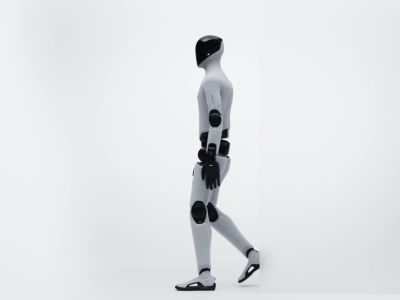
Figure 03
AI Capabilities
Figure 02 uses a custom Linux-based OS with ROS-style APIs and Nvidia RTX GPU modules for AI inference, supporting fully autonomous control with remote override. Figure 03 integrates the Helix AI system based on ROS and Linux, supporting Python and C++ APIs, with vision-language-action processing that enables learning directly from humans and adapting to new tasks via natural language prompts, representing a significant step toward general-purpose autonomy.
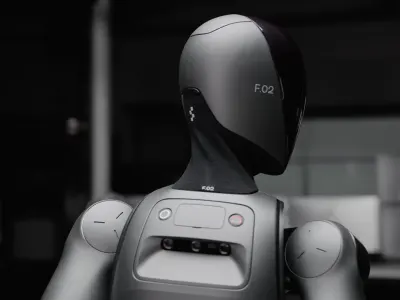
Figure 02
Battery & Power Efficiency
Figure 02’s battery details are unspecified, though it integrates the battery into the torso. Figure 03 features an internal, wirelessly charged battery compliant with UN38.3 standards, offering 3-5 years of battery life, and improved energy efficiency supporting longer autonomous operation and reduced downtime.
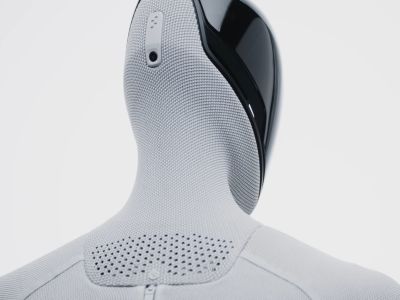
Figure 03
Use-Case Suitability
Figure 02 targets industrial applications like automotive assembly and hazardous material handling, designed for repetitive, high-precision tasks in controlled environments. Figure 03 broadens this scope to include home assistance, elderly care, household chores, and light object manipulation, emphasizing safety and adaptability in complex, cluttered, or human-centric spaces.
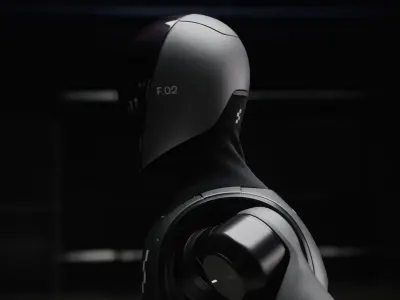
Figure 02
Software Ecosystem
Both robots operate on Linux-based systems with ROS integration, but Figure 03’s Helix AI system supports advanced vision-language-action capabilities and app integration for remote monitoring and voice commands. This makes Figure 03 more versatile for interactive and adaptive tasks compared to the more industrially focused software stack of Figure 02.
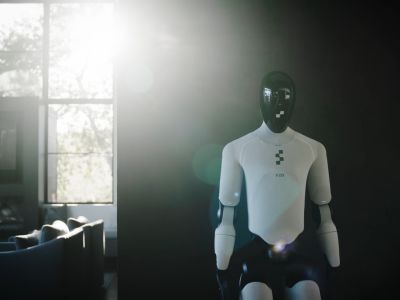
Figure 03
Safety Features
Figure 02 includes emergency stop, collision detection, and compliant actuators for industrial safety. Figure 03 enhances safety with multi-density foam padding, soft textile coverings, pinch point protection, emergency stop, and obstacle avoidance, addressing risks associated with domestic and close human interaction environments.
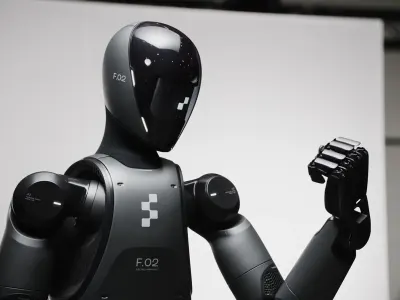
Figure 02
Pricing & Value
Figure 02 is priced at approximately $130,000, reflecting its industrial-grade build and capabilities. Figure 03 is offered in a lower price range of $50,000 to $70,000, enabled by redesigned manufacturing processes and component cost reductions, making it more accessible for broader commercial and domestic use.
Capabilities & Operational Tasks
Head-to-head comparison of what Figure 02 and Figure 03 can do, their applications, and capabilities.
What Can Figure 02 & Figure 03 Do?
2411 tasks listed for both, 7 only for Figure 02, 6 only for Figure 03.
Technical Specifications
Figure 02 and Figure 03 differ on 34 of the 54 specifications listed for both.
Functional Utility & Use Cases
4 Comparative Metrics
Manipulation & Load Capacity
4 Comparative Metrics
Kinematic Architecture & Dexterity
4 Comparative Metrics
Related Comparisons
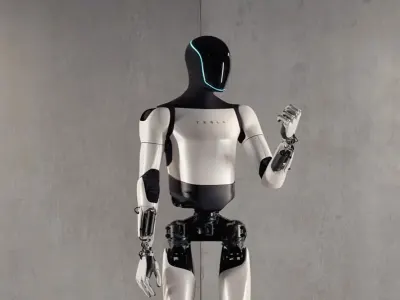
Figure 03 vs Optimus Gen 3
In-depth comparison of Figure 03 and Optimus Gen 3, covering hardware capabilities, teleoperation, and enterprise readiness.
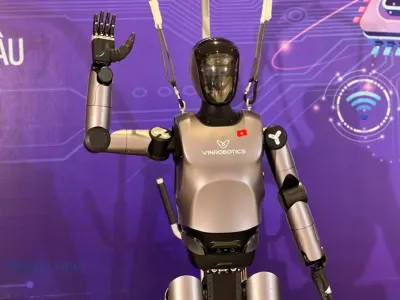
Figure 03 vs VR-H3
Which humanoid robot is better? Figure 03 vs VR-H3 compared for dexterity, AI capabilities, and price.

Figure 02 vs Alpha
Compare Figure 02 and Alpha. Detailed analysis of sensors, navigation, battery, speed, and AI capabilities.
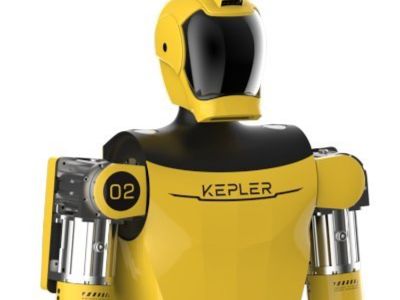
Figure 03 vs K2 Bumblebee
Compare Figure 03 and K2 Bumblebee. Detailed analysis of navigation, battery, and sensors.
Verdicts reflect our research and opinion. Confirm specifications with the manufacturer before buying.