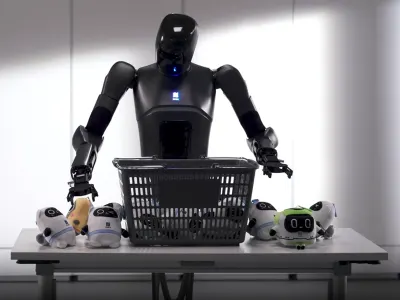
The KUAVO-MY by Leju Robotics is a humanoid robot positioned for advanced research and industrial applications with a focus on robust motion control and multi-sensor integration. It is designed to support various tasks from manufacturing to remote operations, featuring a Linux-based OS and ROS 2 support that facilitate flexible development and deployment. KUAVO-MY’s key differentiators include its extensive sensor suite and balance-assisted walking capabilities, enabling it to operate in complex environments.
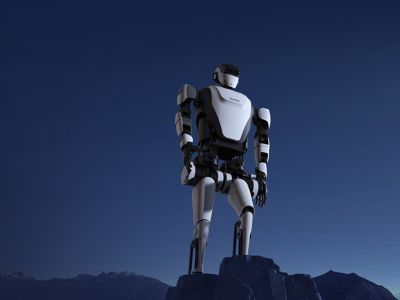
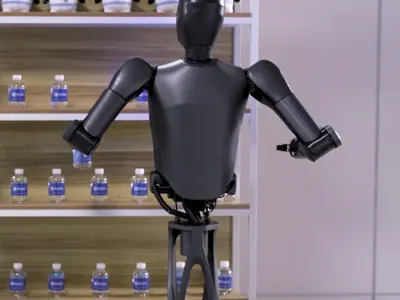
The D7 by Pudu Robotics is a humanoid robot in a similar price and specification range, aimed at comparable use cases including manufacturing, logistics, and infrastructure inspection. It emphasizes autonomous and teleoperation control modes, supported by a Linux-based OS and Python SDK. The D7 matches KUAVO-MY closely in dimensions and sensor configuration, reflecting a competitive offering in humanoid robotics for practical industrial and research applications.
Detailed Analysis
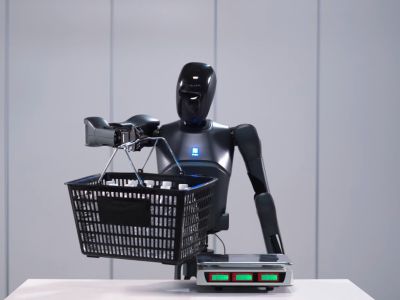
Design & Build Quality
Both KUAVO-MY and D7 share identical dimensions (170cm x 55cm x 38cm) and weight range (50-80 kg), reflecting similar form factors optimized for humanoid tasks. KUAVO-MY is noted for its 30 degrees of freedom and optional dexterous hand, facilitating complex manipulation, while D7’s build details are less specified but consistent with a humanoid platform designed for balance and mobility. Both robots are constructed to balance robustness with operational flexibility.
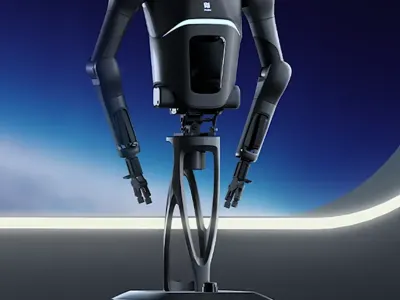
Mobility & Navigation
Each robot achieves walking speeds between 1.5 and 3 m/s, utilizing balance-assisted walking mechanisms to maintain stability. Navigation capabilities include Visual SLAM and LiDAR mapping, enabling autonomous operation in diverse environments. Both platforms support smooth navigation in industrial and remote inspection scenarios, indicating comparable proficiency in mobility and environmental mapping.
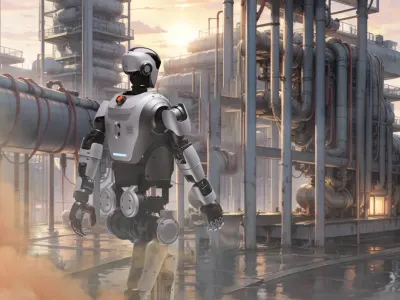
Sensors & Perception
The sensor arrays of KUAVO-MY and D7 are closely matched, featuring RGB and depth cameras, LiDAR, IMU, force/torque sensors, gyroscopes, accelerometers, and joint encoders. This comprehensive sensor suite supports detailed environmental perception and proprioception required for complex tasks and safe interaction with surroundings. KUAVO-MY additionally integrates stereo vision and microphone arrays for enhanced situational awareness.
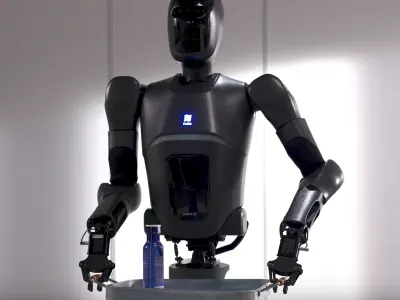
AI Capabilities
Both robots offer control via teleoperation, autonomous modes, and learned behaviors enabled by their Linux-based operating systems and ROS 2 compatibility. They provide Python SDKs for custom development and integration, facilitating AI research and practical applications. KUAVO-MY’s software stack is noted for a comprehensive demo library and support tools, which may offer a more developed ecosystem for rapid experimentation.
Battery & Power Efficiency
KUAVO-MY and D7 both feature batteries with an estimated lifespan of 3 to 5 years, suitable for extended deployments in industrial and research settings. Specific runtime or recharge details are not provided, but the longevity suggests design consideration for sustained operation without frequent replacement.
Use-Case Suitability
Both robots are designed for overlapping use cases such as manufacturing support, research, logistics, infrastructure inspection, and remote operations. Their sensor suites and navigation capabilities enable deployment in environments requiring autonomous mobility and manipulation. KUAVO-MY’s demonstrated dexterous manipulation and integration in real-world tasks may provide an edge in applications demanding fine motor skills.
Software Ecosystem
The KUAVO-MY benefits from a Linux-based OS with ROS 2 support and a Python SDK, complemented by over 20 demo programs and debugging tools, enhancing developer productivity. D7 offers a similar software foundation with ROS 2 and Python SDK support but lacks publicly detailed demo libraries or additional development tools, suggesting KUAVO-MY might have a more mature software ecosystem.
Safety Features
Both robots incorporate safety measures such as force limiting, collision detection, emergency stop functions, and redundant sensors. These features are critical for human-robot collaboration and operational reliability in industrial environments. The parity in safety systems ensures both robots meet essential operational safety standards.
Pricing & Value
Both KUAVO-MY and D7 are offered in a similar price range of $50,000 to $150,000, reflecting their comparable hardware and capabilities. The pricing indicates positioning toward medium- to high-end industrial and research markets, with value derived from advanced sensors, mobility, and software support.
Analysis Score Summary
Total Score
10
KUAVO-MY
VS
Based on Detailed Analysis
Total Score
8
D7
📊 Win: 2 points | Trade-off: 1 point each
Scores are summed across every insight: a clear winner earns 2 points, while balanced trade-offs give each robot 1 point. The total reflects how often each robot outperforms the other (or shares the spotlight) throughout the detailed analysis sections.
Capabilities & Operational Tasks
Head-to-head comparison of what KUAVO-MY and D7 can do, their applications, and capabilities.
What Can KUAVO-MY & D7 Do?
12Core operational tasks, activities, and physical manipulation duties evaluated side-by-side.
| Task & Description | Model AKUAVO-MY8 supported | Model BD79 supported |
|---|---|---|
| Autonomous task execution | High | High |
| Carrying and transport | High | High |
| Collaborative work | High | — |
| Human interaction | High | High |
| Machine operation | — | High |
| Material handling | — | High |
| Move objects | High | High |
| Navigation | High | — |
| Obstacle traversal | High | — |
| Pick and place | High | High |
| Repetitive physical tasks | — | High |
| Sorting | — | High |
Technical Specifications
Head-to-head performance data and metrics
| Specification | Model AKUAVO-MY | Model BD7 |
|---|---|---|
Functional Utility & Use Cases4 Comparative Metrics | ||
Control Method | Teleoperation, autonomous, learned behaviors | Teleoperation, autonomous, learned behaviors |
Use Cases | Bipedal walking, obstacle traversal, tote carrying, customer guidance, teleoperated tool manipulation, KaihongOS AI development | Manufacturing, research, logistics, infrastructure inspection, remote operations |
Multi Robot Coord | Multi-robot coordination via network | Multi-robot coordination via network |
Pet Friendly | Not Applicable | Yes, with safety protocols |
Manipulation & Load Capacity4 Comparative Metrics | ||
Carrying Capacity | 15–25 kg per arm | 10 kg lifting capacity |
Deadlift Capacity | 50–100 kg | 50 kg |
Payload Type | 15–25 kg carrying capacity per arm (50–100 kg deadlift capacity) | Tools, sensors, industrial equipment |
Modular Attachments | Tool changers, gripper interfaces, sensor mounts | Tool changers, gripper interfaces, sensor mounts |
Kinematic Architecture & Dexterity4 Comparative Metrics | ||
Degrees of Freedom | 42+ DOF | 30 |
Material | Aluminum frame, composite joints, polymer covers | Aluminum frame, composite joints, polymer covers |
Mobility Type | Legged (dynamic bipedal locomotion, walking up to 1.2 m/s, stair traversal) | Wheeled-based |
Hardware Interface | USB-C, Ethernet, GPIO, CAN bus | USB-C, Ethernet, GPIO, CAN bus |
Functional Utility & Use Cases
4 Comparative Metrics
Manipulation & Load Capacity
4 Comparative Metrics
Kinematic Architecture & Dexterity
4 Comparative Metrics
Related Comparisons
Discover similar robot matchups to expand your knowledge and find the perfect solution
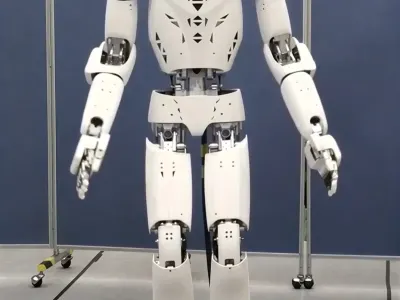
KUAVO-MY vs Kaleido 8.0
Compare KUAVO-MY and Kaleido 8.0. Detailed analysis of speed, sensors, navigation, and battery life.
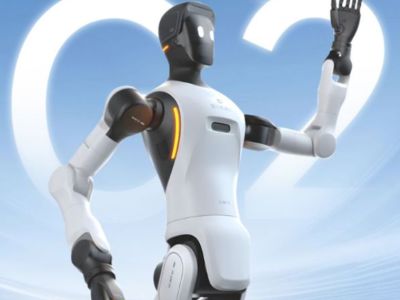
AgiBot G2 vs D7
Compare AgiBot G2 and D7. Detailed analysis of navigation, battery, and sensors.
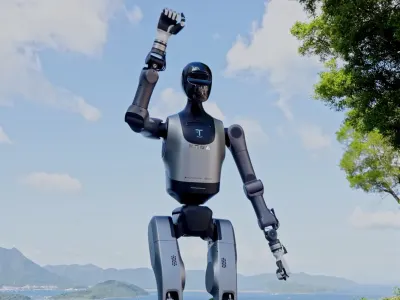
D7 vs Walker Tienkung
Compare D7 and Walker Tienkung. Detailed analysis of sensors, navigation, mobility, and battery life.
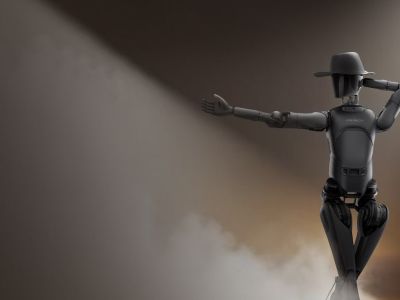
D7 vs Agibot A2 Lite
D7 or Agibot A2 Lite? Compare specs, navigation, battery, sensors, and real-world performance.
Disclaimer
All content, comparisons, and verdicts on this website are based on our research, testing, and opinion. While we strive for accuracy, we do not guarantee the completeness, reliability, or suitability of any information. Performance, specifications, and results may vary depending on usage and conditions. This website and its authors are not responsible for any decisions, actions, or outcomes based on the information provided. Always verify product details with the manufacturer before making purchase or operational decisions.