LUS2 vs RobotEra Q5 at a glance
RobotEra Q5 lasts longer on a charge, about 4 hours against 2 hours for LUS2. RobotEra Q5 has more degrees of freedom (44 against 28 for LUS2), which allows finer movement. RobotEra Q5 is quicker, with a top speed of 1.5 m/s versus 1.1 m/s for LUS2. LUS2 is lighter at 57 kg, compared with 70 kg for RobotEra Q5.
Which one fits your use?
Based on the uses each robot is built and marketed for. Open a use to see the specs that matter for it.
| Comparing for… | LUS2 | RobotEra Q5 |
|---|---|---|
| Suited | Suited | |
| Suited | Suited | |
| Suited | Suited | |
| Suited | Suited |
- Both are aimed at the same uses (warehouse and logistics work, factory and manufacturing work, research labs and education and training), so the spec differences decide it.
The LUS2 by Lumos Robotics represents a next-generation humanoid robot focused on agile, human-like mobility and advanced sensor integration. Positioned for dynamic environments such as industrial automation, healthcare assistance, and search-and-rescue, its key differentiators include rapid movement capability, a lightweight design at 57 kg, and a compact frame optimized for indoor navigation. Its software stack supports autonomous operation with learned behaviors and large language model integration, making it a versatile research and development platform.
Robot Era’s Q5 humanoid robot targets service-oriented roles including elder care, retail, hospitality, and logistics, emphasizing ultra-humanlike interaction and dexterity. It distinguishes itself with a larger build at 70 kg, extended battery life, and a focus on multi-modal sensor fusion including stereo and RGB cameras. The Q5 features highly dexterous robotic arms with detailed teleoperation capabilities, supporting real-time learning and emotional voice interaction tailored to dynamic service scenarios.
Detailed Analysis
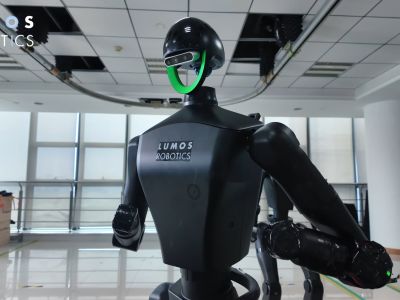
LUS2
Design & Build Quality
LUS2 features a slim, lightweight humanoid form measuring 160 x 50 x 30 cm and weighing 57 kg, designed for agility and rapid physical maneuvers. In contrast, Q5 is slightly taller and heavier at 165 x 50 x 52 cm and 70 kg, reflecting its emphasis on service robustness and dexterous task execution. Both robots showcase collaborative design elements such as force-limiting joints and compliant interaction modes, but Q5’s broader physical footprint supports its enhanced manipulative capabilities.
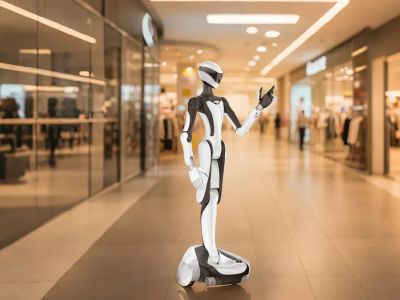
RobotEra Q5
Mobility & Navigation
LUS2 reaches 4 km/h (1.12 m/s), a little slower than Q5, but its motion control recovers quickly in dynamic and unpredictable environments. The Q5 moves at 1.5 m/s, prioritizing safe and precise navigation within confined indoor spaces. Both utilize indoor SLAM, visual SLAM, and LiDAR mapping for navigation, but LUS2’s demonstrated reflexive balance and quick ground-to-stand transitions enable faster responses in complex terrain.
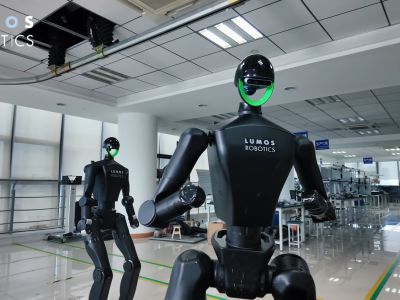
LUS2
Sensors & Perception
LUS2 is equipped with Intel RealSense D435i depth cameras, tactile sensors on fingers and palms, IMU, ultrasonic and 360° LiDAR sensors, along with gyroscope, force, and temperature sensors, supporting detailed proprioception and environmental mapping. Q5 incorporates RGB and stereo cameras combined with LiDAR and ultrasonic sensors, IMU, gyroscope, force, and temperature sensors. Its sensor suite supports full-body teleoperation and emotional AI interaction, emphasizing rich visual and tactile perception for service tasks.
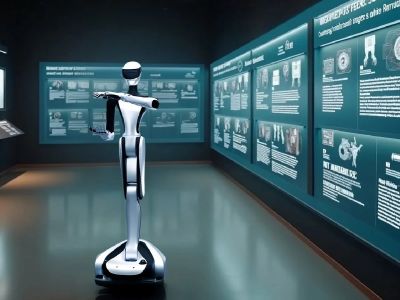
RobotEra Q5
AI Capabilities
LUS2 integrates proprietary OS and ROS2 compatibility with APIs for large language model (LLM) interaction, enabling autonomous control and learned behavioral adaptation with a focus on real-time agility and neural motion planning. Q5 supports ROS2 and proprietary OS environments as well, featuring embodied AI (ERA-42) for full-body teleoperation, real-time learning, and multilingual voice interaction in over 37 languages. Q5’s AI emphasizes human-robot collaboration in social and service contexts.
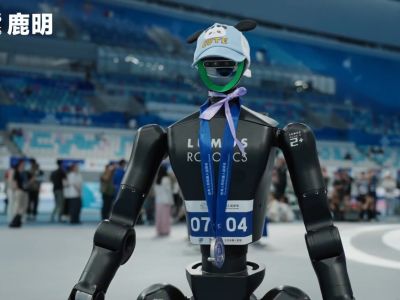
LUS2
Battery & Power Efficiency
LUS2’s battery offers an approximate lifespan of three years, aligning with its intensive mobility and sensor systems optimized for extended autonomous use. Q5 features a longer battery life estimated at four years, reflecting its service-oriented design with lower mobility speed but sustained operation in continuous service environments. Both robots embed safety and energy efficiency measures suited to their operational demands.
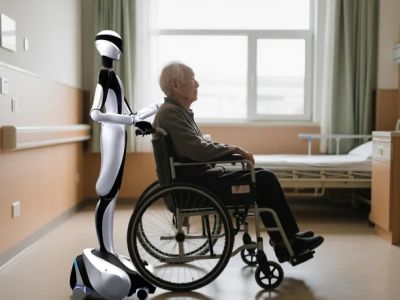
RobotEra Q5
Use-Case Suitability
LUS2 is tailored for industrial automation, healthcare assistance, search-and-rescue, and research where rapid, precise movement and robust navigation are critical. Q5 is designed for elder care, child interaction, hospitality, retail service, logistics, and research labs, emphasizing dexterity, interaction, and safe operation in human-populated spaces. The choice between these platforms depends on application priorities such as agility versus service adaptability.
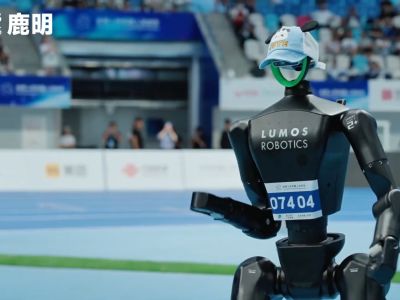
LUS2
Software Ecosystem
Both robots support ROS2 and proprietary operating systems along with programming in Python and C++, providing flexible development environments. LUS2’s software is notable for its APIs facilitating integration with large language models, supporting autonomous cognitive functions. Q5’s software enables immersive teleoperation via VR devices and data gloves, with a closed-loop data collection and model iteration system enhancing its learning and adaptability.
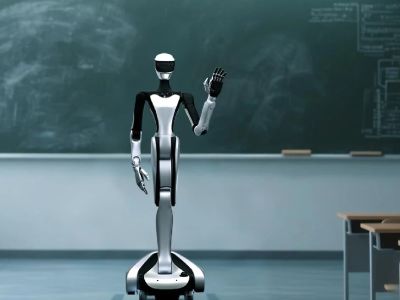
RobotEra Q5
Safety Features
LUS2 and Q5 both incorporate force limiting, collision detection, emergency stop functions, and collaborative mode operation, ensuring compliance with safety standards for human-robot interaction. These shared features support safe functioning in dynamic, populated environments, with design considerations prioritizing user and bystander protection during task execution.
Capabilities & Operational Tasks
Head-to-head comparison of what LUS2 and RobotEra Q5 can do, their applications, and capabilities.
What Can LUS2 & RobotEra Q5 Do?
97 tasks listed for both, 0 only for LUS2, 2 only for RobotEra Q5.
Technical Specifications
LUS2 and RobotEra Q5 differ on 27 of the 53 specifications listed for both.
Functional Utility & Use Cases
4 Comparative Metrics
Manipulation & Load Capacity
4 Comparative Metrics
Kinematic Architecture & Dexterity
4 Comparative Metrics
Related Comparisons
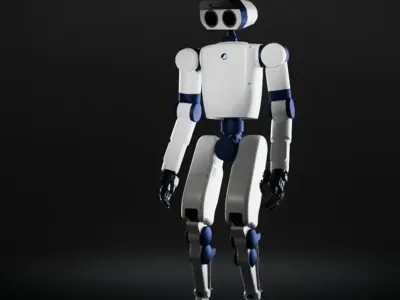
LUS2 vs P-73
Which humanoid robot is better? LUS2 vs P-73 compared for dexterity, AI capabilities, payload, and industrial use cases.
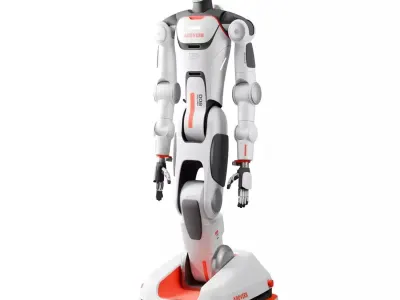
RobotEra Q5 vs ELIXIS W
Compare Q5 by Robot Era and ELIXIS W by Addverb Technologies. Detailed analysis of sensors, navigation, battery, and price.
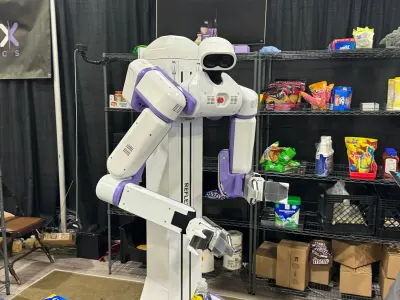
RobotEra Q5 vs Reflex Humanoid
Which robot wins? Q5 vs Reflex Humanoid compared across sensors, navigation, battery, speed, and price.
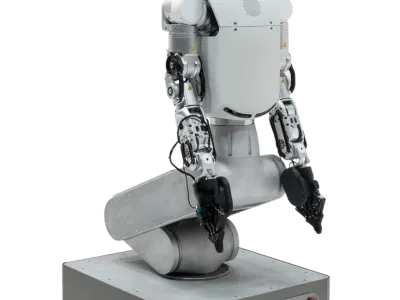
RobotEra Q5 vs HMND 01 Alpha Wheeled
Q5 or HMND 01 Alpha Wheeled? Compare specs, speed, sensors, navigation, and battery for service vs industrial performance.
Verdicts reflect our research and opinion. Confirm specifications with the manufacturer before buying.