LUS2 vs T800 at a glance
LUS2 is sold through a sales quote, while T800 can be bought now. T800 lasts longer on a charge, about 4 hours against 2 hours for LUS2. T800 is quicker, with a top speed of 2 m/s versus 1.1 m/s for LUS2. LUS2 is lighter at 57 kg, compared with 75–85 kg for T800.
| Key specs | LUS2 | T800 |
|---|---|---|
| Price | $99,000 | — |
| Height | — | 173 cm |
| Weight | 57 kg | 75–85 kg |
| Top speed | 1.1 m/s | 2 m/s (stronger) |
| Runtime | 2 hours | 4 hours (stronger) |
| Degrees of freedom | 28 | 25–46 |
| Payload | 3 kg | 5 kg (stronger) |
| Availability | Order via sales quote | Available to buy |
Last updated:
Which one fits your use?
Based on the uses each robot is built and marketed for. Open a use to see the specs that matter for it.
| Comparing for… | LUS2 | T800 |
|---|---|---|
| Suited | Not marketed | |
| Suited | Not marketed | |
| Suited | Suited | |
| Suited | Suited | |
| Not marketed | Suited |
- Only LUS2 is marketed for warehouse and logistics work and factory and manufacturing work.
- Only T800 is marketed for hazardous or high-risk work.
- Both suit research labs and education and training, so compare the specs for that use.
LUS2 by Lumos Robotics is a humanoid robot designed with a focus on versatile industrial and service applications including healthcare assistance and search-and-rescue. Positioned in the mid-range market it distinguishes itself through a lightweight frame, faster top speed of 7.2 km/h, and a comprehensive sensor suite enabling indoor and visual SLAM navigation.
T800 by EngineAI targets heavy-duty industrial, commercial, and human-interaction tasks,000 for the top configuration. It stands out with a larger and heavier build, longer battery life, and is equipped with robust AI-driven capabilities supporting complex tasks like robot boxing and logistics automation. T800 carries 5 kg. It reaches 2 m/s and runs for 3–5 hours per charge. Safety features include force limiting, collision detection and emergency stop.
Detailed Analysis
Design & Build Quality
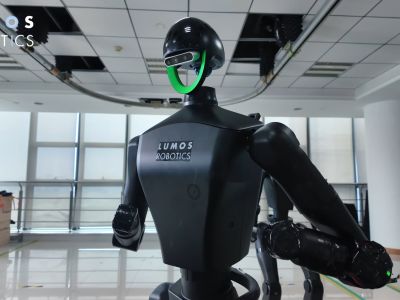
LUS2
LUS2 measures 160 x 50 x 30 cm and weighs 57 kg, making it more compact and lightweight compared to T800, which stands 173 cm tall and weighs 75–85 kg. LUS2’s smaller profile supports agility in dynamic environments, whereas T800’s larger magnesium-aluminum alloy exoskeleton is designed for durability and strength in heavy-duty tasks. LUS2's safety features include force limiting, collision detection, emergency stop and collaborative mode. T800's safety features include force limiting, collision detection, emergency stop and collaborative mode. LUS2's sensors include Intel RealSense D435i, finger and palm tactile sensors, ultrasonic sensors and 360° LiDAR. T800's sensors include RGB cameras, stereo cameras, ultrasonic sensors and force sensors.
Mobility & Navigation
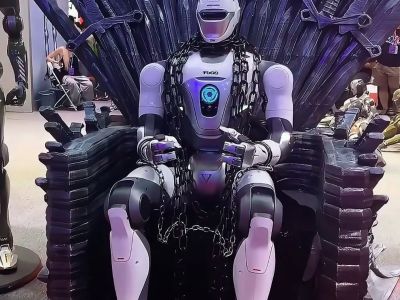
T800
T800 is faster at 2 m/s or more versus LUS2’s 4 km/h (1.12 m/s), giving it quicker movement in indoor and complex environments. Both utilize visual SLAM and LiDAR mapping for navigation, but LUS2 also incorporates ultrasonic sensors for enhanced indoor localization. T800 emphasizes stability and continuous operation with an active cooling system in joints during demanding tasks. LUS2's mobility type is legged. T800's mobility type is legged. LUS2 navigates with indoor SLAM, visual SLAM and LiDAR mapping. LUS2 has 28 degrees of freedom, carries 3 kg and can deadlift 50 kg. T800 carries 5 kg.
Sensors & Perception
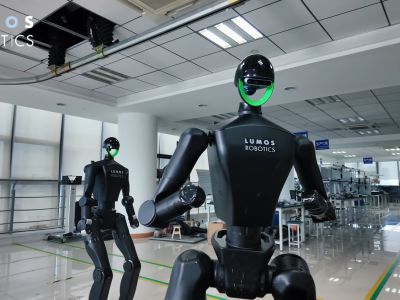
LUS2
LUS2’s sensor array includes Intel RealSense D435i, tactile sensors on fingers and palms, 360° LiDAR, ultrasonic sensors, IMU, gyroscope, force, and temperature sensors. T800 features RGB and stereo cameras, omnidirectional LiDAR, ultrasonic sensors, IMU, gyroscope, force, and temperature sensors. T800’s 360° omnidirectional perception system enhances continuous environment monitoring without blind spots. LUS2 weighs 57 kg. T800 stands 173 cm tall and weighs 75–85 kg. LUS2's listed uses include industrial automation, healthcare assistance, dynamic environments and research and development. T800's listed uses include heavy-duty industrial tasks, robot boxing, retail assistance and human-robot interaction.
AI Capabilities
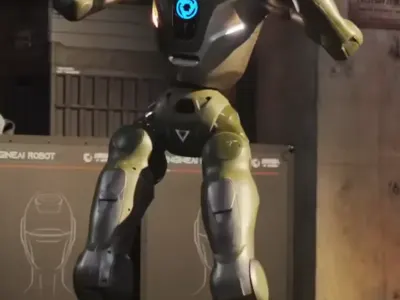
T800
Both robots support autonomous operation, learned behaviors, and teleoperation, integrating ROS2 and Python/C++ APIs. LUS2 provides proprietary OS with APIs tailored for large language model integration. T800 leverages advanced onboard AI computing with AGX Orin modules supporting 275 tera operations per second, enabling high-performance vision-language-action modeling, reflecting a heavier focus on complex AI tasks. LUS2's control method is listed as autonomous, learned behaviors, teleoperation. T800's control method is listed as autonomous, learned behaviors, teleoperation. LUS2 reaches 1.1 m/s. T800 navigates with visual SLAM and LiDAR mapping.
Battery & Power Efficiency
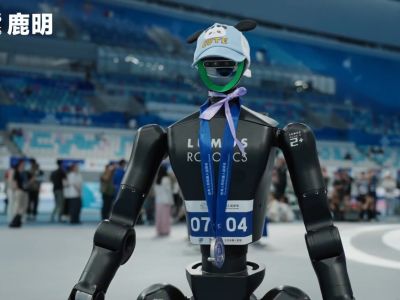
LUS2
LUS2 runs about 2 hours on a 10 Ah, 54 V pack and recharges in 2 to 3 hours, while T800 runs 3 to 5 hours on a modular solid-state battery and recharges in 2 hours. Both batteries can be swapped quickly. T800 lasts longer on a charge and charges faster, but it weighs 75 to 85 kg against LUS2's 57 kg. LUS2's lighter build suits shorter, more agile sorties, and T800's longer runtime suits sustained work.
Use-Case Suitability
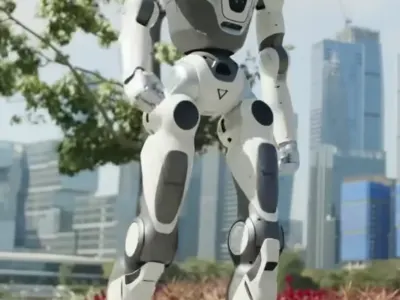
T800
LUS2 is versatile across industrial automation, healthcare assistance, search-and-rescue, dynamic environments and research, benefiting from its lighter 57 kg frame. T800 is suited to heavy-duty industrial tasks, commercial retail, logistics automation and human-robot interaction, with physical strength and endurance emphasised alongside robot boxing. LUS2 lifts 50 kg, and T800 moves faster at 2 m/s or more against LUS2's 1.12 m/s.
Software Ecosystem
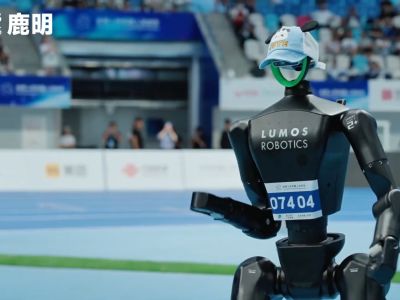
LUS2
Both robots run proprietary operating systems with ROS2 support and programming in Python and C++. LUS2 includes APIs designed for integration with large language models, supporting conversational AI. T800 adds touch panel, voice, gesture and app interfaces, and offers reinforcement learning, motion learning and task programming for manipulation and perception. LUS2 suits teams building language-driven applications, and T800 suits teams that want ready-made operator interfaces.
Safety Features
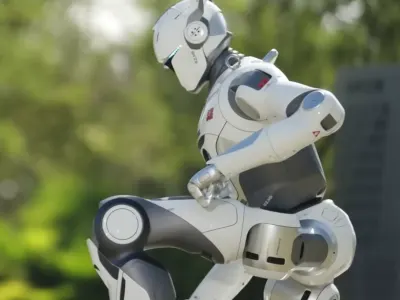
T800
Both robots have force limiting, collision detection, an emergency stop and a collaborative mode for safe interaction in human environments. LUS2 adds finger and palm tactile sensors, ultrasonic sensing and a 360° LiDAR, and T800 adds ultrasonic and temperature sensors alongside LiDAR and stereo cameras. LUS2 is rated for -10 to 55 °C and T800 for -10 to 45 °C, both indoors and outdoors. At 57 kg against 75 to 85 kg, LUS2 puts less mass near people.
Pricing & Value
LUS2
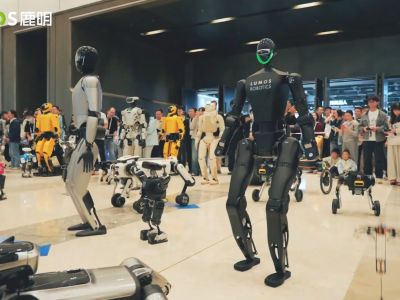
LUS2 is listed at $99,000 through a purchase inquiry form, while T800 ranges from about $25,000 to $80,000 and is sold through EngineAI's purchase page and JD.com stores. T800's price undercuts LUS2 even at the top configuration, while offering a solid-state battery and 25 to 46 degrees of freedom. LUS2 offers 28 degrees of freedom, tactile hands and a 50 kg deadlift. T800 is the better value for most industrial buyers.
Capabilities & Operational Tasks
Head-to-head comparison of what LUS2 and T800 can do, their applications, and capabilities.
What Can LUS2 & T800 Do?
95 tasks listed for both, 2 only for LUS2, 2 only for T800.
Tap a circle area to filter the lists
Only LUS2
Not listed for the other robot
Shared by both
Listed for LUS2 and T800
Only T800
Not listed for the other robot
Technical Specifications
LUS2 and T800 differ on 26 of the 35 specifications listed for both.
Manipulation & Load Capacity
4 Comparative Metrics
Kinematic Architecture & Dexterity
4 Comparative Metrics
Energy & Power Management
7 Comparative Metrics
Frequently Asked Questions
Can I buy LUS2 or T800 today?
LUS2 is sold through a sales quote, while T800 can be bought now.
Which is lighter, LUS2 or T800?
LUS2 is lighter at 57 kg, compared with 75–85 kg for T800.
Which uses is each robot marketed for, LUS2 or T800?
Only LUS2 is marketed for warehouse and logistics work and factory and manufacturing work. Only T800 is marketed for hazardous or high-risk work. Both suit research labs and education and training, so compare the specs for that use.
How much does LUS2 cost?
LUS2 is listed at $99,000.
Where can I buy LUS2?
LUS2 is sold through Lumos Robotics's sales team; request a quote.
Where can I buy T800?
T800 is sold by EngineAI.
Related Comparisons
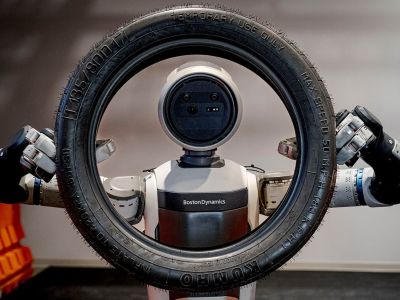
T800 vs Atlas (Electric 2025)
EngineAI T800 vs Boston Dynamics Atlas compared on size, strength, battery, joints, software and safety, with a clear pick for each buyer.
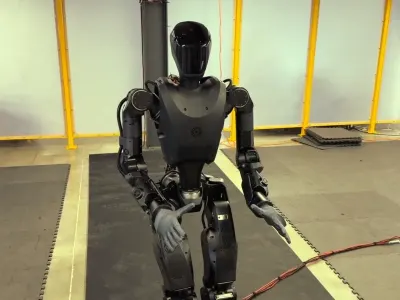
T800 vs Phantom MK1
Compare T800 by EngineAI vs Phantom MK1 by Foundation for humanoid mobility, dexterity, autonomy, payload, and industrial vs defense use cases.
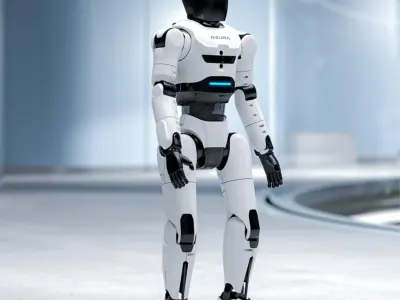
T800 vs 4NE-1 Mini
T800 or 4NE-1 Mini? See which humanoid robot performs better for manufacturing, logistics, and research with comparisons on dexterity, autonomy, and payload.
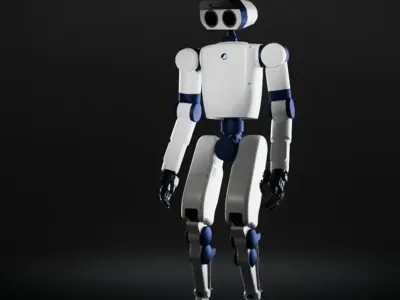
LUS2 vs P-73
Which humanoid robot is better? LUS2 vs P-73 compared for dexterity, AI capabilities, payload, and industrial use cases.
Verdicts reflect our research and opinion. Confirm specifications with the manufacturer before buying.