Martian vs AgiBot A2 Ultra at a glance
Martian is quicker, with a top speed of 3 m/s versus 1.2 m/s for AgiBot A2 Ultra. AgiBot A2 Ultra has more degrees of freedom (40 against 23 for Martian), which allows finer movement. Martian is lighter at 50 kg, compared with 69 kg for AgiBot A2 Ultra. Martian lasts longer on a charge, about 4 hours against 3 hours for AgiBot A2 Ultra.
Which one fits your use?
Based on the uses each robot is built and marketed for. Open a use to see the specs that matter for it.
| Comparing for… | Martian | AgiBot A2 Ultra |
|---|---|---|
| Suited | Suited | |
| Suited | Suited | |
| Suited | Suited | |
| Suited | Not listed | |
| Not listed | Suited | |
| Not listed | Suited |
- Pick Martian for education and training.
- Pick AgiBot A2 Ultra for hospitality, retail and public-facing roles and hazardous or high-risk work.
- Both suit warehouse and logistics work, factory and manufacturing work and research labs, so compare the specs for that use.
The Martian by UniX AI is a versatile humanoid robot designed for logistics, manufacturing, household assistance, and research applications. Positioned as a high-speed, lightweight platform with advanced sensor integration and modular hardware, it emphasizes autonomous operation and software flexibility through ROS2 and open APIs. Its key differentiators include a 16-DOF bipedal system delivering up to 10.8 km/h speed, a broad sensor array including temperature sensing, and a focus on scalable software deployment.
The AgiBot A2 Ultra by AgiBot is a humanoid robot tailored for customer service, logistics, manufacturing, research, and entertainment sectors. It distinguishes itself with teleoperation capabilities alongside autonomous and learned behaviors, a larger and heavier frame, and a comprehensive sensor suite including fisheye and RGB-D cameras. AgiBot A2 Ultra targets collaborative human interaction with robust control options and an emphasis on integration through proprietary OS and ROS2 compatibility.
Detailed Analysis
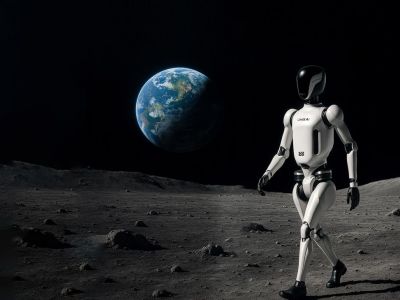
Martian
Design & Build Quality
Martian stands at 160 x 50 x 30 cm and weighs 50 kg, featuring a 16-degree-of-freedom bipedal system optimized for dynamic and precise object manipulation. In contrast, AgiBot A2 Ultra is larger at 169 x 75 x 30 cm and heavier at 69 kg, reflecting a sturdier build potentially suited to more physically demanding tasks. Both robots use collaborative design principles with safety-focused structural elements.
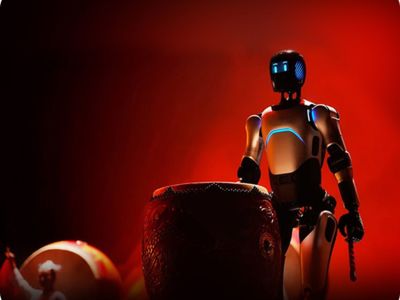
AgiBot A2 Ultra
Mobility & Navigation
Martian prioritizes speed and agility with a maximum velocity of 10.8 km/h (3 m/s), enabling rapid movement in complex environments. AgiBot A2 Ultra moves significantly slower at 4.3 km/h (1.2 m/s), which may support more deliberate and careful navigation. Both utilize indoor SLAM, visual SLAM, and LiDAR mapping for autonomous navigation, but only AgiBot includes teleoperation for remote control.
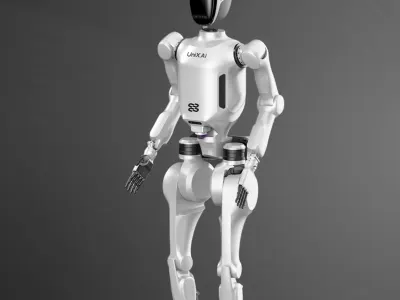
Martian
Sensors & Perception
Martian integrates a wide array of sensors including RGB and depth cameras, LiDAR, ultrasonic sensors, IMU, gyroscope, force sensors, and temperature sensors, offering comprehensive environmental awareness. AgiBot A2 Ultra employs LiDAR, RGB-D, fisheye cameras, IMU, gyroscope, and force sensors but does not list temperature sensing, indicating a slightly different sensor focus tailored to its applications.
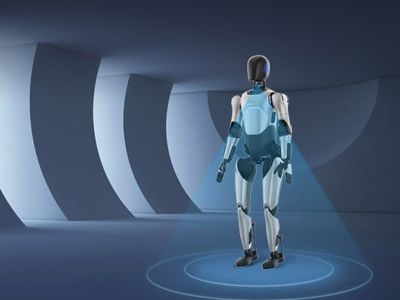
AgiBot A2 Ultra
AI Capabilities
Both robots support autonomous operation and learned behaviors, with Martian focusing on software scalability through ROS2, Python, C++, and extensive APIs. AgiBot A2 Ultra adds teleoperation to its control modes, facilitating remote intervention and enhanced human-robot collaboration. Software ecosystems vary with Martian using ROS2 and proprietary solutions, while AgiBot runs a proprietary OS with ROS2 compatibility.
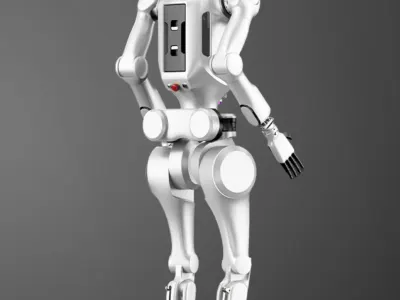
Martian
Battery & Power Efficiency
Both robots have batteries designed to last 3 to 5 years in long-term use. Martian offers approximately 4 hours of runtime per charge with a 9000mAh battery and a charging time of around 2 hours. Battery specifics for AgiBot’s runtime are not detailed, but it shares the same estimated battery longevity, indicating comparable power efficiency for extended deployments.
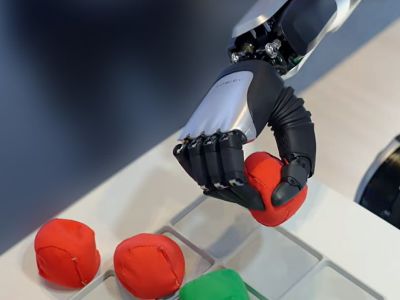
AgiBot A2 Ultra
Use-Case Suitability
Martian is suited for logistics, manufacturing, household assistance, research, and service industries, leveraging its speed and lightweight form for dynamic tasks. AgiBot A2 Ultra extends applications to customer service and entertainment alongside logistics and manufacturing, supported by its teleoperation capability and larger size for interaction-rich environments.

Martian
Safety Features
Both robots implement force limiting, collision detection, emergency stop functions, and collaborative modes to ensure safe operation alongside humans. These features enable deployment without additional protective infrastructure, supporting flexible human-robot interaction in shared spaces.

AgiBot A2 Ultra
Software Ecosystem
Martian's software base is built on ROS2 with proprietary extensions and APIs supporting Python and C++, enabling robust customization and integration. AgiBot A2 Ultra operates on a proprietary OS with ROS2 compatibility and similar programming language support, also offering APIs for system integration, with the added benefit of teleoperation management.
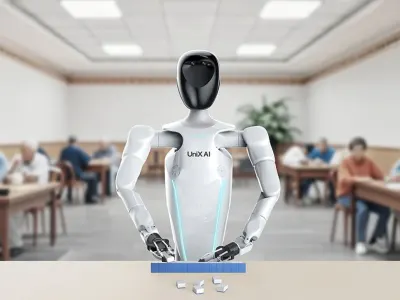
Martian
Pricing & Value
Martian’s estimated price range is $100,000 to $150,000, reflecting its mid-range market positioning focused on speed and modularity. AgiBot A2 Ultra is priced higher at $150,000 to $200,000, corresponding with its larger size, extended control options including teleoperation, and expanded application scope.
Capabilities & Operational Tasks
Head-to-head comparison of what Martian and AgiBot A2 Ultra can do, their applications, and capabilities.
What Can Martian & AgiBot A2 Ultra Do?
186 tasks listed for both, 1 only for Martian, 11 only for AgiBot A2 Ultra.
Technical Specifications
Martian and AgiBot A2 Ultra differ on 26 of the 55 specifications listed for both.
Functional Utility & Use Cases
4 Comparative Metrics
Manipulation & Load Capacity
4 Comparative Metrics
Kinematic Architecture & Dexterity
4 Comparative Metrics
Related Comparisons
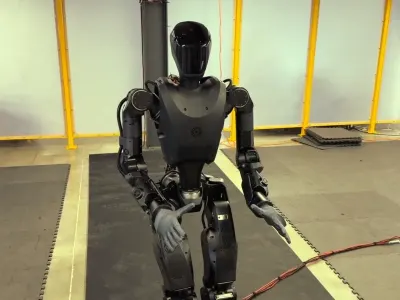
AgiBot A2 Ultra vs Phantom MK1
Which humanoid robot is better? AgiBot A2 Ultra vs Phantom MK1 compared for dexterity, AI capabilities, payload, and defense use cases.
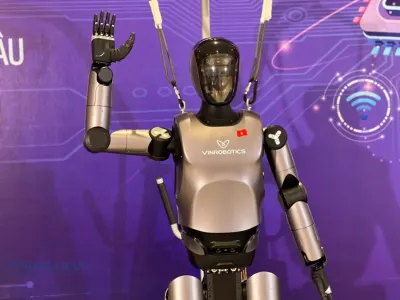
AgiBot A2 Ultra vs VR-H3
Which humanoid robot is better? AgiBot A2 Ultra vs VR-H3 compared for dexterity, AI autonomy, payload capacity, and industrial deployment readiness.
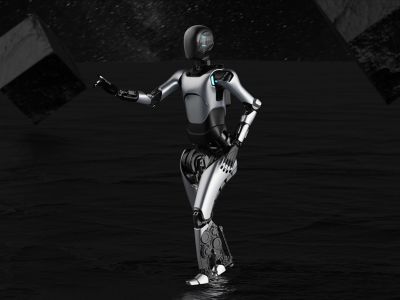
AgiBot A2 vs Martian
Compare AgiBot A2 and Martian. Detailed analysis of sensors, navigation, mobility, and battery life.

Alpha vs Martian
Alpha or Martian? Compare specs, speed, sensors, navigation, and battery performance.
Verdicts reflect our research and opinion. Confirm specifications with the manufacturer before buying.