RobotEra Q5 vs AgiBot A2 Ultra at a glance
Both RobotEra Q5 and AgiBot A2 Ultra are sold through a sales quote. RobotEra Q5 lasts longer on a charge, about 4 hours against 3 hours for AgiBot A2 Ultra. RobotEra Q5 is quicker, with a top speed of 1.5 m/s versus 1.2 m/s for AgiBot A2 Ultra. RobotEra Q5 has more degrees of freedom (44 against 40 for AgiBot A2 Ultra), which allows finer movement.
| Key specs | RobotEra Q5 | AgiBot A2 Ultra |
|---|---|---|
| Price | $75,000–$95,000 | — |
| Height | 165 cm | 169 cm |
| Weight | 70 kg | 69 kg |
| Top speed | 1.5 m/s (stronger) | 1.2 m/s |
| Runtime | 4 hours (stronger) | 3 hours |
| Degrees of freedom | 44 (stronger) | 40 |
| Payload | 10 kg (stronger) | 2 kg |
| Availability | Order via sales quote | Order via sales quote |
Last updated:
Which one fits your use?
Based on the uses each robot is built and marketed for. Open a use to see the specs that matter for it.
| Comparing for… | RobotEra Q5 | AgiBot A2 Ultra |
|---|---|---|
| Suited | Suited | |
| Suited | Suited | |
| Suited | Suited | |
| Suited | Not marketed | |
| Not marketed | Suited | |
| Not marketed | Suited |
- Only RobotEra Q5 is marketed for education and training.
- Only AgiBot A2 Ultra is marketed for hospitality, retail and public-facing roles and hazardous or high-risk work.
- Both suit warehouse and logistics work, factory and manufacturing work and research labs, so compare the specs for that use.
The Q5 by Robot Era is a humanoid service robot positioned for indoor applications including elder care, retail service, and hospitality. It features a compact frame measuring 165 x 50 x 52 cm and weighs 70 kg, enabling operation in confined spaces. Key differentiators include a diverse sensor array with RGB cameras, stereo cameras, ultrasonic sensors, and temperature sensors, alongside navigation via Indoor SLAM, visual SLAM, and LiDAR mapping.
The AgiBot A2 Ultra by AgiBot targets customer service, logistics, and manufacturing with an ergonomic design for natural human-robot interaction. Its dimensions are 169 x 75 x 30 cm and it weighs 69 kg, providing a slimmer profile in depth. It stands out with a higher speed of 0.8 m/s and sensors including LiDAR, RGB-D camera, and fisheye camera.
Detailed Analysis
Design & Build Quality
RobotEra Q5
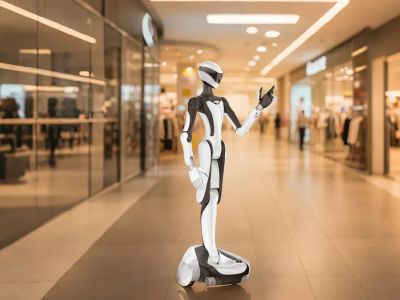
Q5 measures 165 x 50 x 52 cm and weighs 70 kg, offering a taller and narrower profile suited for tight indoor spaces. AgiBot A2 Ultra dimensions are 169 x 75 x 30 cm with 69 kg weight, featuring greater width but significantly reduced depth for ergonomic interaction. Both employ lightweight builds under 70 kg to facilitate mobility in service environments. RobotEra Q5 has 44 degrees of freedom, carries 10 kg per arm and can deadlift 10 kg. RobotEra Q5 runs for more than 4 hours per charge and recharges in 4 hours.
Mobility & Navigation
AgiBot A2 Ultra
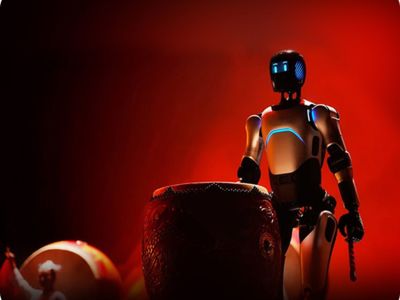
Q5 achieves 1.5 m/s speed, surpassing AgiBot A2 Ultra's 1.2 m/s, enabling faster task completion in dynamic settings. Both utilize Indoor SLAM, visual SLAM, and LiDAR mapping for obstacle avoidance and route planning. Q5's compact base further supports maneuverability in confined workspaces. RobotEra Q5's mobility type is wheeled. AgiBot A2 Ultra's mobility type is legged. RobotEra Q5 stands 165 cm tall and weighs 70 kg. AgiBot A2 Ultra stands 169 cm tall and weighs 69 kg. RobotEra Q5's safety features include force limiting, collision detection, emergency stop and collaborative mode. AgiBot A2 Ultra's safety features include force limiting, collision detection, emergency stop and collaborative mode.
Sensors & Perception
RobotEra Q5
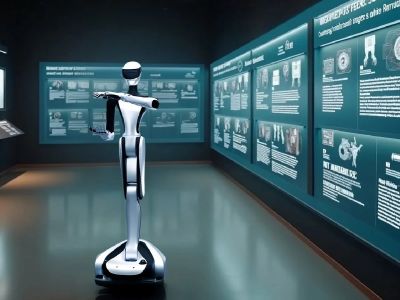
Q5 includes RGB cameras, stereo cameras, LiDAR, ultrasonic sensors, IMU, gyroscope, force sensors, and temperature sensors for comprehensive environmental awareness. AgiBot A2 Ultra equips LiDAR, RGB-D camera, fisheye camera, IMU, gyroscope, and force sensors, emphasizing depth perception. Q5 provides additional ultrasonic and stereo capabilities for enhanced precision. RobotEra Q5's listed uses include customer greeting, guided tours, healthcare assistance and object delivery. RobotEra Q5 reaches 1.5 m/s. AgiBot A2 Ultra reaches 1.2 m/s. RobotEra Q5 navigates with indoor SLAM, visual SLAM and LiDAR mapping. AgiBot A2 Ultra navigates with indoor SLAM, LiDAR mapping and visual SLAM.
AI Capabilities
AgiBot A2 Ultra
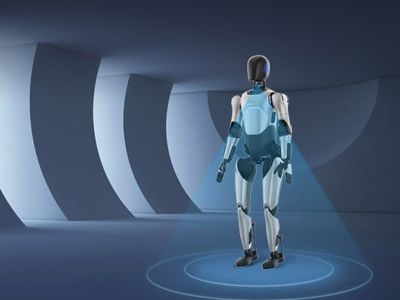
Both robots support autonomous control, learned behaviors, and teleoperation, integrating ROS2, proprietary OS, Python, C++, and APIs. Q5 leverages embodied AI models for motion data collection and adaptive learning in human-like interactions. AgiBot A2 Ultra focuses on ergonomic design for natural collaboration across its use cases. RobotEra Q5 is listed as semi-autonomous. AgiBot A2 Ultra is listed as semi-autonomous, teleoperated. RobotEra Q5's control method is listed as teleoperation, autonomous, learned behaviors. AgiBot A2 Ultra's control method is listed as autonomous, learned behaviors, teleoperation. RobotEra Q5's sensors include RGB cameras, stereo cameras, 360° LiDAR and force sensors. AgiBot A2 Ultra's sensors include RGB-D camera, fisheye Camera and force sensors.
Battery & Power Efficiency
RobotEra Q5
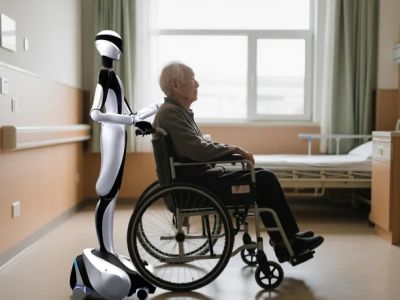
Q5 runs more than 4 hours on a 50,000 mAh pack and recharges in 4 hours, but its battery is not swappable. AgiBot A2 Ultra runs 3 hours standing and more than 1.5 hours walking, recharges in 2 hours and has a hot-swappable battery. Q5 lasts longer on a charge, while A2 Ultra recovers faster and can swap packs for continuous work. Q5 is wheeled at up to 1.5 m/s, and A2 Ultra walks at up to 1.2 m/s.
Use-Case Suitability
AgiBot A2 Ultra
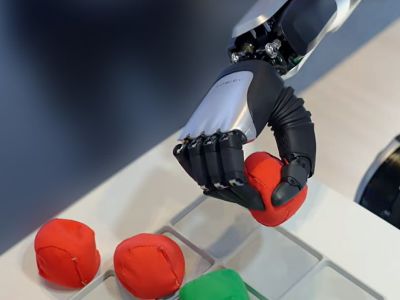
Q5 targets customer greeting, guided tours, healthcare assistance, object delivery and research demos, carrying 10 kg per arm on a wheeled base. AgiBot A2 Ultra suits customer service, logistics, manufacturing, research and entertainment, with 40 degrees of freedom and six-joint dexterous hands but only about 2 kg of arm load. Overlaps exist in logistics and research, while Q5 is the stronger carrier and A2 Ultra the more dexterous, human-like performer.
Software Ecosystem
RobotEra Q5
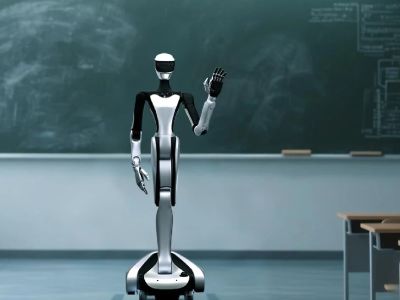
Q5 runs ROS2 on a proprietary OS with Python, C++ and APIs for integration and development, and it learns from human motion data. AgiBot A2 Ultra uses a proprietary OS with ROS2 compatibility, Python, C++ and integration APIs. Both enable flexible programming and extensibility for custom applications. Q5 is listed as semi-autonomous with teleoperation, and A2 Ultra as semi-autonomous and teleoperated, so both suit setups where an operator can step in.
Safety Features
AgiBot A2 Ultra
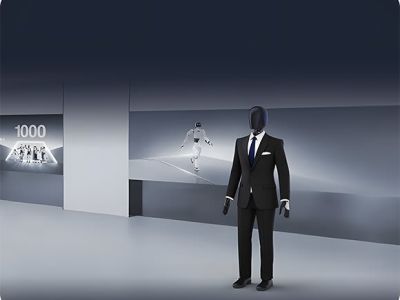
Q5 has force limiting, collision detection, an emergency stop and a collaborative mode for safe human proximity, and A2 Ultra has the identical set. Both work indoors and outdoors, with Q5 rated for 0 to 40 °C and A2 Ultra for 0 to 45 °C. Q5 adds a 360° LiDAR for obstacle avoidance, while A2 Ultra adds a fisheye camera and force sensors. At 70 kg against 69 kg the two carry similar mass, so the safety choice follows the work each will do.
Capabilities & Operational Tasks
Head-to-head comparison of what RobotEra Q5 and AgiBot A2 Ultra can do, their applications, and capabilities.
What Can RobotEra Q5 & AgiBot A2 Ultra Do?
205 tasks listed for both, 4 only for RobotEra Q5, 11 only for AgiBot A2 Ultra.
Both RobotEra Q5 and AgiBot A2 Ultra
5Only RobotEra Q5
4Only AgiBot A2 Ultra
11Technical Specifications
RobotEra Q5 and AgiBot A2 Ultra differ on 29 of the 38 specifications listed for both.
Manipulation & Load Capacity
3 Comparative Metrics
Kinematic Architecture & Dexterity
4 Comparative Metrics
Energy & Power Management
7 Comparative Metrics
Frequently Asked Questions
Can I buy RobotEra Q5 or AgiBot A2 Ultra today?
Both RobotEra Q5 and AgiBot A2 Ultra are sold through a sales quote.
Which uses is each robot marketed for, RobotEra Q5 or AgiBot A2 Ultra?
Only RobotEra Q5 is marketed for education and training. Only AgiBot A2 Ultra is marketed for hospitality, retail and public-facing roles and hazardous or high-risk work. Both suit warehouse and logistics work, factory and manufacturing work and research labs, so compare the specs for that use.
How much does RobotEra Q5 cost?
RobotEra Q5 is listed at $75,000–$95,000.
Where can I buy RobotEra Q5?
RobotEra Q5 is sold through Robot Era's sales team; request a quote.
Where can I buy AgiBot A2 Ultra?
AgiBot A2 Ultra is sold through AgiBot's sales team; request a quote.
Related Comparisons
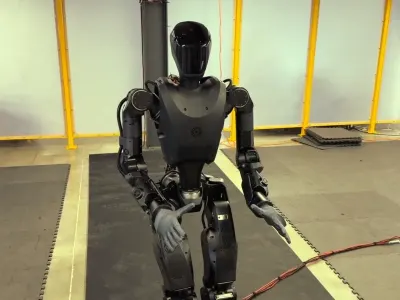
AgiBot A2 Ultra vs Phantom MK1
Which humanoid robot is better? AgiBot A2 Ultra vs Phantom MK1 compared for dexterity, AI capabilities, payload, and defense use cases.
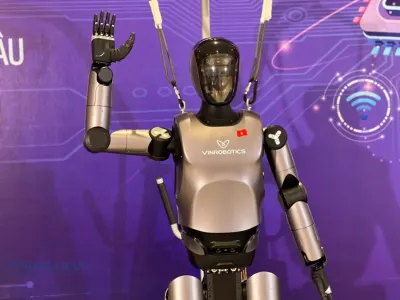
AgiBot A2 Ultra vs VR-H3
Which humanoid robot is better? AgiBot A2 Ultra vs VR-H3 compared for dexterity, AI autonomy, payload capacity, and industrial deployment readiness.
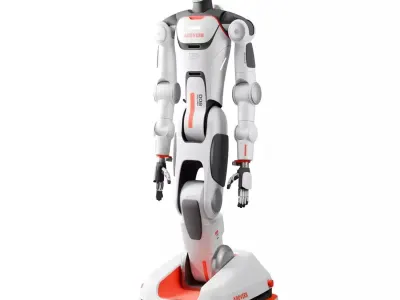
RobotEra Q5 vs ELIXIS W
Compare Q5 by Robot Era and ELIXIS W by Addverb Technologies. Detailed analysis of sensors, navigation, battery, and price.
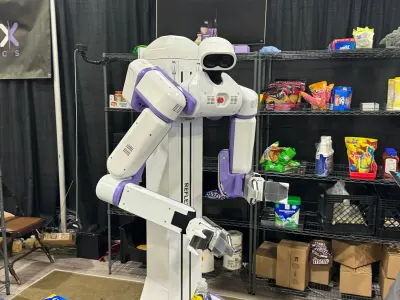
RobotEra Q5 vs Reflex Humanoid
Which robot wins? Q5 vs Reflex Humanoid compared across sensors, navigation, battery, speed, and price.
Verdicts reflect our research and opinion. Confirm specifications with the manufacturer before buying.