T800 vs 4NE-1 Mini at a glance
T800 is quicker, with a top speed of 2 m/s versus 0.8 m/s for 4NE-1 Mini. 4NE-1 Mini is lighter at 36 kg, compared with 75–85 kg for T800. T800 lasts longer on a charge, about 3–5 hours against 2.5 hours for 4NE-1 Mini.
Which one fits your use?
Based on the uses each robot is built and marketed for. Open a use to see the specs that matter for it.
| Comparing for… | T800 | 4NE-1 Mini |
|---|---|---|
| Suited | Suited | |
| Suited | Suited | |
| Not listed | Suited | |
| Not listed | Suited | |
| Not listed | Suited | |
| Suited | Not listed |
- Pick T800 for hazardous or high-risk work.
- Pick 4NE-1 Mini for home help and elder care, hospitality, retail and public-facing roles and healthcare settings.
- Both suit research labs and education and training, so compare the specs for that use.
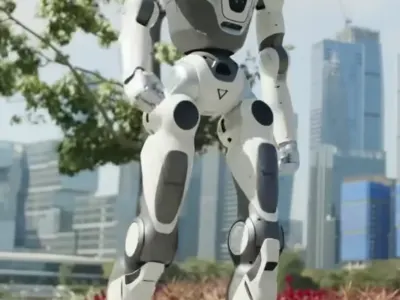
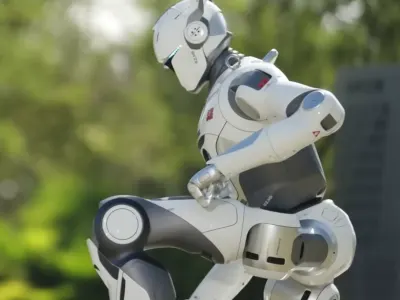
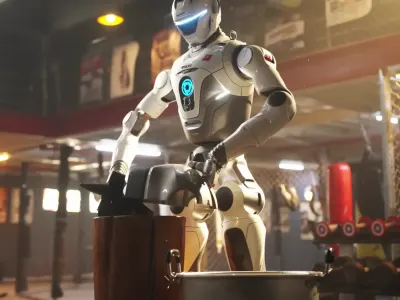
The T800 by EngineAI is a full-size humanoid robot positioned for heavy-duty industrial applications, standing 173 cm tall and weighing 75–85 kg. It differentiates through superior speed of 10 km/h, 41 degrees of freedom, and high payload capacities including 20 kg carrying and 100 kg deadlift. These specs enable robust performance in logistics, manufacturing, and dynamic tasks like robot boxing.
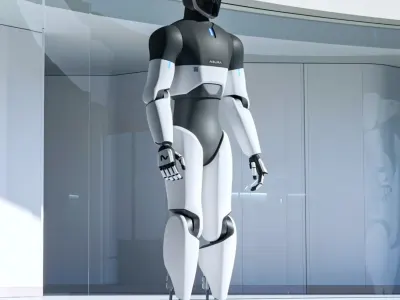
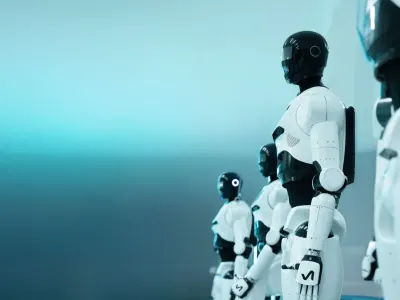
The 4NE-1 Mini by NEURA Robotics targets educational and research environments as a compact humanoid, measuring 132 cm in height and 36 kg. It stands out with semi-autonomous operation, touchless human detection, and a focused sensor suite for safe lab interactions. Its lower capacities of 3 kg per arm carrying and 10 kg deadlift suit skills training and STEM demonstrations.
Detailed Analysis
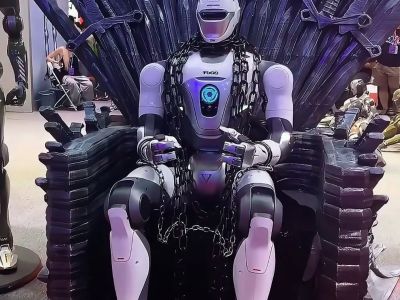
T800
Bipedal Mobility & Balance Comparison Between T800 and 4NE-1 Mini
T800 achieves 2 m/s (7.2 km/h) or more with demonstrated balance in dynamic actions like kicks and runs on uneven terrain via 25 to 46 DoF (depending on edition) and high-torque joints. 4NE-1 Mini operates at 3 km/h, prioritizing stable, slower movement suitable for controlled lab settings with IMU and gyroscope support. T800's magnesium-aluminum frame and active cooling enable sustained high-performance locomotion. 4NE-1 Mini's lighter build reduces inertia for precise positioning in research tasks.
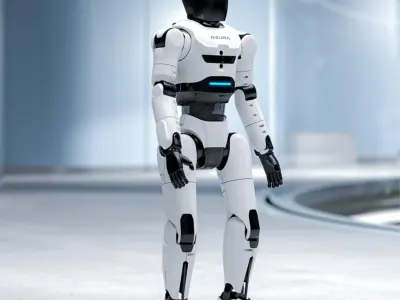
4NE-1 Mini
Dexterity & Manipulation Capabilities in T800 vs 4NE-1 Mini
T800 features 25 to 46 DoF depending on edition with advanced hand dexterity for grasping up to 5 kg per hand and complex manipulations in industrial scenarios. 4NE-1 Mini offers 25 DoF with force-torque sensors enabling fine control limited to 3 kg per arm. T800's high-torque joints support heavy object handling and coordinated movements. 4NE-1 Mini excels in delicate tasks for educational training.
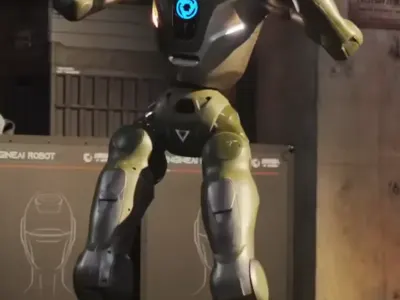
T800
AI, Autonomy & Learning Capabilities of T800 and 4NE-1 Mini
T800 provides full autonomous navigation and task execution in dynamic industrial environments using proprietary perception systems. 4NE-1 Mini operates semi-autonomously, relying on Neuraverse OS for supervised research applications. T800 integrates end-to-end neural networks for decision-making without compute unit specified. 4NE-1 Mini emphasizes ROS2 compatibility for learning in controlled settings.
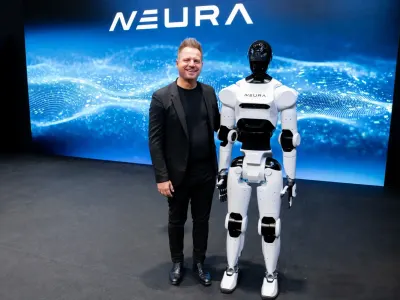
4NE-1 Mini
Payload & Lifting Capacity Differences T800 vs 4NE-1 Mini
T800 handles 20 kg carrying and 100 kg deadlift, suited for logistics and heavy manufacturing. 4NE-1 Mini manages 3 kg per arm carrying and 10 kg deadlift maximum, appropriate for light lab objects. T800's reinforced frame supports industrial loads. 4NE-1 Mini's design limits it to low-risk handling.
T800
Battery Runtime & Power Efficiency T800 Compared to 4NE-1 Mini
T800 uses solid-state tech for 4-5 hour high-intensity runtime. 4NE-1 Mini offers 3-5 years with modular design for research shifts. T800's active cooling sustains heavy workloads. 4NE-1 Mini prioritizes efficiency in intermittent use.
4NE-1 Mini
Real-World Use Cases Industrial vs Research for T800 and 4NE-1 Mini
T800 targets heavy-duty industrial tasks, logistics automation, and human-robot interaction in dynamic factories. 4NE-1 Mini focuses on educational demos, lab research, and STEM skills development. T800 demonstrates boxing and retail assistance viability. 4NE-1 Mini supports controlled training environments.
T800
Sensor Suite & Vision Systems in T800 vs 4NE-1 Mini?
T800 includes RGB/stereo cameras, LiDAR, ultrasonic, IMU, gyroscope, force, and temperature sensors for comprehensive industrial perception. 4NE-1 Mini adds touchless human detection and environmental sensors to RGB/stereo, force-torque, ultrasonic, IMU, and gyroscope. T800's 360° LiDAR enables real-time mapping. 4NE-1 Mini emphasizes safe proximity detection.
4NE-1 Mini
Which Humanoid Robot is Better for Industrial Manufacturing?
T800 outperforms 4NE-1 Mini in industrial manufacturing with 100 kg deadlift, 10 km/h speed, and full autonomy for heavy tasks. 4NE-1 Mini's 10 kg limit and semi-autonomy suit labs, not factories. T800's higher DoF and torque handle dynamic production lines. For industrial manufacturing, select T800.
T800
Which Robot Offers Superior Payload for Logistics Tasks?
T800's 20 kg carrying and 100 kg deadlift capacity exceed 4NE-1 Mini's 3 kg per arm and 10 kg maximum, making T800 ideal for logistics. 4NE-1 Mini lacks capacity for material transport. T800 supports automation in warehouses. Choose T800 for logistics payloads.
Capabilities & Operational Tasks
Head-to-head comparison of what T800 and 4NE-1 Mini can do, their applications, and capabilities.
What Can T800 & 4NE-1 Mini Do?
104 tasks listed for both, 3 only for T800, 3 only for 4NE-1 Mini.
Technical Specifications
T800 and 4NE-1 Mini differ on 28 of the 53 specifications listed for both.
Functional Utility & Use Cases
4 Comparative Metrics
Manipulation & Load Capacity
4 Comparative Metrics
Kinematic Architecture & Dexterity
4 Comparative Metrics
Frequently Asked Questions
What is the deadlift capacity of EngineAI T800 versus NEURA Robotics 4NE-1 Mini?
EngineAI T800 deadlifts 100 kg; NEURA Robotics 4NE-1 Mini maximum is 10 kg.
What autonomy level does NEURA Robotics 4NE-1 Mini provide compared to EngineAI T800?
NEURA Robotics 4NE-1 Mini is semi-autonomous; EngineAI T800 offers full autonomous navigation and task execution.
How do walking speeds and stability compare in EngineAI T800 and NEURA Robotics 4NE-1 Mini?
EngineAI T800 reaches 2 m/s (7.2 km/h) or more with dynamic balance; NEURA Robotics 4NE-1 Mini at 3 km/h prioritizes lab stability.
What dexterity and hand capabilities define EngineAI T800 versus NEURA Robotics 4NE-1 Mini?
EngineAI T800 has 25 to 46 DoF (depending on edition) for heavy manipulation; NEURA Robotics 4NE-1 Mini with 25 DoF suits fine educational tasks.
Which robot is suitable for heavy-duty industrial tasks like logistics automation?
EngineAI T800 excels in heavy-duty industrial tasks and logistics with 20 kg carrying capacity.
Is NEURA Robotics 4NE-1 Mini ready for lab research and STEM education deployments?
NEURA Robotics 4NE-1 Mini is designed for educational demonstrations and lab research training.
Related Comparisons
T800 vs Phantom MK1
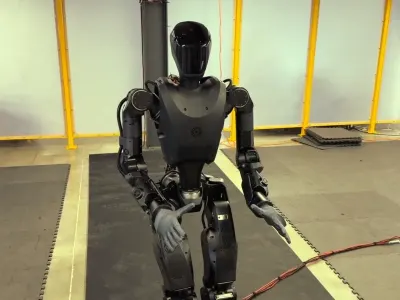
Compare T800 by EngineAI vs Phantom MK1 by Foundation for humanoid mobility, dexterity, autonomy, payload, and industrial vs defense use cases.

Optimus vs 4NE-1 Mini
Which humanoid robot is better? Optimus vs 4NE-1 Mini compared for dexterity, AI capabilities, payload, and industrial vs research use cases.
NEO Home Robot vs 4NE-1 Mini
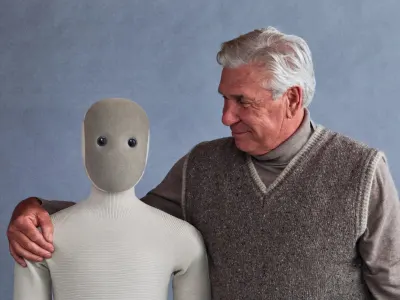
1X NEO Home Robot vs NEURA 4NE-1 Mini: size, payload, battery, AI, price and which humanoid suits household help or classrooms and labs.
NEO Home Robot vs T800
1X NEO Home Robot vs EngineAI T800: size, strength, battery, sensors, safety and price for home help versus heavy-duty industrial work.
Verdicts reflect our research and opinion. Confirm specifications with the manufacturer before buying.