T800 vs AgiBot A2 Ultra at a glance
T800 can be bought now, while AgiBot A2 Ultra is sold through a sales quote. T800 is quicker, with a top speed of 2 m/s versus 1.2 m/s for AgiBot A2 Ultra. AgiBot A2 Ultra is lighter at 69 kg, compared with 75–85 kg for T800.
| Key specs | T800 | AgiBot A2 Ultra |
|---|---|---|
| Price | $25,000–$80,000 | — |
| Height | 173 cm | 169 cm |
| Weight | 75–85 kg | 69 kg |
| Top speed | 2 m/s (stronger) | 1.2 m/s |
| Runtime | 3–5 hours | 3 hours |
| Degrees of freedom | 25–46 | 40 |
| Payload | 5 kg (stronger) | 2 kg |
| Availability | Available to buy | Order via sales quote |
Last updated:
Which one fits your use?
Based on the uses each robot is built and marketed for. Open a use to see the specs that matter for it.
| Comparing for… | T800 | AgiBot A2 Ultra |
|---|---|---|
| Not marketed | Suited | |
| Not marketed | Suited | |
| Suited | Suited | |
| Suited | Not marketed | |
| Not marketed | Suited | |
| Suited | Suited |
- Only T800 is marketed for education and training.
- Only AgiBot A2 Ultra is marketed for warehouse and logistics work, factory and manufacturing work and hospitality, retail and public-facing roles.
- Both suit research labs and hazardous or high-risk work, so compare the specs for that use.
The T800 by EngineAI is positioned as a robust humanoid robot designed for heavy-duty industrial and commercial applications. It stands out with its larger dimensions, heavier weight, and advanced strength capabilities, making it suitable for tasks requiring endurance and physical power. The T800 incorporates a wide range of sensors and advanced navigation systems, alongside a proprietary OS and ROS2 support, reflecting its emphasis on versatility and autonomy.
The A2 Ultra by AgiBot targets customer service, logistics, and research sectors with its lighter frame and ergonomic design. It differentiates itself with AI-powered sensors tailored for human interaction and precision tasks, while maintaining compatibility with ROS2 and offering APIs for integration. The AgiBot A2 Ultra emphasizes indoor mobility and specialized applications, with a battery life range that matches or exceeds comparable robots.
Detailed Analysis
Design & Build Quality
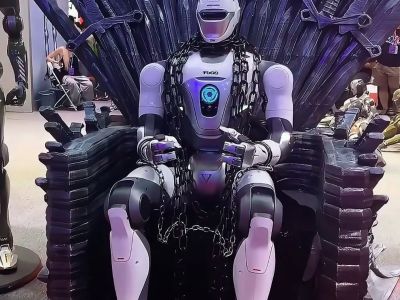
T800
The T800 stands 173 cm tall and weighs 75–85 kg, making it larger and heavier than the AgiBot A2 Ultra, which is 169 x 75 x 30 cm and weighs 69 kg. The T800’s build is optimized for heavy-duty and industrial purposes, reflecting its bulkier frame, whereas the AgiBot A2 Ultra features a sleeker and more compact design to support customer interaction and indoor environments. T800's body is made from aluminum alloy and soft materials. T800's safety features include force limiting, collision detection, emergency stop and collaborative mode. AgiBot A2 Ultra's safety features include force limiting, collision detection, emergency stop and collaborative mode.
Mobility & Navigation
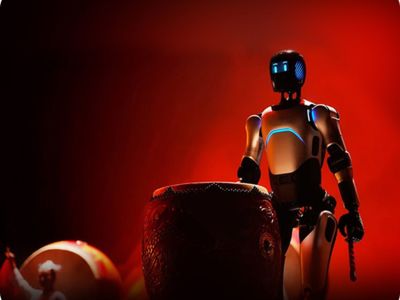
AgiBot A2 Ultra
The T800 achieves a higher top speed of 2 m/s or more compared to the AgiBot A2 Ultra’s 1.2 m/s, indicating superior mobility for tasks demanding quicker movement. Both robots utilize sophisticated navigation techniques including visual SLAM and LiDAR mapping, but the AgiBot A2 Ultra also incorporates indoor-specific SLAM, enhancing its performance in confined or structured spaces. T800's mobility type is legged. AgiBot A2 Ultra's mobility type is legged. AgiBot A2 Ultra navigates with indoor SLAM, LiDAR mapping and visual SLAM. T800 carries 5 kg.
Sensors & Perception
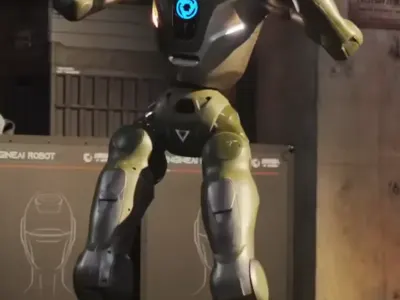
T800
The T800 is equipped with an extensive sensor suite including RGB and stereo cameras, 360° omnidirectional LiDAR, ultrasonic sensors, IMU, gyroscope, force sensors, and temperature sensors. In contrast, the AgiBot A2 Ultra utilizes LiDAR, RGB-D and fisheye cameras, IMU, gyroscope, and force sensors, focusing on AI-powered perception for human interactions and precision tasks, with slightly fewer sensor types overall. T800 stands 173 cm tall and weighs 75–85 kg. AgiBot A2 Ultra stands 169 cm tall and weighs 69 kg. T800's listed uses include heavy-duty industrial tasks, robot boxing, retail assistance and human-robot interaction.
AI Capabilities
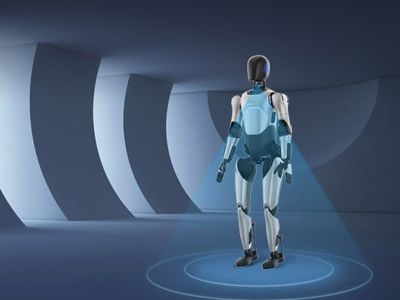
AgiBot A2 Ultra
Both robots support autonomous behavior, learned behaviors, and teleoperation control modes, with software ecosystems including proprietary OS, ROS2 compatibility, and programming in Python and C++. The T800 features additional integration of a proprietary end-to-end vision language action model, enhancing its AI perception and decision-making, while the AgiBot A2 Ultra offers APIs for easier integration into diverse applications. AgiBot A2 Ultra is listed as semi-autonomous, teleoperated. T800's control method is listed as autonomous, learned behaviors, teleoperation. AgiBot A2 Ultra's control method is listed as autonomous, learned behaviors, teleoperation.
Battery & Power Efficiency
T800
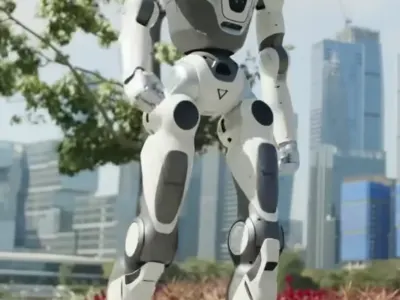
T800 runs 3 to 5 hours on a quick-release solid-state battery and recharges in 2 hours. AgiBot A2 Ultra runs 3 hours standing and more than 1.5 hours walking on a 14.4 Ah pack, recharges in 2 hours and also has a hot-swappable battery. Charge times match, and T800's higher upper range gives it the edge for shifts of walking work. T800 is the heavier robot at 75 to 85 kg against 69 kg, and A2 Ultra walks at up to 1.2 m/s.
Use-Case Suitability
AgiBot A2 Ultra
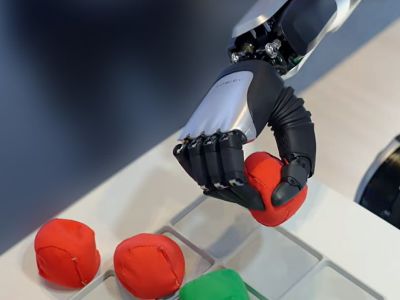
T800 is suited to heavy industrial tasks, robot boxing, retail assistance, human-robot interaction and logistics automation, with 5 kg in its hands. AgiBot A2 Ultra focuses on customer service, logistics, manufacturing, research and entertainment, with 40 degrees of freedom including six-joint dexterous hands and about 2 kg of arm load. T800 emphasises strength and endurance in physically demanding roles, while A2 Ultra prioritises interaction and light handling indoors and outdoors.
Software Ecosystem
T800
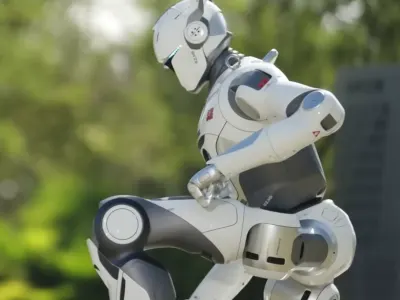
EngineAI's T800 runs a proprietary OS with ROS2 and supports Python and C++, with reinforcement learning, motion learning and task programming for high-performance applications. AgiBot A2 Ultra also uses a proprietary OS with ROS2 compatibility and offers Python, C++ and integration APIs, which makes it flexible for academic, research and customised commercial use. T800 comes with touch panel, voice, gesture and app interfaces, while A2 Ultra is listed as semi-autonomous and teleoperated.
Safety Features

AgiBot A2 Ultra
Both robots incorporate safety mechanisms such as force limiting, collision detection, emergency stop, and collaborative mode. These features ensure safe human-robot interaction and minimize risks in shared work environments, suitable for both industrial and customer-facing applications. AgiBot A2 Ultra has 40 degrees of freedom, carries 2 kg and can deadlift 3 kg. T800 runs for 3–5 hours per charge and recharges in 2 hours. AgiBot A2 Ultra runs for 3 hours per charge and recharges in 2 hours. T800 reaches 2 m/s. T800 runs proprietary OS, ROS2, Python, C++.
Capabilities & Operational Tasks
Head-to-head comparison of what T800 and AgiBot A2 Ultra can do, their applications, and capabilities.
What Can T800 & AgiBot A2 Ultra Do?
194 tasks listed for both, 3 only for T800, 12 only for AgiBot A2 Ultra.
Both T800 and AgiBot A2 Ultra
4Only T800
3Only AgiBot A2 Ultra
12Technical Specifications
T800 and AgiBot A2 Ultra differ on 31 of the 44 specifications listed for both.
Manipulation & Load Capacity
3 Comparative Metrics
Kinematic Architecture & Dexterity
4 Comparative Metrics
Energy & Power Management
8 Comparative Metrics
Frequently Asked Questions
Can I buy T800 or AgiBot A2 Ultra today?
T800 can be bought now, while AgiBot A2 Ultra is sold through a sales quote.
Which is lighter, T800 or AgiBot A2 Ultra?
AgiBot A2 Ultra is lighter at 69 kg, compared with 75–85 kg for T800.
Which uses is each robot marketed for, T800 or AgiBot A2 Ultra?
Only T800 is marketed for education and training. Only AgiBot A2 Ultra is marketed for warehouse and logistics work, factory and manufacturing work and hospitality, retail and public-facing roles. Both suit research labs and hazardous or high-risk work, so compare the specs for that use.
How much does T800 cost?
T800 is listed at $25,000–$80,000.
Where can I buy T800?
T800 is sold by EngineAI.
Where can I buy AgiBot A2 Ultra?
AgiBot A2 Ultra is sold through AgiBot's sales team; request a quote.
Related Comparisons
T800 vs Phantom MK1
Compare T800 by EngineAI vs Phantom MK1 by Foundation for humanoid mobility, dexterity, autonomy, payload, and industrial vs defense use cases.
T800 vs 4NE-1 Mini
T800 or 4NE-1 Mini? See which humanoid robot performs better for manufacturing, logistics, and research with comparisons on dexterity, autonomy, and payload.
AgiBot A2 Ultra vs Phantom MK1
Which humanoid robot is better? AgiBot A2 Ultra vs Phantom MK1 compared for dexterity, AI capabilities, payload, and defense use cases.
AgiBot A2 Ultra vs VR-H3
Which humanoid robot is better? AgiBot A2 Ultra vs VR-H3 compared for dexterity, AI autonomy, payload capacity, and industrial deployment readiness.
Verdicts reflect our research and opinion. Confirm specifications with the manufacturer before buying.