T800 vs Martian at a glance
T800 is the more affordable option at $25,000–$80,000, while Martian costs $100,000–$150,000. Martian is lighter at 50 kg, compared with 75–85 kg for T800. T800 has more degrees of freedom (25–46 against 23 for Martian), which allows finer movement. Martian is quicker, with a top speed of 3 m/s versus 2 m/s for T800.
Which one fits your use?
Based on the uses each robot is built and marketed for. Open a use to see the specs that matter for it.
| Comparing for… | T800 | Martian |
|---|---|---|
| Not listed | Suited | |
| Not listed | Suited | |
| Suited | Suited | |
| Suited | Suited | |
| Suited | Not listed |
- Pick T800 for hazardous or high-risk work.
- Pick Martian for warehouse and logistics work and factory and manufacturing work.
- Both suit research labs and education and training, so compare the specs for that use.
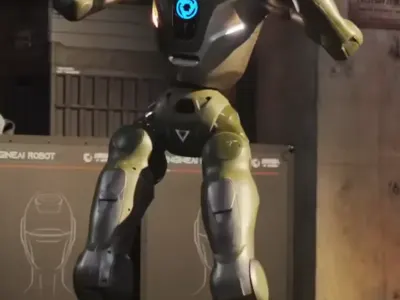
The T800 by EngineAI is positioned as a robust humanoid robot designed for heavy-duty industrial tasks, retail assistance, and logistics automation. With a height of 185 cm and a weight of 85 kg, the T800 stands out for its strong build and endurance capabilities. Its key differentiators include a wide sensor suite featuring RGB and stereo cameras, LiDAR, and a 4-year battery life, supporting complex autonomous and teleoperated functions.
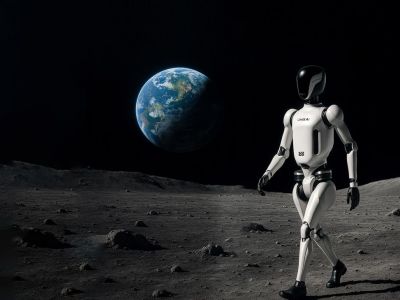
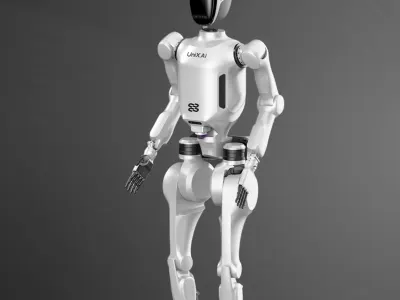
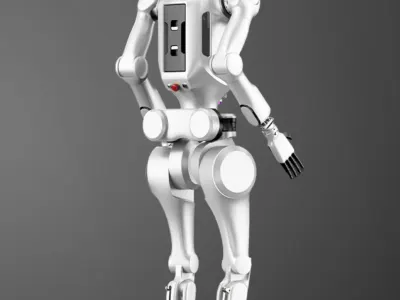
Martian by UniX AI offers a more lightweight and faster humanoid platform, with a height of 160 cm and weighing 50 kg. Targeted primarily at logistics, manufacturing, household assistance, and research, the Martian emphasizes agility with a max speed of 10.8 km/h and versatile navigation using indoor and visual SLAM. Its software ecosystem includes ROS2 and extensive APIs, reflecting a focus on service industry flexibility and scalable deployment.
Detailed Analysis

T800
Design & Build Quality
The T800 is larger and heavier than the Martian, standing 173 cm tall and weighing 75–85 kg, built for strength and durability in industrial environments. It uses an aerospace-grade aluminum alloy exoskeleton, emphasizing mechanical robustness. The Martian is more compact at 160 x 50 x 30 cm and lighter at 50 kg, focusing on agility and ease of deployment in dynamic service settings.
Martian
Mobility & Navigation
Martian outpaces the T800 in speed, achieving 10.8 km/h (3 m/s) versus T800’s 2 m/s or more, allowing quicker movement in operational scenarios. Both robots utilize advanced navigation techniques like visual SLAM and LiDAR mapping, with Martian adding indoor SLAM for enhanced indoor localization. T800 supports teleoperation alongside autonomous control, whereas Martian operates autonomously with learned behaviors.
T800
Sensors & Perception
T800 and Martian both integrate RGB cameras, LiDAR, ultrasonic sensors, IMUs, gyroscopes, force sensors, and temperature sensors, providing comprehensive environmental awareness. The T800 includes stereo cameras, while Martian incorporates depth cameras for improved three-dimensional perception. Both sensor suites enable robust autonomous navigation and interaction capabilities.
Martian
AI Capabilities
T800 operates with a proprietary OS combined with ROS2 and supports autonomous, teleoperation, and learned behaviors, enabling versatility across applications. Martian uses ROS2 with proprietary software, Python, C++, and extensive API support but focuses mainly on autonomous operation and learned behaviors without teleoperation. Both deploy machine learning approaches for adaptive task execution.

T800
Battery & Power Efficiency
Both robots prioritize power efficiency to support extended deployments without frequent replacements.
Martian
Use-Case Suitability
T800 targets heavy-duty industrial tasks, robot boxing, retail assistance, and logistics automation, benefiting from its durability and integrated teleoperation. Martian suits logistics, manufacturing, household assistance, research, and service industries where higher mobility and flexible software integration are prioritized. Each robot aligns with distinct operational needs reflecting their design focuses.
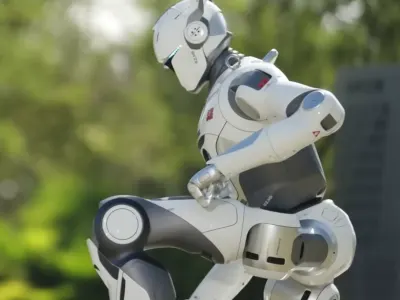
T800
Software Ecosystem
Both robots leverage ROS2 and support programming in Python and C++. The T800 includes a proprietary operating system tailored for industrial robustness and supports teleoperation, expanding its control versatility. Martian emphasizes API extensibility and proprietary software designed for scalable deployment and integration in diverse environments.

Martian
Safety Features
T800 and Martian implement safety mechanisms such as force limiting, collision detection, emergency stop, and collaborative modes. These features allow safe operation alongside humans and compliance with collaborative robotics safety standards, enabling deployment in shared human workspaces without additional safeguards.

T800
Pricing & Value
The T800 ranges from about $25,000 for the base model to $80,000 for the top configuration, below Martian's $100,000 to $150,000. Martian is offered at a lower estimated price of $100,000 to $150,000, corresponding to its lighter build and targeted service applications. The pricing difference aligns with their respective market positioning and capability sets.
Capabilities & Operational Tasks
Head-to-head comparison of what T800 and Martian can do, their applications, and capabilities.
What Can T800 & Martian Do?
95 tasks listed for both, 2 only for T800, 2 only for Martian.
Technical Specifications
T800 and Martian differ on 23 of the 54 specifications listed for both.
Functional Utility & Use Cases
4 Comparative Metrics
Manipulation & Load Capacity
4 Comparative Metrics
Kinematic Architecture & Dexterity
4 Comparative Metrics
Related Comparisons
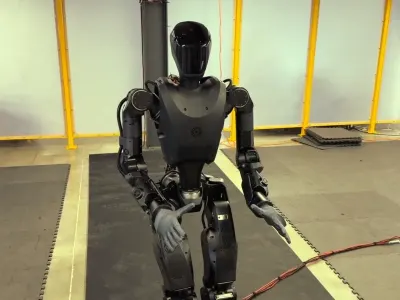
T800 vs Phantom MK1
Compare T800 by EngineAI vs Phantom MK1 by Foundation for humanoid mobility, dexterity, autonomy, payload, and industrial vs defense use cases.
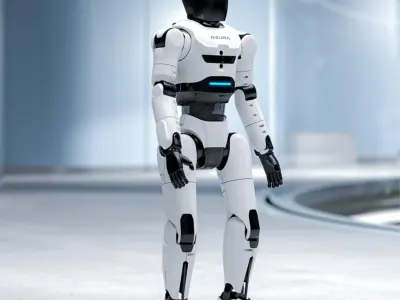
T800 vs 4NE-1 Mini
T800 or 4NE-1 Mini? See which humanoid robot performs better for manufacturing, logistics, and research with comparisons on dexterity, autonomy, and payload.
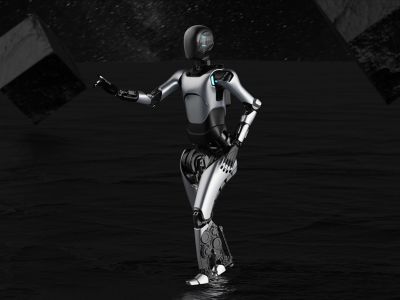
AgiBot A2 vs Martian
Compare AgiBot A2 and Martian. Detailed analysis of sensors, navigation, mobility, and battery life.

NEO Home Robot vs T800
1X NEO Home Robot vs EngineAI T800: size, strength, battery, sensors, safety and price for home help versus heavy-duty industrial work.
Verdicts reflect our research and opinion. Confirm specifications with the manufacturer before buying.