Unitree H2 vs Unitree H1-2 at a glance
Both Unitree H2 and Unitree H1-2 are sold through a sales quote. Unitree H2 is the more affordable option at $29,900, while Unitree H1-2 costs $112,000–$150,000. Unitree H2 lasts longer on a charge, about 3 hours against 2 hours for Unitree H1-2. Unitree H2 has more degrees of freedom (31 against 27 for Unitree H1-2), which allows finer movement.
| Key specs | Unitree H2 | Unitree H1-2 |
|---|---|---|
| Price | $29,900 (stronger) | $112,000–$150,000 |
| Height | 182 cm | — |
| Weight | 70 kg | 70 kg |
| Top speed | 2 m/s | 2 m/s |
| Runtime | 3 hours (stronger) | 2 hours |
| Degrees of freedom | 31 (stronger) | 27 |
| Payload | 7 kg | 7 kg |
| Availability | Order via sales quote | Order via sales quote |
Last updated:
Which one fits your use?
Based on the uses each robot is built and marketed for. Open a use to see the specs that matter for it.
| Comparing for… | Unitree H2 | Unitree H1-2 |
|---|---|---|
| Suited | Suited | |
| Suited | Suited | |
| Suited | Suited | |
| Suited | Not marketed | |
| Suited | Suited |
- Only Unitree H2 is marketed for education and training.
- Both suit warehouse and logistics work, factory and manufacturing work, research labs and hazardous or high-risk work, so compare the specs for that use.
The Unitree H2 is the newer full-size humanoid from Unitree Robotics, launched in 2025 as the successor to the H1 line. It stands 182 cm tall and weighs about 70 kg with its battery. It has 31 joints, a 0.972 kWh quick-release battery and runs about 3 hours per charge. The standard model has no dexterous hands.
The Unitree H1-2 is the 2024 upgrade of Unitree Robotics' first full-size humanoid, about 178 cm tall and also about 70 kg. It has 27 joints, 7-joint arms and a 0.864 kWh hot-swappable battery that runs about 2 hours. It carries a 3D LiDAR (a laser scanner that maps rooms) and a depth camera.
Detailed Analysis
Which should you choose, Unitree H2 or Unitree H1-2?
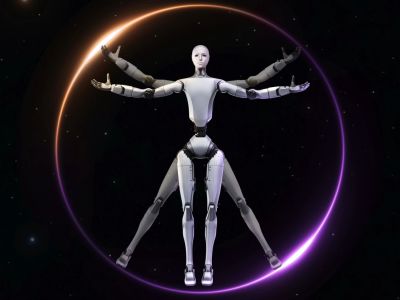
Unitree H2
Choose the H2 if you want the newest Unitree body with more joints and longer runtime; choose the H1-2 if you want a proven research robot with LiDAR sensing and add-on computers. Both weigh about 70 kg and stand around 180 cm. The H2 has 31 joints and runs about 3 hours, while the H1-2 has 27 joints and runs about 2 hours. Both are research platforms for labs, not household helpers. The H2 is the better long-term buy because it is the current model.
How many more joints does the H2 have than the H1-2?
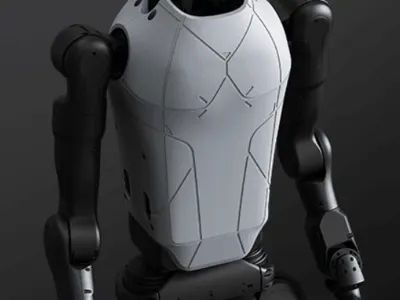
Unitree H1-2
The H2 has 31 joints against 27 on the H1-2, four more. A joint is one axis a robot can bend or turn on, so more joints mean more natural movement. Both have 6-joint legs and 7-joint arms. The H2 adds a 3-joint waist and a 2-joint head, listed in Unitree's own H2 specification table, giving it more reach and a body that can lean and turn its gaze. That extra freedom matters most for picking things up from tables and floors.
Is the Unitree H2 faster than the H1-2?
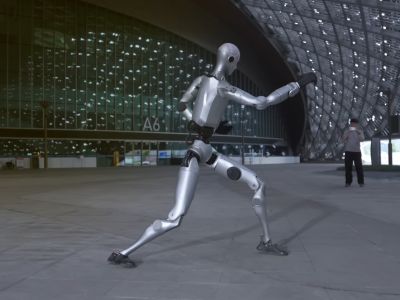
Unitree H2
No. Both are listed under 2 m/s, so neither is the sprinter people remember. The 3.3 m/s record belongs to the original Unitree H1, not to the H1-2 or the H2. Humanoids Daily noted that Unitree traded top speed for strength and articulation when it moved to the H2 design. If you want a robot for fast running research, neither model is the right pick. Both are tuned for steady walking and for doing work with their arms. Neither robot is built to outrun a person, so judge them on arm work and battery instead.
Which has the better battery, H2 or H1-2?
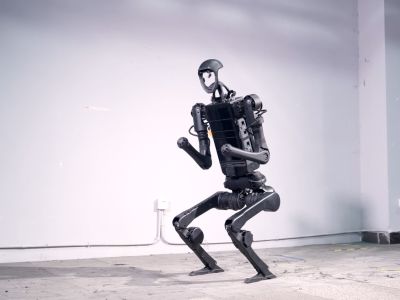
Unitree H1-2
The H2 has the larger pack: 0.972 kWh (15 Ah) against 0.864 kWh (15 Ah) on the H1-2, which gives about 3 hours of runtime against 2 hours. A kilowatt-hour is the energy the pack holds, like the size of a fuel tank. Both packs can be swapped quickly, so a spare battery keeps a lab running through a full day. The H1-2 lists a 0.8-hour charge time, while Unitree's H2 table does not state one. For a full lab day, plan on one spare pack per robot and a charging slot that fits the schedule.
What can the H2 and H1-2 carry with their arms?

Unitree H2
Both list a rated arm payload of about 7 kg, so the carrying jobs are similar. The H1-2 lists a 21 kg deadlift capacity, the weight it can hold while braced, and Unitree's H2 table gives no matching figure. In practice you can hand either robot a box or a tool of a few kilograms and expect steady handling. The H2's extra waist joints help it reach farther without moving its feet, which makes the same payload easier to place.
What sensors does each robot use to see?
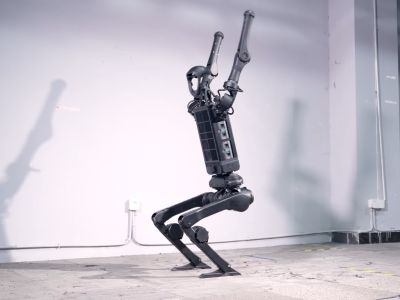
Unitree H1-2
The H1-2 sees with a Livox MID-360 3D LiDAR plus an Intel RealSense D435i depth camera, while the H2 uses a wide-view binocular camera and a microphone array. LiDAR measures distance with lasers and builds a room map, so the H1-2 has an advantage for mapping research. The H2's camera setup is closer to how newer humanoids look at the world, like a pair of eyes. It suits vision-driven AI work rather than classic LiDAR mapping. Check which sensor your own research code expects before you choose, because that decides how much software you must rewrite.
Can you program the H2 and the H1-2 yourself?

Unitree H2
Yes on both, with a catch for the H2. The H2 runs Unitree's unitree_sdk2 toolkit in C++ and Python, but full secondary development, meaning your own control software, belongs to the quote-only H2 EDU version. The H1-2 supports ROS 2, Python and C++ and accepts up to three optional extra computers, an Intel Core i7 or an NVIDIA Orin NX. Labs that need open software access should confirm the exact version they are buying. Ask the seller in writing which version includes software access before you pay.
Is the Unitree H2 worth the price over the H1-2?
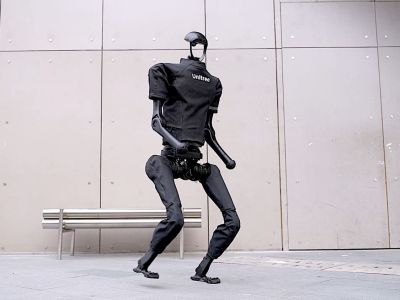
Unitree H1-2
For most buyers, yes. Unitree lists the base H2 at $29,900 without hands, while the H1-2 is listed from USD 112,000 to 150,000. That gap pays for a robot with more joints, a bigger battery and the newer design. The H2 EDU, which adds hands and software access, is quote-only, so the real cost rises. The H1-2 still makes sense if you need its LiDAR sensing or already run a fleet of H1-2 robots. Ask Unitree for a full quote, including hands and software access, before you set a budget.
Capabilities & Operational Tasks
Head-to-head comparison of what Unitree H2 and Unitree H1-2 can do, their applications, and capabilities.
What Can Unitree H2 & Unitree H1-2 Do?
1613 tasks listed for both, 3 only for Unitree H2, 0 only for Unitree H1-2.
Tap a circle area to filter the lists
Only Unitree H2
Not listed for the other robot
Shared by both
Listed for Unitree H2 and Unitree H1-2
Only Unitree H1-2
Not listed for the other robot
Nothing is exclusive to Unitree H1-2. All 13 of its tasks are shared with Unitree H2, see "Shared by both".
Technical Specifications
Unitree H2 and Unitree H1-2 differ on 34 of the 37 specifications listed for both.
Manipulation & Load Capacity
4 Comparative Metrics
Kinematic Architecture & Dexterity
3 Comparative Metrics
Energy & Power Management
7 Comparative Metrics
Frequently Asked Questions
Does the Unitree H2 come with hands?
No. The base Unitree H2 has no dexterous hands. Unitree offers optional hands on the H2 EDU, which is quote-only. The H1-2 listing names no hand model either, so both robots handle objects with simple end tools unless you add hands.
Can the Unitree H2 and H1-2 be programmed with Python?
Yes. The H2 uses the unitree_sdk2 toolkit with C++ and Python, and the H1-2 supports Python, C++ and ROS 2. Full secondary development on the H2 requires the H2 EDU version.
How long does the battery last on the Unitree H2 and H1-2?
The H2 lists about 3 hours per charge and the H1-2 lists about 2 hours. Both use quick-swap packs, so keeping a charged spare lets you keep working while the first battery recharges.
How fast do the Unitree H2 and H1-2 walk?
Both are listed under 2 m/s. The 3.3 m/s running record belongs to the original Unitree H1, so neither the H2 nor the H1-2 should be bought for top speed.
Is the Unitree H2 safe to use around people?
Both robots list an emergency stop. The H1-2 also lists force limiting, collision detection and a collaborative mode, while the H2 lists obstacle avoidance. As 70 kg research robots, both should be used with clear space and trained operators.
What does the Unitree H2 see with compared to the H1-2?
The H2 uses a wide-view binocular camera and a microphone array. The H1-2 uses a Livox MID-360 3D LiDAR and an Intel RealSense D435i depth camera, which suits room mapping research.
Can I buy Unitree H2 or Unitree H1-2 today?
Both Unitree H2 and Unitree H1-2 are sold through a sales quote.
Which costs less, Unitree H2 or Unitree H1-2?
Unitree H2 costs less at $29,900, against $112,000–$150,000 for Unitree H1-2.
Which uses is each robot marketed for, Unitree H2 or Unitree H1-2?
Only Unitree H2 is marketed for education and training. Both suit warehouse and logistics work, factory and manufacturing work, research labs and hazardous or high-risk work, so compare the specs for that use.
How much does Unitree H2 cost?
Unitree H2 is listed at $29,900.
How much does Unitree H1-2 cost?
Unitree H1-2 is listed at $112,000–$150,000.
Where can I buy Unitree H2?
Unitree H2 is sold through Unitree Robotics's sales team; request a quote.
Where can I buy Unitree H1-2?
Unitree H1-2 is sold through Unitree Robotics's sales team; request a quote.
Related Comparisons
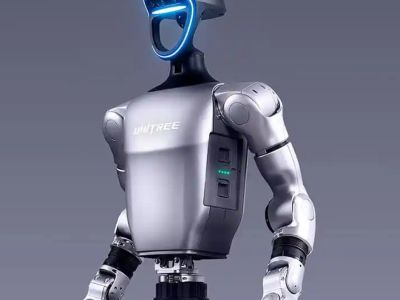
Unitree G1 vs Unitree H1-2
Unitree G1 vs Unitree H1-2: the G1 is the 35 kg lab humanoid with optional hands; the H1-2 is a taller 70 kg robot with stronger arms.
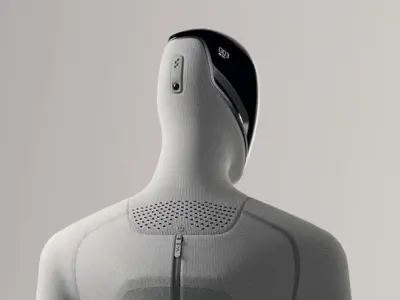
Figure 03 vs Unitree H2
Figure 03 vs Unitree H2 compared on height, weight, battery, walking speed, hands and software, with a clear pick for home help or developer work.
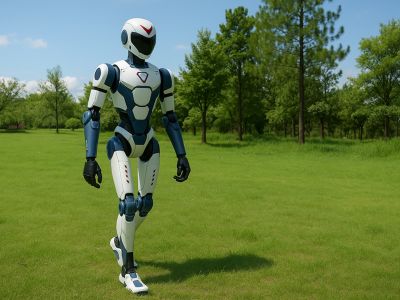
Unitree R1 vs Unitree H2
Unitree R1 vs Unitree H2: height, battery, joints, arms and software compared, with a clear pick by budget, space and project.
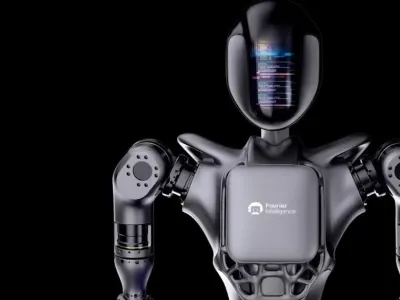
GR-1 vs Unitree H1-2
Head-to-head: GR-1 vs Unitree H1-2 compared on bipedal balance, AI learning, and real-world deployment for research and care.
Verdicts reflect our research and opinion. Confirm specifications with the manufacturer before buying.