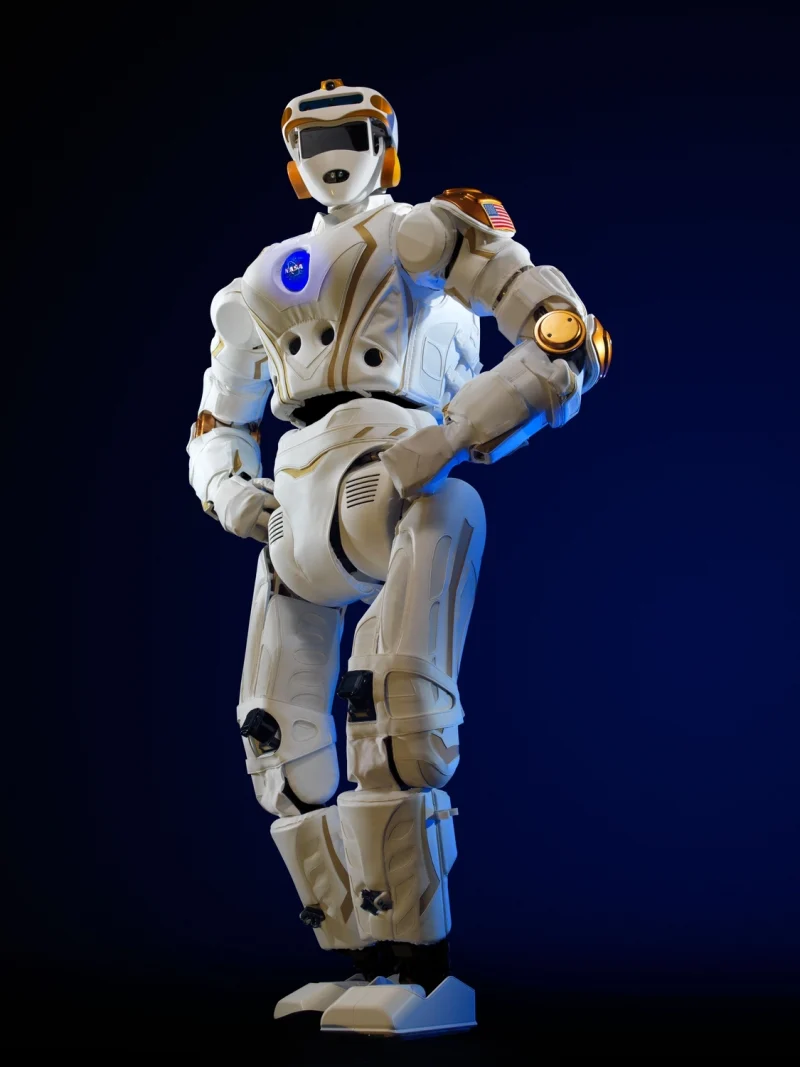
Valkyrie
Last updated:
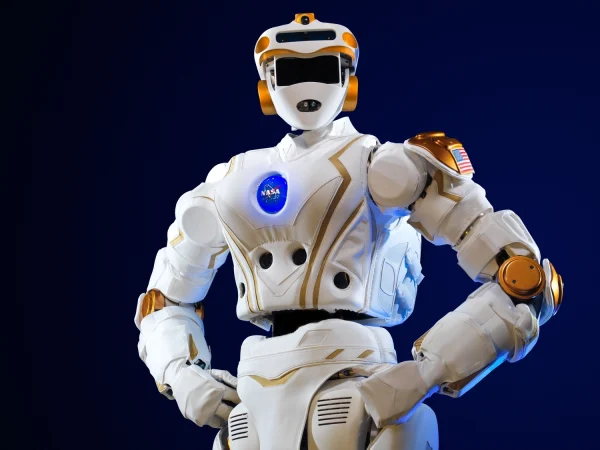
Valkyrie, also designated R5, is NASA's first bipedal humanoid robot, designed and built within 15 months by the Johnson Space Center (JSC) Engineering Directorate for the 2013 DARPA Robotics Challenge (DRC) Trials. Standing 6 ft 2 in (about 1.88 m) tall and weighing 300 lb (about 136 kg), the all-electric, 44-degree-of-freedom robot is built to work in environments designed for people, including damaged or hazardous ones. NASA built several Valkyrie units, keeping one at JSC and loaning others to MIT, Northeastern University and the University of Edinburgh for research; in 2023 NASA began testing an updated Valkyrie with Woodside Energy in Australia on offshore and remote-operations tasks, and JSC's Dexterous Robotics Team continues to demonstrate it today.
Quick Overview & Key Facts
Valkyrie is a humanoid system developed by NASA in United States and launched in 2013. Starting price is estimated at Not for sale; a U.S. government research platform. It is currently ranked #358 in most-viewed humanoid robots on Origin of Bots. It supports Hand tools, cargo, hatch and door mechanisms, and inspection equipment. Operating battery runtime is rated at About one hour of autonomous operation per battery charge (official NASA specification); can also run continuously from wall power. Primary applications include Operating in environments built for people, including damaged or degraded human-engineered environments; cargo handling, spacecraft hatch and door operation, equipment inspection and maintenance for lunar habitats; and, since 2023, remote mobile dexterous manipulation trials for offshore and remote energy facilities with Woodside Energy in Australia.
What Can Valkyrie Do?
Core operational tasks and activities demonstrated or performed by Valkyrie.
Real-World Applications of Valkyrie
Industries, working environments, and deployment suitability for Valkyrie.
Valkyrie Capabilities
Inherent physical, perceptual, and cognitive abilities built into Valkyrie.
Download Media Cards
Story CardExport high-resolution story cards summarizing Valkyrie's operational tasks, real-world applications, and capabilities.
Image Gallery
Below images are from NASA's official sources
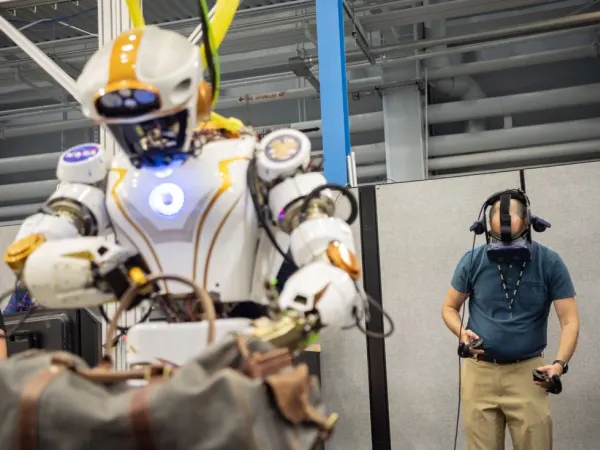
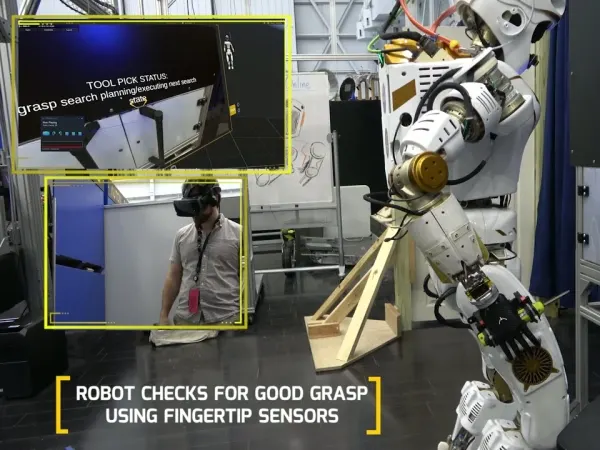
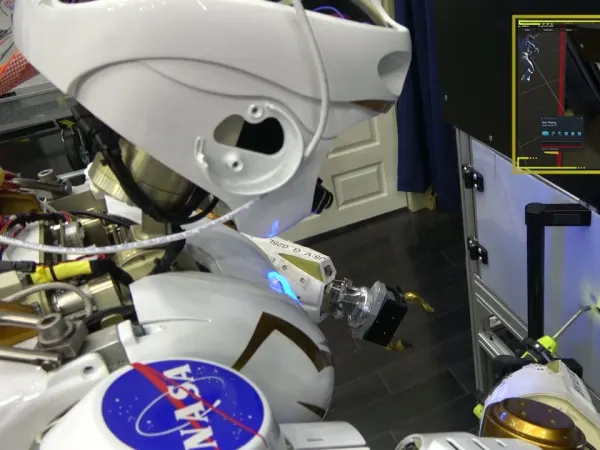
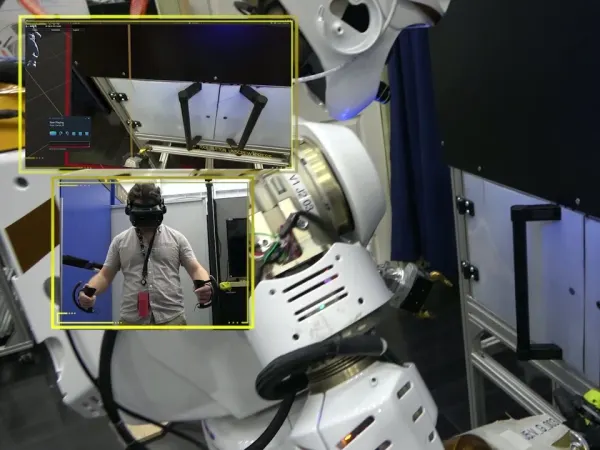
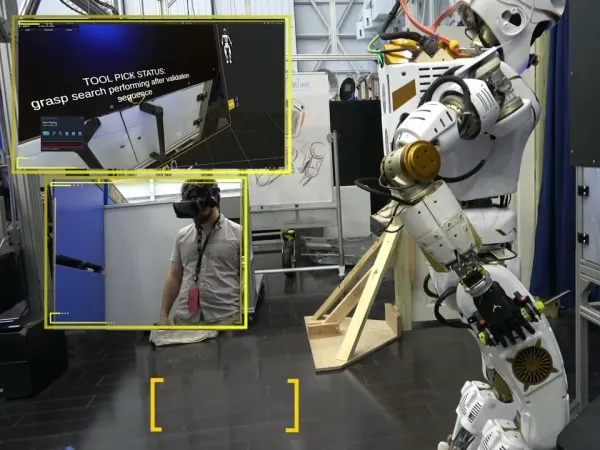
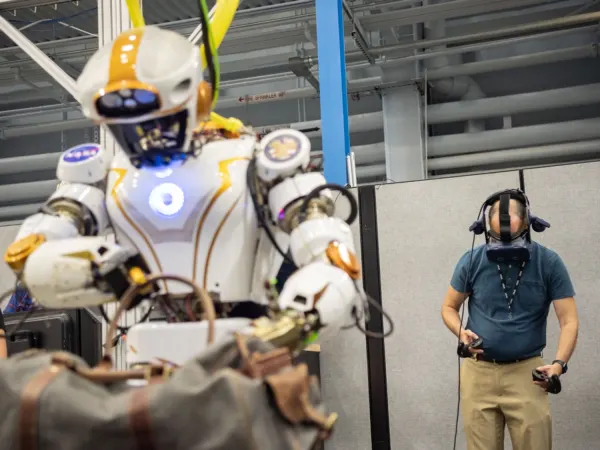
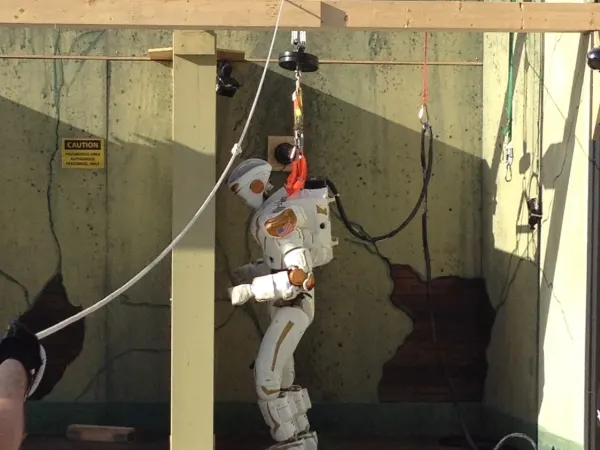
Review Videos
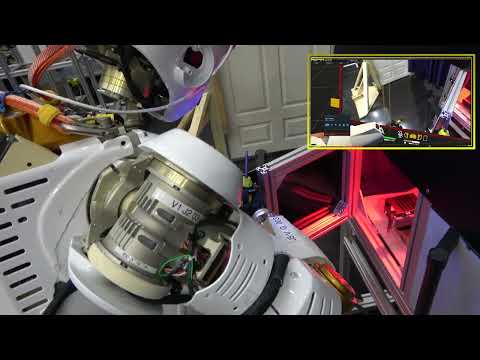
Watch expert reviews and demonstrations of this robot
Robot Specifications
More Humanoid Robots
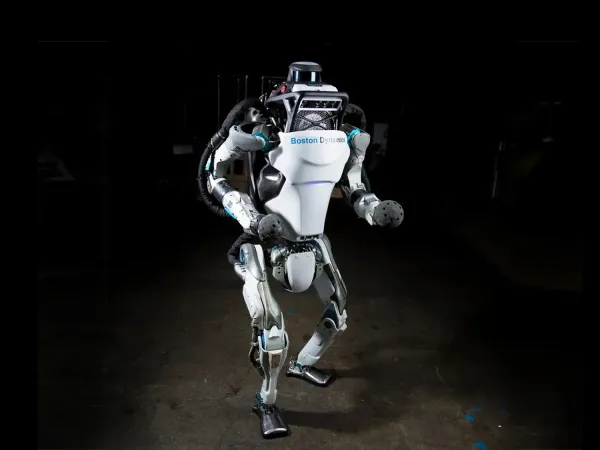
Discover more robots in the same category
Robots From Other Categories
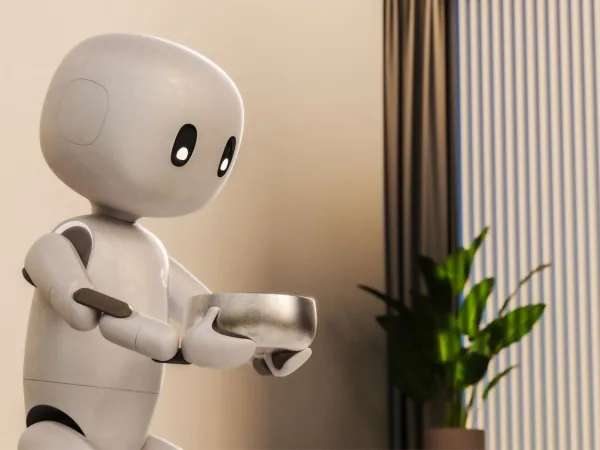
Discover complementary robots from different categories that work well together

Frequently Asked Questions
Get answers to common questions about this robot
Q1. What is Valkyrie, and what problem is it designed to solve?
Valkyrie is NASA's first bipedal humanoid robot, built by the Johnson Space Center to work in environments designed for people, including places that are damaged, hazardous or far from Earth. It is meant to extend what humans can do safely in space exploration and on Earth.
Q2. What are the main capabilities and key features of Valkyrie?
It stands about 1.88 m tall, weighs around 136 kg and has 44 degrees of freedom, including a dexterous 3-finger-and-thumb hand on each arm. It runs on two onboard computers, senses its surroundings with a stereo and laser head camera, and can be teleoperated or carry out autonomous tasks like retrieving a tool.
Q3. Who is Valkyrie built for, and which industries can benefit from it?
It is built for NASA's own exploration goals, for university robotics researchers who have hosted loaned units, and more recently for industrial partners such as Woodside Energy exploring remote operations in hazardous offshore and remote facilities.
Q4. Is Valkyrie a commercial product or still a research prototype?
It is a long-running government research platform, not a commercial product. NASA has continuously developed and demonstrated it for well over a decade, from the 2013 DARPA Robotics Challenge to current cargo-handling demonstrations.
Q5. Is Valkyrie currently available for purchase, and when is it expected to ship?
No, it is not for sale. NASA has loaned Valkyrie units to research partners such as MIT, Northeastern University and the University of Edinburgh under research agreements, and more recently tested it with an industrial partner under a Space Act Agreement.
Q6. How does Valkyrie actually work in real-world environments?
An operator can put on a VR headset and controllers to guide the robot or select an autonomous behavior, which the robot then carries out step by step, checking its positioning and grip before completing each stage. Its onboard sensors and computers handle perception and control.
Q7. When was Valkyrie announced or officially launched?
Valkyrie first appeared publicly at the DARPA Robotics Challenge Trials in December 2013, and NASA's Dexterous Robotics Team continues to develop and demonstrate it today.
Q8. How is Valkyrie different from other robots in the same category?
Unlike most humanoids on this site, Valkyrie was never designed to be sold. It is a long-lived NASA research platform, built with swappable, quick-disconnect limbs so it can be shipped, serviced and handed between research labs over many years.
Q9. Does Valkyrie require additional development or customization after purchase?
Yes. Each research partner has needed to adapt Valkyrie's software and hardware to its own experiments, from the MIT and IHMC walking-control work during the DARPA Robotics Challenge era to Woodside Energy's offshore manipulation trials.
Q10. What is the future roadmap or planned upgrades for Valkyrie?
NASA's Dexterous Robotics Team is continuing to expand Valkyrie's cargo-handling, hatch-operation and inspection capabilities to support lunar habitat maintenance and, eventually, Mars exploration, alongside newer testbeds such as iMETRO.
Rating and Reviews
Share your experience and help others decide!
Loading...
User Reviews
No user reviews. Be the first one to review!
User Comments (No Login needed)
Share your thoughts, experiences, or questions about this robot.
Comments are reviewed before posting.