Tallest Walking Humanoid Robots in 2026, Ranked by Height and Weight
The Short Answer: The Tallest Walking Humanoid Robots
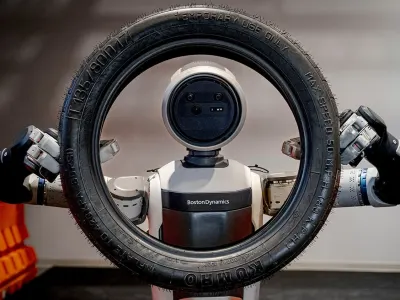
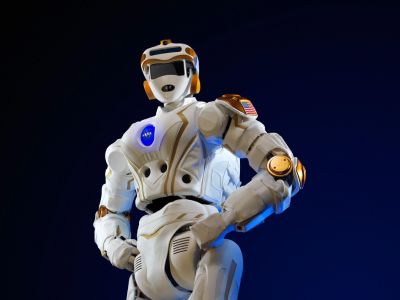
The tallest walking humanoid robot you can find in 2026 is the electric Atlas from Boston Dynamics, at 1.9 m (6 ft 2 in) and 90 kg. NASA's Valkyrie is a close second at 188 cm and is the heaviest robot here at 136 kg (300 lb). Unitree H2 comes third at 182 cm, followed by a group of four robots at 180 cm: Kaleido 8.0, NEURA 4NE-1, MagicBot X1 and Unitree H1.
Almost every full-size humanoid today stops at about 1.8 to 1.9 m, which is roughly the height of a tall adult. The reason is practical. These robots are built to work in factories, warehouses and buildings made for people, so doors, shelves and workbenches decide how tall they need to be. This guide ranks seven walking humanoids by the height their makers publish, and shows the weight next to it so you can see how much machine sits behind each number.
Tallest Humanoid Robots at a Glance
Here is how the seven robots compare. Rows follow our ranking, from the tallest to the shortest, with the heavier robot first when heights match.
| Rank | Robot | Manufacturer | Key Strength | Best For | Height and Weight |
|---|---|---|---|---|---|
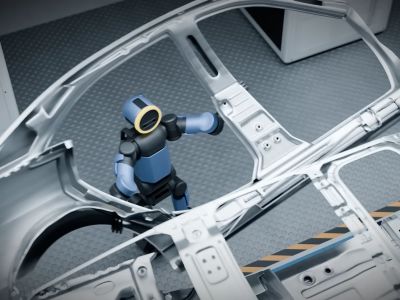
| #1 | 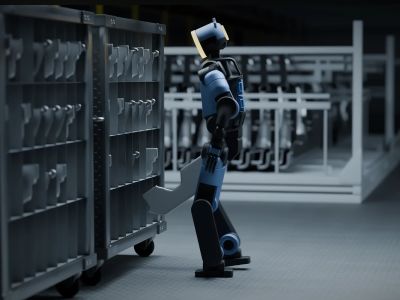 Atlas (Electric 2025) | Boston Dynamics | Tallest here, with a 30 kg sustained and 50 kg peak payload | Heavy factory part handling | 190 cm, 90 kg |
| #2 |  Valkyrie | NASA | Heaviest here, built for damaged human-made sites | Research and space-agency tasks | 188 cm, 136 kg |
| #3 |  Unitree H2 | Unitree Robotics | Arm load of 7 kg rated and 15 kg peak | Research teams and service demos | 182 cm, 70 kg |
| #4 |  Kaleido 8.0 | Kawasaki | Lists a load of up to 60 kg | Disaster response and heavy work | 180 cm, 80 to 86 kg |
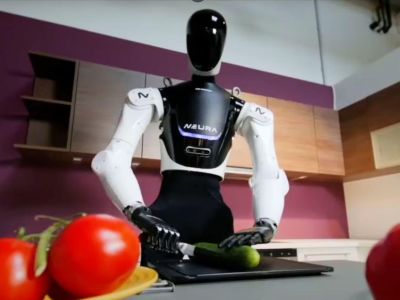
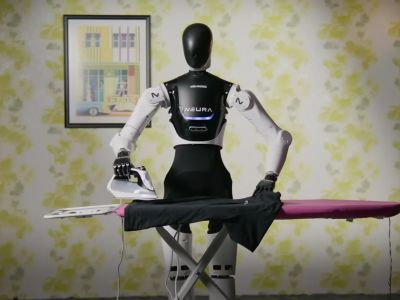
| #5 | 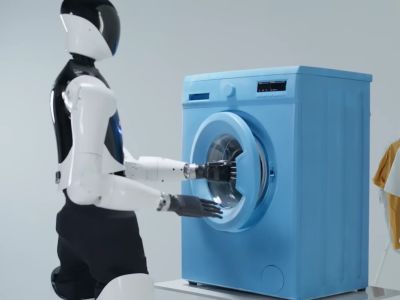 4NE-1 | NEURA Robotics | 6 to 8 hours of work with hot-swap batteries | Shifts beside people in factories | 180 cm, 80 kg |
| #6 |  MagicBot X1 | MagicLab | 31 joints and a dual hot-swap battery system | Logistics and public-facing roles | 180 cm, 70 kg |
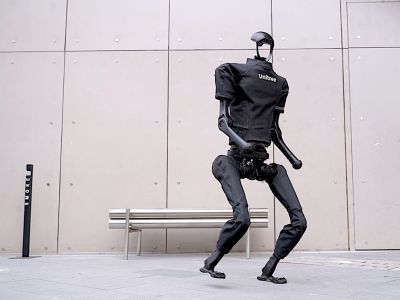
| #7 | 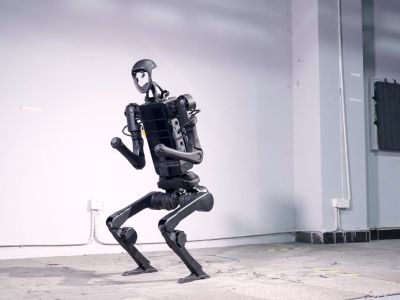 Unitree H1 | Unitree Robotics | Lightest 180 cm walker at 47 kg | Locomotion research and testing | 180 cm, 47 kg |
The gap between first and last is only 10 cm, but the weight gap is almost 90 kg. Height is similar across the group, while build and purpose differ a great deal.
Explore the Robots
Atlas (Electric 2025)
Atlas ranks first because it is the tallest walking humanoid with a published height, at 1.9 m (6 ft 2 in). Boston Dynamics lists its weight at 90 kg and gives it 56 joints that can rotate through very wide angles, so it can turn, crouch and reach in ways a human body cannot. Our record lists a sustained carrying load of 30 kg and a peak lift of 50 kg, the strongest figures on this list. It was designed for car plants, where it can lift and place heavy parts without a break. Typical use runs for about 4 hours, falling to about 2 hours under heavy loads, and the battery is built to be swapped. It suits large manufacturers who want a tall, strong robot for repetitive heavy handling.

Valkyrie
Valkyrie ranks second because NASA publishes a height of 6 ft 2 in, about 1.88 m, which is only 2 cm below Atlas. It is also the heaviest robot in this guide at 300 lb (about 136 kg), nearly one and a half times the weight of Atlas. NASA's Johnson Space Center built it for the 2013 DARPA Robotics Challenge, and it has 44 joints and a 1.8 kWh battery. It runs for about one hour on battery and can also work from wall power. Valkyrie was designed to operate in damaged or unsafe places built for people, such as collapsed buildings. It suits research labs and space-agency teams studying how a large humanoid moves and works.

Unitree H2
Unitree H2 ranks third because Unitree lists its standing size as 1820 x 456 x 218 mm, so it is 182 cm tall. It weighs 70 kg, which is 20 kg less than Atlas. Its leg joints deliver a peak torque of 360 N.m, which is the turning force that lets it balance and walk. The arms carry a rated load of about 7 kg and a peak of about 15 kg, enough for tools and light parcels. Our record lists a runtime of about 3 hours. It is slim, only 45.6 cm across the shoulders, so it fits through doorways and between shelves easily. It suits university labs and companies that want a tall, buyable humanoid for research, service demonstrations and small trials.

Kaleido 8.0
Kaleido 8.0 ranks fourth because it stands 180 cm tall and is the heaviest of the four robots at that height, at 80 to 86 kg. It comes from Kawasaki, a company known for industrial robots, and the Kaleido line has been developed in Japan for years. Our record lists a carrying load of up to 60 kg for version 8, the largest on this list, and a walking pace of about 4 km/h. Kawasaki showed it in a mock evacuation centre at iREX 2023, where it worked alongside people in a disaster setting. It is a legged robot built for strength rather than speed. It suits disaster-response teams and heavy-duty work areas where a sturdy human-sized helper could move equipment and supplies.
4NE-1
4NE-1 ranks fifth because it matches the 180 cm height of three others but weighs less than Kaleido 8.0 at 80 kg. NEURA Robotics, a German company, built it for factories and warehouses, and its skin senses touch so that it can stop before it hits a person. Our record lists a continuous carrying load of 15 to 20 kg, roughly 10 kg on each arm, and a walking pace of 3 to 5 km/h. Its standout number is the runtime, 6 to 8 hours, with hot-swap batteries that allow work to continue around the clock. It suits manufacturers who want a robot to share an assembly line with people, move totes and kit parts through long shifts.

MagicBot X1
MagicBot X1 ranks sixth because it matches the 180 cm height of 4NE-1 but weighs 70 kg, which is 10 kg less. MagicLab lists its width at 55.4 cm, its depth at 28 cm, its arm span at 158 cm and its leg length at 92 cm, so the long legs make up just over half of its height. It has 31 active joints, a peak joint torque of at least 350 N.m and a dual hot-swap battery system rated at 18 Ah, so the batteries can be changed one at a time without shutting the robot down. MagicLab names logistics, inspection, public safety and event roles for it. It suits companies testing a mid-weight humanoid in shops, warehouses and public spaces.
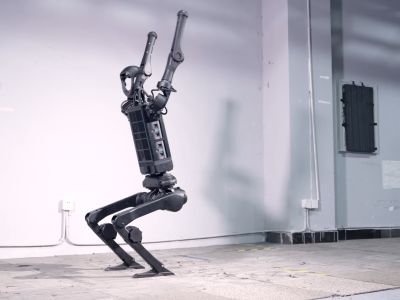
Unitree H1
Unitree H1 ranks seventh because it is 180 cm tall but only 47 kg, the lightest robot here by a wide margin. Unitree lists its leg joints at a peak torque of 360 N.m, and the arms carry a rated load of about 7 kg. It became known for speed, and our record lists a top speed above 3.3 m/s, which is faster than a quick jog. Its slim frame, 57 cm wide and 22 cm thick, makes it easy to move and to store. It is built for research rather than heavy work. It suits labs and universities that want a tall, light biped to study balance, running and learning, at a smaller size than Atlas.
How to Choose Between Them
Start by asking why height matters to you. A taller robot reaches higher shelves and works at counters set for adults, but extra height does not mean extra strength. Atlas is the tallest on this list, yet Valkyrie weighs about 46 kg more and Kaleido 8.0 lists the largest load of the group at up to 60 kg. Height tells you the reach, weight tells you the build, and payload tells you the work.
Next, look at weight. A heavy robot is steadier when it lifts or leans, but it is harder to move, needs stronger floors and hits harder if something goes wrong. A light robot such as Unitree H1 at 47 kg is easier to transport and safer to test around people, and it is the lightest 180 cm walker here by a wide margin. If your space is small or you move the robot often, weight matters as much as height.
Then check how long it works. Valkyrie runs for about an hour on its own battery, though it can also run on wall power. Unitree H2 lists about 3 hours, and NEURA 4NE-1 lists 6 to 8 hours with battery swapping. A tall robot that needs charging every hour is a research tool, while one with swappable batteries can cover a shift.
Be clear about availability. Several robots here are sold or leased to companies and labs, while others are shown at fairs and trials. NASA's Valkyrie is a research platform that was lent to universities, and Kaleido 8.0 has been shown in disaster-response demonstrations. Ask the maker whether you can buy, rent or only watch before you plan around a robot.
If you want a quick pick, use this shortcut. Choose Atlas for the tallest, strongest factory worker. Choose Valkyrie for a heavy research platform from a space agency. Choose Unitree H2 for a tall robot with published arm loads that research teams can buy. Choose NEURA 4NE-1 for long shifts alongside people. Choose Unitree H1 when a light 180 cm body matters most.
How We Ranked These Robots
We ranked by the height each maker publishes, in centimetres. When two robots share the same height, the heavier one is listed first, which is why Kaleido 8.0 sits above NEURA 4NE-1, MagicBot X1 and Unitree H1. We checked Atlas against Boston Dynamics, Valkyrie against NASA, Unitree H2 and H1 against Unitree, and 4NE-1 against NEURA.
We only counted humanoids that walk on two legs and are live in our catalogue. Wheeled humanoids, mobile pedestal robots and fixed torsos can reach 2 m or more because they do not need to balance on legs, but they answer a different question. We also left out robots whose makers give a height only as a loose range, and concept machines that have not been built.
Two limits are worth knowing. First, makers measure in different ways: some give the standing height with the head up, others give a rounded figure, and a few show a different number for each software or hardware version. Second, height and weight change between versions, so confirm the figure for the exact model you plan to buy or see.
Frequently Asked Questions
What is the tallest humanoid robot in the world?
Among walking humanoids that have been built and have a published height, the electric Atlas from Boston Dynamics is the tallest at 1.9 m (6 ft 2 in). NASA's Valkyrie follows at 188 cm. Wheeled and fixed-base robots can be taller because they do not balance on two legs, so they are counted in a separate group.
What is the heaviest humanoid robot?
Of the seven robots here, NASA's Valkyrie is the heaviest at 300 lb (about 136 kg). Atlas is much lighter at 90 kg despite being taller. Kaleido 8.0 comes next at 80 to 86 kg, then NEURA 4NE-1 at 80 kg. The lightest is Unitree H1 at 47 kg.
How tall are most humanoid robots?
Full-size humanoids mostly stand between 1.7 and 1.9 m, close to an adult person. Smaller models for homes, schools and research are shorter, around 1.3 m or less. Makers choose human height on purpose, so the robot can use the same doors, shelves, tools and workstations that people use.
Why are humanoid robots about the same height as people?
Because the world is built for people. Doorways, stairs, shelves, car seats and machine controls are set for an adult body. A robot of similar height can work in those spaces without rebuilding them. Going much taller adds weight, cost and balance problems, with little gain for most jobs.
Is a taller humanoid robot stronger?
Not by itself. Strength comes from the motors, joints and frame, not from height. Atlas is the tallest here and lists the strongest carrying figures, but Valkyrie is heavier and Unitree H1 is the same height as several others at a much lower weight. Check the payload and weight for the job you have in mind.
Which tall humanoid robot can I buy?
Availability varies by maker and country. Unitree lists H2 for sale on its own site, and NEURA, Boston Dynamics and MagicLab offer their robots to business customers. NASA's Valkyrie was lent to research groups and is not a retail product. Contact the maker to confirm buying or leasing terms in your region.
Can humanoid robots be taller than 2 metres?
Yes, but mostly on wheels. Wheeled and pedestal humanoids can reach 2 m or more because they do not need to balance on two legs. Walking humanoids stay under about 1.9 m today because a taller body is harder to keep upright and needs a heavier frame and stronger joints.
Sources
Related Articles
Top 7 Humanoid Robots Launched in Q3 2026 (July–September)
10/1/2026
Top 8 Social & Companion Humanoid Robots with Conversational Emotional AI for 2026-2027
9/20/2026
Top 10 Humanoid Robots with the Highest Payload & Heavy-Lifting Capacity in 2026
9/9/2026
Best Open-Source Humanoid Robots in 2026, Ranked by How Open They Really Are
10/27/2026
Top 5 Humanoid Robots Being Developed for Defense, Security & First Responders in 2026
10/9/2026
Top 10 Heavy-Duty Industrial Humanoid Robots for Automotive & Factory Assembly in 2026
10/9/2026