Best Open-Source Humanoid Robots in 2026, Ranked by How Open They Really Are

The Short Answer: Which Humanoid Robots Are Truly Open Source
The most open humanoid robot in 2026 is Reachy 2 from Pollen Robotics, which publishes both its hardware and its software under the Apache 2.0 licence. Close behind are ROBOTO ORIGIN from RoboParty and Asimov v1 from Menlo Research, two full-size biped robots whose body designs, circuit boards and code are public. AgiBot X1, Bruce, Sourccey and RP1 follow, each open in a different way and to a different degree.
Open source means different things on different robots. For some, you can download the drawings and build the whole machine yourself. For others, you only get the programming interface to control a robot that the maker built. This guide ranks seven humanoids by what the maker has actually released, so you know what you can build, change and share before you spend anything.
Open-Source Humanoid Robots at a Glance
How to Choose Between Them
Start with what you want to do. If you want to study how a robot uses its hands and arms, Reachy 2 is the closest fit. If you want to build and learn how a walking robot works, ROBOTO ORIGIN or Asimov v1 give you the most complete public files at human scale. If you want a smaller, safer robot for walking research, Bruce is the option here.
Next, look at the licence. Apache 2.0 lets you do almost anything. GPL licences require you to share your changes if you share your version. A robot with no stated licence leaves you to ask the maker before you use it in a product. Finally, check that the files you need are actually in the repository today, because some roadmaps list items as still to come.
Be realistic about effort. Building from public files takes time, tools and electronics skills, and you are responsible for fixing what breaks. A closed commercial robot comes working out of the box. An open one gives you freedom in return for work.
Open the maker's repository and look at the dates of the latest changes. A project that has been updated recently is more likely to answer your questions. Read the licence file, and read the list of what is marked finished and what is marked upcoming. If the maker runs a community forum, see how quickly people get answers.
Ask what happens if a part is out of stock. Open designs let you make a replacement yourself, which is a real advantage, but only if you have access to a 3D printer or a machine shop. And remember that open source does not mean free: the motors, batteries and computers still have to be bought, and they make up most of the cost.
If you are still undecided, use this shortcut. Choose Reachy 2 for the clearest licence and arm research. Choose ROBOTO ORIGIN or Asimov v1 for a human-sized biped you can assemble. Choose AgiBot X1 if a large maker matters to you and you will confirm the reuse terms. Choose Bruce for a small, safe walker. Treat Sourccey as a home-task learning platform, and RP1 as a robot to follow until its files are published.
How We Ranked These Robots
We looked at four things for each robot: whether the mechanical drawings are public, whether the electronics and firmware are public, whether the control and training code is public, and whether a licence says what you may do with it all. A robot that releases all four ranks above one that releases only a software kit. We read each maker's own page or code repository, and where a page did not state something, we left it out instead of guessing.
We only counted humanoids that are live in our catalogue and have a public project page. We used height and weight as published by the maker. We left out robots that only say they support open tools, such as a standard robot operating system, without releasing their own designs. A robot can use free software and still keep its body design closed, so that is not enough to count.
Two limits are worth knowing. First, a public repository can change, so check the project page before you buy. Second, open source is about access to the designs, not about quality. A fully open robot can still be rough, slow or unfinished, and several robots above are research platforms, not finished products.
Here is how the seven robots compare on what the makers have released. Rows follow our ranking, from the most open to the least.
| Rank | Robot | Manufacturer | Key Strength | Best For |
|---|---|---|---|---|
| #1 | 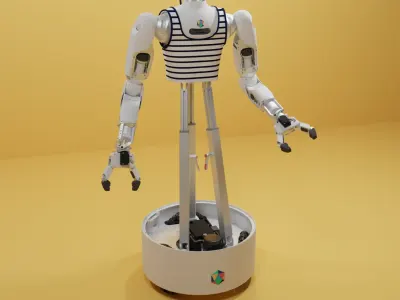 Reachy 2 | Pollen Robotics | Apache 2.0 licence covers both hardware and software | Manipulation research and teaching |
| #2 | 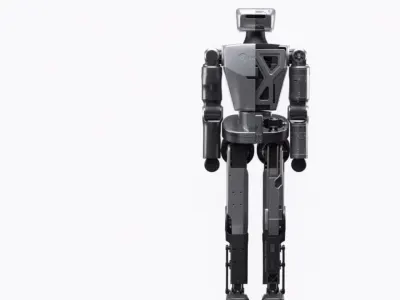 ROBOTO ORIGIN | RoboParty | Near-complete release: drawings, circuits, firmware and training code | Makers and robotics clubs |
| #3 | 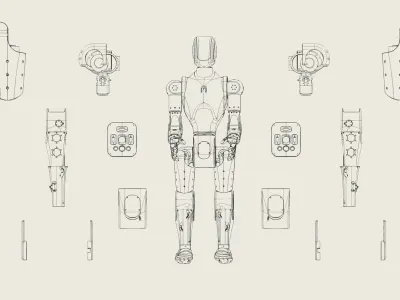 Asimov v1 | Menlo Research | Open hardware and software licences, plus a buildable kit | Small teams wanting a human-sized platform |
| #4 | 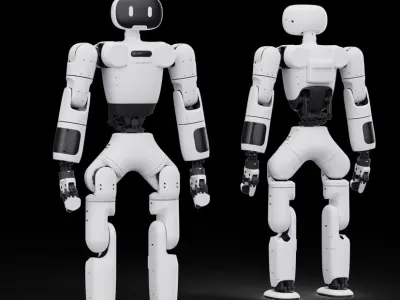 AgiBot X1 | AgiBot | Public designs and training code from a large maker | University and company labs |
| #5 | 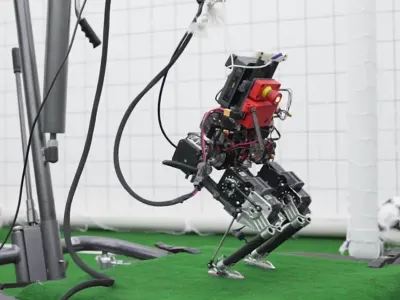 Bruce | Westwood Robotics | Light 4.8 kg walker that is safe around people | Locomotion labs and classrooms |
| #6 | 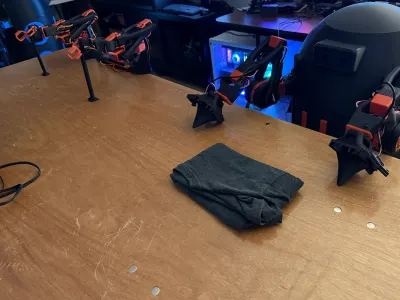 Sourccey | Vulcan Robotics | 3D-printed body that learns tasks by demonstration | Hobbyists teaching household tasks |
| #7 |  RP1 | RoboParty | Runs at up to 4 m/s, with a full open release promised | Readers following the next wave |
The ranking reflects what is public today, not what is promised. Check each project page for updates before you plan a build.
Explore the Robots
Reachy 2
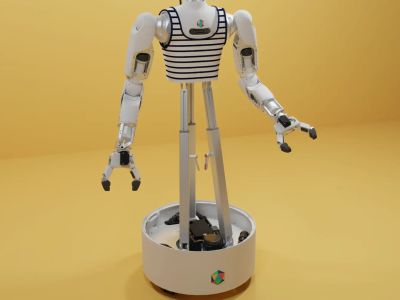
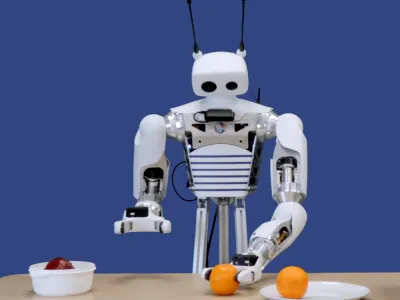
Reachy 2 ranks first because Pollen Robotics releases both its hardware and its software and names the licence: Apache 2.0, which lets you use, change and sell your own versions if you keep the credits. Few humanoid makers say this so plainly. It is a wheeled upper-body humanoid, so it does not walk. Its two arms move like human arms and each carries about 3 kg, which is enough for tools, small parcels and everyday objects. A person can also drive it remotely wearing a virtual reality headset, which is a handy way to teach it a task by example. Its height adjusts from 136 to 166 cm and it weighs up to 50 kg. It suits a university or company team that wants to study how robots handle objects and is free to change the design.
ROBOTO ORIGIN
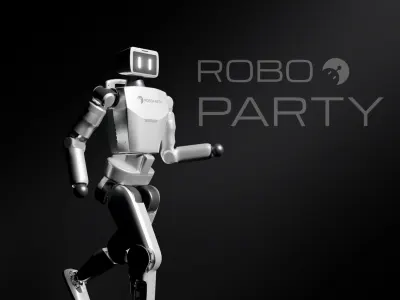
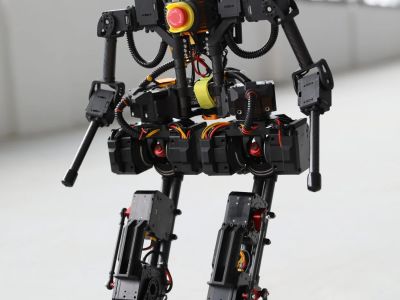
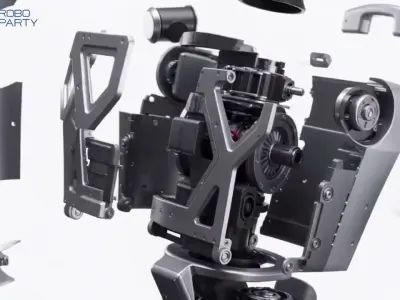
ROBOTO ORIGIN comes second because RoboParty, when it released the robot in January 2026, published nearly everything: drawings, parts list, circuit boards, firmware, simulator files, and the code for training and running it. The project text is under the GPL-3.0 licence, so anyone who shares a changed version must share their changes too. It is a 1.25 m, 34 kg walking prototype with 23 motorised joints that runs at about 3 m/s, and the team built it in roughly four months. It loses the top spot because RoboParty says the motion-control algorithms that run on the robot are still to be added. Expect real assembly and tuning work. It suits makers, students and robotics clubs who want to learn by building a walking humanoid from public files.
Asimov v1
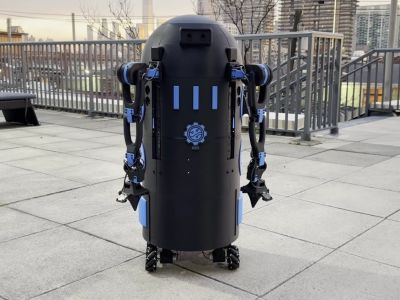
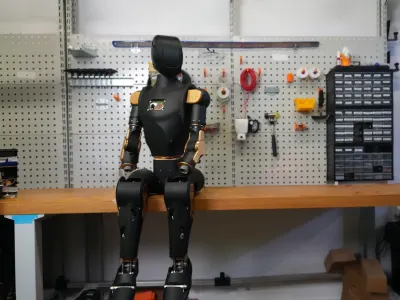
Asimov v1 takes third place. Menlo Research marks its mechanical drawings (seven sub-assemblies), wiring, circuit schematics and board files, simulation model and onboard software as complete, with the hardware under the CERN Open Hardware Licence and the software under GPL-2.0. The robot is 1.2 m tall, weighs 35 kg and has 25 motorised joints. Menlo also publishes the parts list and assembly manual, so you can source the pieces yourself, and it offers a kit for people who would rather not. Its roadmap still lists the walking policy and a module called Asimov Edge as upcoming, which means the body is open before some of the software is. It suits a small team that wants a well-documented, human-sized platform and can wait for the last software pieces.
AgiBot X1
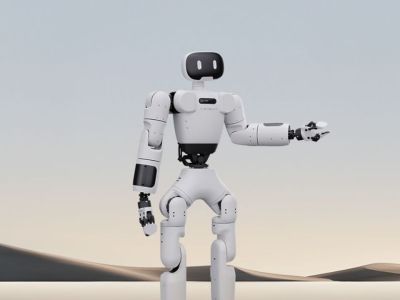
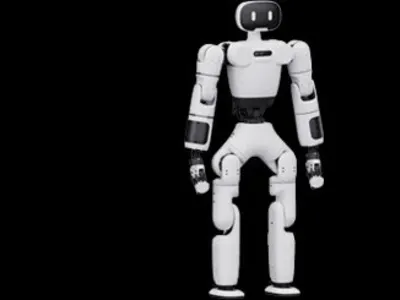
AgiBot X1 is the rare product from a large Chinese humanoid maker that ships with public designs: a parts list, STEP and SolidWorks drawings, an assembly procedure, and code repositories for running and training the robot. That gives a lab a complete starting point from a company with real manufacturing experience. The X1 stands 130 cm tall, weighs 33 kg and has 29 joints plus two grippers, and the head can take three more joints. It sits fourth because the developer guide states no licence, so the rules for reuse are unclear. Anyone planning a commercial product should ask AgiBot first. It suits a university or company lab that wants a mid-size walking platform from a maker with a track record and will confirm the reuse terms directly.
Bruce
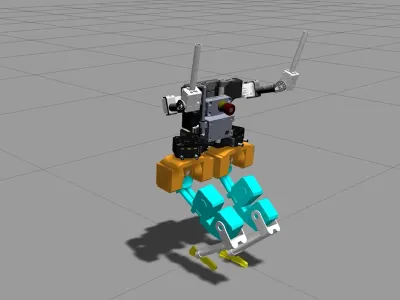
Bruce ranks fifth. Westwood Robotics calls this kid-size humanoid completely open source for research and education, but says its wiki and code are open to Bruce developers and community members, so you may need to join before you can see everything, and no licence is named. It stands 70 cm tall, weighs 4.8 kg and has 16 joints, five in each leg and three in each arm. The light carbon fibre frame suits walking, balancing and jumping tests, and the robot is small enough to be safe to use around people, which suits classroom work as well as lab benches. It suits a lab or school studying how legged robots walk and balance, and it is the smallest robot on this list.
Sourccey
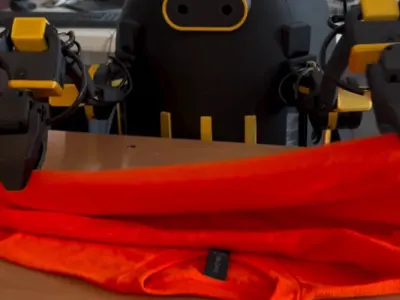
Sourccey ranks sixth because its open status is the least documented of the released projects. Coverage says Vulcan Robotics publishes its hardware, electronics and software designs and offers printable parts files, but no licence is stated and reports differ on the release date. It rolls on four mecanum wheels, which let it slide sideways, stands 1,030 mm tall, weighs just under 16 kg and has two five-joint arms with grippers. Most of the body is 3D printed, so a replacement part can come off your own printer. Some sources question whether a wheeled robot counts as a humanoid. It suits hobbyists who want to teach a robot household tasks, such as folding clothes, by showing it what to do.

RP1
RP1 ranks last because its openness is a promise, not a release. RoboParty showed it at the IROS 2026 robotics conference on 28 September 2026 and calls it a full-stack open-source humanoid, but its press release says only the earlier ROBOTO ORIGIN is public. The RP1 body, motor modules, motion control, simulator and developer tools are due later, and the company planned to share its roadmap in October 2026. It stands 1.35 m tall, weighs about 39 kg, runs at up to 4 m/s and carries up to 5 kg per arm. The same team delivered on a similar promise once, so it is worth watching. To build something today, choose one of the robots above.
Sources
- Reachy 2 Profile
- ROBOTO ORIGIN Profile
- Asimov v1 Profile
- AgiBot X1 Profile
- Bruce Profile
- Sourccey Profile
- RP1 Profile
- ROBOTO_ORIGIN - Fully Open-Source DIY Humanoid Robot
- Asimov 1: Open-Source Humanoid Robot
- Reachy 2 - The open-source humanoid for embodied AI
- AgibotTech/agibot_x1_hardware: The hardware design for AgiBot X1.
- BRUCE
- Sourccey Brings Open Source Robotics Home
- RoboParty Unveils RP1, a High-Performance Full-Stack Open-Source Humanoid Robot at IROS
Related Articles
Top 7 Humanoid Robots Launched in Q3 2026 (July–September)
10/1/2026
Top 8 Social & Companion Humanoid Robots with Conversational Emotional AI for 2026-2027
9/20/2026
Top 10 Humanoid Robots with the Highest Payload & Heavy-Lifting Capacity in 2026
9/9/2026
Top 5 Humanoid Robots Being Developed for Defense, Security & First Responders in 2026
10/9/2026
Top 10 Heavy-Duty Industrial Humanoid Robots for Automotive & Factory Assembly in 2026
10/9/2026
Top 10 Home Humanoid Robots for Domestic Tasks & Personal Assistance in 2026
10/5/2026