Top 5 Humanoid Robots Being Developed for Defense, Security & First Responders in 2026
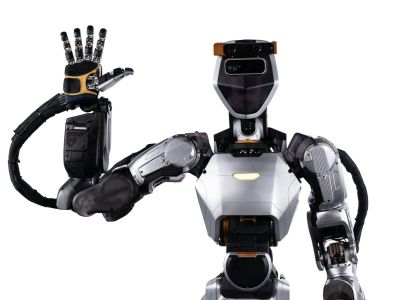
Frontline Humanoids Emerge
Humanoid robots are shifting from lab demos to mission-adjacent tools, and in 2026 the most consequential developments are happening where danger, repetition, and urgency overlap. The ranking here reflects which platforms are closest to real-world value for defense, security, and first responder work, with emphasis on logistics under fire, hazardous-area support, and the ability to operate in human spaces without major infrastructure changes. Phantom MK1 leads because it is being pushed hardest toward frontline support and reconnaissance, while the rest of the field shows how industrial humanoids are being adapted for riskier public-service roles through teleoperation, manipulation, and ruggedized task performance.
Risk Work Drives Demand
What makes this moment different is the convergence of military procurement, emergency-response needs, and enterprise robotics maturity. The strongest candidates are no longer defined only by walking ability, but by whether they can move supplies, inspect dangerous zones, handle tools, and collect data while staying useful to human teams. Defense agency contracts, active pilot programs, and deployments into hazardous environments are now the clearest indicators of progress. In that context, Apollo 2, Atlas, Figure 03, and Phoenix each represent a different step toward practical humanoid labor, but the ranking still favors platforms with the clearest near-term mission fit for security, rescue, and contested environments rather than general-purpose household utility.
These 5 Humanoid Robots Being Developed for Defense, Security & First Responders
Quick Overview
Here is a ranked snapshot of how each humanoid fits the defense, security, and first responder landscape.
| Rank | Robot | Manufacturer | Key Strength | Best For |
|---|---|---|---|---|
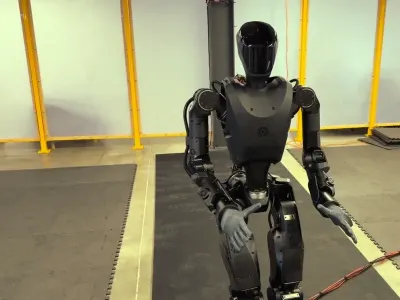
| #1 | 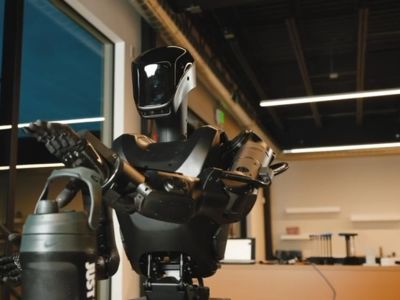 Phantom MK1 Phantom MK1 | Foundation | Defense-focused field testing and hazardous-zone support | Logistics, reconnaissance, CBRN operations |
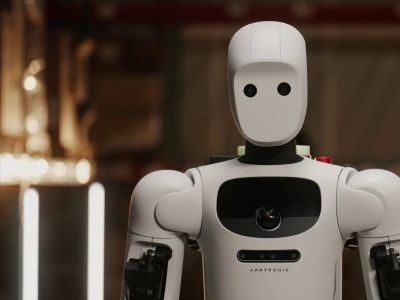
| #2 | 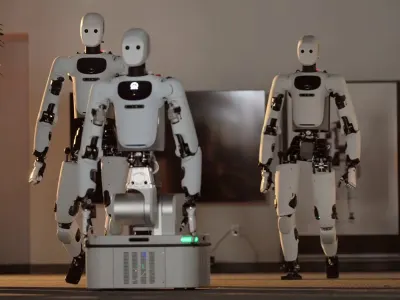 Apollo 2 Apollo 2 | Apptronik | Flexible enterprise manipulation in human spaces | Goods-to-person, packout, machine tending |
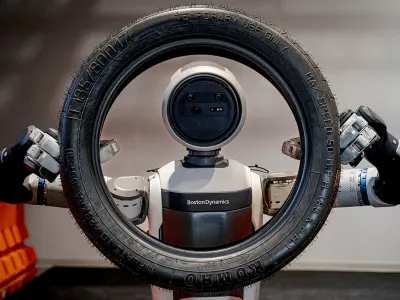
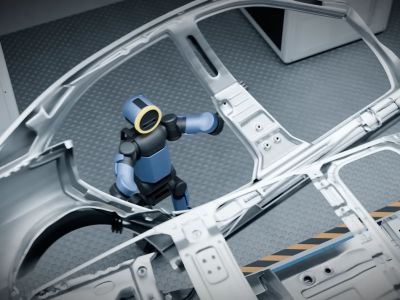
| #3 | 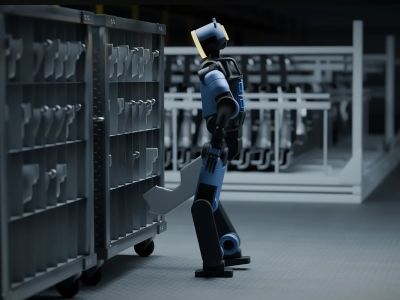 Atlas (Electric 2025) Atlas (Electric 2025) | Boston Dynamics | Humanoid / General Purpose | Heavy automotive part sequencing, damper strut lifting |
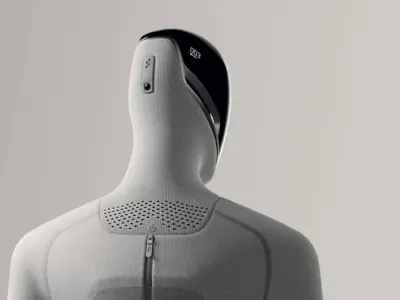
| #4 | 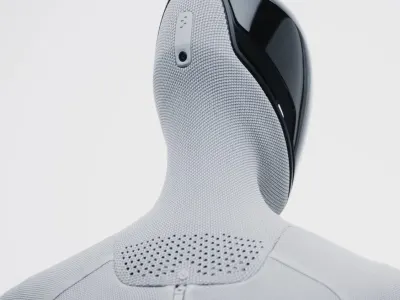 Figure 03 Figure 03 | Figure AI | General-purpose dexterity for human-centered tasks | Home assistance, light manipulation, cleaning |
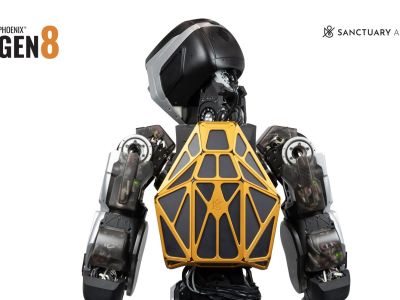
| #5 | 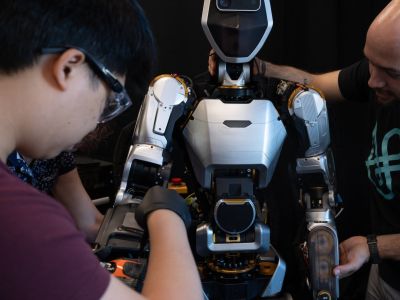 Phoenix Phoenix | Sanctuary AI | Broad task versatility and data-capture workflows | Logistics handling, customer service, research |
This ranking shows a clear split between robots being shaped for frontline risk and robots optimized for broader commercial versatility, with Phantom MK1 and Atlas standing out most for defense-adjacent use.
Explore the Robots
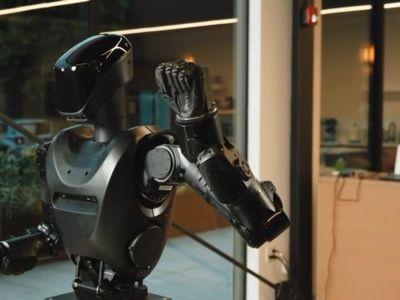
Phantom MK1
Phantom MK1 is the most overtly defense-oriented robot on this list, and that is what makes it notable in 2026. It is being positioned for logistics support, reconnaissance, urban operations, and contaminated or dangerous zones where humans face unnecessary exposure. Its appeal is not elegance, but mission relevance: getting supplies moved, collecting information, and supporting teams in environments that are too risky for routine human entry. That makes it a different kind of humanoid than consumer-facing systems. Instead of aiming first at convenience, it is built around operational usefulness in military and emergency conditions, which is why it sits at Rank #1.
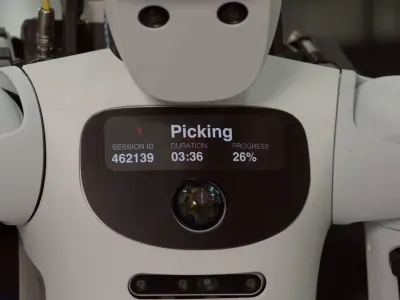
Apollo 2
Apollo 2 ranks high because it is one of the more mature humanoid platforms for structured work, even if its current focus is industrial rather than battlefield deployment. Apptronik is using it for goods-to-person workflows, packout, kitting, inspection, and machine tending, all of which matter indirectly to defense logistics and emergency supply chains. Its value lies in working in human-built environments without demanding a full warehouse redesign. That makes it relevant to security operations, depots, and back-end support for first responders. Apollo 2 is less about rugged field action and more about reliable task execution where people and machines need to coexist efficiently.
Atlas (Electric 2025)
Atlas (Electric Atlas, 2025) is Boston Dynamics' fifth-generation humanoid robot, fully electric and designed for real-world industrial and research applications. It features advanced all-electric actuators that provide superior strength and a broader range of motion than previous models, including 360-degree rotation at key joints. Atlas integrates sophisticated sensor arrays such as LiDAR, stereo and RGB cameras, and depth sensors, enabling real-time perception and environmental awareness. Its software leverages AI, machine learning, and large behavior models for autonomous whole-body manipulation and locomotion, allowing it to perform complex tasks like packing, sorting, and adapting dynamically to unexpected physical challenges. The robot is built with lightweight titanium and aluminum 3D printed parts for optimal strength-to-weight ratio and supports integration with Boston Dynamics’ fleet management software, Orbit.
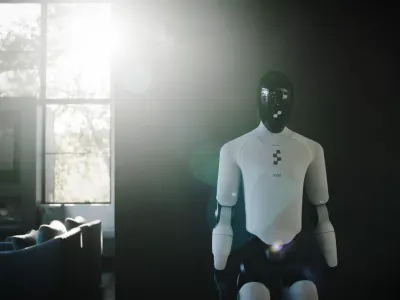
Figure 03
Figure 03 is best understood as a general-purpose humanoid aimed at home assistance and light manipulation, which places it lower in this ranking for defense and first responder work. Still, its dexterity and human-space compatibility matter because many emergency and security tasks happen in buildings, residences, and care facilities rather than open terrain. That gives Figure 03 potential value in elderly care support, cleanup, and careful object handling where a compact humanoid may assist without major disruption. Its strongest differentiator is broad usability, not specialized ruggedization. In this list, that makes it a promising platform, but not yet one built around hostile or high-risk deployment.
Phoenix
Phoenix from Sanctuary AI rounds out the list as a flexible humanoid built around industrial automation, data capture, and service-oriented tasks. Its relevance to defense and first responder scenarios comes from adaptability rather than direct tactical positioning. In logistics handling, research, and healthcare support, a platform like Phoenix could help with repetitive workflows, inventory movement, and information gathering in controlled environments. That makes it useful as a support robot, especially where remote supervision or teleoperation can reduce labor strain. Compared with Phantom MK1 or Atlas, Phoenix is less rugged and less visibly mission-specific, but it still fits the broader shift toward humanoids that can operate in practical human settings.
Sources
Related Articles

Top 10 Wheeled & Hybrid Humanoid Robots for High-Speed Facility Mobility in 2026
9/9/2026
Top 10 Humanoid Robots with the Highest Payload & Heavy-Lifting Capacity in 2026
9/9/2026
Top 8 Humanoid Robots Powered by Vision-Language-Action (VLA) Embodied AI in 2026
9/3/2026
Top 7 Humanoid Robots Transforming Healthcare, Hospitals & Eldercare in 2026
9/3/2026
The 5 Fastest & Most Agile Humanoid Robots in 2026
9/3/2026
Top 10 Heavy-Duty Industrial Humanoid Robots for Automotive & Factory Assembly in 2026
10/9/2026
Top 10 Home Humanoid Robots for Domestic Tasks & Personal Assistance in 2026
10/5/2026
Top 8 Social & Companion Humanoid Robots with Conversational Emotional AI for 2026-2027
9/20/2026