The 5 Fastest & Most Agile Humanoid Robots in 2026

Speed Meets Balance
The humanoid race in 2026 is no longer just about walking upright, but about how fast a machine can sprint, recover, and keep control under pressure. This ranking reflects a new benchmark for agility, where top-end speed, dynamic balance, obstacle traversal, and whole-body control now matter as much as raw mechanical power. Rank #1 Superman leads the field with extreme burst speed and athletic movement, while the rest of the list shows how humanoids are quickly moving from lab demos to real-world tasks such as logistics, inspection, and public demonstration. The result is a fast-changing field where performance is becoming a proxy for practical utility.
Control Drives Progress
What separates this generation of humanoids from earlier models is not only faster legs, but smarter control stacks that let the robots stabilize mid-stride, change direction, and handle uneven terrain without losing form. Rank #2 Bolt pushed the speed envelope with real-world sprint testing, Rank #3 Tiangong has become a more versatile platform for industrial and service scenarios, Rank #4 Honor D1 is emerging as a benchmark for athletic mobility and deployment-ready autonomy, and Rank #5 Unitree H1 remains a reference point for general-purpose humanoid development. Together, they show that the market is converging on robots that can move like athletes and work like machines.
Quick Overview
Here is how the five robots compare on speed, agility, and intended use.
| Rank | Robot | Manufacturer | Key Strength | Best For |
|---|---|---|---|---|
| #1 | 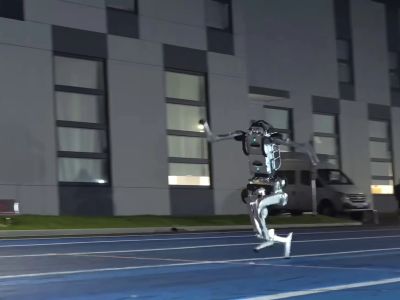 Superman Superman | Unitree Robotics | Extreme sprint speed and explosive athletic motion | Dynamic locomotion research and humanoid benchmarking |
| #2 | 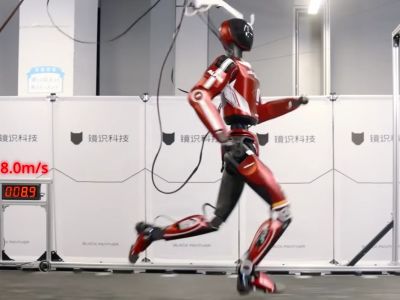 Bolt Bolt | MirrorMe Technology | Real-world high-speed running and balance control | Sports training, motion research, and fast collaboration |
| #3 | 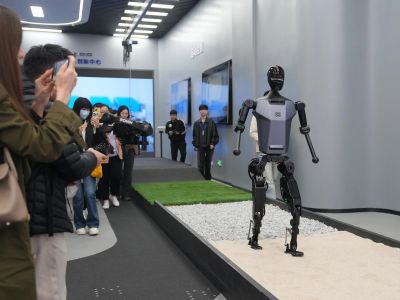 Tiangong Tiangong | X-Humanoid | Stable full-body control across varied environments | Warehouse logistics and inspection |
| #4 |  Honor D1 (Lightning) Honor D1 (Lightning) | Honor | Mobility designed for bipedal performance and deployment scenarios | Delivery, demonstrations, and benchmarking |
| #5 | 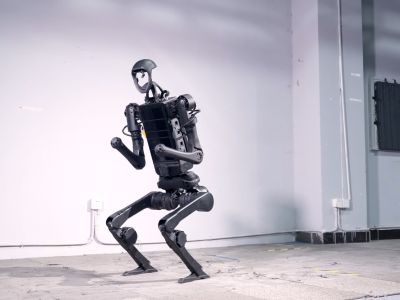 Unitree H1 Unitree H1 | Unitree Robotics | General-purpose agility with broad robotics applicability | Research, inspection, and development |
This ranking shows a clear divide between pure athletic performance at the top and adaptable, task-ready humanoids below, with each robot advancing the practical limits of bipedal motion.
Explore the Robots
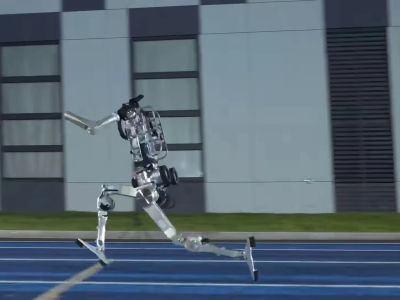
Superman
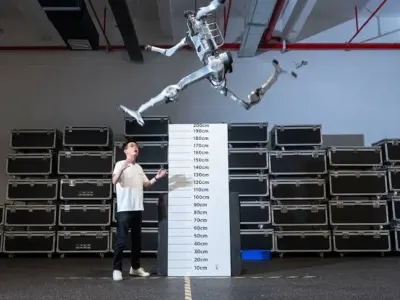
Superman is the most attention-grabbing entry in this ranking because it represents the current edge of humanoid speed and athletic control. Designed by Unitree Robotics, it is positioned as a platform for dynamic locomotion research, benchmarking, inspection, and advanced control development, which makes it more than a showpiece. Its significance lies in how it turns sprinting, jumping, and rapid stabilization into a research asset rather than a stunt. That balance of spectacle and engineering is what sets it apart from more general-purpose humanoids. In practical terms, Superman matters because it expands what developers can expect from a machine that has to move quickly and still remain upright.
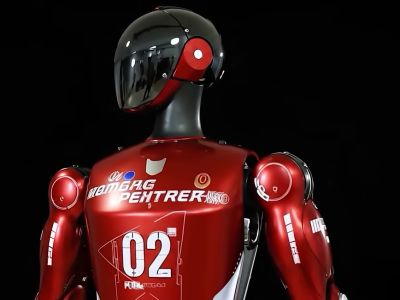
Bolt
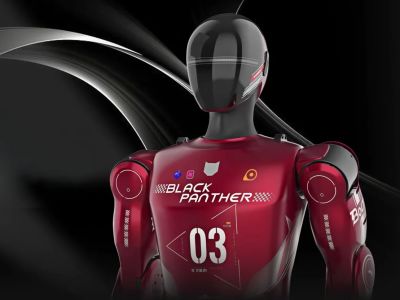
Bolt stands out as a speed-first humanoid built to prove that bipedal robots can run at human-athlete levels while staying controllable in the real world. MirrorMe Technology has framed it as a platform for sports training, dynamic motion research, high-speed logistics, and collaboration in unstructured environments. Its importance is less about novelty than about what its motion profile unlocks: faster reactions, stronger balance recovery, and more confident movement through complex spaces. Bolt’s place in the ranking reflects that mix of velocity and control, making it one of the clearest examples of a humanoid that is meant to be both a test bed and a future work machine.
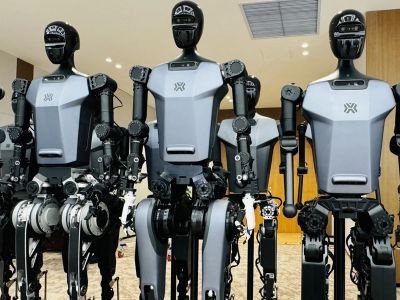
Tiangong
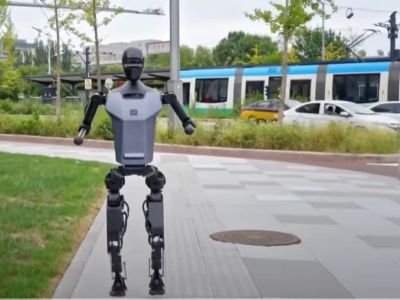
Tiangong is the most utility-oriented robot in this group, but it still earns its ranking because agility in 2026 is increasingly tied to dependable movement in real settings. Developed by X-Humanoid, it is aimed at warehouse logistics, power plant inspection, elderly care, disaster response, and research. That broad mission makes Tiangong notable for balancing serviceability with dynamic performance rather than chasing speed alone. Its value comes from steady whole-body control, terrain handling, and the ability to operate in places where reliability matters more than spectacle. Tiangong is the kind of humanoid that shows where fast movement becomes useful movement.

Honor D1 (Lightning)
Honor D1, also called Lightning, is built around the idea that humanoid speed can support both public-facing demonstrations and practical movement tasks. As a bipedal platform from Honor, it is associated with autonomous delivery, logistics, entertainment, and future smart-environment integration. What makes it notable is the way it bridges athletic benchmarking with real deployment potential, suggesting a robot that can serve as both a test platform and a mobility showcase. In this ranking, Honor D1 sits behind the more aggressive runners, but it remains important because it points toward a future where agile humanoids are expected to navigate human spaces with confidence and consistency.
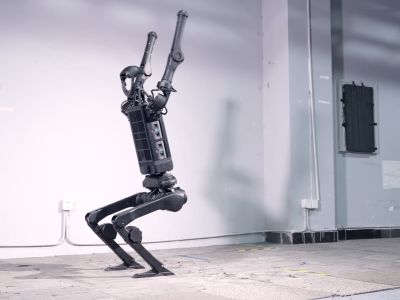
Unitree H1
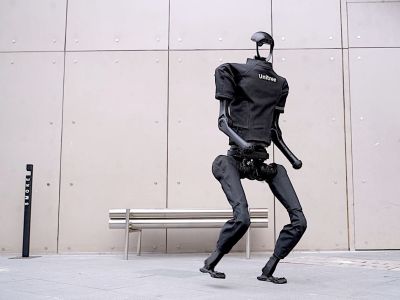
Unitree H1 remains a foundational humanoid in the broader speed-and-agility conversation because it helped define what a full-size bipedal robot could do in motion research. Positioned as a versatile general-purpose humanoid, it has been used across multiple robotics scenarios rather than a single narrow job. Its relevance comes from the combination of balance, locomotion, and control maturity that makes it useful as a platform for experimentation and development. While newer robots in this ranking push harder on raw speed, H1 still matters because it represents the practical baseline that many next-generation machines are trying to surpass.
Related Articles
Top 7 Humanoid Robots Transforming Healthcare, Hospitals & Eldercare in 2026
9/3/2026
Top 8 Humanoid Robots Powered by Vision-Language-Action (VLA) Embodied AI in 2026
9/3/2026

Top 10 Wheeled & Hybrid Humanoid Robots for High-Speed Facility Mobility in 2026
9/9/2026
Top 10 Humanoid Robot Launches of 2026 So Far
6/12/2026
10 Best Humanoid Robots for Education & Research Labs
6/8/2026
Top 10 Humanoid Robots Competing with Tesla Optimus (2026)
6/8/2026
Top 5 Humanoid Robots Being Developed for Defense, Security & First Responders in 2026
10/9/2026
Top 10 Heavy-Duty Industrial Humanoid Robots for Automotive & Factory Assembly in 2026
10/9/2026
Top 10 Home Humanoid Robots for Domestic Tasks & Personal Assistance in 2026
10/5/2026