Top 10 Humanoid Robot Launches of 2026 So Far (as of June 12)







The First Half of 2026
Across the first half of 2026, humanoid launches split into robots that run, robots that work and robots that talk. Bolt's 36 km/h sprint, Honor D1's half-marathon win and Luna's stage presence show how fast the field is diversifying, while Sprout, Onero H1 and Walker C1 aim at developers, homes and public venues. This list covers the ten most notable launches with a dated unveiling between January 1 and June 12, 2026. Our quarterly lists give every debut of each period in more detail.
How the Ten Were Chosen
Three tests decided the selection: a dated unveiling by the maker, published specifications beyond marketing claims and a clear use case. Robots that were only teased, or that lack a verifiable launch date, such as Sudo R1, are left out. Several launches are still pre-order or prototype stages, so availability and prices vary widely, from TRON 2's $7,000 to $10,000 range to the six-figure prices of the full-size bipeds.
Quick Overview
These ten launches had a dated unveiling between January 1 and June 12, 2026.
| Rank | Robot | Manufacturer | Key Strength | Best For |
|---|---|---|---|---|
| #1 |  Bolt Bolt | MirrorMe Technology | Feb 2, 2026 | 36 km/h sprint, fastest full-size humanoid at launch |
| #2 | 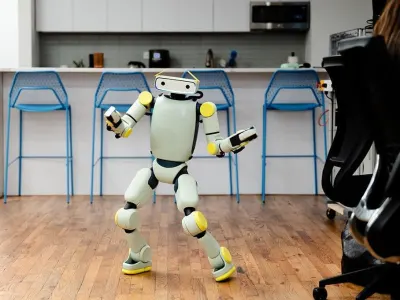 Sprout Sprout | Fauna Robotics | Jan 27, 2026 | Safe, compact $50,000 developer platform |
| #3 |  Moya Moya | DroidUp | Feb 4, 2026 | Warm skin and human-like gait |
| #4 |  Jupiter Jupiter | Zeroth | Jan 2026 (CES) | Autonomous and teleoperated modes |
| #5 | 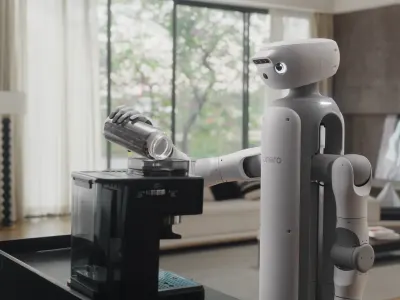 Onero H1 Onero H1 | SwitchBot | Jan 2026 (CES) | Wheeled household humanoid with 22-DoF arms |
| #6 |  Honor D1 (Lightning) Honor D1 (Lightning) | Honor | Apr 2026 | Half-marathon winner in 50:26 |
| #7 | 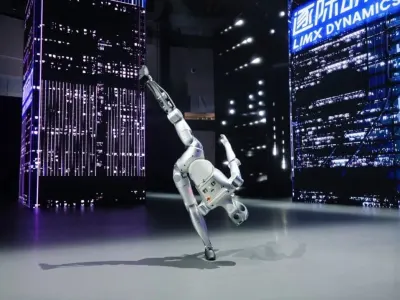 Luna Luna | LimX Dynamics | May 2026 | Gymnastics-level motion and stage presence |
| #8 |  Walker C1 Walker C1 | UBTECH Robotics | May 23, 2026 | Service humanoid for public venues |
| #9 | 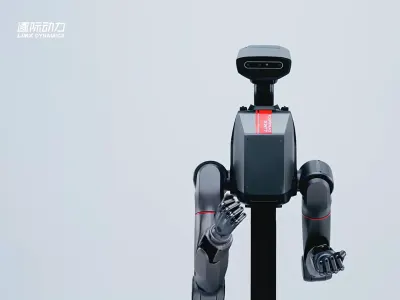 Tron 2 Tron 2 | LimX Dynamics | May 2026 | Modular bipedal, dual-arm or wheeled platform |
| #10 |  Kengo Kengo | Galaxea Dynamics | Jun 2, 2026 | First biped from a wheeled-robot maker |
Speed, expressiveness and low entry prices set this half-year apart from the lab-only humanoids of earlier years.
Explore the Robots
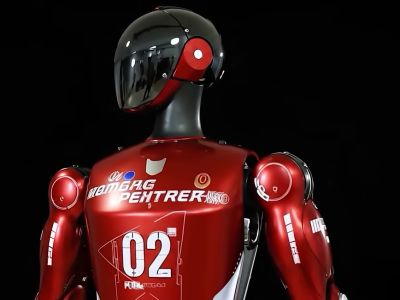
Bolt
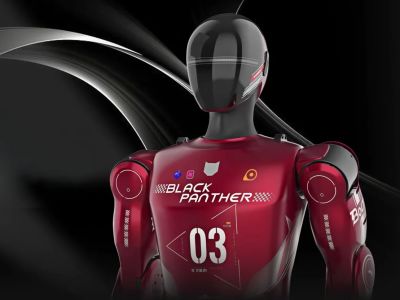
Bolt earned its place by turning a record into a product. MirrorMe Technology launched the 175 cm, 75 kg humanoid on February 2, 2026 after it hit 10 m/s, about 22 mph, in a real-world sprint test. Redesigned high-power joints keep a natural running gait and balance at that speed, and more than 40 degrees of freedom support a payload of 20 kg while moving. It runs three to five hours per charge. No other launch in the first half of the year came close to Bolt's top speed.
Sprout
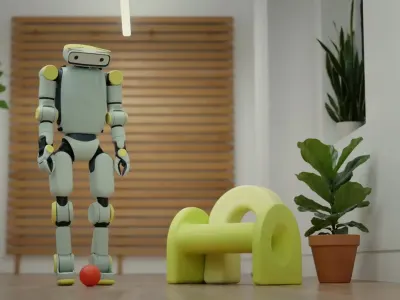
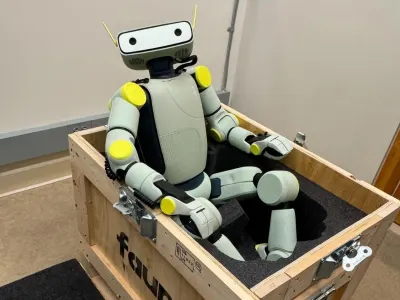
Sprout is the launch to watch for developers. Fauna Robotics came out of stealth with it on January 27, 2026, offering a 107 cm, 22.7 kg humanoid with 29 degrees of freedom for $50,000 in the Creator Edition. Compliant legs and soft materials make it safe around people, while NVIDIA Jetson AGX Orin compute and a ZED 2i camera give teams a ready platform for physical AI work. It walks at 0.8 m/s and runs about three hours, a modest spec sheet with an open door for research.

Moya
Moya set out to look and feel alive rather than powerful. DroidUp unveiled it on February 4, 2026 in Shanghai's Zhangjiang Robotics Valley as a 1.65 m, 32 kg biomimetic humanoid. Its skin is kept warm at 32 to 36°C, it can smile and wink, and its gait is rated 92% human-like. A modular head supports eye contact, which is why the maker points it at elder care and social roles. At USD 173,000, it is priced as a showcase machine.

Jupiter
Jupiter was one of the full-size bipeds at CES 2026. Zeroth Intelligence introduced the 1.65 m, 60 kg humanoid in January with a lineup of home and service robots. It can switch between autonomous navigation and remote teleoperation, which suits precision jobs where a human may need to step in. Jupiter walks at 3 km/h, climbs stairs, avoids obstacles and carries 5 kg per arm for about four hours on a 2 kWh battery. The official launch price is USD 89,999.

Onero H1
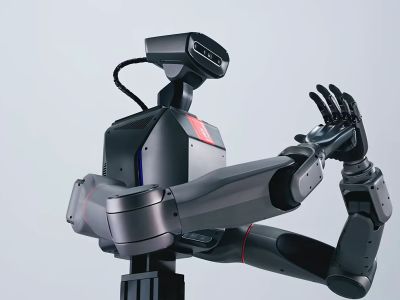
Onero H1 is SwitchBot's first humanoid and one of the cheapest ambitions of the half-year. Unveiled at CES 2026, the 1.3 m wheeled robot has 22 degrees of freedom in its arms and hands and runs SwitchBot's OmniSense vision-language-action model on-device. It can serve coffee, wash dishes and fold laundry, moving at 1.5 km/h for safety. SwitchBot has targeted a price under $10,000 for a late-2026 release, which would put a general household robot within reach of far more buyers.

Honor D1 (Lightning)
The Honor D1, nicknamed Lightning, made the list by winning the 2026 Beijing E-Town Humanoid Robot Half-Marathon in April in 50 minutes 26 seconds, and it also took the Best Design Award. At 169 cm and 45 kg, with legs 90 to 95 cm long and built to copy an elite runner's stride, it is among the lightest and fastest full-size bipeds. Honor, a smartphone maker, lists a top speed of 25.2 km/h. The D1 signals that consumer-electronics brands now compete in embodied AI.

Luna
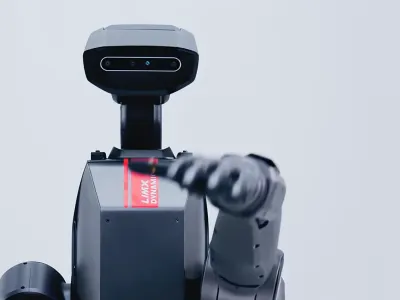
Luna brought showmanship to the half-year. LimX Dynamics introduced the 160 cm, 27-degree-of-freedom humanoid in May 2026 at RMB 298,000, about $41,000. Evolved from the Oli platform, Luna swaps an industrial look for a rounded head and curved body and can perform gymnastics-style illusion turns and catwalk walks. It weighs 56 kg, runs about four hours at up to 5 km/h and targets interaction research, luxury reception and performance, where appearance and smooth movement count as much as lifting power.

Walker C1
UBTECH's Walker C1, unveiled on May 23, 2026, is a service humanoid made for people-facing spaces. The 165 cm, 50 kg robot has 26 degrees of freedom and focuses on navigation, route following and obstacle avoidance for hospitality, exhibitions and visitor centers, rather than heavy lifting. It upgrades the Walker C that UBTECH showed at the World Robot Conference in August 2025. UBTECH says the C1 is still a prototype and not yet for sale, so buyers cannot yet order it.
Tron 2
TRON 2 earned a spot for flexibility and price. LimX Dynamics launched it in May 2026 as a modular platform that can be configured as a dual-arm robot, a biped or a wheeled biped. Walking reaches 2 to 3 m/s and wheeled-leg mode 3 to 5 m/s. The robot has 26 degrees of freedom, arms that carry 5 kg each and a swappable 46.8 V, 9 Ah pack for about four hours. LimX lists it at $7,000 to $10,000, the lowest price on this list.

Kengo
Kengo is notable for who built it. Galaxea Dynamics, known for wheeled dual-arm robots such as the R1, unveiled its first self-developed bipedal humanoid on June 2, 2026. Kengo stands about 1.4 m tall, with a curved head display, three color schemes and a build aimed at durable industrial deployment. Joint torque above 130 N·m supports high-dynamic movement and terrain adaptation, and a motion controller works with Galaxea's AI models. The company has not published a verified price or battery figure.
Sources
- Bolt Profile
- Sprout Profile
- Moya Profile
- Jupiter Profile
- Onero H1 Profile
- Honor D1 (Lightning) Profile
- Luna Profile
- Walker C1 Profile
- Tron 2 Profile
- Kengo Profile
- CGTN: MirrorMe Technology launches Bolt, a 175 cm, 75 kg humanoid that reaches a peak of 10 m/s
- Sprout: official specifications (Fauna Robotics)
- CNBC: Amazon acquires Fauna Robotics, the maker of the Sprout humanoid.
- HONOR: The Honor D1 "Lightning" wins the 2026 Beijing E-Town Humanoid Robot Half-Marathon in 50
- Luna: official specifications (LimX Dynamics)
- Caixin Global: LimX Dynamics raises about $200 million in a pre-IPO round valuing it at roughly $2.2
- Tron 2: official specifications (LimX Dynamics)
- Kengo: official specifications (Galaxea Dynamics)
- Gasgoo: Galaxea Dynamics unveils Kengo, its first self-developed bipedal humanoid, with joint
Related Articles

Top 5 Fastest Humanoid Robots in September 2026
9/3/2026

Top 7 Humanoid Robots Transforming Healthcare, Hospitals & Eldercare in 2026
9/3/2026

Top 8 Humanoid Robots Powered by Vision-Language-Action (VLA) Embodied AI in 2026
9/3/2026
10 Best Humanoid Robots for Education & Research Labs
6/8/2026
Top 10 Humanoid Robots Competing with Tesla Optimus (2026)
6/8/2026

Top 10 Humanoid Robots with the Best Learning Capabilities (AI Training) 2026
6/8/2026
Top 5 Humanoid Robots Being Developed for Defense, Security & First Responders in 2026
10/9/2026
Top 10 Heavy-Duty Industrial Humanoid Robots for Automotive & Factory Assembly in 2026
10/9/2026

Top 10 Home Humanoid Robots for Domestic Tasks & Personal Assistance in 2026
10/5/2026