Indian Humanoid Robots in 2026: Every Made in India Model Ranked

The Short Answer: Six Indian Humanoids, and One You Can Order Today
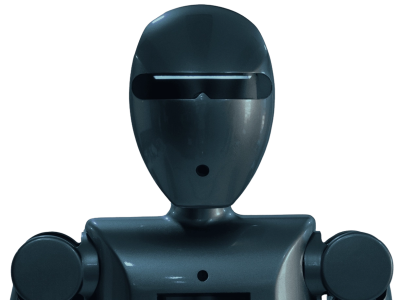
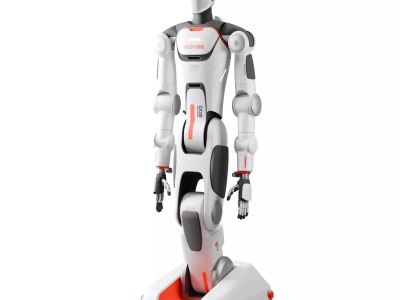
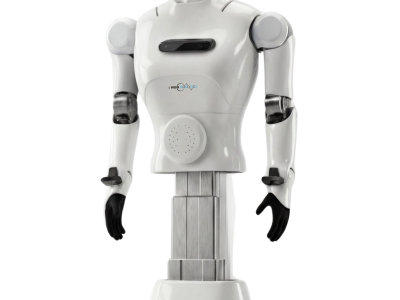
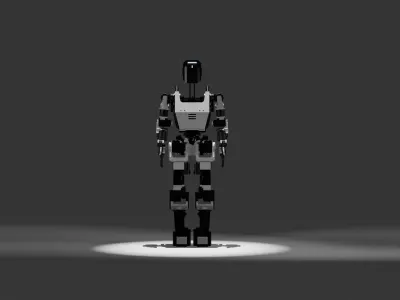
India now builds its own humanoid robots, and six released models matter. The one closest to everyday use is the Spaceo M1 from Pune's Muks Robotics: it takes orders on the maker's website and has already guided travellers at Pune Airport. Next comes the ELIXIS W from Addverb Technologies, a wheeled factory helper launched in February 2026. iHub Robotics in Kerala follows with the Tara Gen 2, then the Spaceo Pro, Kody Technolab's Skändä (Skanda) and the Vanar Gen 1 from Mumbai, which is still waiting for its first beta deployments.
Most of these robots roll on wheels rather than walk. That is a practical choice: Indian warehouses, airports and factories have flat floors, and wheels give a stable base, longer battery life and faster setup. Addverb has also announced a walking humanoid, the ELIXIS, but says only that it is preparing to launch it later this year, so it is not ranked here. Below you will find a side by side table, a ranked card for each robot with its published numbers, advice on how to choose, and answers to the questions people ask most about humanoid robots made in India.
Quick Overview
The six Indian humanoids side by side, in ranked order. Figures come from each maker's own pages and from news reports. Addverb's walking ELIXIS is not listed because it has not launched.
| Rank | Robot | Manufacturer | Key Strength | Best For | Where It Stands Today |
|---|---|---|---|---|---|
| #1 | 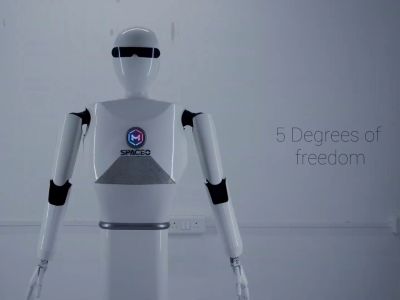 Spaceo M1 | Muks Robotics | Speaks over 85 languages, 1.5 m/s on wheels | Airports, lobbies, visitor desks | Order page live; Pune Airport trial in 2026 |
| #2 | 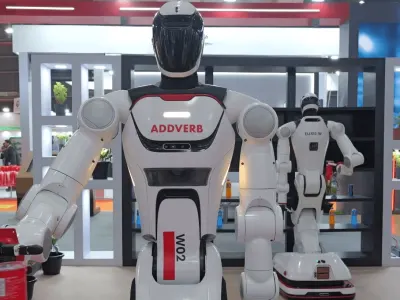 ELIXIS W | Addverb Technologies | 10 kg payload, about 2 h battery | Warehouse and factory pilots | Launched Feb 2026; supervised pilots planned |
| #3 |  Tara Gen 2 | iHub Robotics | 190 cm tall with a 400 mm torso lift | Heavy industrial handling | Unveiled Feb 2026; proof of concept projects |
| #4 |  Spaceo Pro | Muks Robotics | Base trolley carries up to 200 kg | Material handling and inspection | Shown since March 2025 |
| #5 |  Skändä (Skanda) | Kody Technolab | Two-legged walking at 2.5 km/h | Events, education, reception | Show robot since Jan 2024 |
| #6 |  Vanar Gen 1 | Vanar Robots | 38 degrees of freedom, in-house actuators | Future industrial work | Industrial beta planned for 2027 |
Four of the six robots roll on wheels and two walk on legs. Only the Spaceo M1 can be ordered from its maker's website today, while the ELIXIS W and the Tara Gen 2 are heading into supervised industrial projects.
Explore the Robots

Spaceo M1
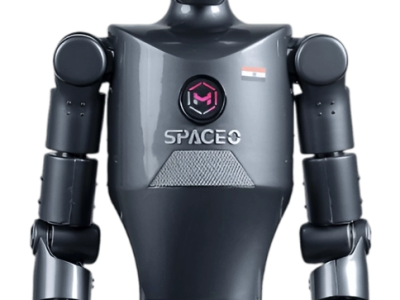
The Spaceo M1 ranks first because it is the Indian humanoid most people can actually meet and order. Muks Robotics, based in Pune, built it as a social robot for public spaces. In February 2026 it began an 8 to 10 day trial at Pune Airport, where it answered travellers' questions, gave flight updates and guided people to check-in counters and gates. Muks lists it at 1,625 mm tall and about 45 kg, with 12 degrees of freedom, a 7 inch touch display and a top speed of 1.5 m/s on its wheeled base. It handles more than 35 separate tasks and speaks over 85 languages, including Hindi, Marathi, Tamil and Telugu. Its limits are clear: its arms are for gestures, not heavy lifting, and it works indoors. It suits airports, malls, hospitals, banks and offices that need a friendly guide.
ELIXIS W
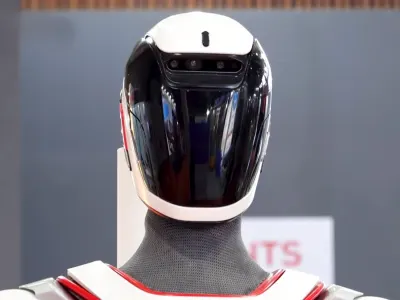
The ELIXIS W ranks second because it comes from India's most established robotics maker and is set to roll out through supervised industrial pilots. Addverb Technologies, which counts Reliance as its main backer, launched it at LogiMAT India in Mumbai in February 2026 as India's first Made in India wheeled humanoid for industrial use. It stands 1,750 mm tall, carries a 10 kg payload, moves at 1.5 m/s and runs for about two hours on a charge. Two arms, stereo depth cameras, a 3D LiDAR and a two layer safety system let it work near people. Addverb chose wheels because most warehouses have flat floors, which makes setup faster. The limit is reach: wheels cannot climb stairs or step over obstacles. Its two-legged sibling is still to come. The ELIXIS W suits warehouses and factories ready to run a carefully watched pilot.

Tara Gen 2
The Tara Gen 2 ranks third because its maker, iHub Robotics, already has robots working for paying customers. The Kerala company has deployed around 35 of its earlier Tara Gen 1 service robots across three countries, including exports to the UAE and Saudi Arabia, and in January 2025 it became the first Indian company selected for NVIDIA's humanoid robotics program. The Tara Gen 2, sold as Daksha, is the industrial model unveiled at the India AI Impact Summit in New Delhi in February 2026. It stands 190 cm tall on a wheeled base with a 400 mm lift, moves at 1.5 m/s and runs up to six hours on a swappable battery. It is heavy, at 120 to 150 kg, so it needs space and solid floors. It suits factories and logistics sites with heavy, repetitive handling work.

Spaceo Pro
The Spaceo Pro ranks fourth because it has a detailed industrial spec sheet and a clear job, but no named customer deployment yet. Muks Robotics first presented it in March 2025 alongside the Spaceo M1. Its body adjusts from 1,625 mm to 2,100 mm tall, and with waist rotation it can work anywhere from floor level up to 145 cm. It has 20 degrees of freedom, weighs 60 kg, moves at 1.5 m/s, and each arm handles up to 5 kg, while its built-in base trolley carries up to 200 kg of material. Muks lists lifting accuracy of plus or minus 1 cm and remote control delay under 100 milliseconds. It runs on the company's FusionMax AI model, which takes spoken commands like moving bins to a zone. It suits warehouses and plants that move materials and want inspection on the same robot.

Skändä (Skanda)
The Skändä (Skanda) ranks fifth because it is a well known public face of Indian humanoids rather than a working industrial machine. Ahmedabad's Kody Technolab launched it at the Vibrant Gujarat summit in January 2024, where Prime Minister Narendra Modi visited the hall where it was displayed. Later that year Gujarat Police dressed it in a sub-inspector uniform at the Gujarat Police Expo. It walks on two legs at 2.5 km/h, uses cameras and a microphone array to see and listen, and is built for conversation and interaction. Kody shares few technical details, and there is no named commercial deployment, which keeps it lower on this list. It suits events, exhibitions, schools and reception desks that want a walking robot to engage visitors.

Vanar Gen 1
The Vanar Gen 1 ranks sixth because it is still on its way to customers, with its first industrial beta deployments planned for 2027. Mumbai startup Vanar Robots builds almost everything itself, from the frame and actuators to the tendon-driven hands and the software. Vanar lists it at 5 ft 9 in tall, about 60 kg, with 38 degrees of freedom. The company has shared steady progress through 2026, including material handling tests in June and July and package handling in October. Beta sites will be picked from a public sign-up list. The limit is time: until those trials run, there is no real-world record to judge. It suits companies that want to join an Indian walking humanoid program early through the beta list.
How to Choose Between Them
Start with the job, not the robot. If you need a robot that talks to people, answers questions and guides visitors in a lobby, mall or terminal, the Spaceo M1 is the only Indian humanoid here with a public trial in a busy space and an order button on its maker's site. If you need help moving boxes, picking parts or feeding a production line, look at the ELIXIS W, the Tara Gen 2 and the Spaceo Pro, which are all built for industrial floors.
Next, decide between wheels and legs. A wheeled humanoid like the ELIXIS W or the Spaceo Pro keeps its balance without effort, carries more and runs longer on a charge. A walking humanoid like the Skändä (Skanda) or the Vanar Gen 1 can handle steps and uneven ground in principle, but legs use more energy and are harder to make reliable. If your site has flat concrete floors and no stairs, wheels are the sensible starting point.
Then read the spec sheet line by line. The numbers that matter most for real work are payload, top speed, battery time and degrees of freedom, which is the count of joints that can move on their own. The ELIXIS W, for example, lists a 10 kg payload and about two hours of battery, while the Spaceo Pro lists 5 kg per arm and a base trolley that carries up to 200 kg. Those lines tell you which robot can finish a full shift task.
Ask what stage the robot is at. A robot sold through an order page, a robot in a supervised pilot and a robot that has only appeared at expos are three very different things. Addverb says the ELIXIS W will be introduced through limited, closely supervised proof of concept projects. Vanar plans its first beta deployments in 2027. Plan your timeline around those stages, not around launch videos.
Before you commit, ask the maker for a site visit or a trial on your own floor, a clear service plan, and where spare parts come from. A big promise of Indian humanoids is local support: Muks, Addverb, iHub, Kody and Vanar all design and build in India, so repairs and software changes should not depend on an overseas team in another time zone.
A quick shortcut by need: for front desk and visitor help, pick the Spaceo M1. For a warehouse pilot backed by a large automation company, pick the ELIXIS W. For heavy industrial parts and reach, talk to iHub about the Tara Gen 2. For a flexible industrial platform with a tall adjustable body, look at the Spaceo Pro. To follow India's walking humanoids, watch the Vanar Gen 1 and Addverb's upcoming ELIXIS.
How We Ranked These Robots
We started from every live humanoid on our site whose maker is headquartered in India, then kept only the newest generation from each product line and only robots that have actually been released or shown. That left six robots from five companies. We dropped the earlier Addverb Humanoid listing because Addverb's program has since become the ELIXIS family, and we left out the Eagle 8.0 school robot because we could not match its specifications to a page from its maker. We also left out the walking ELIXIS, which Addverb says it is preparing to launch later this year, and the SPACEO Prime, which has no specifications yet.
The ranking order rewards how close each robot is to real customers. A robot you can order today and that has worked in a public place ranks highest. Robots in supervised pilots come next, then robots with a full published spec sheet but no named deployment, then robots shown mainly at events, and last, robots whose first beta deployments are still ahead. Inside each stage we used the published specifications to break ties.
Every number in this article comes from the maker's own product page or from reporting by credible Indian and international outlets, and we checked each robot against its maker's website in November 2026. We did not rank on launch claims such as first or most intelligent, because several Indian companies use those words for different robots. This ranking will change as pilots turn into orders, so check each robot's page for the latest figures.
Frequently Asked Questions
Which Indian companies make humanoid robots?
The main Indian makers in 2026 are Addverb Technologies in Noida with the ELIXIS W, Muks Robotics in Pune with the Spaceo M1 and Spaceo Pro, iHub Robotics in Kerala with the Tara Gen 2, Kody Technolab in Ahmedabad with the Skändä (Skanda), and Vanar Robots in Mumbai with the Vanar Gen 1. All five design their robots in India. Addverb has also announced a walking humanoid, the ELIXIS, which has not launched yet.
Which is India's first humanoid robot?
There is no single answer, because several companies claim a different first. Kody Technolab calls the Skändä (Skanda) India's first AI-powered humanoid, Addverb calls the ELIXIS W India's first Made in India wheeled humanoid for industrial use, and Muks Robotics calls the Spaceo Pro India's first production-ready industrial humanoid. Each claim covers a different category, so it helps to ask first at what.
Can I buy an Indian humanoid robot today?
Yes, for business use. The Spaceo M1 has an order page on the Muks Robotics website. Addverb, iHub Robotics and Muks also take inquiries for their industrial robots, usually starting with a pilot or proof of concept at your site. Vanar Robots is collecting sign-ups for its 2027 beta program. None of these robots is sold as a home robot for families.
Where can I see an Indian humanoid robot working?
The most public example so far was the Spaceo M1 at Pune Airport, where it ran a trial in February 2026 guiding travellers on the arrivals side. Indian humanoids also appear regularly at events such as LogiMAT India, the India AI Impact Summit in New Delhi and Vibrant Gujarat, where the ELIXIS W, the Tara Gen 2 and the Skändä (Skanda) were first shown.
Do Indian humanoid robots walk or use wheels?
Most use wheels. The Spaceo M1, Spaceo Pro, ELIXIS W and Tara Gen 2 all roll on a wheeled base, which is stable and efficient on flat factory, airport and office floors. The Skändä (Skanda) and the Vanar Gen 1 walk on two legs, which helps on steps and uneven ground but uses more energy.
Has Addverb launched a walking humanoid?
Not yet. Addverb launched the wheeled ELIXIS W in February 2026. Its walking model, the ELIXIS, is described by the company as the next-generation humanoid it is preparing to launch later this year, so it is not available to order or pilot and is not ranked here. The company is targeting 3,000 humanoid units in industrial facilities by 2030.
Is India building a humanoid robot for space?
Yes. In October 2026 Muks Robotics announced a project with ISRO, India's space agency, to develop the SPACEO Prime, a two-legged humanoid meant for space and extreme environments. The company has not yet released its specifications or a mission timeline, so it is not part of this ranking.
How do Indian humanoids compare with Chinese and American ones?
Indian humanoids are earlier in their journey. Most are in pilots, trials or beta programs rather than large production runs, and their published specs, such as 5 to 10 kg per arm, are modest next to the leading Chinese and American robots. Their strengths are local design, local support and a focus on practical wheeled designs for Indian warehouses and public spaces.
Sources
- Spaceo M1 Profile
- ELIXIS W Profile
- Tara Gen 2 Profile
- Spaceo Pro Profile
- Skändä (Skanda) Profile
- Vanar Gen 1 Profile
- Elixis | Humanoid Robot for Collaborative Human Augmentation
- New Phase of Industrial Humanoids with Addverb at LogiMAT India 2026
- Addverb Celebrates Its 10-Year Anniversary
- Spaceo M1 | AI Social Humanoid Robot by Muks Robotics
- Pune Welcomes Its First Humanoid Airport Robot, Spaceo M1 Guides Travellers at Pune Airport
- ISRO Taps Muks Robotics to Develop SPACEO Prime
- Kerala's iHUB Robotics is teaching robots to see, act, and understand
- Kody Technolab Ltd. Captivates Vibrant Gujarat 2024 with India’s First Al-Powered Humanoid Robot, Honored by Prime Minister’s Visit
Related Articles

Humanoid Robots That Box and Fight in 2026, Ranked by What They Have Shown in Public
11/3/2026

Which Humanoid Robots Can Actually Cook? Six Compared for 2026
11/2/2026

Humanoid Robots With the Most Degrees of Freedom in 2026, and Why It Matters
11/1/2026
Humanoid Robots You Can Actually Buy Right Now in 2026, and How to Order
11/7/2026
Which Humanoid Robots Can Do a Backflip? Every Flipping Robot Compared (2026)
11/5/2026
South Korean Humanoid Robots in 2026: Models, Makers and Specs Compared
11/4/2026