Humanoid Robots With the Most Degrees of Freedom in 2026, and Why It Matters


The Short Answer: Which Humanoid Has the Most Degrees of Freedom
XPENG's Next-Gen IRON has the highest published count, at 82 degrees of freedom, including 22 in each hand. Unitree's H2 Plus follows with 75, then PaXini's TORA DoubleOne at 58, Boston Dynamics' electric Atlas at 56, Robot Era's Star1 at 55 and Fourier's GR-2 at 53. A degree of freedom is one independent way a joint can move, so more of them means the robot can bend, twist and grip in more human-like ways.
Be careful with the headline numbers. Makers count differently: some include the fingers, some leave them out, and one robot here is listed with a wheeled base. In the biggest totals, the hands supply the largest share. The H2 Plus has 31 in its body and 44 more in its two hands. So this guide ranks the published total and then shows you where the joints are, so you can judge what the number really buys.
Quick Overview
The table ranks six humanoids by the total degrees of freedom their makers or credible outlets have published. Read the last column together with the card for each robot, because most totals include the hands.
| Rank | Robot | Manufacturer | Key Strength | Best For | Published Degrees of Freedom |
|---|---|---|---|---|---|
| #1 | 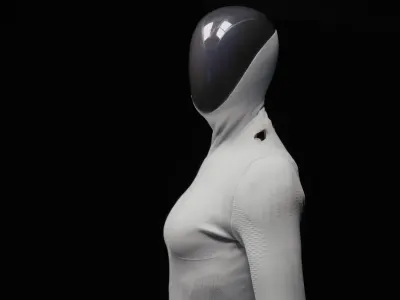 Next-Gen IRON | XPENG | 22 degrees of freedom in each hand | Fine hand work and lifelike movement | 82 |
| #2 |  Unitree H2 Plus | Unitree Robotics | 31 in the body plus two 22-joint tactile hands | Universities training hand-skill AI | 75 |
| #3 |  TORA DoubleOne | PaXini | About 1,956 touch sensors and 18-joint hands | Factory tasks on flat floors | 58 (Model X) |
| #4 |  Atlas (Electric 2025) | Boston Dynamics | Mostly fully rotational joints, IP67 body | Heavy factory lifting | 56 |
| #5 |  Star1 | Robot Era | 24 hand joints, 400 N·m joint torque | Research on running and manipulation | 55 |
| #6 | 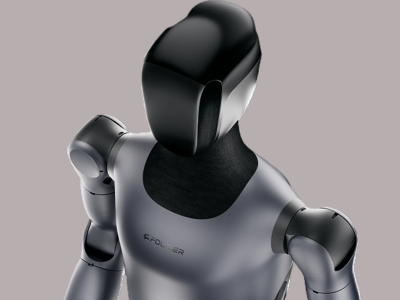 GR-2 | Fourier Intelligence | 12-joint hands with six touch arrays each | Labs and rehabilitation research | 53 |
The top two lead mainly because of their hands. Compare the body counts, the hand counts and the work each robot has actually been shown doing, not the single total.
Explore the Robots
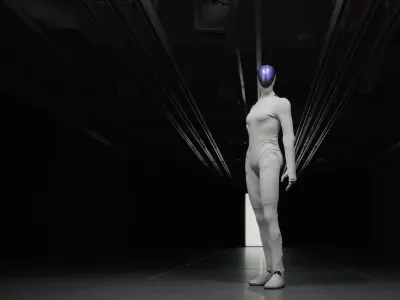
Next-Gen IRON
Next-Gen IRON ranks first because XPENG publishes 82 degrees of freedom for it, the highest count we found. Of those, 22 sit in each hand, close to the range of a human hand, and the rest run through a bionic spine, shoulders and legs. XPENG unveiled it at its AI Day in November 2025 and says mass production starts by the end of 2026. It weighs 70 kg. The company has even cut the robot open on stage to show it is a machine and not a person in a suit. The high count aims at smooth, lifelike movement rather than raw strength. It suits people who want to follow the most articulated humanoid announced so far.

Unitree H2 Plus
Unitree H2 Plus ranks second because Unitree lists 75 degrees of freedom across its body and hands. The body has 31: six in each leg, seven in each arm, three in the waist and two in the head. Two Sharpa Wave tactile hands add 22 each. It carries an NVIDIA Jetson T5000 computer, a rated payload of 7 kg per hand with 15 kg at peak, and weighs about 70 kg. Unitree announced it in June 2026 as a reference robot for NVIDIA's Isaac GR00T platform, aimed at academic research, with availability planned for late 2026. Its limit is that most of its extra count lives in the hands. It suits university labs training robots in fine hand skills.

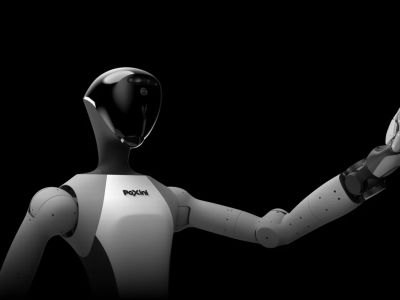
TORA DoubleOne
TORA DoubleOne ranks third because PaXini lists 58 degrees of freedom for the Model X and 56 for the Model P. It rolls on a wheeled base instead of walking, and its upper body folds down, which helps with transport and storage. The hands have 18 degrees of freedom each and carry around 1,956 touch sensors, so the robot can feel what it holds. It runs on an NVIDIA Jetson AGX Orin computer, has a rated lift of 6.5 kg per arm, and weighs 70 kg for the Model P and 73 kg for the Model X. It was first shown at iREX 2025 in Tokyo. It cannot climb stairs. It suits factories with flat floors and delicate parts.
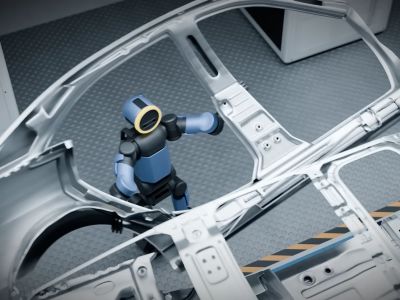
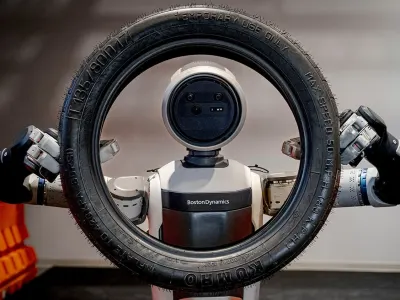
Atlas (Electric 2025)
Atlas (Electric 2025) ranks fourth because Boston Dynamics reports 56 degrees of freedom for the production version it unveiled at CES in January 2026. Most of its joints rotate fully around, so a limb can turn past what a human joint allows and the robot can reposition without stepping around. It has human-scale hands with touch sensing, weighs 90 kg and has an IP67 rating, meaning it can be washed down. It is the electric successor to the hydraulic research Atlas known for backflips. The count is lower than the leaders, but it is built for steady industrial work rather than a lab. It suits factories that want a durable robot for lifting and moving parts.

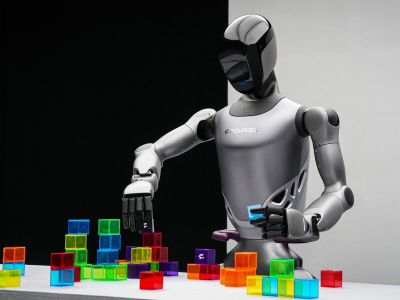
Star1
Star1 ranks fifth because Robot Era's open-source model files list 55 degrees of freedom. The split is 12 in the legs, 14 in the arms, 24 in the hands, 3 in the waist and 2 in the head. Each hand is a 12-joint unit, which makes the hands the largest share of the total. It stands 171 cm tall, weighs 65 kg, has joints that deliver up to 400 N·m of torque and can carry 20 kg with both arms. The company trains its walking and running with reinforcement learning, a method where the robot learns by trial and error in simulation. It suits researchers who want published joint data to build on.
GR-2
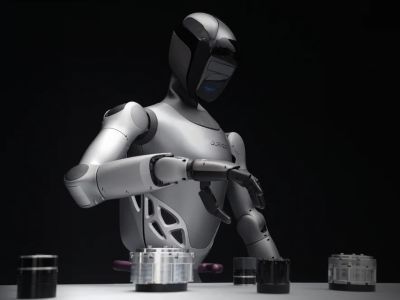
GR-2 ranks sixth because Fourier lists up to 53 degrees of freedom in the version with its 12-joint dexterous hands. Each hand carries six arrays of touch sensors, which let the robot sense force, work out the shape of an object and adjust its grip as it holds it. Each arm carries 3 kg, and the robot weighs around 63 kg. Fourier launched it in September 2024 as the second generation of its GR series, with a detachable battery that doubles the capacity of its predecessor and a runtime of up to two hours. Its hands are simpler than the leaders'. It suits laboratories and rehabilitation research that need a proven, documented platform.
How to Choose Between Them
Start by asking what you want the robot to do with its hands. If the job is fine work, such as handling small parts, tools or soft objects, the finger count matters most. Next-Gen IRON and the H2 Plus put 22 degrees of freedom in each hand, close to the 27 in a human hand, while the GR-2 has 12 per hand and the TORA DoubleOne has 18 per hand.
If the job is moving around and carrying, look at the body count instead. The H2 Plus has 31 in the legs, waist, arms and head. Atlas has 56 in total and uses mostly fully rotational joints, so its limbs can turn past what a human joint allows. That helps it reach and reposition in tight factory spaces. Wheeled models such as the TORA DoubleOne trade legs for a base, which suits flat floors.
Do not read a bigger number as a better robot. Each joint adds a motor, a sensor and a place where something can fail, and the software must learn to control every one. A robot with 53 well-controlled joints can beat one with 82 joints that nobody has trained it to use. Ask how many of the joints are actively driven and whether the maker has shown the robot using them.
Check what the count includes before you compare. Next-Gen IRON's 82 and the H2 Plus's 75 both include the hands. Star1's 55 breaks down into 12 in the legs, 14 in the arms, 24 in the hands, 3 in the waist and 2 in the head. The TORA DoubleOne is listed at 56 for the Model P and 58 for the Model X. Always ask for the split between body, hands and base.
Finally, check how you can get one. The H2 Plus is aimed at academic research and was announced for late 2026, and Next-Gen IRON is planned for mass production by the end of 2026. The others are offered through their makers to labs and companies. If you want to experiment now, the GR-2 and Star1 have the longest public track records on this list.
How We Ranked These Robots
We ranked live humanoids in our database by the total number of degrees of freedom the maker or a credible outlet has published. Where a maker lists different counts for different versions, we used the highest published configuration and name it in the card. Figures from a single weak source, or ones that conflicted across sources, were left out, which is why some well-known robots do not appear.
Each ranked count was checked against a manufacturer page or release, or a respected outlet, and against our own record. Entertainment faces with dozens of small facial motors were not ranked, because their joints serve expressions rather than work. The total counts joints the robot can move on its own, and it can change as makers release new versions, so treat the order as a snapshot for 2026.
Frequently Asked Questions
What does degrees of freedom mean for a humanoid robot?
A degree of freedom is one independent way a joint can move, such as bending an elbow or twisting a wrist. Add them up across the legs, arms, hands, waist and head and you get the robot's total. A higher number lets it make more human-like motions, but it also needs more motors and more software to control them.
Which humanoid robot has the most degrees of freedom?
The leader is Next-Gen IRON from XPENG, with 82 counted across the whole machine. Unitree's H2 Plus comes second with 75. In both, very detailed hands supply most of the lead, so their body-only counts sit much closer to the rest of the list.
How many degrees of freedom does a human hand have?
A common figure is about 27 for one hand. The best robot hands on this list, at 22 per hand, now come close to that, while the 12 and 18 per hand on the GR-2 and TORA DoubleOne cover the main finger and thumb motions.
Do more degrees of freedom make a robot better?
Not by themselves. Each extra joint adds weight and a possible fault, and the software must learn to use it. A robot with fewer joints that has been trained well can do more useful work than one with many joints that has not been trained to use them.
Why do some robots count the hands and others do not?
There is no single rule. Some makers quote a body-only figure and some include the fingers. The H2 Plus shows the difference: 31 in the body and 75 once the two 22-joint hands are added. Always ask what the number includes.
Are the hands the most important part?
For work with tools and small objects, yes. Hands decide whether a robot can pick up a part, turn a screw or hold something soft. For moving heavy things or crossing a room, the legs, waist and arms matter more than the fingers.
Can I buy a humanoid with more than 50 degrees of freedom?
Several are offered to labs and companies. The GR-2, Star1 and TORA DoubleOne are available through their makers, Atlas is aimed at industrial customers, and the H2 Plus and Next-Gen IRON are planned for late 2026. Check each maker for current availability.
Sources
- Next-Gen IRON Profile
- Unitree H2 Plus Profile
- TORA DoubleOne Profile
- Atlas (Electric 2025) Profile
- Star1 Profile
- GR-2 Profile
- XPENG unveils next-generation humanoid robot IRON, to begin mass production by end of 2026
- Is Musk Conceding Ground? And Does XPENG’s IRON Signal China’s Lead in the Humanoid Robot Race?
- Nvidia and Unitree release H2 Plus reference design for humanoid robots
- Atlas, meet Atlas
- Fourier GR-2 humanoid robot: modular design, longer battery life
- Fourier launches GR-2 humanoid, software platform
- TORA DOUBLE ONE — Modular Industrial Humanoid Robot by PaXini
Related Articles
Tallest Walking Humanoid Robots in 2026, Ranked by Height and Weight
10/28/2026
Best Open-Source Humanoid Robots in 2026, Ranked by How Open They Really Are
10/27/2026
Top 7 Humanoid Robots Launched in Q3 2026 (July–September)
10/1/2026
Japanese Humanoid Robots in 2026: Every Major Model Compared
10/31/2026
Humanoid Robots That Can Fold Laundry in 2026, Ranked by What They Really Do
10/30/2026
Waterproof and Dustproof Humanoid Robots in 2026, Ranked by IP Rating
10/29/2026