Japanese Humanoid Robots in 2026: Every Major Model Compared

The Short Answer: Which Japanese Humanoid Robots Matter Right Now
Japan's most useful humanoid robot today is the NEXTAGE Fillie from Kawada Robotics, a two-armed factory robot that is on sale in Japan and already packs, assembles and inspects parts. After it come Torobo from Tokyo Robotics, a research humanoid that folds laundry and clears tables, and two care robots heading into nursing homes: Ena from Enactic and Cinnamon 1 from Donut Robotics. Kawasaki's Kaleido, Kawada's HRP-4 and Toyota's Punyo and CUE7 are research machines you cannot buy.
Japan built many of the world's first famous humanoids, from Honda's ASIMO to the HRP series, but most of today's headlines belong to Chinese and American startups. That makes it hard to see what Japan is still building. This guide ranks eight Japanese humanoids by one plain question: how close is each robot to doing paid work for a real customer, and what has it been seen doing so far?
Quick Overview
Here are the eight Japanese humanoids side by side, in rank order. The last column tells you the most important thing for most readers: whether anyone outside the maker can get one today.
| Rank | Robot | Manufacturer | Key Strength | Best For | Can You Get One? |
|---|---|---|---|---|---|
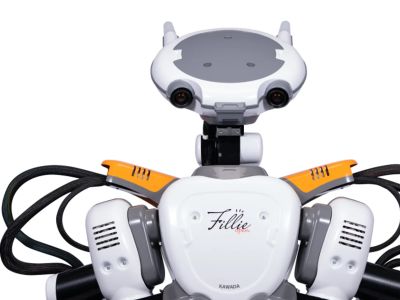
| #1 |  NEXTAGE Fillie | Kawada Robotics | Two arms, head and hand cameras, motors under 80 W | Factory assembly, inspection and packing | On sale in Japan |
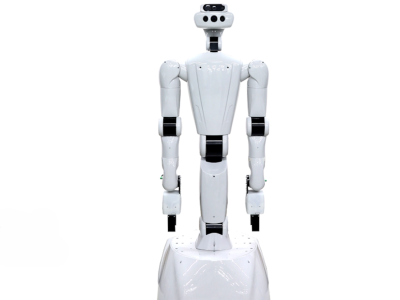
| #2 |  Torobo | Tokyo Robotics | Torque sensors in every arm and waist joint | Labs testing force-control tasks | R&D platform from the maker |
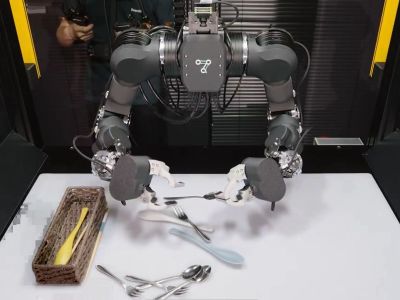
| #3 | 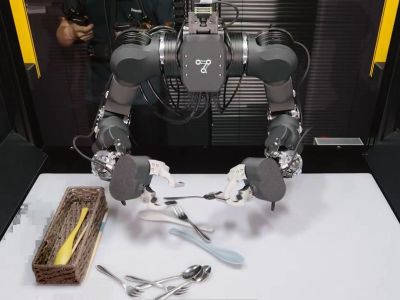 Ena | Enactic | Built with 70+ Japanese care facilities | Care homes short on staff | Beta program from late 2026 |
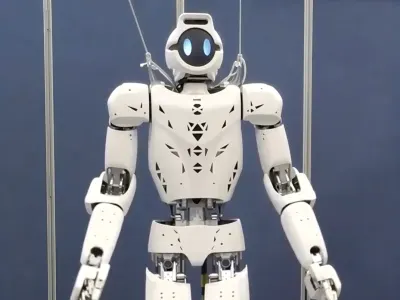
| #4 |  Cinnamon 1 | Donut Robotics | Takes hand and finger gesture commands | Patrols and nurse calls in care homes | Nursing home trial since July 2026 |
| #5 |  Kaleido 8.0 | Kawasaki | Real-time footstep correction on two legs | Disaster sites and heavy industry | Not sold; target around 2030 |
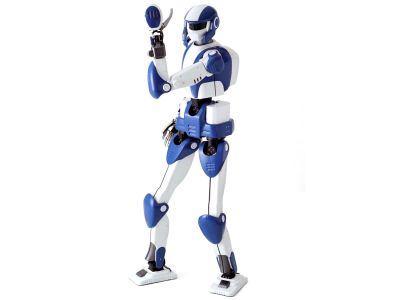
| #6 |  HRP-4 | Kawada Robotics | 34 degrees of freedom at 39 kg | University humanoid research | Supplied to labs since 2011 |
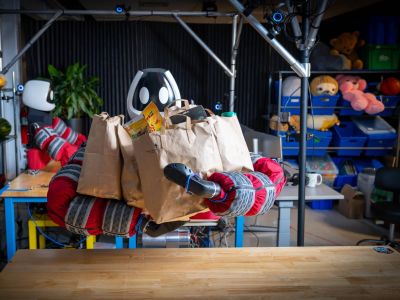
| #7 |  Punyo | Toyota | Air-filled arm bubbles that feel contact | Research on carrying bulky objects | Research only |
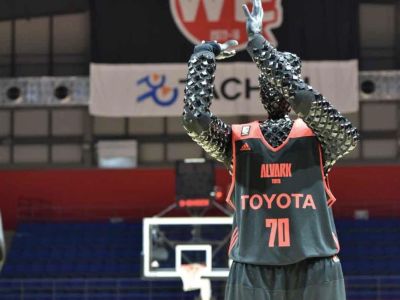
| #8 |  CUE7 | Toyota | Cut from 120 kg to 74 kg | Testing vision and fast balance | Research only |
Only one robot in the table is sold for everyday work right now. Two more are moving into care homes through pilot programs, and the rest are research machines that show where Japanese makers are heading.
Explore the Robots

NEXTAGE Fillie
NEXTAGE Fillie ranks first because it is the one Japanese humanoid that factories in Japan can order for real work today. Kawada Robotics began building humanoids for the University of Tokyo in 1999, and Fillie, released in 2022, is the compact model of its NEXTAGE line. It has two arms, two cameras in its head and cameras in its hands, and its motors are kept under 80 watts so it can work safely next to people. It does not use AI to decide what to do. Staff teach it each job with a graphical tool called NxProduction, with no coding skills needed, and it then repeats assembly, inspection and boxing tasks. A research version, NEXTAGE Fillie OPEN, runs ROS. It suits factories in Japan with repetitive bench work and too few hands.

Torobo
Torobo ranks second because it is a full-size research humanoid that a company or lab can use for real force-sensitive work, and its maker keeps showing new skills on it. Tokyo Robotics fitted torque sensors in every joint of its arms and waist, so Torobo feels how hard it pushes. That lets it hammer a nail, saw wood and wipe a table without crushing anything. The wheeled version has 7-axis arms, a 3-axis waist and an omnidirectional base, and stands 1,660 mm tall. Each arm holds 8 kg in its weakest pose and 20 kg at its peak. Its software is built on ROS, and newer Torobo2 videos show autonomous laundry folding and table clearing, while a two-legged Torobo walks with a human-like gait. Its main limit is that it is a development platform, not a finished worker. It suits labs and companies building their own robot skills.
Ena
Ena ranks third because it is being built inside real Japanese care homes, with a beta program set to start in late 2026. Its maker, Tokyo startup Enactic, says it works with more than 70 care facilities in Japan on the design. Ena is meant to take on the physical chores around residents so staff can spend more time with people. The list includes folding laundry, collecting used meal trays, tidying rooms, handling soiled items, wiping tables, restocking supplies, serving tea and snacks, and watching over residents. Ena builds on OpenArm, Enactic's open-source two-arm platform, which the company also sells worldwide to robot researchers. The limit is timing: Ena is not yet at work every day, and facilities join through the beta program first. It suits care operators in Japan who want an early seat and a say in how the robot works.

Cinnamon 1
Cinnamon 1 ranks fourth because it is already on duty in a real nursing home, even though its maker admits it can do little so far. Donut Robotics has trialled the two-legged robot at a Charm Care home since July 2026, starting with patrols. The next step is nurse calls: the plan is that when a resident presses the call button, the robot goes to them, takes the request and helps staff respond. Charm Care, which runs more than 100 private nursing homes, has invested 300 million yen in the company. Cinnamon 1 stands 170 cm tall and can follow hand and finger gestures, a patented feature meant for loud places where voice commands fail. Donut Robotics also plans to use it in factories, building sites and security work. It suits care operators and partners willing to help train a young robot on the job.

Kaleido 8.0
Kaleido 8.0 ranks fifth because Kawasaki has spent a decade making it tough enough for real disaster and factory sites, but it is not for sale yet. Kawasaki began building humanoids in 2015 and first showed Kaleido at the iREX trade show in Tokyo in 2017. The Kaleido line runs on its own battery, walks on two legs, and has lifted 50 to 60 kg in bench press demos. From 2023 it could correct where its foot lands when knocked, which cuts the risk of falling. The newer Kaleido 9 adds LiDAR mapping for walking on its own and a head-mounted display for remote control. Kawasaki plans first jobs such as patrols and moving parts around 2030, and is talking with car and chip makers. It suits disaster response teams and heavy industry planning for the next decade.

HRP-4
HRP-4 ranks sixth because it was supplied to outside research groups and is still a full walking humanoid, but it dates from 2010. Kawada built the body and Japan's national research institute AIST wrote the motion control software. It stands 151 cm tall and weighs only 39 kg, with 34 degrees of freedom, meaning 34 separate joints, including 7 in each arm for handling objects. Supply to external research groups began in January 2011. Its software runs on OpenRTM-aist and a real-time Linux system, so labs can share code and use the free OpenHRP3 simulator. Its age is the main limit: newer robots walk faster and use modern AI. It suits universities that want a proven Japanese walking platform with a long research record behind it.

Punyo
Punyo ranks seventh because its ideas are fresh and useful, but it is a research torso with no legs that is not offered for sale. Toyota Research Institute built Punyo to handle large, heavy items the way people do, by hugging them against its chest and arms rather than gripping with outstretched hands. Each arm is covered in 13 air-filled bubbles, each linked to a pressure sensor, so the robot feels where it touches an object. Its hands are soft latex paws with a camera inside that reads how the surface bends. Under the soft skin sit two rigid arms and a waist motor. Punyo learns from human demonstrations and from training in simulation. The name is a Japanese word for something soft, cute and resilient. It suits researchers studying how future home robots might lift and carry safely.

CUE7
CUE7 ranks eighth because it is a pure research demonstrator, yet it shows how fast Toyota's robot control is moving. The CUE line began as a side project by Toyota employees in 2017 and set world records for basketball shots, including a Guinness World Record for the longest shot by CUE6 in 2024. CUE7 made its debut on April 12, 2026, at a pro basketball game in Tokyo. Toyota cut its weight from 120 kg to 74 kg and moved it onto two wheels that balance like a self-balancing scooter. A mix of reinforcement learning and model predictive control, two ways of teaching robots to plan their moves, lets it move quickly and still shoot with precision. It is not for sale and has no job beyond the court. It suits anyone following how Japanese firms test vision and balance before using them in other machines.
How to Choose Between Them
Start with what you need the robot to do this year, not in five years. If you run a factory line in Japan and want help with packing, kitting or inspection now, the NEXTAGE Fillie is the only robot on this list sold for that job today. Everything else is either a research platform, a pilot inside partner care homes, or a demonstrator that stays inside its maker's labs.
Next, decide whether you need legs. Most real work in factories and care homes happens on flat floors, and a wheeled base is steadier and simpler to keep running. NEXTAGE Fillie, the main Torobo model, Ena and CUE7 all roll on wheels. Kaleido, HRP-4 and Cinnamon 1 walk on two legs, which matters for stairs, rubble and buildings that were never planned around robots.
If you are a lab or a company research team, look at how open the robot is. NEXTAGE Fillie OPEN runs ROS, the most widely used free robot software toolkit, and Torobo is built on ROS as well. HRP-4 uses OpenRTM-aist, a Japanese robot software standard. Open software means your team can write its own programs instead of waiting for the maker to add features.
If you run a care facility, the two names to follow are Ena and Cinnamon 1. Both are being shaped inside real nursing homes, but they take different routes. Ena focuses on the physical chores around residents, such as folding laundry, collecting meal trays and restocking supplies. Cinnamon 1 has started with night patrols and is moving toward answering nurse calls.
Before you commit to anything, ask each maker three things. Can I see the robot working in a site like mine, not only in a video? Who services it, and how fast? How much of the work is done on its own, and how much needs a person steering it from a distance? Kawasaki, for example, plans for Kaleido to start with remote control and hand more of the job to AI over time.
The quick pick: for factory work you can buy today, NEXTAGE Fillie. For a research humanoid with strong force control, Torobo. For a care home pilot, Ena or Cinnamon 1. For disaster and heavy industry work in the next decade, follow Kaleido. For the ideas that may shape Toyota's future home robots, watch Punyo and CUE7.
How We Ranked These Robots
We started with every live humanoid in the Origin of Bots catalog made by a company headquartered in Japan, which gave us 18 robots. We dropped robots that have retired from public work, such as Honda's ASIMO, which gave its last show in 2022. We also dropped Pepper and NAO, which were born at Aldebaran in France, older lab platforms replaced by newer models from the same maker, research androids built for art or conversation, and robots with too little public detail to judge. That left eight.
Each robot was then placed by two tests, in this order. First, how close it is to a real customer: on sale, then supplied to labs or pilot partners, then a working demonstrator that stays with its maker. Second, how much real work it has been shown doing, from a staged stage demo up to daily tasks at a customer site. Every fact comes from the maker's own pages or from reporters who covered the robot, and we only use numbers the makers have released. Robots built by Toyota Research Institute in the United States are counted as Japanese because Toyota owns and directs the work.
Frequently Asked Questions
What is the most famous Japanese humanoid robot?
Honda's ASIMO is the best known. First shown in 2000, it could walk, run, climb stairs and pour a drink, and it toured the world for two decades. Honda ended its public performances in March 2022 to focus its robot research elsewhere, though ASIMO is still on display. Among robots active today, the NEXTAGE series from Kawada Robotics and Kawasaki's Kaleido are the most widely covered.
Can you buy a Japanese humanoid robot?
Yes, but only a few. The NEXTAGE Fillie from Kawada Robotics is on sale in Japan for factory work, and its OPEN version is sold to research teams. Ena from Enactic is opening to care facilities through a beta program from late 2026. Kawasaki's Kaleido and Toyota's Punyo and CUE7 are not for sale.
Which Japanese companies make humanoid robots?
The main makers in this guide are Kawada Robotics, Tokyo Robotics, Kawasaki, Toyota, Enactic and Donut Robotics. Honda still builds robot parts such as dexterous hands, and the Tokyo company GMO showed an airport cargo humanoid at the Humanoids Summit in Tokyo in May 2026. That GMO robot runs on hardware from Chinese maker Unitree, a sign that some Japanese projects now mix foreign bodies with local software.
Is Japan behind China in humanoid robots?
In volume, yes. Chinese makers build and sell far more humanoids, often at lower prices, and they drew the biggest crowds at the Humanoids Summit in Tokyo in 2026. Japan was early with ASIMO and the HRP series but turned few of those projects into products. Japanese firms still lead in parts such as motors, gears and sensors, and in careful factory and care robots.
Why does Japan build humanoid robots for care homes?
Japan's population is aging fast, and care homes struggle to hire enough staff. A humanoid can work in buildings made for people without changing doors, shelves or beds. For that reason Enactic designed Ena with more than 70 care facilities, and why a nursing home operator, Charm Care, invested in Donut Robotics to put Cinnamon 1 on night patrols and nurse calls.
Is Pepper a Japanese robot?
Partly. Pepper was sold by SoftBank, a Japanese company, and was unveiled in 2014 and became a familiar face in Japanese shops. But it was developed with Aldebaran, a French robot company that SoftBank owned at the time, so we did not count it as a Japanese humanoid in this ranking. The small NAO robot comes from the same French team.
Sources
- NEXTAGE Fillie Profile
- Torobo Profile
- Ena Profile
- Cinnamon 1 Profile
- Kaleido 8.0 Profile
- HRP-4 Profile
- Punyo Profile
- CUE7 Profile
- NEXTAGE - Collaborative Humanoid Robot
- Torobo humanoid robot accurately hammers nail, shows potential for industrial use
- Enactic, Inc.
- Japanese nursing home operator Charm Care invests in humanoid company Donut Robotics
- The Current Goals of Kaleido 9 as a Humanoid Robot
- Development of HRP-4, a Research and Development Platform for Working Humanoid Robots
- Punyo is a soft robot from TRI designed for whole-body manipulation
- Toyota’s new CUE7 robot uses smart vision and control to make precise shots
Related Articles
Best Open-Source Humanoid Robots in 2026, Ranked by How Open They Really Are
10/27/2026
Top 7 Humanoid Robots Launched in Q3 2026 (July–September)
10/1/2026
Top 8 Social & Companion Humanoid Robots with Conversational Emotional AI for 2026-2027
9/20/2026
Humanoid Robots That Can Fold Laundry in 2026, Ranked by What They Really Do
10/30/2026
Waterproof and Dustproof Humanoid Robots in 2026, Ranked by IP Rating
10/29/2026
Tallest Walking Humanoid Robots in 2026, Ranked by Height and Weight
10/28/2026