South Korean Humanoid Robots in 2026: Models, Makers and Specs Compared
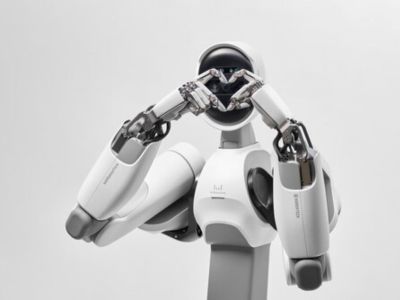

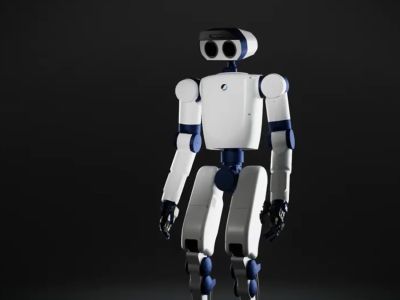
The Short Answer: Which Korean Humanoid Robots Matter Right Now
South Korea's most useful humanoid robot today is the AI Worker from ROBOTIS, a two-armed robot on wheels that has been packing boxes at a real distribution center since September 2026. Next comes IGRIS-C from ROBROS, a walking humanoid with 18 units already sold, then Holiday Robotics' Friday, a factory robot due for commercial launch in the second half of 2026. ROBOTIS' open AI Sapiens K0, WIRobotics' ALLEX, AEI Robot's ALICE 4, LG's CloiD and Blue Robin's P-73 complete the list of eight.
Korea is the world's most automated manufacturing country by robot density, and its first walking humanoid, HUBO, took its first steps at KAIST in 2005. Yet most humanoid headlines now go to Chinese and American startups, and the Korean field is a mix of small startups, university spin-offs and giant brands that is hard to follow. This guide ranks the eight Korean humanoids that matter most by one plain question: how close is each robot to doing paid work for a real customer, and what has it been seen doing so far?
Quick Overview
Here are the eight South Korean humanoids side by side, in rank order. The last column tells you the most important thing for most readers: whether anyone outside the maker can get one today.
| Rank | Robot | Manufacturer | Key Strength | Best For | Can You Get One? |
|---|---|---|---|---|---|
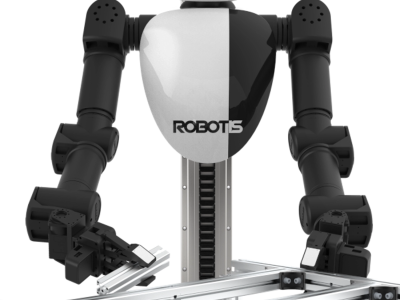
| #1 |  AI Worker | ROBOTIS | Two units packing boxes at Olive Young since September 2026 | Warehouse packing and factory assembly | Yes, sold to businesses |
| #2 |  IGRIS-C | ROBROS | 18 units sold; walks and does backflips | Logistics pilots and university research | Yes, in small numbers |
| #3 |  Friday | Holiday Robotics | Tactile hands that feel 0.05 N | Delicate factory line work | Commercial launch planned for late 2026 |
| #4 |  AI Sapiens K0 | ROBOTIS | Full design, code and walking software released | Labs and students building their own robots | Open design released 2026 |
| #5 |  ALLEX | WIRobotics | 40 N fingertip force with gentle touch sensing | Research on safe, delicate handling | Sales to research buyers from Q4 2026 |
| #6 |  ALICE 4 | AEI Robot | 41 degrees of freedom on gearless linear actuators | Testing new robot muscle designs | By inquiry; no named customer yet |
| #7 |  CloiD | LG Electronics | Two 7-joint arms with five-finger hands | Future household chores | Not yet; no release date |
| #8 |  P-73 | Blue Robin | 173 cm walker with 32 degrees of freedom | University-grade walking research | Prototype since December 2025 |
Two robots in the table are already working for paying customers, two more have set launch dates, and the rest are open research platforms, demonstrators or prototypes that show where Korean makers are heading.
Explore the Robots

AI Worker
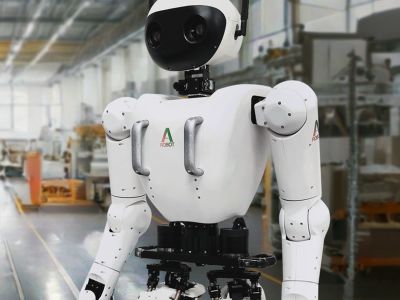
AI Worker ranks first because it is the Korean humanoid already doing daily work at a customer site. Since September 2026, two units have worked in live operations at the Olive Young distribution center in Yongin, near Seoul, putting cushioning into shipping boxes, after earlier packing tests with CJ Logistics. ROBOTIS calls it a semi-humanoid: a human-like upper body with two 7-joint arms and dexterous hands sits on a wheeled base that rolls in any direction at up to 1.5 m/s. It learns jobs by copying people, who first steer it remotely to show each task. Its software, simulation models and training data are open source, so customers are not locked in. The limits are that it has no legs and needs fresh human demonstrations for every new job. It suits warehouses and factories with repetitive packing and assembly work.

IGRIS-C
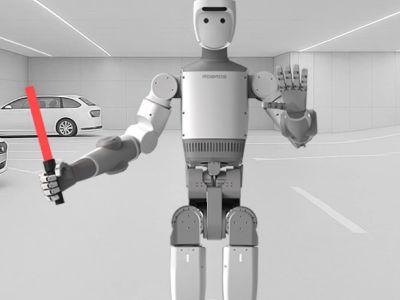
IGRIS-C ranks second because it is a walking humanoid that companies are already paying for. ROBROS, a Seoul startup founded in 2020, has sold 18 units, and the robot has been piloted at Lotte Global Logistics, with work under way to make it tougher for the dust of shipyards and the chemicals of chip plants. Universities including Kwangwoon, Kyung Hee and Sogang use it for teaching and research. It stands 154 cm tall, weighs 56 kg and lifts 3 kg in each hand. ROBROS builds its own joints, control software and AI, and in July 2026 the robot pulled off a backflip and a windmill spin, a tough test of balance. Walking is trained in simulation, while hand skills are taught by people steering it. Its limits are a light load and a modest walking pace. It suits logistics, factory and research teams that need a robot on two legs.

Friday
Friday ranks third because its maker has the funding and a production plan to put it in factories soon. Holiday Robotics closed a Series A of $103.4 million in July 2026, the largest ever raised by a Korean startup, and plans a commercial launch in the second half of 2026, with capacity for 100 units this year and 1,000 a year in 2027. The wheeled robot stands 176 cm tall, weighs 115 kg and rolls at up to 1.9 m/s. Its hands carry tactile sensors that feel forces as small as 0.05 newtons, enough to handle delicate parts, and its batteries can be swapped while it keeps working. Trials with car, chip and logistics companies are under way but confidential, so there is no public customer yet. The company's founder previously built Sualab, an industrial AI vision firm. It suits manufacturers with repetitive bench and line work.

AI Sapiens K0
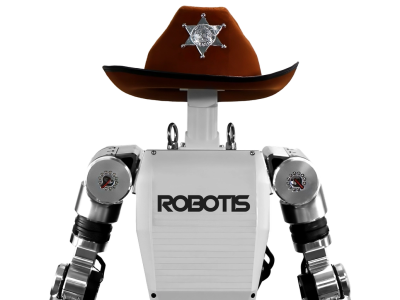
AI Sapiens K0 ranks fourth because it is the most open humanoid any Korean company has released, so anyone can study, copy or change it. ROBOTIS unveiled it in April 2026 and has published its parts list, CAD drawings, source code and simulation files, including the balance and walking code that many makers keep secret. In August 2026 it released the software under a licence with few limits on commercial use, plus tools for moving skills trained in simulation onto the real robot. The robot is 130 cm tall, weighs 34 kg and has 23 degrees of freedom, meaning 23 separate joints, each driven by an in-house Dynamixel-Q motor. Each arm handles 3 kg. It is a research tool rather than a worker, and its small frame limits what it can carry. It suits universities, students and startups that want a humanoid they fully control.

ALLEX
ALLEX ranks fifth because its maker has set a date to start selling it, though buyers will get a research version first. WIRobotics plans to sell ALLEX to AI companies, large tech firms and research institutes from the fourth quarter of 2026, with capacity for more than 300 units a year by the end of 2027. The robot is built around touch. Its hands press with up to 40 newtons at the fingertip, yet it senses forces as light as 100 gram-force without skin sensors, so it can shake a hand without crushing it. Today it is an upper body on a stand with no legs or wheels, and a wheeled Mobile ALLEX is planned. WIRobotics also makes WIM, a walking-assist wearable that has passed 3,000 units sold, which gives it years of data on how people move. It suits labs studying safe, gentle handling.

ALICE 4
ALICE 4 ranks sixth because it brings a rare hardware idea to a full-size humanoid, but its maker has not named a customer for it yet. AEI Robot, a 2018 spin-off from a robotics lab at Hanyang University ERICA, moves the robot's joints with its own linear actuators, motors that push and pull in a straight line like a muscle instead of turning through a gearbox. The company says this gives finer force control, quieter motion and simpler manufacturing. ALICE 4 stands 160 cm tall, weighs 45 kg and has 41 degrees of freedom, with an NVIDIA Jetson Orin NX computer on board. AEI Robot showed the ALICE series at CES 2026 and handles requests through direct inquiry. The team's roots are in robot soccer: an earlier ALICE played in the RoboCup humanoid league. It suits research teams and companies that want to test a different kind of robot muscle.

CloiD
CloiD ranks seventh because it comes from the biggest Korean brand on this list, but it is still a demonstrator with no release date. LG Electronics unveiled it at CES 2026 as part of its Zero Labor Home idea, a home where robots take over chores. It has a wheeled base, a torso that adjusts its height between 105 and 143 cm, and two arms with 7 degrees of freedom each, ending in five-finger hands. Its head works as an AI hub with cameras, a display, speakers and voice control, and it links to LG's connected appliances. LG pitches it for jobs such as folding laundry, loading the dishwasher and organizing the fridge. LG has not said when, where or for whom it will become available. It suits households and appliance fans who want to follow where LG's home robots are heading.

P-73
P-73 ranks eighth because it is the newest walking humanoid on this list and is still a prototype. Blue Robin was spun out of the DYROS lab at Seoul National University in 2022, building on more than ten years of research on two-legged walking and two-armed handling, and the same team reached the finals of the ANA Avatar XPRIZE that year. The P-73 prototype launched in December 2025. It stands 173 cm tall, weighs 75 kg and has 32 degrees of freedom. It can walk using either model-based control or learned policies, and its arms can copy a remote operator's motions in real time. The Blue Robin Hand has four fingers and can lift 10 kg. There is no public customer yet. It suits research partners and care robotics teams willing to work with an early prototype.
How to Choose Between Them
Start with the job you need done this year. If you run a warehouse or a packing line and want a robot working on site now, AI Worker has the clearest record, with two units in live operations at a large distribution center. IGRIS-C is the other robot on this list that customers have paid for, and it has gone through a logistics pilot with Lotte Global Logistics. Everything else is about to launch, built for research, or still a demonstrator.
Next, decide whether you need legs. Most packing, sorting and assembly happens on flat floors, where wheels are steadier, faster and simpler to keep running. AI Worker, Friday and CloiD all roll on wheels, and ALLEX works from a fixed stand for now. IGRIS-C, AI Sapiens K0 and P-73 walk on two legs, which matters for stairs, ship decks, cramped plant rooms and buildings that were never planned around robots.
If you are a lab or a university, look at how open the robot is. AI Sapiens K0 publishes its full design, from the parts list and CAD drawings to the walking code, and AI Worker's software, simulation models and training data are open source too. Open software means your team can write its own programs and fix problems without waiting for the maker. ALLEX is sold first as a research platform, which suits teams that care most about delicate force control.
Look hard at how each robot learns. AI Worker and IGRIS-C learn hand skills from people who first steer them remotely to show the task, so plan for staff time to record those examples. Ask how many demonstrations a new job takes, who records them, and whether the robot keeps improving once it is working alone. A robot that needs a remote operator for every unusual case can still help, but your staffing plan must allow for it.
Before you commit, ask each maker three things. Can I see the robot working in a site like mine, not only in a video? Who services it in my country, and how fast? What share of the work does it do on its own today? Several makers on this list are young startups, so also ask how many units they have built and delivered, and where spare parts come from.
The quick pick: for packing and warehouse work you can start this year, AI Worker. For a walking humanoid with paying customers, IGRIS-C. For factory work with very sensitive hands, Friday once it ships. For a fully open research humanoid, AI Sapiens K0. For gentle, force-aware handling research, ALLEX. To follow new ideas in robot muscles, ALICE 4. For the future of home help from a household brand, keep an eye on CloiD, and for university-grade walking research, P-73.
How We Ranked These Robots
We started with every live humanoid in the Origin of Bots catalog made by a company headquartered in South Korea, which gave us 14 robots. We dropped older models replaced by newer ones from the same maker, such as ALICE 3, IGRIS-A and the AIMY welcome robot, the Ambidex research arm platform from Naver Labs, and the 2005 Albert HUBO, which no longer works in public. We also left out two brand-new wheeled helpers, XYZ's DEUX and Neubility's Billi, which were only shown in autumn 2026 and are not yet available. Rainbow Robotics' RB-Y1 is under review in our catalog and will be added once its profile is checked. Boston Dynamics' Atlas is owned by Hyundai but designed and built in the United States, so it does not count as Korean here. That left eight.
Each robot was then placed by two tests, in this order. First, how close it is to a real customer: in paid use, then sold in small numbers, then a dated launch plan, then an open or research release, then a demonstrator or prototype. Second, how much real work it has been shown doing, from a stage demo up to daily tasks at a customer site. Every fact comes from the maker's own pages or from reporters who covered the robot, and we only use numbers the makers have released. Where makers have not released a number, such as battery life for most of these robots, we leave it out instead of guessing.
Frequently Asked Questions
What was Korea's first humanoid robot?
HUBO, built at KAIST in 2005, was South Korea's first two-legged walking humanoid. Its team later founded Rainbow Robotics, and a version called DRC-HUBO won the DARPA Robotics Challenge in 2015, beating teams from the United States and Japan. An Albert HUBO version from the same year carried a lifelike Einstein face made with Hanson Robotics.
Which Korean companies make humanoid robots?
The main makers in this guide are ROBOTIS, ROBROS, Holiday Robotics, WIRobotics, AEI Robot, LG Electronics and Blue Robin. Rainbow Robotics, now backed by Samsung, builds the RB-Y1 wheeled humanoid. Newer entrants include XYZ with DEUX and Neubility with Billi. Large groups such as LG and Hyundai also supply robot parts, from motors and actuators to cameras and batteries.
Can you buy a Korean humanoid robot?
Yes, but only a few. ROBOTIS sells AI Worker to businesses, and ROBROS has sold 18 IGRIS-C units to companies and universities. Holiday Robotics plans a commercial launch of Friday in the second half of 2026, and WIRobotics plans to start selling ALLEX to research buyers in the fourth quarter of 2026. LG's CloiD has no release date.
Is Samsung making a humanoid robot?
Samsung has not released its own humanoid yet, but it is the largest shareholder of Rainbow Robotics, the KAIST spin-off behind HUBO and the RB-Y1 wheeled humanoid. In July 2026 Samsung also set up a dedicated robotics division. For now, the Samsung-linked humanoid you can actually see working is Rainbow Robotics' hardware.
Is Boston Dynamics' Atlas a Korean robot?
Not quite. Hyundai Motor Group has owned Boston Dynamics since 2021, but Atlas is designed and built by Boston Dynamics in the United States, so we did not count it as a Korean humanoid here. Korea's role is growing, though: Hyundai Mobis is set to make actuators, the motors that move each joint, for the commercial version of Atlas.
Is Korea behind China in humanoid robots?
In volume, yes. Chinese makers build and ship far more humanoids, often at lower prices. Korea's strengths are different: factories that already use more robots per worker than any other country, big manufacturers such as LG, Samsung and Hyundai that can be early customers, and startups like ROBROS that design their own joints, control software and AI in house instead of buying them abroad.
Sources
- AI Worker Profile
- IGRIS-C Profile
- Friday Profile
- AI Sapiens K0 Profile
- ALLEX Profile
- ALICE 4 Profile
- CloiD Profile
- P-73 Profile
- Korean Robots Leap 1 Meter as Makers Near Field Deployment
- Korea’s First Full-Stack Humanoid Clears Backflip: IGRIS-C Is Already on Factory Floors
- Robros Targets Shipyards, Chip Plants With Walking Humanoids
- Holiday Robotics Raises $103.4 Million Series A to Scale Humanoid Robot Manufacturing
- ROBOTIS Enters the Open-Source Humanoid Arena with "AI Sapiens" K0 Platform
- Korean startup WIRobotics plans humanoid robot sales this year after $63 mil. raise
- AeiROBOT demonstrates humanoid robot “ALICE” series at the CES 2026 HUMANOID M.AX Alliance Pavilion… Presenting the vision of “A Robot for All”
- CES 2026: LG to debut new CLOiD humanoid robot for the home
Related Articles
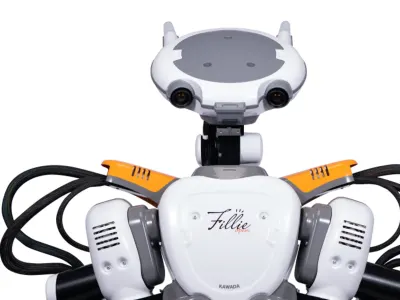
Japanese Humanoid Robots in 2026: Every Major Model Compared
10/31/2026
Humanoid Robots That Can Fold Laundry in 2026, Ranked by What They Really Do
10/30/2026
Waterproof and Dustproof Humanoid Robots in 2026, Ranked by IP Rating
10/29/2026
Humanoid Robots That Box and Fight in 2026, Ranked by What They Have Shown in Public
11/3/2026

Which Humanoid Robots Can Actually Cook? Six Compared for 2026
11/2/2026

Humanoid Robots With the Most Degrees of Freedom in 2026, and Why It Matters
11/1/2026