Humanoid Robots You Can Actually Buy Right Now in 2026, and How to Order


The Short Answer: Yes, and Five of Them Take Orders Today
Yes, you can buy a humanoid robot in 2026. The easiest one to own is the Unitree R1: it sits in Unitree's online store at $4,900, marked in stock, with an Add to Cart button. Feather and the AgiBot A2 Lite can also be ordered online today, the Unitree G1+ has a public list price of $15,000, and the Nori A3 takes full orders at $1,688 for its fall 2026 batch. Three more, the 1X NEO Home Robot, the NEURA 4NE-1 Mini and the Lightberry Lumi, take refundable reservations for 2026 deliveries.
Everything else you see in buying guides is a sales inquiry, a pilot program or a robot that is not for sale at all. Tesla does not offer Optimus to buyers, and most industrial humanoids are sold through a quote form after a sales call. This guide lists only robots whose makers publish both a price and a way to order, and it tells you exactly where to click, what you pay up front and what happens after.
Quick Overview
These are the eight humanoids with a published price and a public order route, in rank order, with where to buy each one.
| Rank | Robot | Manufacturer | Key Strength | Best For | Where and How to Order |
|---|---|---|---|---|---|
| #1 | 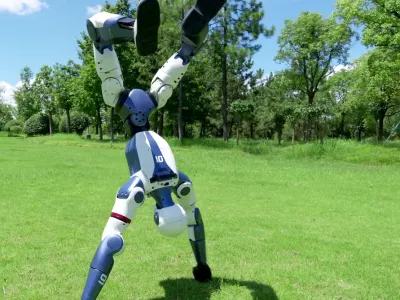 Unitree R1 | Unitree Robotics | Walks, runs and does cartwheels at 123 cm and 29 kg | First walking humanoid for learners and makers | Unitree online store, in stock, $4,900 |
| #2 |  Feather | Feather Robotics | Two 7-DoF arms, 600 mm torso lift, 10-hour battery | Developers building work apps for labs and kitchens | Configure on feather.dev, Standard preset $32,990 |
| #3 |  AgiBot A2 Lite | AgiBot | Full-size 169 cm biped with a built-in routine library | Shows, venues and commercial performances | AgiBot online store, add to cart, $44,560 |
| #4 |  Unitree G1+ | Unitree Robotics | 25 DoF, moving neck, quick-release 2-hour battery | Universities, schools and research labs | Unitree G1+ page and sales booking, $15,000 |
| #5 |  Nori A3 | Nori Robotics | Two arms on a 69 to 145 cm lifting column, 6 to 8 hours | Home chores on the smallest outlay | Order on norirobotics.com, $1,688 paid in full, ships fall 2026 |
| #6 | 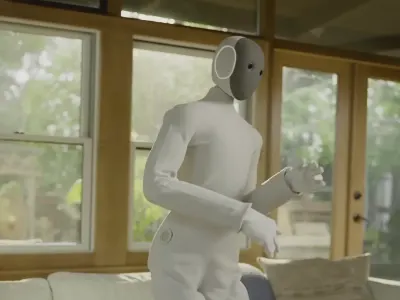 NEO Home Robot | 1X Technologies | 75 DoF tendon-driven body built for homes | US households that want a full-size helper | $200 refundable deposit, $20,000 or $499 a month |
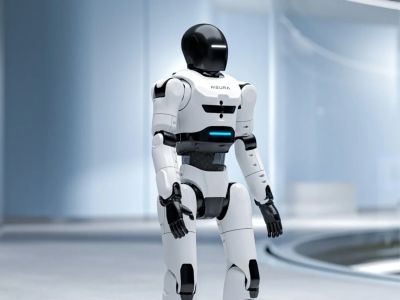
| #7 |  4NE-1 Mini | NEURA Robotics | Compact 132 cm biped, 3 kg per arm | European schools and research groups | €100 refundable reservation, €19,999 or €29,999 Pro |
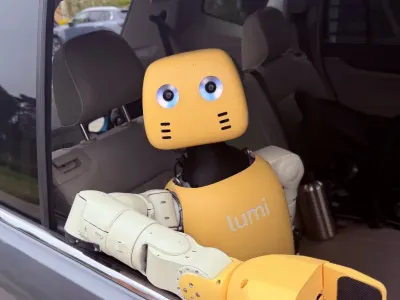
| #8 |  Lumi | Lightberry | 34 DoF with Jetson Thor and conversation software | Events, retail and guided visits | Reserve on lightberry.com, $39,990 Founder Edition |
Five can be ordered outright today and three take refundable reservations; shipping, customs and taxes are extra on every one of them.
Explore the Robots
Unitree R1
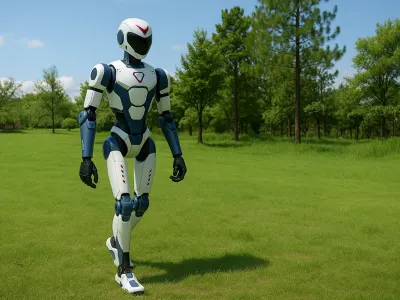
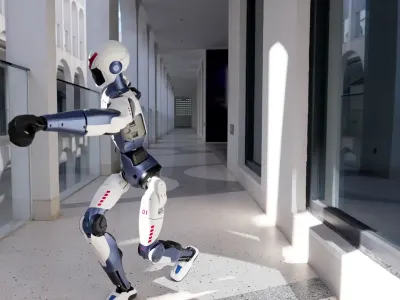
Unitree R1 ranks first because it is the only humanoid here that sits in a public online store, marked in stock, with an Add to Cart button. It stands 123 cm tall, weighs about 29 kg and has 20 to 26 degrees of freedom depending on the version, enough to run, cartwheel and do handstands. A two-axis head, binocular vision, a microphone array and an onboard speech and vision model let it hear, see and answer. Its limits are real: the battery lasts about an hour, its hands are fixed spheres that cannot grip, and only the EDU version accepts your own code. The buyer also handles customs clearance. It suits students, makers and anyone who wants a real walking humanoid at home or in class.

Feather
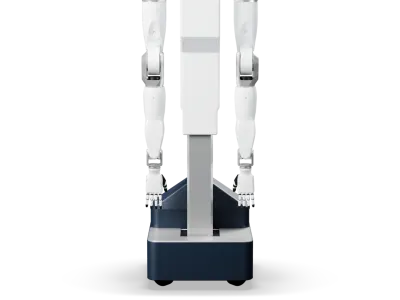
Feather ranks second because you can configure and order it online today, choosing compute, cameras, arms and hands on a single build page, with financing offered. It is a wheeled humanoid: two 7-degree-of-freedom arms, each 1 m long, ride on a torso that rises and falls 600 mm, on a base that moves in any direction at up to 1.3 m/s. Dual hot-swappable batteries give about 10 hours of work, and an open Python and ROS 2 software kit lets teams bring their own AI. Its makers say it already works as a cook in restaurants and cleans science labs. Its limits are a 105 kg weight and no legs, so stairs are out. It suits developers and integrators building robot apps for real workplaces.

AgiBot A2 Lite
AgiBot A2 Lite ranks third because it is a full-size walking humanoid you can add to a cart in AgiBot's global store, with shipping and delivery handled by the company. It stands 169 cm tall, weighs 63 kg, has 23 degrees of freedom and walks at up to 0.8 m/s, with about 1.5 hours of walking per charge. It ships with a library of routines such as handshakes, tai chi and Peking opera, can be run in groups, and learns new moves through an optional VR kit. Its main limit is that it has no perception or speech AI, so it performs rather than helps. It suits venues, brands and event companies that want a life-size performer.

Unitree G1+
Unitree G1+ ranks fourth because Unitree takes G1+ orders through its store and sales booking form, though it has no instant checkout like the R1. Launched in September 2026 as the upgrade of the popular G1, it stands 1.34 m tall, weighs about 35 kg and folds to 690 mm for transport. It has 25 degrees of freedom, up to 45 on the EDU version, two new neck joints, a head tap sensor, stronger shoulder and waist motors and a quick-release battery good for about 2 hours. Each arm carries about 3 kg. Its limits are a short 8-month warranty on the base model and code access only on EDU. It suits universities, schools and labs that want the most used research humanoid.

Nori A3
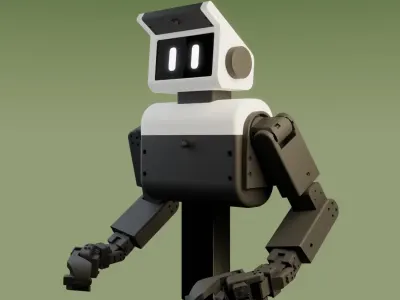
Nori A3 ranks fifth because Nori takes full orders on its website for a limited fall 2026 batch, after its first units shipped in July 2026. It is a wheeled home robot from a San Francisco startup: a telescoping column carries its head and two 7+1 degree-of-freedom arms from 69 cm to 145 cm, so it reaches both the floor and the counter. It weighs 20.4 kg, runs 6 to 8 hours and is assembled in San Francisco. Owners train it at home and can share skills with other owners. Its limits are light arms that lift about 1.5 kg each and the need to teach it most chores yourself. It suits tinkerers who want to try household robotics at the lowest entry point.

NEO Home Robot
NEO Home Robot ranks sixth because 1X takes orders on its website with a fully refundable deposit for US deliveries starting in 2026, but you cannot take one home today. It is the most complete home humanoid here: about 168 cm tall, about 30 kg, with 75 degrees of freedom and soft tendon-driven joints designed to be safe and quiet around people. It walks through ordinary homes, carries groceries, fetches items and holds a conversation, with about 4 hours per charge. Owners get a 3-year warranty with the ownership tier. Its limit is that it still learns many chores with help from remote 1X operators, which raises privacy questions. It suits US households that want a full-size helper and accept early-adopter trade-offs.

4NE-1 Mini
4NE-1 Mini ranks seventh because NEURA Robotics takes a fully refundable reservation that holds a place in its delivery queue, with the fee credited toward the robot. It is the compact member of the 4NE-1 family: 132 cm tall, 36 kg, with 25 degrees of freedom, 3 kg of payload per arm and about 2.5 hours per charge. It runs NEURA's Neuraverse software, understands several languages and uses safety sensors that detect nearby people. The Pro version adds more hardware and a developer kit with a C++ SDK, digital twin and teleoperation. Its limits are a slow 3 km/h walk and a delivery date still ahead. It suits European schools, universities and research groups.

Lumi
Lumi ranks eighth because Lightberry takes reservations for its first 100 Founder Edition units, which ship in 2026, so it is a pre-order rather than a robot you can collect today. Introduced in August 2026, it combines Lightberry's sensors and software with a Unitree G1 body. It stands 1.3 m tall, has 34 degrees of freedom and runs Lightberry OS on an NVIDIA Jetson Thor computer, with 2.5 to 3.5 hours per charge. It is built to talk: it holds long conversations, tells stories, takes photos, looks up information and guides people around a space. Its limits are a small first batch and a young company behind it. It suits event organisers, shops and visitor centres.
How to Choose Between Them
Start with what you want the robot to do. If you want a walking humanoid to learn on, code on or show off, the Unitree R1 and the Unitree G1+ are the safest picks, because Unitree offers open joint and sensor interfaces plus simulation support for its EDU versions. If you want a robot that does useful work at a bench or in a kitchen, the wheeled Feather and Nori A3 are built for that job: wheels and a lifting torso trade the ability to climb stairs for stability and long battery life.
Next, read the version name before you pay. Unitree sells the R1 in Air, standard and EDU versions, and only the EDU version lets you write your own software for the robot. The same split applies to the G1+ and the G1+ EDU. If you plan to program the robot, the cheapest version in the store is usually the wrong one.
Then add the costs that are not in the headline number. Unitree charges $300 to $1,200 for shipping an R1, AgiBot charges $500 to $3,000 for an A2 Lite, and in both cases the buyer pays customs duties and import taxes. Unitree also warns that a phone number, an email address and in some countries a tax ID are needed to clear customs, and that a shipment can be sent back if the buyer does not respond.
Before you commit, check the warranty and the delivery promise in writing. The G1+ comes with an 8-month warranty, and 18 months on the EDU version, while 1X includes a 3-year warranty with NEO ownership. Reservation deposits for NEO and the 4NE-1 Mini are fully refundable, which makes them low-risk ways to hold a place in line, but a delivery year is a target, not a date.
Be realistic about what a home robot can do on day one. Nori asks owners to teach the A3 new tasks, and 1X openly describes NEO as a robot that learns, with help from remote 1X operators for chores it cannot yet do alone. Expect to spend time training and supervising, and treat any robot here as a helper you set up, not a finished appliance.
A quick shortcut by need: to learn robotics on a real walking humanoid, buy the Unitree R1 EDU or the Unitree G1+ EDU. To build a working robot app for a lab, kitchen or factory bench, configure a Feather. To stage shows and performances, order the AgiBot A2 Lite. To experiment with household chores for the least money, order a Nori A3. To get a full-size home humanoid with the most support, reserve a NEO Home Robot.
How We Ranked These Robots
We started from every live humanoid in the Origin of Bots catalog and kept only robots whose maker publishes a price and an order route a member of the public can use. Robots sold only through quote forms, pilot programs or private sales calls were left out, as were older generations that have a newer model on sale, such as the original Unitree G1, which Unitree still lists from $13,500 next to the newer G1+.
The ranking puts robots you can pay for and receive soonest at the top: a store checkout with stock first, then a direct order with a published list price, then a refundable reservation for a 2026 delivery. Within each group, clearer terms and a lower published price rank higher. Every price, deposit and delivery note was checked on the maker's own order page on November 7, 2026, and specs come from maker pages and our robot records. Prices change often and launch offers end, so confirm the total on the order page before you pay.
Frequently Asked Questions
Can you actually buy a humanoid robot right now?
Yes. The Unitree R1 is in stock in Unitree's online store, and the AgiBot A2 Lite can be added to a cart in AgiBot's store. Feather takes online orders through its build page, and Nori takes full orders for its fall 2026 batch of the A3. Several others, including the 1X NEO Home Robot, take refundable reservations for delivery later in 2026.
What is the cheapest humanoid robot you can buy?
The cheapest walking humanoid with a public checkout is the Unitree R1 at $4,900 in Unitree's store, plus $300 to $1,200 for shipping and any local import taxes. The wheeled Nori A3 costs less at $1,688, but it rolls on a base instead of walking and ships in fall 2026.
How much does a humanoid robot cost in 2026?
Robots with public prices run from $1,688 for the wheeled Nori A3 to $44,560 for the full-size AgiBot A2 Lite. Most walking humanoids for learning and research sit between $4,900 and $20,000, while industrial humanoids are usually sold by quote after a sales call. Shipping, duties and software plans can add to the total.
Can I buy Tesla Optimus?
No. Tesla does not offer Optimus for sale or pre-order on its website. If you want a home humanoid you can reserve today, the closest options are the 1X NEO Home Robot in the US and the NEURA 4NE-1 Mini in Europe, both with refundable deposits.
Is the deposit on a pre-order humanoid refundable?
For the robots on this list that ask for one, yes. 1X takes a $200 deposit on NEO that it describes as fully refundable, and NEURA's €100 reservation fee for the 4NE-1 Mini is fully refundable and counts toward the purchase. Always read the order terms, because delivery dates are targets and refund rules can change.
Do I have to pay shipping and import duty on a humanoid robot?
Usually, yes. Unitree charges $300 to $1,200 to ship an R1 and AgiBot charges $500 to $3,000 to ship an A2 Lite, and both stores say the buyer pays customs duties, taxes and import clearance. Unitree also asks for a phone number and email for customs, and some countries require a tax ID.
Can a home humanoid robot do chores out of the box?
Only a few, and with limits. NEO is designed to fetch items, carry groceries and tidy, but 1X relies on remote operators to guide it through chores it has not learned. Nori A3 owners teach it tasks such as fetching and tidying themselves. Expect to train and supervise any home robot for now.
Sources
- Unitree R1 Profile
- Feather Profile
- AgiBot A2 Lite Profile
- Unitree G1+ Profile
- Nori A3 Profile
- NEO Home Robot Profile
- 4NE-1 Mini Profile
- Lumi Profile
- Unitree R1
- AGIBOT A2 Lite
- Order NEO
- Reserve 4NE1 Mini: Compact Humanoid Robot
- NEO humanoid designed for household use, available for preorder
- Household robot promises to handle chores for under $1,700 – but maybe it's not for you
- Unitree launches G1+ with stronger motors, a moving neck and a $15,000 price
- Feather launches a $30,000 wheeled humanoid for developers, announces $7.6M funding
Related Articles

Which Humanoid Robots Can Actually Cook? Six Compared for 2026
11/2/2026

Humanoid Robots With the Most Degrees of Freedom in 2026, and Why It Matters
11/1/2026
Japanese Humanoid Robots in 2026: Every Major Model Compared
10/31/2026
Which Humanoid Robots Can Do a Backflip? Every Flipping Robot Compared (2026)
11/5/2026
South Korean Humanoid Robots in 2026: Models, Makers and Specs Compared
11/4/2026

Humanoid Robots That Box and Fight in 2026, Ranked by What They Have Shown in Public
11/3/2026