Which Humanoid Robots Can Do a Backflip? Every Flipping Robot Compared (2026)
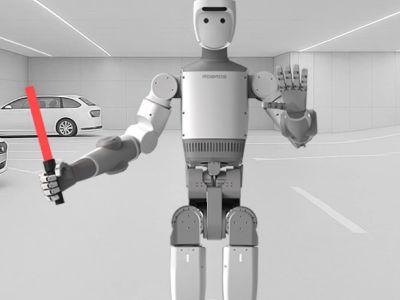
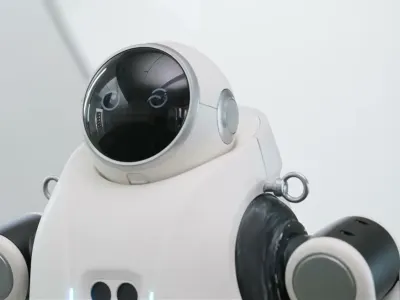
The Short Answer: Seven Humanoids Have Landed a Flip on Camera
Six humanoid robots have landed a backflip in official footage and are current products or new releases. Boston Dynamics' electric Atlas flipped in a December 2024 holiday clip and is sold to business customers today. Noetix's N2 does several in a row, Phybot M1 flips at full adult size, Unitree H2-X landed after a jump from a platform marked four meters high, and Robros' IGRIS-C and Dobot's LUMO flip as part of longer routines. Unitree's older H1 was the first electric humanoid to do it, in March 2024. Only some of these robots can be bought.
A backflip is useless in a warehouse, so why do robot makers keep filming them? Because it is the hardest balance test there is. The robot has to throw its whole weight into the air, spin, and catch itself on two small feet in a fraction of a second. Motors must be strong and light, and the software must know exactly where every joint is while the body is upside down. A robot that can do that has power and control to spare for walking on rough ground or recovering from a shove. This guide ranks every humanoid we found with a flip on its maker's own footage, explains what each flip really proves, and tells you which ones you can actually get.
Quick Overview
Here are the six humanoids with a flip in official footage, in rank order, with what each one actually did.
| Rank | Robot | Manufacturer | Key Strength | Best For | Flip Shown |
|---|---|---|---|---|---|
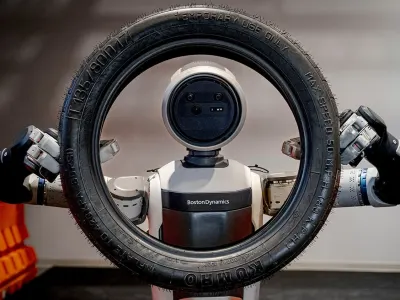
| #1 | 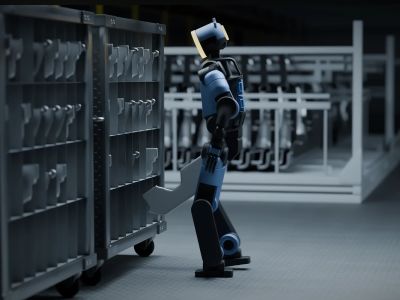 Atlas (Electric 2025) | Boston Dynamics | 56 degrees of freedom and 30 kg sustained payload | Industrial customers who want a commercial full-size robot | Backflip in a December 2024 holiday clip |
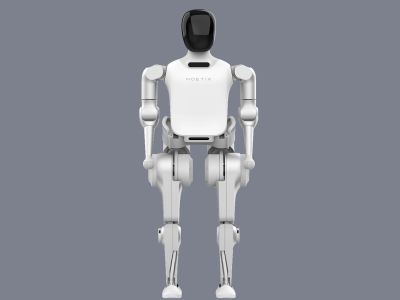
| #2 | 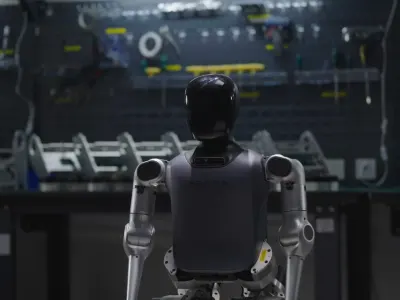 N2 (Athlete) | Noetix Robotics | Several backflips in a row in one take | Schools, hobby labs and robot sports | Repeated backflips |
| #3 |  Phybot M1 | Phybot | 530 N·m peak joint torque | Heavy-duty strength research | Standing backflip at 172 cm |
| #4 |  Unitree H2-X | Unitree Robotics | Landed a jump from a 4 m platform | Security and rescue demos | Backflips and a flip off a car roof |
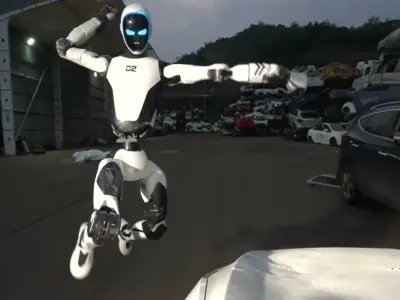
| #5 |  IGRIS-C | ROBROS | 43 degrees of freedom, built fully in-house | Logistics pilots and university research | Backflip and windmill spin |
| #6 |  LUMO | Dobot Corp Ltd | Walks on grass, sand and cobblestone | Home companionship and education | Backflip in a boxing routine |
Two robots on this list are full adult size and electric, one is a child-sized flipping specialist, and only some can be ordered today.
Explore the Robots
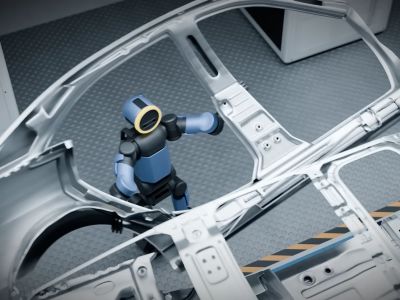
Atlas (Electric 2025)
Atlas (Electric 2025) ranks first because it pairs a clean flip with a full commercial product from a major maker. In December 2024, Boston Dynamics posted a holiday clip of the new electric Atlas in a Santa suit that crouches with a low hum, jumps and sticks a backflip landing. It replaced the hydraulic Atlas that first made humanoid flips famous. The 2025 version stands 190 cm, weighs 90 kg and has 56 degrees of freedom with joints that rotate a full 360 degrees. It sustains a 30 kg payload, runs up to 2.5 m/s and has a battery designed for quick swaps. Its limits are that the flip appears in one holiday clip rather than as a work skill, and it is sold only through Boston Dynamics sales. It suits industrial customers who want proven balance in a factory robot.

N2 (Athlete)
N2 (Athlete) ranks second because it does what the others rarely show: several backflips in a row in a single take, indoors and outdoors. Beijing startup Noetix Robotics unveiled it in March 2025. The robot stands 118 cm tall with 18 degrees of freedom and an NVIDIA Jetson computer. To make flipping easier, the team moved the heavy joint motors up toward the hips and drove the knee through a connecting rod, which keeps the legs light so they spin faster in the air. On landing it makes several small foot corrections, much like a human gymnast. Its limits are its child size, simple hands and a body built for movement rather than lifting. Noetix says it is heading into mass production. It suits schools, hobby labs and robot sports teams that want reliable acrobatics.

Phybot M1
Phybot M1 ranks third because it is a full-size electric humanoid that launched itself with a standing backflip. Beijing startup Phybot, founded by Tsinghua University graduates, released the video in November 2025. The 172 cm robot uses joints the company designed in-house, with 530 N·m of peak torque and more than 10 kW of instant power, figures well above most electric humanoids. It has 32 degrees of freedom, 3D lidar, stereo cameras and an NVIDIA Jetson Orin paired with an Intel Core i7. Phybot calls it the most powerful humanoid ever built, which is the company's own claim. Its limits are a short public track record and few units in customers' hands so far. It suits teams researching heavy industrial work where strength and impact tolerance matter.

Unitree H2-X
Unitree H2-X ranks fourth because it pulled off the most extreme stunts on this list, yet only inside an edited film. In an October 21, 2026 video it flips off a car roof, does backflips and lands after a jump from a platform marked four meters high, and Unitree says the footage is real and not sped up. It builds on the full-size H2, 182 cm tall and 70 kg, and follows Unitree's H1, the first electric humanoid to backflip, in March 2024. Unitree says H2-X can stand for up to eight hours on one charge. Its limits are clear: Unitree has not said how the stunts were controlled, how many takes they needed, or when the robot will be released. It suits anyone following where security and rescue humanoids are heading.

IGRIS-C
IGRIS-C ranks fifth because its flip comes with real work behind it. On July 29, 2026, Seoul startup ROBROS released a video of the robot doing a windmill spin, a backflip, kicks and squats, the first time a Korean-built biped reached that level of whole-body control. IGRIS-C stands 154 cm, weighs 56 kg and has 43 degrees of freedom, including tendon-driven five-finger hands. ROBROS built the motors, control software and AI itself. Universities including Kwangwoon, Kyung Hee and Sogang use it for teaching, and it is in trials at Lotte Global Logistics and shipyards. Its limits are a modest walking speed of 0.6 m/s and one flip clip so far. It suits logistics pilots and university labs that want a dexterous robot with proven balance.

LUMO
LUMO ranks sixth because its backflip is one move inside a broader companion routine. Dobot released the robot on August 5, 2026, and its launch film, which the company says used no visual effects, shows it sparring with a child, dodging a kick and landing a backflip. It also walks over grass, sand and cobblestone, dances, recognizes emotions and switches to a quiet walking mode when its owner falls asleep. LUMO stands 1.24 m, weighs 40.5 kg and has 30 degrees of freedom with 130 N·m joints. A Standard edition runs on a Rockchip RK3588 chip and a Max edition on NVIDIA Jetson Thor. Its limits are light arms that carry 1.5 kg each and only one flip on film. It suits families, schools and showrooms that want a friendly robot with athletic moves.
How to Choose Between Them
First decide why the flip matters to you. If you want a robot that can show off acrobatics in a classroom, at a trade show or at a robot sports event, a smaller machine like N2 (Athlete) is the realistic choice. It is light, it is built for this kind of move, and a fall is less dangerous. If you care about the flip as proof of raw strength for real work later, look at the full-size machines, Unitree H1 and Phybot M1, whose joints were designed to throw an adult-sized body into the air.
Second, separate what was filmed from what you will get. Every flip on this list comes from the maker's own video. Most clips show one good attempt, edited, and none of the companies publish how many tries failed. A robot that flipped on camera can usually repeat the move only with the same trained software, on a flat mat, with people standing by. Ask the seller whether the flip routine ships with the robot or was a one-off research demo.
Third, check safety before you try anything dynamic. A flipping robot lands with a force several times its own weight. Unitree asks everyone to stay at least two to three meters away from its humanoids when they move, and that advice applies to every robot here. You need open floor space, a soft landing area, a harness or crane for the bigger models, and an emergency stop within reach.
Fourth, look at what the robot does when it is not flipping. Atlas (Electric 2025) is built for industrial work, with 56 degrees of freedom and a 30 kg sustained payload. IGRIS-C is already in logistics and shipyard trials in Korea. LUMO is a home and education companion that walks on grass and sand. The flip is a bonus, while the daily skills decide whether the robot is worth owning.
Fifth, check how you can actually get one. Boston Dynamics sells Atlas to business customers through its sales team, and LUMO is sold through Dobot distributors. N2 comes from a young company that has announced plans for mass production. Phybot and Robros sell in small numbers, mainly to research and industrial partners. Unitree has not announced when H2-X will be released.
A quick shortcut by need: for a school or hobby lab that wants flips, pick N2 (Athlete). For a full-size commercial robot with a clean flip, look at Atlas (Electric 2025). For heavy-duty strength research, follow Phybot M1. For a friendly home robot that can also flip, look at LUMO. For dual-arm work in factories with flips as proof of balance, look at IGRIS-C.
How We Ranked These Robots
We started from every live humanoid in our catalog whose record mentions a flip, then looked for the flip in the maker's own video or in reporting on that video. We ranked by three things in this order: how hard the flip was (a standing flip by a full-size robot, or several flips in a row, ranks above a single flip by a small robot inside a dance or fight routine), how clearly it was shown (an uncut clip ranks above a heavily edited film), and whether you can get the robot today. Heights, weights and joint counts in this guide come from the makers' published specifications.
Disney's Stuntronics figure was left out because it flips while hanging from cables, not by jumping from its own legs. Robots whose flip we could not find on official footage were also left out. Where a maker has released a newer generation we list the newer robot: Atlas (Electric 2025) replaces the retired hydraulic Atlas, and Unitree's H1, the first electric flipper, is covered through the newer H2-X. ROBROS unveiled the heavier-lifting IGRIS-MAX on November 4, 2026, but its launch film shows lifting rather than flips, so the flip stays with IGRIS-C. Unitree G1's best-known flip is a side flip, so it is covered in the FAQ instead of the ranking. This list will change quickly, because flips have become a favorite way for new humanoid makers to introduce themselves.
Frequently Asked Questions
What was the first humanoid robot to do a backflip?
Boston Dynamics' hydraulic Atlas did it first, years before any electric robot. Unitree H1 became the first electric humanoid to do a standing backflip in March 2024, proving that motors alone, without hydraulics, could throw a full-size robot through the air. Boston Dynamics' new electric Atlas followed with its own backflip in a December 2024 holiday video.
Can a humanoid robot do a side flip or a front flip?
Yes. Unitree's smaller G1 performed a standing side flip in a video released in March 2025, a move reported as more complex than the H1's standing backflip. Front flips have also appeared on video from Chinese startups. Noetix engineers point out that for a robot a backflip is the harder of the two, because its feet, like ours, are longer at the front and give less support behind the heel when it lands backwards.
Why do robot companies film backflips if robots never need them at work?
A backflip is a stress test. It shows the motors can produce a sudden burst of power, the joints can absorb a hard landing, and the balance software can track the whole body while it is upside down. A robot that passes this test has a large margin of strength and control for ordinary jobs such as carrying loads, walking on uneven floors or recovering from a slip.
Can every Unitree robot do a backflip out of the box?
No. The flips in Unitree's videos come from special trained routines run by the company's engineers, usually on a mat. A robot you order arrives with walking and basic motion software, and dynamic tricks need either a routine supplied by the maker or your own training work in simulation, which takes skill and carries a real risk of damaging the robot.
How much does a humanoid robot that can backflip cost?
Published figures vary a lot. Noetix said its N2 was expected to sell for 39,000 yuan, about 5,500 US dollars, while Phybot targets a price below 42,000 US dollars for the M1. Unitree has not announced a price for H2-X, and Boston Dynamics sells Atlas through its sales team without listing a price. Dobot gives LUMO prices on request through its distributors.
Is it dangerous to be near a flipping robot?
It can be. A flipping robot lands with a force several times its body weight and can tip over if anything goes wrong. Unitree asks people to stay at least two to three meters away from its humanoids in motion. Anyone testing flips should use a padded area, a safety harness or crane for larger robots, and keep an emergency stop in hand.
Sources
- Atlas (Electric 2025) Profile
- N2 (Athlete) Profile
- Phybot M1 Profile
- Unitree H2-X Profile
- IGRIS-C Profile
- LUMO Profile
- Video: Unitree H1 is first humanoid to nail a backflip without hydraulics
- China startup unveils humanoid robot that can perform continuous backflips
- Phybot M1 Debuts with a Backflip and a ‘Most Powerful’ Claim
- Unitree’s H2-X Flips Off Cars in New Kung Fu “Guardian” Video
- From windmills to backflips… Robros unveils full-body humanoid control technology
- ‘World’s first embodied all-terrain’ humanoid for life beyond the factory unveiled
- Watch this humanoid robot perform a side flip for the first time
- Watch: Humanoid robot Santa’s epic backflip lights up Christmas cheer online
Related Articles
Humanoid Robots With the Most Degrees of Freedom in 2026, and Why It Matters
11/1/2026
Japanese Humanoid Robots in 2026: Every Major Model Compared
10/31/2026
Humanoid Robots That Can Fold Laundry in 2026, Ranked by What They Really Do
10/30/2026
South Korean Humanoid Robots in 2026: Models, Makers and Specs Compared
11/4/2026

Humanoid Robots That Box and Fight in 2026, Ranked by What They Have Shown in Public
11/3/2026
Which Humanoid Robots Can Actually Cook? Six Compared for 2026
11/2/2026