Top 7 US Humanoid Robotics Companies Leading the Commercial Race in 2026
Capital, Compute, Scale
The commercial race in US humanoid robotics has shifted from demo-driven hype to industrial execution, with capital, compute access, and factory readiness now separating the leaders from the rest. Figure AI sits at Rank #1 because it combines top-tier Silicon Valley backing, a $39 billion valuation in its latest major financing, and a fast-expanding strategy centered on its Helix physical AI model and the Figure 03 humanoid introduced in October 2025. Tesla ranks #2 on the strength of its manufacturing depth, Optimus pilot production in Fremont, and its ability to use internal factories as a proving ground. Agility Robotics, Boston Dynamics, Apptronik, Sunday Robotics, and Faraday Future follow as the market broadens into warehouses, logistics, domestic automation, and adjacent mobility plays.
Pilots, Partnerships, Products
What distinguishes this field in 2026 is the move from prototypes to commercial contracts, automotive factory pilots, and proprietary AI systems that can learn from human-scale tasks at industrial volumes. Figure’s recent Nscale compute pact underscores how serious the training race has become, while Tesla’s Optimus line reflects a vertically integrated path to scale. Agility is pushing Digit into warehouse workflows, Boston Dynamics is leveraging its reputation for field-proven mobile robotics, and Apptronik is building around industrial humanoids and logistics automation. Sunday Robotics is betting on domestic service robotics and imitation learning infrastructure, while Faraday Future is attempting to extend an EV and AI brand into robotics. The ranking reflects not just ambition, but evidence of product maturity, investor conviction, and commercial traction.
Top 7 US Humanoid Robotics Companies Leading the Commercial Race in 2026
Quick Overview
Here is a ranked snapshot of the seven companies and the core factor driving their position in the 2026 commercial race.
| Rank | Company | HQ | Key Strength | Notable Product |
|---|---|---|---|---|
| #1 | 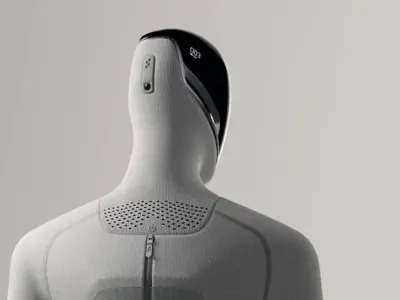 Figure AI Figure AI | San Jose, California, United States | Elite venture backing, frontier AI, and large-scale compute commitment | Figure 03 |
| #2 | 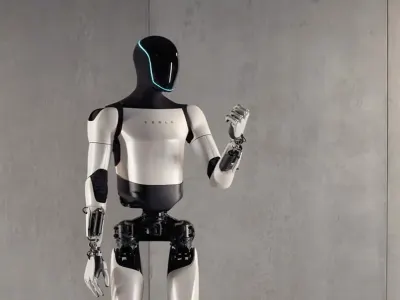 Tesla Tesla | Austin, Texas, United States | Manufacturing scale and internal factory deployment | Optimus |
| #3 | 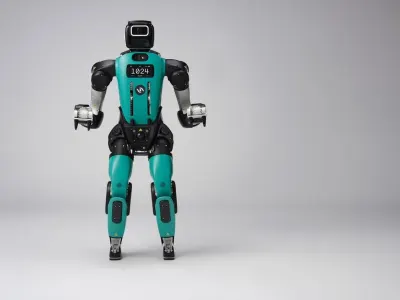 Agility Robotics Agility Robotics | Salem, United States | Warehouse commercialization and logistics fit | Digit |
| #4 | 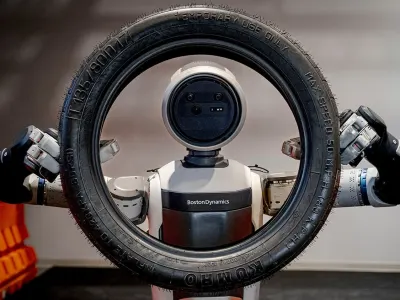 Boston Dynamics Boston Dynamics | Waltham, United States | Proven mobile robotics and engineering credibility | Atlas |
| #5 | 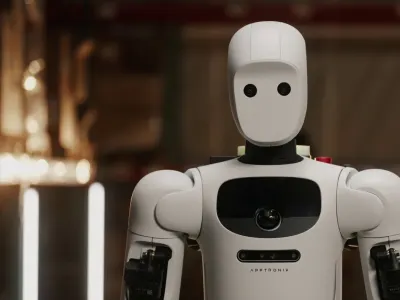 Apptronik Apptronik | Austin, United States | Industrial humanoid design and automation partnerships | Apollo |
| #6 | 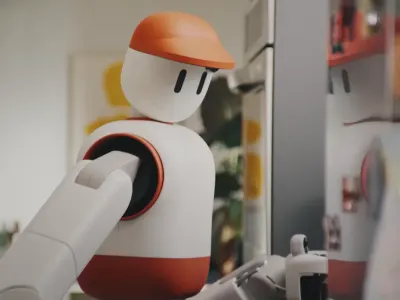 Sunday Robotics Sunday Robotics | Mountain View, California, United States | Domestic service robotics and imitation learning focus | Home robotics platform |
| #7 | 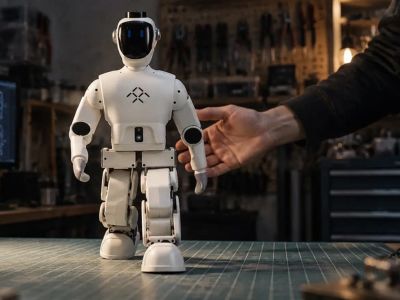 Faraday Future Faraday Future | El Segundo, California, USA | Cross-over EV, AI, and robotics ambition | FF robotics initiatives |
These ranks show a market still led by well-capitalized, technically differentiated players with real pilot pathways, while newer entrants are trying to convert AI and automation narratives into durable commercial pipelines.
Explore the Companies
Figure AI
Figure AI has the biggest valuation in the US humanoid race and its own factory. Its commercial proof so far is BMW: under a January 2024 agreement, Figure 02 worked at the Spartanburg plant for about 11 months. Figure 03 arrived in October 2025, built for homes as well as factories, running on Helix AI, which reached Helix 02 in January 2026. Owning both the hardware and the AI lets Figure move quickly, and investors valued the company at $39 billion in September 2025.
Tesla
Tesla's commercial case is internal deployment first: its own factories are the first customer, which gives Optimus guaranteed work while it matures. The plan for volume is a converted Fremont line, designed for up to one million robots a year, with a second factory planned at Giga Texas. For outside buyers the question is timing, since Tesla has missed earlier goals, including about 10,000 robots in 2025. Tesla also builds its own AI chips and actuators, which few US rivals can match.
Agility Robotics
Agility leads the US race in paid warehouse work. Digit moves totes and materials in warehouses and factories, GXO Logistics signed the industry's first robots-as-a-service contract for it in 2024, and customers include Schaeffler and Toyota Motor Manufacturing Canada. In June 2026 Agility agreed to go public through a merger with Churchill Capital Corp XI that values it at $2.5 billion, and in September it unveiled Digit 5, which lifts 50 lb and recharges in about nine minutes. Its RoboFab plant in Salem, Oregon gives it in-house manufacturing.
Boston Dynamics
Boston Dynamics has the deepest engineering record in the US field. The Waltham company launched a production electric Atlas at CES 2026, with the first fleets going to Hyundai factories and Google DeepMind, and its Spot robot, on sale since 2020, does industrial inspection while Stretch unloads trucks. Hyundai Motor Group has held a controlling stake since 2021, and in June 2026 it agreed to buy SoftBank's remaining share for full ownership. Marc Raibert founded it in 1992 as an MIT Leg Laboratory spin-off.
Apptronik
Apptronik pairs industrial pilots with serious funding. Its commercial footing comes from car and logistics pilots, starting with Mercedes-Benz in March 2024. In February 2026 the Austin company raised $520 million, bringing its Series A to $935 million at a valuation of about $5 billion. In July 2026 it unveiled Apollo 2 in bipedal and wheeled versions and opened Robot Park, a facility of nearly 90,000 square feet, where robots collect training data. GXO began testing Apollo in logistics later in 2024.
Sunday Robotics
Sunday is the US home-robot bet. The Mountain View company, founded by Stanford PhD roboticists Tony Zhao and Cheng Chi, emerged from stealth on November 19, 2025 with Memo, a legless household robot on a rolling platform trained from about 10 million episodes of real routines captured with its Skill Capture Glove. It raised a US$165 million Series B at a US$1.15 billion valuation in March 2026, and a Founding Family Beta with fifty households is due from late 2026.
Faraday Future
Faraday Future is the electric-vehicle company that jumped into robots. Its FF EAI line introduced the FF Futurist full-size humanoid, the FF Master athletic humanoid and the FX Aegis quadruped in February 2026, and shipped 68 robots by the end of April. In September 2026 it launched five more models, among them the All-New Futurist, a full-size humanoid with 51 degrees of freedom and up to 700 TOPS of computing, and the 95 cm Master Mini for education. The robots are sold through FF.com, Amazon and RobotShop.
Sources
- Figure AI Profile
- Tesla Profile
- Agility Robotics Profile
- Boston Dynamics Profile
- Apptronik Profile
- Sunday Robotics Profile
- Faraday Future Profile
- Agility Robotics: official website
- Agility Robotics: Announces $2.5 billion merger with Churchill Capital Corp XI (sec.gov)
- Apptronik: official website
- Apptronik: Series A extended to $403 million (globenewswire.com)
- Apptronik: $350 million Series A (globenewswire.com)
- Apptronik raises $520 million at $5 billion valuation (CNBC)
- Tesla: official website
- Tesla: Optimus V3 reveal delayed, Fremont line converted (electrek.co)
- Boston Dynamics: official website
- Boston Dynamics: Hyundai to take full ownership (kedglobal.com)
- Boston Dynamics: Production Atlas launched at CES 2026 (engadget.com)
- Boston Dynamics unveils new Atlas robot (Boston Dynamics)
- Faraday Future: official website
- Faraday Future: FF EAI robot lines launched (ff.com)
- Sunday Robotics: $165 million Series B at $1.15 billion valuation (techcrunch.com)
- Sunday Robotics: Sunday emerges from stealth with Memo (globenewswire.com)
- Figure AI: official website
- Introducing Figure 03 (Figure AI)
- Figure AI raises $1B+ in Series C funding (The Robot Report)
- Reuters
- Bloomberg
Related Articles
These 5 Companies Building the Most Advanced Humanoid Robots in 2026
6/22/2026
The 5 Humanoid Robot Companies Most Likely to Dominate by 2030
6/22/2026
Top 10 Humanoid Robot Companies in 2026: Ranked by Technology, Real-World Deployments & Market Impact
6/19/2026
Top 9 European Humanoid Companies to Watch in 2026-2027
10/9/2026

The 10 Chinese Humanoid Robotics Companies Scaling Mass Production the Fastest in 2026
9/9/2026
Top 10 Humanoid Robot Companies with the Biggest Funding & Market Momentum in 2026
9/9/2026