Top 10 Humanoid Robot Companies with the Biggest Funding & Market Momentum in 2026
Capital Floods Robotics
The humanoid robotics race in 2026 is being shaped by a new mix of capital intensity, industrial validation, and compute access, with the strongest companies pulling ahead through large funding rounds and real-world deployments. Rank #1 Figure AI, Rank #2 NEURA Robotics, and Rank #3 UBTECH Robotics are drawing the most attention because investors now want evidence of scale, not just demos. Across the field, Fortune 500-style pilot programs, factory integrations, and supply-chain commitments are becoming the clearest markers of momentum, while leaders are also using partnerships to lock in chips, cloud capacity, and manufacturing pathways before volume production begins.
Pilots Turn To Scale
The companies ranked below stand out for different reasons, but each is trying to convert technical promise into commercial traction. Figure AI’s massive compute deal with Nscale, NEURA Robotics’ record Series C backed by global industrial and AI players, and UBTECH’s established industrial and service footprint show how funding is now tied to deployment readiness. Unitree, Agility Robotics, Apptronik, AgiBot, Galbot, Robot Era, and LimX Dynamics are farther down the list because their momentum is either more regional, earlier-stage, or less proven at scale, even when they have strong technical credibility and active customer pipelines.
Quick Overview
The ranking reflects a mix of funding scale, partnership quality, product maturity, and manufacturing readiness rather than pure technical novelty.
| Rank | Company | HQ | Key Strength | Notable Product |
|---|---|---|---|---|
| #1 | 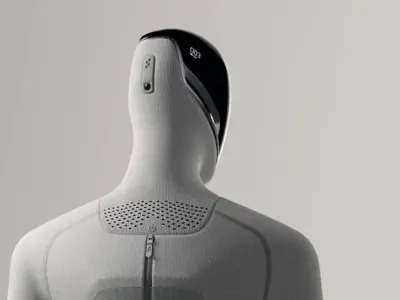 Figure AI Figure AI | San Jose, California, United States | Massive funding momentum and compute access | Figure 02 / Helix |
| #2 | 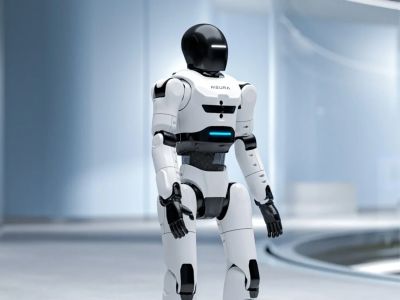 NEURA Robotics NEURA Robotics | Metzingen, Baden-Württemberg, Germany | Record Series C and industrial alliances | 4NE-1 |
| #3 |  UBTECH Robotics UBTECH Robotics | Shenzhen, China | Broad commercial footprint in education and industry | Walker S |
| #4 |  Unitree Robotics Unitree Robotics | Hangzhou, China | Cost-competitive humanoids and high-volume robotics hardware | G1 |
| #5 |  Galbot Robotics Galbot Robotics | Beijing, China | AI-driven embodied automation for retail and logistics | Galbot humanoid |
| #6 | 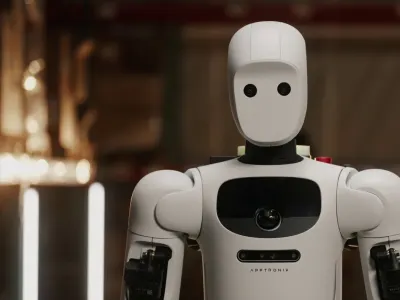 Apptronik Apptronik | Austin, United States | Industrial-focused humanoid partnerships | Apollo |
| #7 |  AgiBot AgiBot | Shanghai, China | Rapid China-scale commercialization push | Yuanzheng |
| #8 | 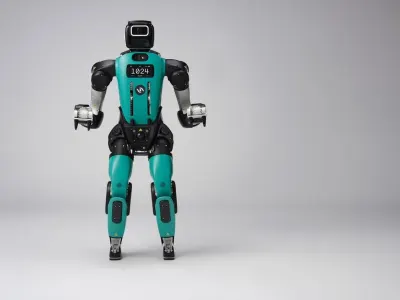 Agility Robotics Agility Robotics | Salem, United States | Warehousing deployments and logistics traction | Digit |
| #9 |  Robot Era Robot Era | Haidian District, Beijing, China | Embodied AI and research-to-deployment pipeline | STAR1 |
| #10 |  LimX Dynamics LimX Dynamics | Shenzhen, China | Advanced embodied AI and locomotion research | LimX biped platform |
Taken together, these ten companies illustrate a market moving from prototype hype toward capital-backed industrial execution, with the leaders distinguished by funding depth, ecosystem partnerships, and credible manufacturing plans.
Explore the Companies
Figure AI
Figure AI has the largest valuation in this ranking. The San Jose company, founded in 2022 by Brett Adcock, raised US$675 million in February 2024 at a US$2.6 billion valuation from backers including Jeff Bezos, Microsoft, NVIDIA and OpenAI, then more than US$1 billion in September 2025 at a US$39 billion valuation. That capital funds its BotQ factory, designed for 12,000 robots a year, and its Helix AI, with Figure 03 launched in October 2025.
NEURA Robotics
NEURA holds the record for European humanoid funding. The Metzingen company, founded in 2019 by David Reger, raised a €120 million Series B in January 2025 led by Lingotto Investment Management, then announced a Series C of up to US$1.4 billion in June 2026 at a US$7 billion valuation, led by Tether with Amazon, NVIDIA and the European Investment Bank. NEURA reported a €1 billion order book, and its 4NE-1 humanoid is listed at about €98,000, with volume shipments expected from late 2026.
UBTECH Robotics
UBTECH's momentum comes from orders and public-market capital. The Shenzhen company, listed in Hong Kong since December 2023, began mass production and delivery of its Walker S2 humanoid on November 17, 2025, with Walker orders above 800 million yuan. Customers include BYD, Geely, FAW-Volkswagen, Audi FAW, Foxconn and SF Express, and UBTECH targets annual capacity of 5,000 industrial humanoids in 2026 and 10,000 in 2027, backed by revenue from education and service robots.
Unitree Robotics
Unitree turned funding into a public listing. The Hangzhou company, backed by DeepSeek and affiliates of Tencent, Meituan and Alibaba, shipped more than 5,500 humanoids in 2025 and reported revenue of 1.699 billion yuan. It filed for a Shanghai STAR Market listing in March 2026, and its IPO was priced at 150.80 yuan a share in August 2026 under the ticker 688836. Founded in 2016 by Wang Xingxing, it started from a quadruped robot built as a master's thesis project.
Galbot Robotics
Galbot's funding story is the fastest in this ranking. The Beijing company, founded in May 2023 by Peking University's Wang He, raised 1.1 billion yuan led by CATL in June 2025, more than US$300 million at a US$3 billion valuation in December 2025 and a further 2.5 billion yuan in March 2026, taking total funding to about US$1.15 billion. Its wheeled dual-arm G1 robots staff autonomous convenience-store capsules in more than 20 cities, giving investors real commercial usage to point to.
Apptronik
Apptronik has raised steadily from strategic backers. A US$350 million Series A in February 2025, led by B Capital and Capital Factory with Google participating, was extended to US$403 million in March 2025, and in February 2026 it raised US$520 million, bringing the Series A to US$935 million at a valuation of about US$5 billion. Mercedes-Benz signed a commercial agreement in March 2024 and later invested, and Google DeepMind became its AI partner in December 2024.
AgiBot
AgiBot's momentum shows in production milestones backed by major investors. The Shanghai company, founded in February 2023 by former Huawei engineers Peng Zhihui and Deng Taihua, counts HongShan, Hillhouse, Tencent and BYD among its backers. Its 1,000th robot came off the line in January 2025, its 5,000th was announced on December 8, 2025 and its 10,000th on March 30, 2026. AgiBot also develops the GO-1 foundation model and has said a Hong Kong stock listing is planned for 2026.
Agility Robotics
Agility turned traction into a public-market route. In June 2026 it agreed to go public through a merger with Churchill Capital Corp XI that values the company at US$2.5 billion, with a planned listing under the ticker AGLT. Its Digit humanoid is in paid commercial work: GXO signed the first robots-as-a-service contract for it in 2024, and Schaeffler and Toyota Motor Manufacturing Canada are customers. Robots are built at the RoboFab factory in Salem, Oregon.
Robot Era
Robot Era's funding has accelerated each round. The Tsinghua University spin-out, founded in August 2023 by Chen Jianyu, raised nearly 300 million yuan in a pre-Series A in October 2024 and nearly 500 million yuan, about US$69 million, in a Series A on July 7, 2025, co-led by CDH Investments and Haier Capital. It announced a further 1 billion yuan strategic round in March 2026 at a valuation above 10 billion yuan, and it reportedly plans a Hong Kong IPO.
LimX Dynamics
LimX Dynamics has raised heavily within months. The Shenzhen company, founded in 2022 by Zhang Wei, a professor at the Southern University of Science and Technology, announced a US$200 million Series B on February 2, 2026, with JD.com as a strategic partner and existing backers including NIO Capital increasing stakes. Funds go to R&D, market investment and global expansion for its Oli humanoid, TRON 2 platform and Luna. LimX is among several Chinese humanoid start-ups preparing to go public.
Sources
- Figure AI Profile
- NEURA Robotics Profile
- UBTECH Robotics Profile
- Unitree Robotics Profile
- Galbot Robotics Profile
- Apptronik Profile
- AgiBot Profile
- Agility Robotics Profile
- Robot Era Profile
- LimX Dynamics Profile
- Galbot Robotics: official website
- Galbot Robotics: More than $300 million at a $3 billion valuation (prnewswire.com)
- Agility Robotics: official website
- Agility Robotics: Announces $2.5 billion merger with Churchill Capital Corp XI (sec.gov)
- Apptronik: official website
- Apptronik: Series A extended to $403 million (globenewswire.com)
- Apptronik: $350 million Series A (globenewswire.com)
- Apptronik raises $520 million at $5 billion valuation (CNBC)
- UBTECH Robotics: official website
- UBTECH Robotics: Walker S2 begins mass production (prnewswire.com)
- AgiBot: official website
- Unitree Robotics: official website
- Unitree Robotics: IPO priced at 150.80 yuan a share (english.sse.com.cn)
- Unitree: STAR Market IPO subscription opens, price 150.80 yuan (RTHK)
- Robot Era: Series A of nearly 500 million yuan (caixinglobal.com)
- Robot Era reportedly plans Hong Kong IPO (Gasgoo)
- NEURA Robotics: official website
- NEURA Robotics: Series C of up to $1.4 billion (cnbc.com)
- NEURA Robotics: €120 million Series B (neura-robotics.com)
- LimX Dynamics: official website
- LimX Dynamics secures $200 million in Series B funding (CnEVPost)
- Chinese robot startup LimX Dynamics raises $200 million (Caixin)
- LimX Dynamics secures $200 million in Series B financing (LimX)
- Figure AI: official website
- Introducing Figure 03 (Figure AI)
- Figure AI raises $1B+ in Series C funding (The Robot Report)
- Reuters Figure AI Nscale Deal
Related Articles
These 5 Companies Building the Most Advanced Humanoid Robots in 2026
6/22/2026
The 5 Humanoid Robot Companies Most Likely to Dominate by 2030
6/22/2026
Top 10 Humanoid Robot Companies in 2026: Ranked by Technology, Real-World Deployments & Market Impact
6/19/2026
Top 7 US Humanoid Robotics Companies Leading the Commercial Race in 2026
10/16/2026
Top 9 European Humanoid Companies to Watch in 2026-2027
10/9/2026
The 10 Chinese Humanoid Robotics Companies Scaling Mass Production the Fastest in 2026
9/9/2026