The 10 Chinese Humanoid Robotics Companies Scaling Mass Production the Fastest in 2026
Mass Production Race Heats
China’s humanoid robotics market has shifted from prototype hype to factory discipline in 2026, and these 10 companies are now judged less by demo flair than by whether they can source actuators, integrate domestic components, and ship at scale. The leaders are the firms already tying software, supply chain control, and manufacturing engineering into a single production plan, with order books and overseas customers becoming as important as technical milestones. UBTECH’s 10,000-unit target, Unitree’s rapid output ramp, and AgiBot’s industrial push show how quickly the market is moving from lab credibility to mass manufacturing readiness.
Supply Chains Define Leaders
What separates the fastest scalers is not just robot design, but how aggressively they are cutting cost and localizing supply chains for harmonic drives, motors, sensors, and control systems. Companies with clearer paths to mass production are pairing launches with partnerships in digital manufacturing, aviation, logistics, and industrial automation, while also using exports to validate demand beyond China. Rank #1 through Rank #10 reflects both current production momentum and strategic readiness, with firms like UBTECH, Unitree, and AgiBot moving fastest, while newer players such as Kepler Robotics and LimX Dynamics are still building toward repeatable manufacturing and broader international reach.
Quick Overview
A packed field is now racing to prove who can turn humanoid robotics into a volume business first, with each company advancing on a different mix of manufacturing scale, vertical focus, and overseas ambition.
| Rank | Company | HQ | Key Strength | Notable Product |
|---|---|---|---|---|
| #1 |  AgiBot AgiBot | Shanghai, China | Fast-rising embodied AI and production engineering | Yuanzheng humanoid platform |
| #2 |  Unitree Robotics Unitree Robotics | Hangzhou, China | Cost-efficient hardware and rapid commercialization | H1 humanoid |
| #3 |  UBTECH Robotics UBTECH Robotics | Shenzhen, China | Industrial deployment and mass-production partnerships | Walker S2 |
| #4 |  Galbot Robotics Galbot Robotics | Beijing, China | Autonomous retail and logistics deployment | Galbot humanoid platform |
| #5 | 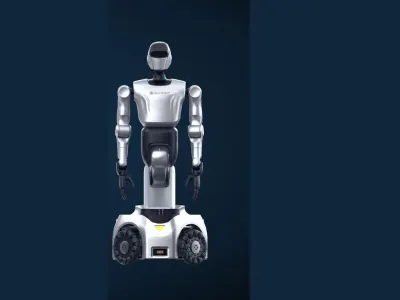 Leju Robotics Leju Robotics | Shenzhen, Guangdong, China | Industrial manufacturing integration | Kuavo humanoid |
| #6 |  XPENG XPENG | Guangzhou, China | Mobility-scale engineering and automotive manufacturing | Iron humanoid robot |
| #7 | 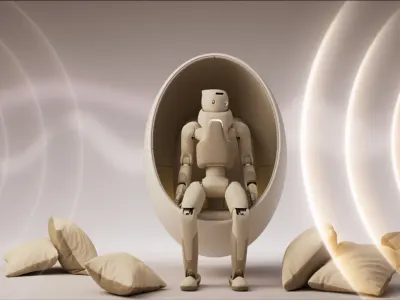 Fourier Intelligence Fourier Intelligence | Shanghai, China | Healthcare robotics and embodied AI | GR-1 humanoid |
| #8 | 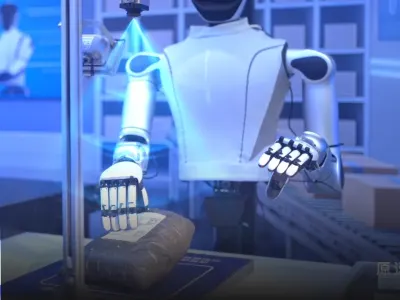 Robot Era Robot Era | Haidian District, Beijing, China | Embodied AI research and manufacturing pilots | Star1 humanoid |
| #9 | 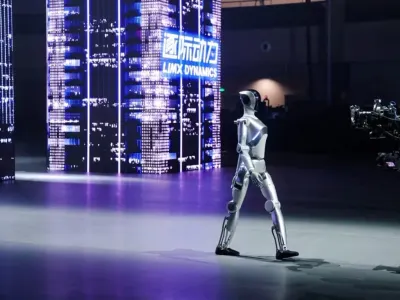 LimX Dynamics LimX Dynamics | Shenzhen, China | Advanced robotics R&D and embodied intelligence | CL-1 humanoid |
| #10 | 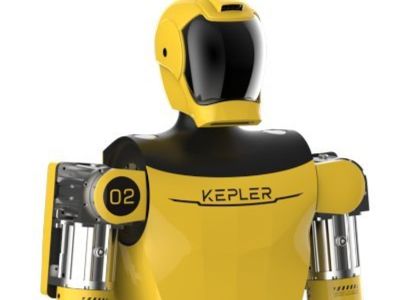 Kepler Robotics Kepler Robotics | Shanghai, China | Industrial automation and logistics focus | Forerunner K2 |
This ranking reflects the strongest combination of manufacturing readiness, domestic supply chain depth, and commercial traction in 2026.
Explore the Companies
AgiBot
AgiBot is the volume leader among Chinese start-ups in its own reporting. It builds robots in its own Shanghai factory: mass production started at the end of 2024, the 1,000th robot came off the line in January 2025, the 5,000th was announced on December 8, 2025 and the 10,000th on March 30, 2026. The range includes the Expedition A2 series, the smaller Lingxi X series and the G2 industrial robot, and its humanoids hold certifications from China, the United States and the European Union.
Unitree Robotics
Unitree has the strongest shipment record in the group. It shipped more than 5,500 humanoids in 2025 and more than 33,000 quadrupeds in total, with over 40 percent of revenue from overseas, and annual revenue reached 1.699 billion yuan with a gross margin above 60 percent. The G1 went into mass production in August 2024 at about US$16,000, and the H2 launched in October 2025. Its Shanghai STAR Market IPO in August 2026 was priced at 150.80 yuan a share.
UBTECH Robotics
UBTECH leads Chinese humanoid production in announced capacity. The Walker S2, which swaps its own battery in about three minutes, began mass production and delivery on November 17, 2025, with Walker orders above 800 million yuan. UBTECH targets annual capacity of 5,000 industrial humanoids in 2026 and 10,000 in 2027, with customers including BYD, Geely, FAW-Volkswagen, Audi FAW, Foxconn and SF Express. The Hong Kong-listed Shenzhen company also builds Cruzr service robots and Alpha educational humanoids.
Galbot Robotics
Galbot scales through deployment rather than a humanoid assembly line. Its wheeled dual-arm G1, launched in June 2024, restocks shelves and delivers pharmacy orders, while the S1 handles industrial logistics with a 30 kg payload. Autonomous convenience-store capsules staffed by G1 robots now operate in more than 20 cities, some handling more than 500 orders a day. Funding of more than US$300 million in December 2025 and 2.5 billion yuan in March 2026 supports the expansion.
Leju Robotics
Leju is building a dedicated production base. A Shenzhen pilot line began operating on April 12, 2026 to make Leju's Roban 2, with units to move to mass production at a Foshan factory with annual capacity above 10,000 humanoids. Leju delivered its 100th full-size KUAVO humanoid in 2025 and applied for a mainland China IPO, accepted on May 19, 2026. Founded in 2016 by Leng Xiaokun, it already shipped educational Aelos robots to thousands of schools.
XPENG
XPENG brings car-factory discipline to humanoid production. It opened an IRON production line in September 2026 with more than 80 percent of core processes automated, targeting mass production by the end of 2026 and deliveries in 2027. The Next-Gen IRON, unveiled on November 5, 2025, is 178 cm tall and 70 kg, with three in-house Turing AI chips delivering 2,250 TOPS. In August 2026 its robotics division raised US$900 million at a US$6.3 billion valuation.
Fourier Intelligence
Fourier moves from rehabilitation robots to humanoid volume. The Shanghai company, founded in 2015 by Alex Gu, unveiled the GR-1 in July 2023 and released a 1.65 m, 55 kg production version that December. The GR-2 followed in 2024, at 1.75 m with 53 degrees of freedom, 12-degree-of-freedom hands and swappable batteries, and the GR-3 series came after. Investors include IDG Capital and Saudi Aramco, and Fourier's medical robotics business gives it manufacturing experience beyond humanoids.
Robot Era
Robot Era scales through delivery to named customers. By June 2025 the Beijing company had delivered more than 200 robots worldwide, with customers including Haier Smart Home, Lenovo and a logistics firm, and its STAR1 humanoid is heading to logistics work at SF Express. It builds the STAR1 and L7 bipedal humanoids, the Q5 service robot and XHAND hands, and a 1 billion yuan strategic round in March 2026 at a valuation above 10 billion yuan funds the next stage.
LimX Dynamics
LimX scales through a family of platforms. The Shenzhen company launched Oli, its first production-ready full-size humanoid, in summer 2025, at 165 cm and about 55 kg with a modular design for research, education and commercial use, then added the TRON 2 modular platform and the Luna humanoid in 2026. A US$200 million Series B in February 2026 funds R&D and global expansion, and LimX is among several Chinese humanoid start-ups preparing to go public.
Kepler Robotics
Kepler is pricing for volume. The Shanghai company, founded in 2023 and led by Hu Debo, has said the mass-produced Forerunner K2 would start at about US$30,000, among the lowest for a full-size humanoid. The K2 has 52 degrees of freedom, carries up to 15 kg in each hand and works an eight-hour cycle on a one-hour charge. It began real-world testing at the SAIC-GM car plant in Shanghai in April 2025, handling inspection and assembly support.
Sources
- AgiBot Profile
- Unitree Robotics Profile
- UBTECH Robotics Profile
- Galbot Robotics Profile
- Leju Robotics Profile
- XPENG Profile
- Fourier Intelligence Profile
- Robot Era Profile
- LimX Dynamics Profile
- Kepler Robotics Profile
- Galbot Robotics: official website
- Galbot Robotics: More than $300 million at a $3 billion valuation (prnewswire.com)
- XPENG: official website
- XPENG: IRON humanoid production line opens (cnevpost.com)
- XPENG: $900 million at $6.3 billion valuation (electrek.co)
- Fourier Intelligence: official website
- Fourier Intelligence: GR-2 humanoid launched (therobotreport.com)
- UBTECH Robotics: official website
- UBTECH Robotics: Walker S2 begins mass production (prnewswire.com)
- AgiBot: official website
- Unitree Robotics: official website
- Unitree Robotics: IPO priced at 150.80 yuan a share (english.sse.com.cn)
- Unitree: STAR Market IPO subscription opens, price 150.80 yuan (RTHK)
- Robot Era: Series A of nearly 500 million yuan (caixinglobal.com)
- Robot Era reportedly plans Hong Kong IPO (Gasgoo)
- Kepler Robotics: official website
- Kepler Robotics: Forerunner K2 debuts at GITEX Global (prnewswire.com)
- Kepler Robotics: Forerunner humanoids shown at CES 2024 (prnewswire.com)
- LimX Dynamics: official website
- LimX Dynamics secures $200 million in Series B funding (CnEVPost)
- Chinese robot startup LimX Dynamics raises $200 million (Caixin)
- LimX Dynamics secures $200 million in Series B financing (LimX)
- Leju Robotics: official website
- Shenzhen launches first humanoid robot production line (Shenzhen Government Online)
- Embodied AI IPO boom: Leju ChiNext application (Gasgoo)
Related Articles
These 5 Companies Building the Most Advanced Humanoid Robots in 2026
6/22/2026
The 5 Humanoid Robot Companies Most Likely to Dominate by 2030
6/22/2026
Top 10 Humanoid Robot Companies in 2026: Ranked by Technology, Real-World Deployments & Market Impact
6/19/2026
Top 7 US Humanoid Robotics Companies Leading the Commercial Race in 2026
10/16/2026
Top 9 European Humanoid Companies to Watch in 2026-2027
10/9/2026
Top 10 Humanoid Robot Companies with the Biggest Funding & Market Momentum in 2026
9/9/2026