Leju Robotics
Leju Robotics (Leju (Shenzhen) Robotics, 乐聚机器人) is a Shenzhen humanoid robot company founded in 2016 by Leng Xiaokun and fellow graduates of the Harbin Institute of Technology, where he earned a PhD in computer application technology. Leju launched its first humanoid, the small educational Aelos, in 2016, and the series went on to run in thousands of schools, giving the company years of experience shipping robot hardware. Early backers included Songhe Capital and Shenzhen Capital Group, and Tencent made a strategic investment of 50 million yuan in 2017. In December 2023 Leju unveiled KUAVO (Kuafu), a high-dynamic full-size humanoid with dexterous hands, which runs KaihongOS, a commercial distribution of the OpenHarmony operating system created by Huawei, and Huawei Cloud's Pangu model. Leju delivered its 100th full-size humanoid in 2025 and began operating a pilot production line in Shenzhen in April 2026, with a Foshan factory planned for mass production at more than 10,000 humanoids a year. In May 2026 its application to list on Shenzhen's ChiNext board was accepted.
💡Notable Achievement: Leju launched Aelos in 2016, unveiled KUAVO in December 2023, delivered its 100th full-size humanoid in 2025 and filed for an A-share IPO in 2026.
What Does Leju Robotics Do?
Leju Robotics is a Shenzhen company founded in 2016 by Harbin Institute of Technology graduates that makes Aelos educational humanoids and the KUAVO full-size humanoid.
“From school robots to full-size humanoids.”
Aelos to KUAVO
Educational Aelos ran in thousands of schools before the KUAVO full-size humanoid.
OpenHarmony
KUAVO runs KaihongOS, an OpenHarmony distribution.
Scale
100th full-size humanoid delivered in 2025.
What Can Leju Robotics Robots Actually Do?
Cross-portfolio operational capabilities, manipulation tasks, and environmental competencies
Full-size humanoids for research and industry, and education robots.
Bipedal Locomotion
KUAVO walks with dynamic gait control.
Education
Aelos teaches robotics in schools.
Leju Robotics Robots
Showing 4 Humanoid Robots of 5 total models
KUAVO 5-W
By: Leju Robotics
Launched: 2025
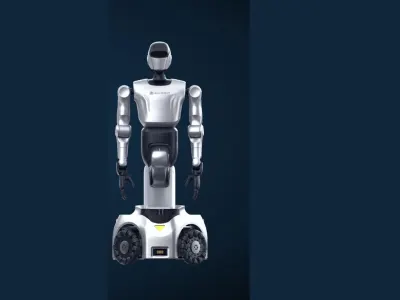
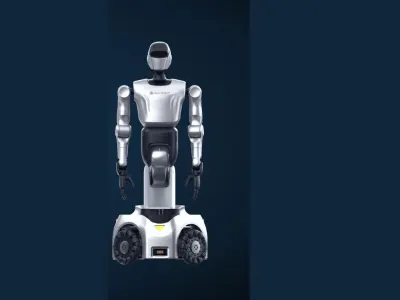
KUAVO 5-W is the wheeled version of Leju Robotics' KUAVO 5 general-purpose humanoid, launched with the legged KUAVO 5 in November 2025 for industrial work. It mounts the KUAVO humanoid upper body on a lifting torso and an omnidirectional wheeled base that turns on the spot, reaching from the floor to 2.6 m. Leju's spec sheet lists 836 × 548 × 2000 mm (extended), 156 kg, 40 degrees of freedom with 6-DoF dexterous hands, 500 N·m peak joint torque, 5 kg per arm and 20 kg whole-body payload, 100–2070 TOPS of compute, four depth cameras and two 2D lidars, Wi-Fi 6 and Bluetooth 5.2, and at least 8 hours of endurance. The waist rotates ±180° to cover a full circle, hand modules release quickly, and 3D visual SLAM with semantic mapping handles navigation. Leju targets warehouse tote handling, automotive and 3C manufacturing, and patrol and inspection work.

ROBAN2
By: Leju Robotics
Launched: 2025
ROBAN2 (ROBAN 2, Chinese name Luban No. 2) is a medium-size bipedal humanoid from Leju Robotics built as a teaching, research and development platform for embodied AI. Leju teased it in July 2025, and from April 2026 it has been built on Shenzhen's first humanoid pilot production line, which assembles a unit in about two hours. It comes in four versions: the Agile edition (23 DoF, five-finger hands, RK3588 compute) and Advanced editions A (23 DoF), B (25 DoF with two-finger grippers) and C (45 DoF with five-finger dexterous hands), which add lidar, a depth camera, autonomous navigation and an NVIDIA Orin NX module with 117 TOPS. It has a fall-resistant structure, a model-based plus reinforcement-learning control architecture compatible with OpenAI Gym and Stable Baselines3, simulation support in Isaac Gym and MuJoCo, hot-swap battery changes while standing, a gamepad, large-language-model Q&A, and graphical and Python programming.
KUAVO 5
By: Leju Robotics
Launched: 2025
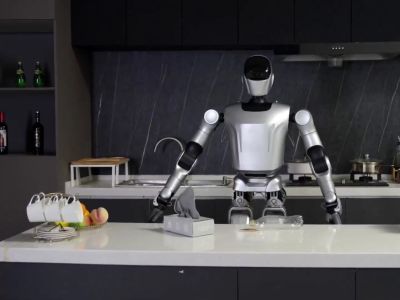
KUAVO 5 is a full-sized modular humanoid robot from Leju Robotics designed for industrial, service, and research use. It emphasizes practical deployment through interchangeable locomotion and end-effector options, including bipedal walking and a wheel-leg variant for smoother indoor mobility. Reported specifications place it around 173 cm tall and 63.5 kg, with a one-hour walking endurance and rapid recharge. The platform is built for dexterous manipulation, multi-terrain movement, and remote or autonomous operation, making it suitable for logistics, factory handling, demonstration, and human-facing service tasks. Its modular architecture and embodied-AI orientation suggest a focus on flexibility, maintainability, and scenario-specific customization rather than a single fixed task.
KUAVO 4PRO (KUAVO-MY)
By: Leju Robotics
Launched: 2024–2025
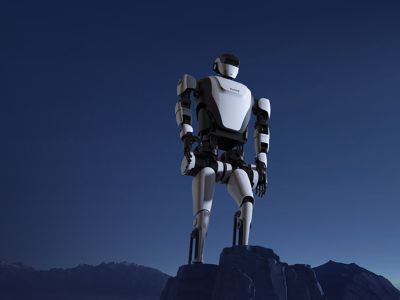
KUAVO-MY is a full-size humanoid robot developed by Leju Robotics for research, industrial experimentation, and advanced service applications. The bipedal platform focuses on dynamic locomotion, whole-body motion control, and intelligent task execution. KUAVO-MY integrates high-precision joint actuators, real-time balance control, and multimodal perception systems to enable stable walking, manipulation, and human-environment interaction. Designed primarily for laboratories, enterprises, and innovation centers, the robot supports autonomous behaviors, teleoperation, and learning-based control through modern robotics software frameworks, making it suitable for robotics research, industrial testing, and intelligent service deployment.
Leju Robotics Software & AI Ecosystem
Developer platforms, fleet management portals, autonomy intelligence, and enterprise integrations
KaihongOS
OpenHarmony Distribution
The operating system KUAVO runs on.
Leju Robotics Timeline & Milestones
Evolutionary history, landmark prototypes, major acquisitions, and commercial roadmap
Aelos educational humanoid launched
Leju launches Aelos, its first humanoid robot, in the year it is founded; the series later ran in thousands of schools.
Source: robottesters.com
Leju Robotics founded in Shenzhen
Leng Xiaokun and Harbin Institute of Technology classmates found Leju Robotics in Shenzhen.
Source: en.wikipedia.org
Tencent strategic investment
Leju secures pre-A funding from Shenzhen Capital Group and a 50 million yuan strategic investment from Tencent.
Source: ysln.ycwb.com
KUAVO full-size humanoid unveiled
Leju unveils KUAVO, a high-dynamic full-size humanoid robot with dexterous hands and autonomous task planning.
Source: ysln.ycwb.com
100th full-size humanoid delivered
Leju delivers its 100th full-size humanoid robot to customers.
Source: en.wikipedia.org
Files for A-share IPO
Tencent-backed Leju Robotics files for an initial public offering on a mainland China stock exchange.
Source: tmtpost.com
Foshan mass-production facility opened
Leju opens a mass-production facility in Foshan together with Dongfang Precision.
Source: robottesters.com
Shenzhen pilot production line begins operating
Leju starts a pilot production line in Shenzhen for its Roban 2 robot, with mass production planned at a Foshan factory of more than 10,000 humanoids a year.
Source: sz.gov.cn
ChiNext IPO application accepted
Leju Robotics has its application to list on the ChiNext board accepted, the first under ChiNext's fourth listing standard.
Source: autonews.gasgoo.com
Leju Robotics Competitors by Category
Direct industry rivals grouped by specific robotics domain
What Makes Leju Robotics Different?
Editorial AnalysisOrigin of Bots objective strategic assessment, engineering moats, and commercial hurdles
Key Strengths & Moats
- ✓Tencent-backed with a long product history.
- ✓Production capacity expanded with a Foshan facility.
Core Strategic Focus
IPO and scaling production.
Road Ahead & Challenges
- •Competes with many Chinese humanoid makers.
- •IPO not yet completed.
Leju Robotics vs Key Competitors
Strategic capability matrix across platform categories, commercial readiness, and target markets
Operating System
- Kuavo (Leju)
- OpenHarmony / Linux
- Walker S1 (UBTECH)
- ROS2 / Custom RTOS
- Expedition A1 (AgiBot)
- AgiOS Embody-Brain
- Unitree G1
- Linux / ROS2
Full-Body DoF
- Kuavo (Leju)
- 38–42 DoF
- Walker S1 (UBTECH)
- 41 DoF
- Expedition A1 (AgiBot)
- 40+ DoF
- Unitree G1
- 23–43 DoF
Height & Weight
- Kuavo (Leju)
- 168 cm / 55 kg
- Walker S1 (UBTECH)
- 172 cm / 68 kg
- Expedition A1 (AgiBot)
- 175 cm / 55 kg
- Unitree G1
- 132 cm / 35 kg
Target Application
- Kuavo (Leju)
- Automotive / OpenHarmony Dev
- Walker S1 (UBTECH)
- Automotive Assembly
- Expedition A1 (AgiBot)
- Industrial Logistics
- Unitree G1
- R&D & Education
| Strategic Dimension | Kuavo (Leju) | Walker S1 (UBTECH) | Expedition A1 (AgiBot) | Unitree G1 |
|---|---|---|---|---|
| Operating System | OpenHarmony / Linux | ROS2 / Custom RTOS | AgiOS Embody-Brain | Linux / ROS2 |
| Full-Body DoF | 38–42 DoF | 41 DoF | 40+ DoF | 23–43 DoF |
| Height & Weight | 168 cm / 55 kg | 172 cm / 68 kg | 175 cm / 55 kg | 132 cm / 35 kg |
| Target Application | Automotive / OpenHarmony Dev | Automotive Assembly | Industrial Logistics | R&D & Education |
Corporate Ecosystem & Ownership Structure
Parent company relationships, historical acquisitions, and global operating facilities
Tencent
Made a 50 million yuan strategic investment in 2017.
Ownership & Acquisition History
Made a 50 million yuan strategic investment in 2017.
Global Facilities & Operating Hubs
Leju Robotics Headquarters
HQShenzhen, Guangdong, China
Articles & Industry News
Showing 2 recent articles and news updates about Leju Robotics
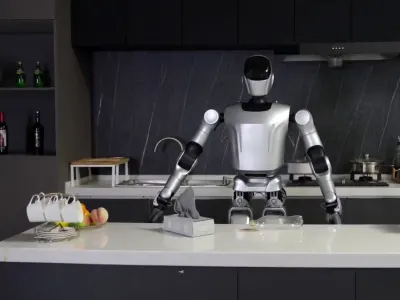
Leju Robotics positions KUAVO 5 as a teleoperation-first humanoid for factories and service spaces
News about KUAVO 5
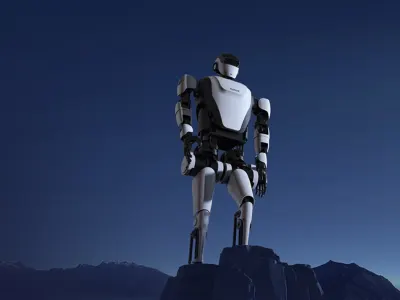
Leju's KUAVO-MY Ignites Torch Relay at National Games
News about KUAVO 4PRO (KUAVO-MY)
Robot Comparisons
Showing 6 in-depth comparisons featuring Leju Robotics — Explore all comparisons →
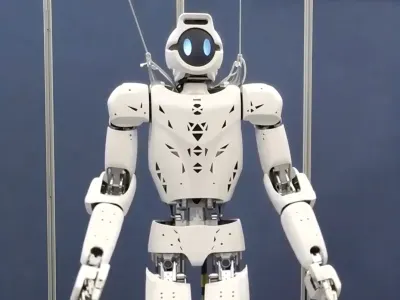
KUAVO-MY by Leju vs Kaleido 8.0 by Kawasaki
KUAVO-MY vs Kaleido 8.0: Leju's research and service humanoid against Kawasaki's robust bipedal humanoid, compared on size, mobility, sensors, AI and best uses.
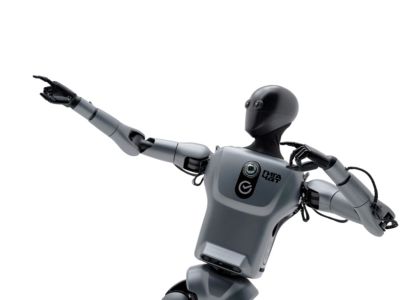
KUAVO-MY vs Green: Key Differences
KUAVO-MY vs Green: Leju's research humanoid on KaihongOS against Sber's GigaChat robot, compared on hands, sensors, AI and uses.
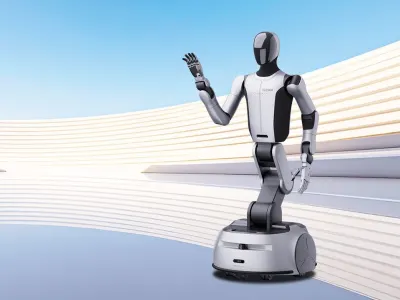
KUAVO-MY vs Cruzr S2: Humanoid Robot Comparison
KUAVO-MY vs Cruzr S2: Leju's research and service humanoid against UBTECH's wheeled assembly and service humanoid, compared on specs and uses.
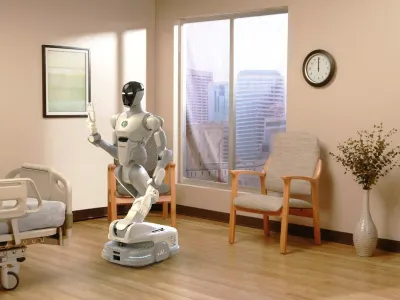
KUAVO-MY vs AlphaBot 2: Key Differences
KUAVO-MY vs AlphaBot 2: Leju's research and service humanoid against AI² Robotics' wheeled VLA humanoid, compared on size, mobility, sensors, AI and best uses.

KUAVO-MY vs D7: Key Differences in Humanoid Robots
KUAVO-MY vs D7: Leju's research and service humanoid against Pudu's wheeled semi-humanoid, compared on size, mobility, sensors, AI and best uses.
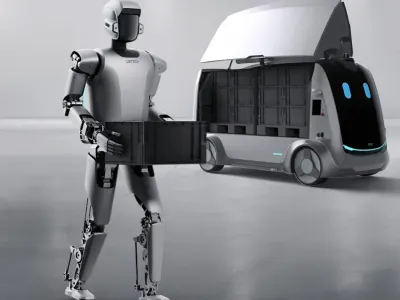
Walker S1 vs KUAVO-MY: Key Differences
Walker S1 vs KUAVO-MY: UBTECH's factory humanoid against Leju's research and service humanoid, compared on size, mobility, sensors, AI and best uses.
Frequently Asked Questions
8 AnswersVerified answers, company specifications, and deployment details about Leju Robotics
What is Leju Robotics?
Leju Robotics is a Shenzhen humanoid robot company, founded in 2016, that makes the KUAVO full-size humanoids and the Aelos educational humanoid robots.
Who founded Leju Robotics?
Leju was founded in 2016 by Leng Xiaokun, who holds a PhD from the Harbin Institute of Technology, together with fellow HIT graduates.
What is the Leju KUAVO robot?
KUAVO, or Kuafu, is Leju's full-size humanoid robot, first unveiled in December 2023. It has dexterous hands, dynamic walking and AI for perception and task planning.
What operating system does Leju KUAVO run?
KUAVO runs KaihongOS, a commercial distribution of OpenHarmony, the open-source operating system created by Huawei, rather than Huawei's proprietary HarmonyOS, and it also uses Huawei Cloud's Pangu model for embodied intelligence.
Is Leju backed by Tencent?
Yes. Tencent made a 50 million yuan strategic investment in Leju in 2017. Other early investors include Songhe Capital and Shenzhen Capital Group.
Is Leju Robotics going public?
Yes. Leju Robotics, which is backed by Tencent, filed for an A-share initial public offering on a mainland China stock exchange in 2026, as more Chinese humanoid makers move towards public markets.
How much does a Leju KUAVO cost?
Leju does not publish a standard list price for KUAVO, as pricing depends on the model and configuration for research, education or industrial use.
What is the Leju Aelos robot?
Aelos is Leju's small educational humanoid robot, used in schools and robotics competitions to teach programming and robotics, and it was an early product before Leju built the full-size KUAVO.
Verified Data & Editorial Assurance
Compiled from verified corporate filings, official Leju Robotics datasheets, and robotics engineering registries. Information has been verified against official manufacturer documentation. For commercial procurement or proprietary integrations, contact the manufacturer directly.