Leju Robotics positions KUAVO 5 as a teleoperation-first humanoid for factories and service spaces
Robot Details
KUAVO 5 • Leju RoboticsPublished
June 11, 2026
Reading Time
3 min read
Author
Origin Of Bots Editorial Team
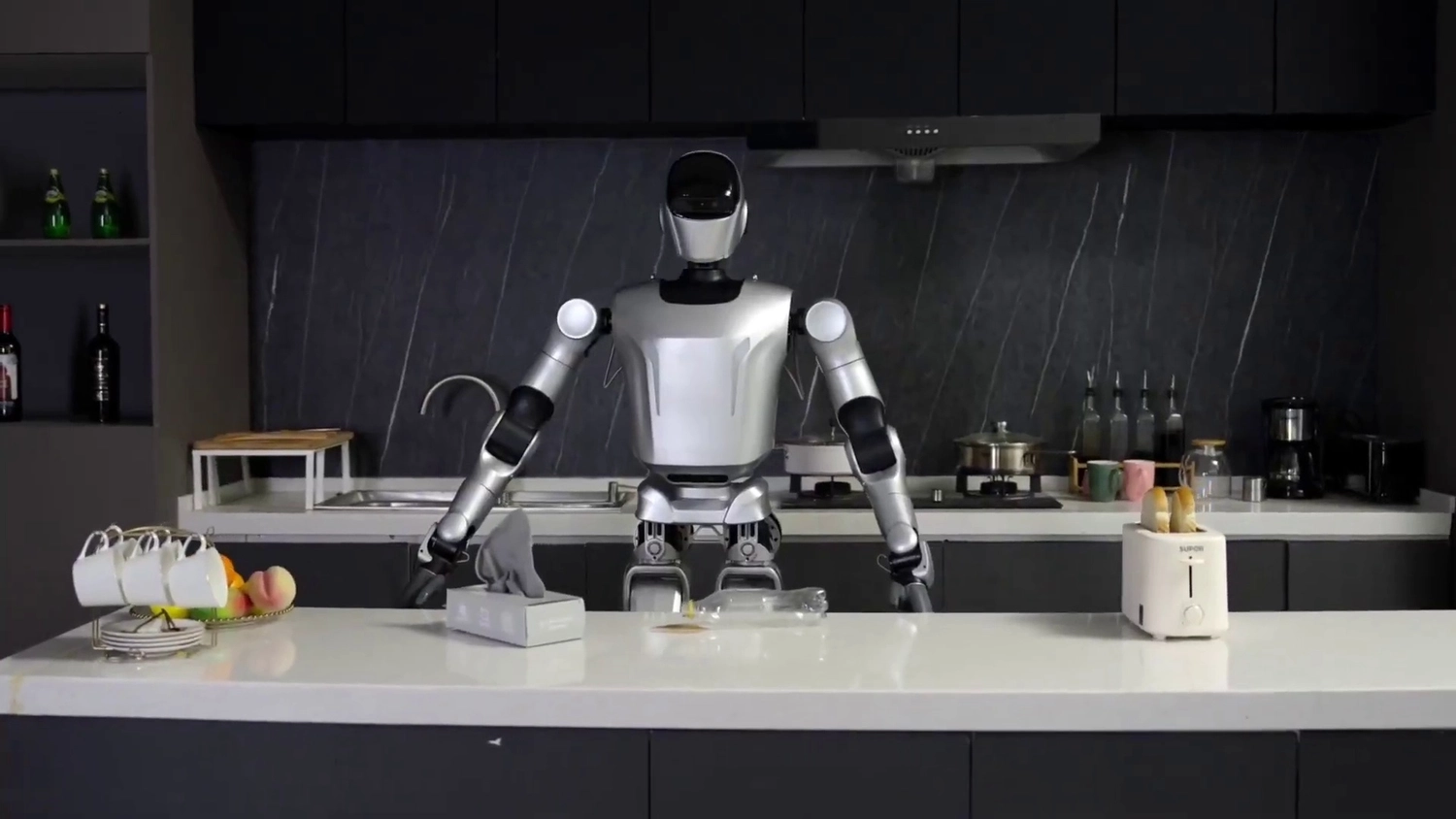
A humanoid for shared spaces
Humanoid robots are being pushed toward tasks that require balance, human-scale movement, and object handling in spaces built for people. Leju Robotics’ KUAVO 5 was presented as the latest generation of its full-size humanoid platform, with demonstrations and product reporting emphasizing bipedal motion, modular hardware, and remote-operation use cases.
Why KUAVO 5 stands out
What separates KUAVO 5 from many humanoid demos is the way its reported design centers on teleoperation, full-body coordination, and manipulation rather than scripted motions. Its modular body and reported 5G-A remote teleoperation support point to a robot intended for human-in-the-loop work in factories, service areas, and inspection environments. The platform also appears built around natural interaction, using a sensor stack that includes depth vision, LiDAR, microphones, and speakers to support awareness and communication. KUAVO 5’s main story is not autonomy alone, but how closely it can map human intent onto a stable humanoid body.
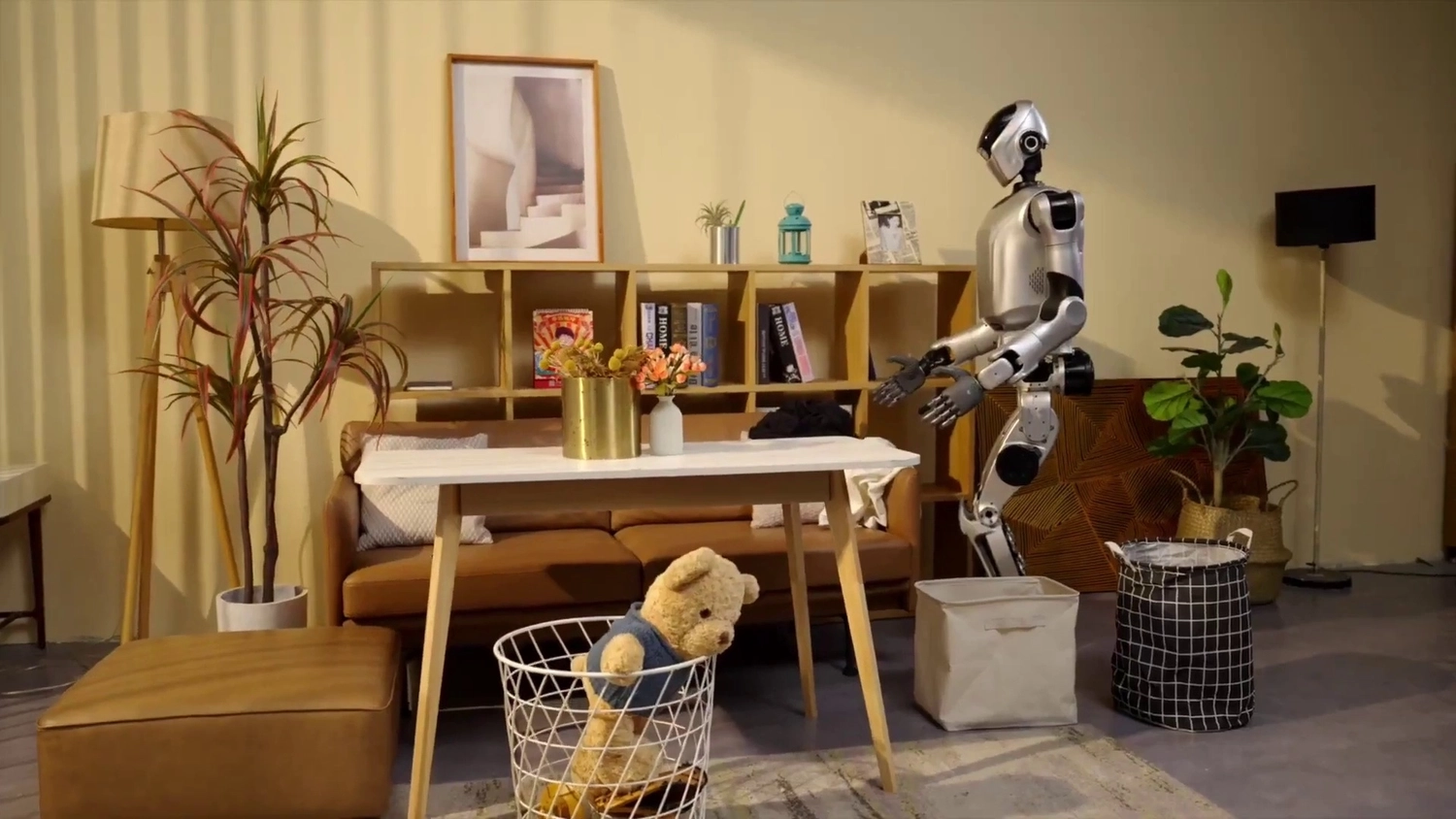
Input to motion
The system flow is straightforward: human motion input goes into AI model processing, and the robot converts that into joint actuation with balance correction. In practical terms, that means an operator can guide the robot while onboard sensing and control keep the body upright, aware of obstacles, and responsive to uneven movement. For a humanoid category, that pipeline matters because the hardest problem is not just moving forward, but moving like a person while staying safe around people.
Factory handoff task
A realistic deployment scenario is assisted material handling on a factory floor, where KUAVO 5 can move packages or tools between stations while a remote operator supervises the action. That use case fits the robot’s reported bipedal mobility, manipulation-oriented upper body, and safety features such as collision detection, force limiting, and fall recovery. It also matches the category’s current operating model: humanoids are often most useful when they extend human reach in spaces designed around human workflows, not when they replace every step of the job.
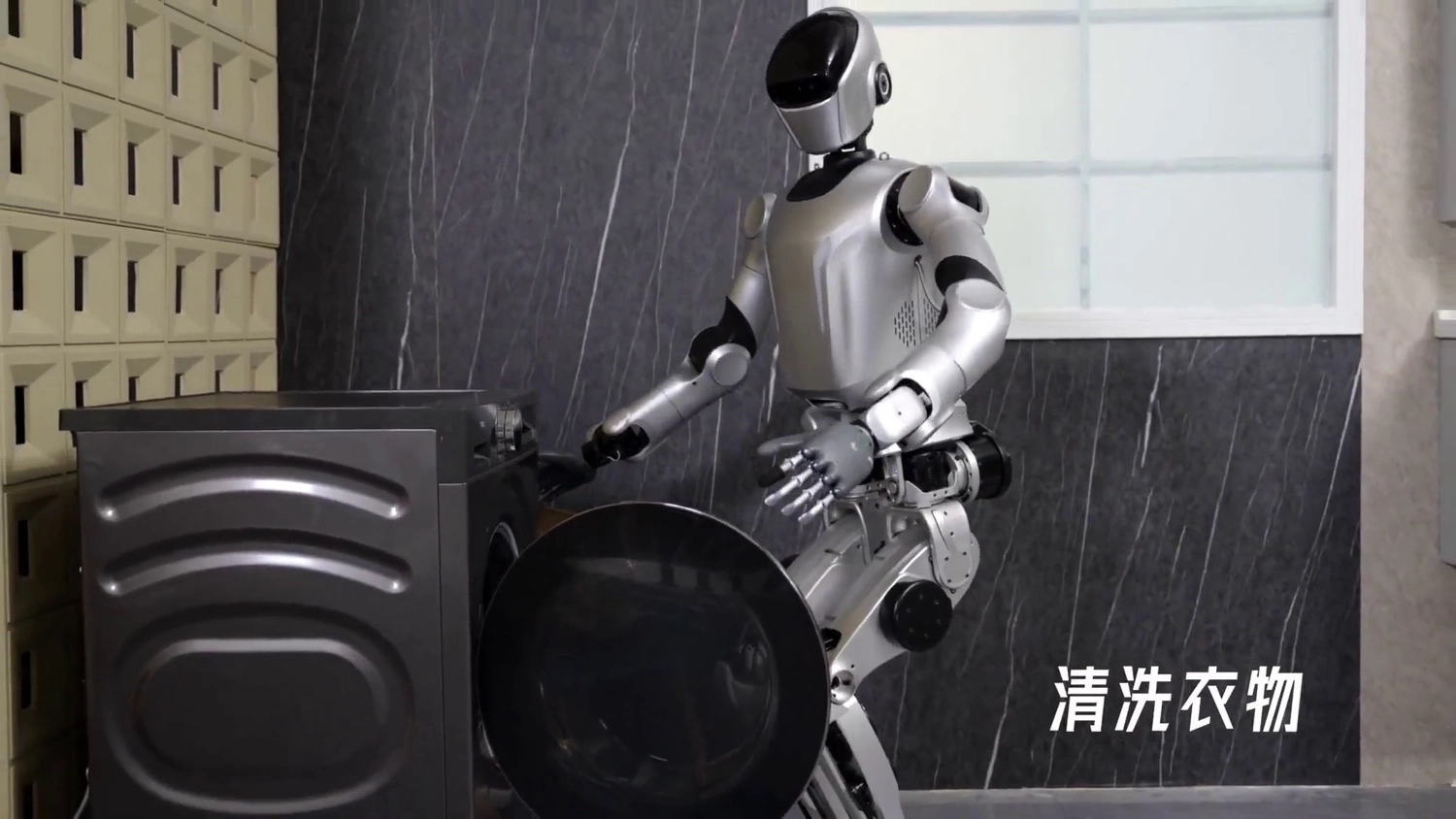
Specs as capability
KUAVO 5 is reported at 173 cm tall and 63.5 kg, a size and mass range that make it look and move more like a person than a mobile machine. Its listed movement profile includes 0.4 m/s walking and 5 km/h running, which supports short-range movement in shared indoor spaces, while the sensor suite combines RGB-D/depth vision, LiDAR, a 6-microphone 360° array, an IMU, joint temperature sensors, and stereo speakers. The platform is also reported to run on a KaihongOS/OpenHarmony-based stack, tying embodied AI and real-time control into the same software foundation.
Rivals Edge Check
| Robot | Key Advantage | Where KUAVO 5 Wins | Target Use |
|---|---|---|---|
| MagicBot Z1 | Strong general humanoid positioning for research and demos | More explicit teleoperation and modular mobility focus | Human-facing service and pilot deployments |
| Walker C | Known for advanced whole-body motion and general humanoid development | Reported sensor stack and service-oriented interaction tools | Research and embodied AI experimentation |
| AgiBot X2-N | Emphasis on adaptable humanoid manipulation and platform learning | Stronger reported factory-readiness and remote-operation framing | Industrial handling and assisted operations |
| Embodied Tien Kung 2.0 Pro | Aimed at full-body embodied intelligence and humanoid research | More practical deployment narrative for mixed human spaces | Research and industrial pilot programs |
Teleoperation first
KUAVO 5 also reflects a broader shift in humanoid robotics: near-term buyers appear to want robots that can be deployed with human supervision before autonomy matures. That is a meaningful market signal because it favors platforms that can handle imitation, remote guidance, and shared-space safety over robots built mainly around pre-programmed motion libraries. In that sense, Leju’s robot is part of a practical turn in the category, where the first commercial value may come from extending human labor rather than replacing it.
Explore Humanoids

Related Articles

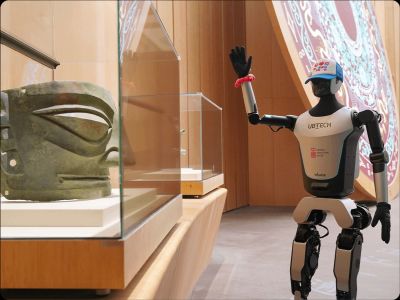
UBTECH’s U1 Series pushes humanoids toward teleoperation-first companionship
Raydiculous’s TP-01 pushes humanoids toward teleoperation-first service roles
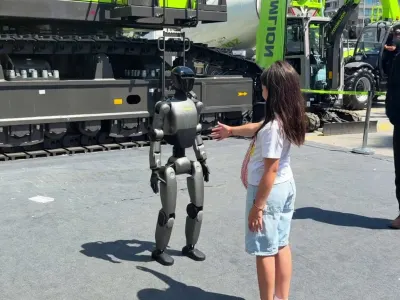
Zoomlion’s Z01 humanoid lands at KOMATEK with a Tai Chi demo and an industrial pitch
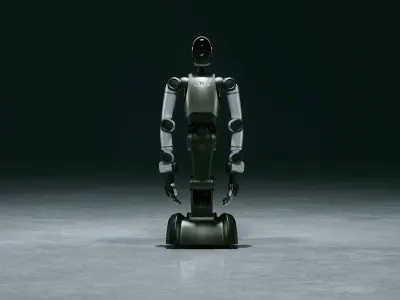
Techman Robot’s TM Xplore I debuts as a wheeled humanoid aimed at factory work and teleoperation
Related Comparisons
Compare KUAVO 5 with similar robots
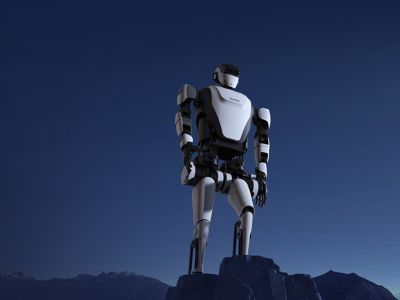
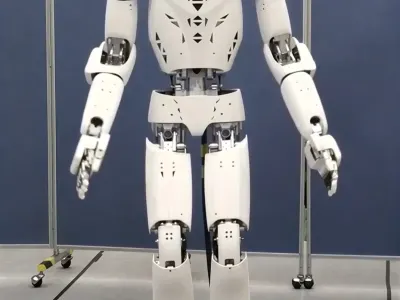
KUAVO 4PRO (KUAVO-MY) vs Kaleido 8.0
KUAVO-MY vs Kaleido 8.0: Leju's research and service humanoid against Kawasaki's robust bipedal humanoid, compared on size, mobility, sensors, AI and best uses.
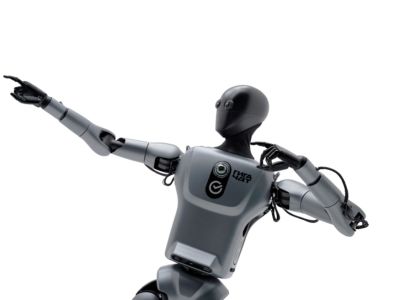
KUAVO 4PRO (KUAVO-MY) vs Green
KUAVO-MY vs Green: Leju's research humanoid on KaihongOS against Sber's GigaChat robot, compared on hands, sensors, AI and uses.
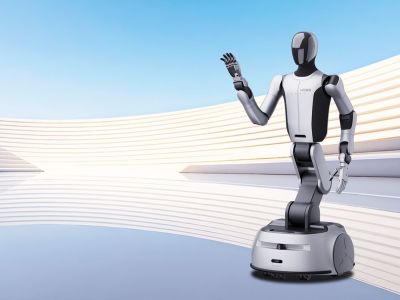
KUAVO 4PRO (KUAVO-MY) vs Cruzr S2
KUAVO-MY vs Cruzr S2: Leju's research and service humanoid against UBTECH's wheeled assembly and service humanoid, compared on specs and uses.
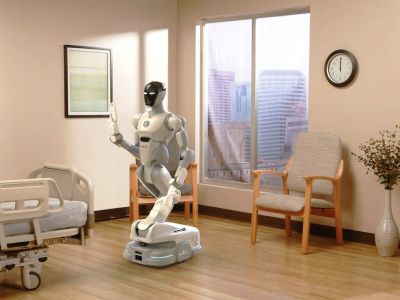
KUAVO 4PRO (KUAVO-MY) vs AlphaBot 2
KUAVO-MY vs AlphaBot 2: Leju's research and service humanoid against AI² Robotics' wheeled VLA humanoid, compared on size, mobility, sensors, AI and best uses.
Learn More About This Robot
Discover detailed specifications, reviews, and comparisons for KUAVO 5.
View Robot Details →