Cartwheel Robotics Accelerates Yogi Debut with Reno Expansion
Robot Details
Yogi • Cartwheel RoboticsPublished
January 22, 2026
Reading Time
3 min read
Author
Origin Of Bots Editorial Team

Humanoid Robot Moves Toward Production
Cartwheel Robotics is scaling operations to bring Yogi from prototype to real-world deployment, with the company expanding into a new manufacturing facility in Reno, Nevada planned to go live in early 2026. The flagship humanoid robot, which debuted its first full-body prototype in December 2025, is targeting initial deployments across healthcare, hospitality, and academic research environments. This infrastructure expansion signals the company's commitment to moving beyond technical demonstrations toward commercially viable embodied AI systems designed for human-centric environments where interaction quality directly impacts outcomes.
Interaction Redefined Through Motion Intelligence
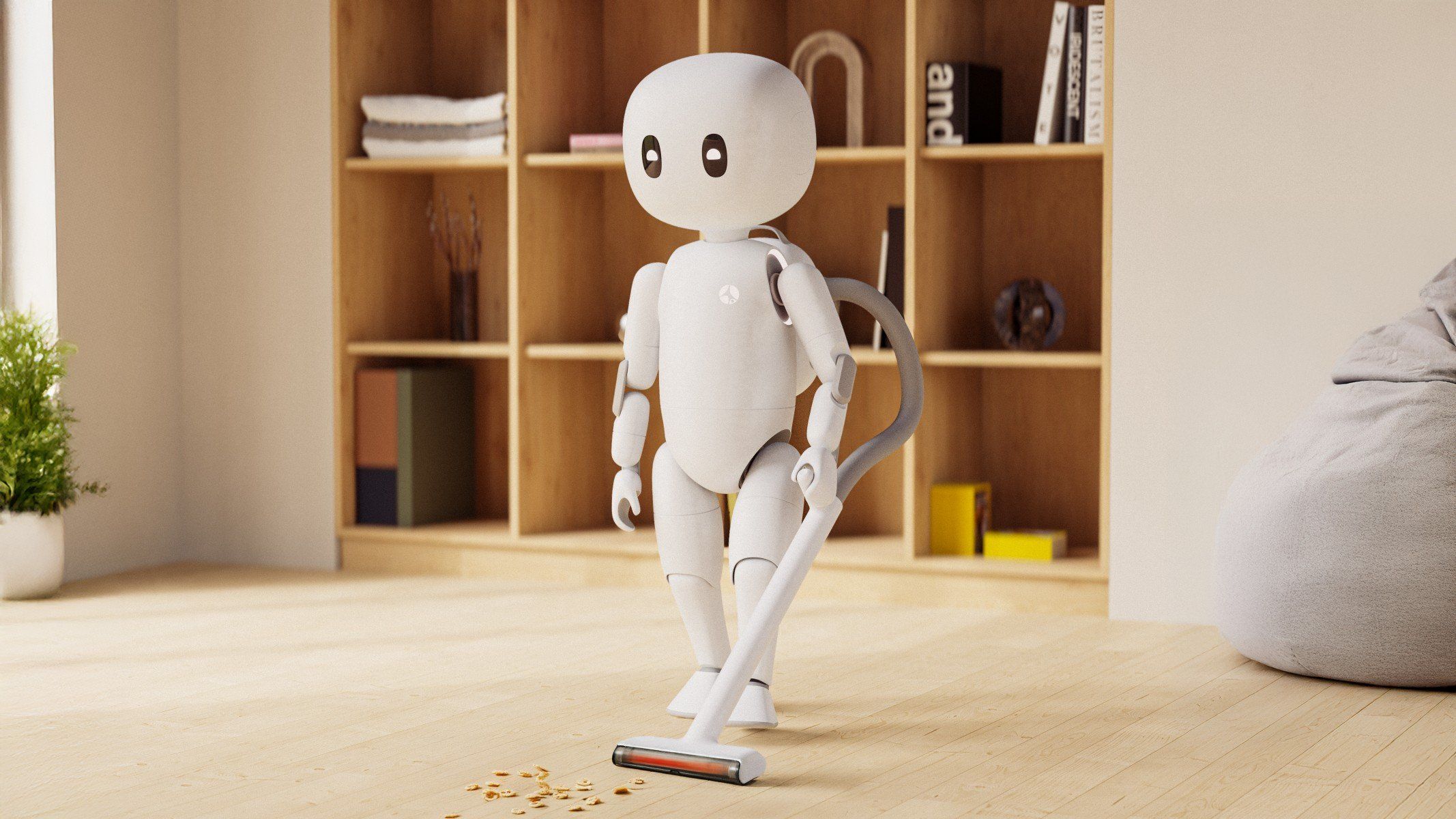
Yogi distinguishes itself through a proprietary Motion Language Model that translates natural language and text prompts into fluid, emotionally resonant full-body gestures. Unlike industrial humanoids optimized for repetitive tasks, Yogi's design philosophy prioritizes approachability and trust, featuring toddler-like proportions, a rounded build, and soft medical-grade silicone skin that invites safe physical contact. This architecture enables intuitive communication without requiring users to learn complex interfaces or manuals, positioning Yogi as a companion rather than a tool requiring operator training.

Engineering for Real-World Reliability
Cartwheel's full-stack development approach integrates hardware, motion intelligence, interaction AI, and behavioral logic into a cohesive platform built for durability. High-torque actuators with integrated overload protection ensure predictable, safe movement around humans, while the modular swappable battery system extends daily operational capacity. The robot's soft exterior absorbs impacts, and precision engineering delivers movements that feel natural rather than mechanical, addressing fundamental safety concerns that plague earlier-generation humanoids in shared human spaces.
Healthcare, Hospitality, and Beyond
Initial deployment conversations have already begun with North American medical institutions, reflecting Yogi's positioning in sectors where human interaction quality directly influences outcomes. Healthcare facilities can deploy Yogi for patient companionship and health reminders, hospitality venues can leverage its social capabilities for guest engagement, and universities gain a versatile research platform for advancing robotics and AI development. This multi-sector approach validates market demand while generating real-world behavioral data to refine Yogi's interaction capabilities across diverse environments.
Skill Architecture and Capability Foundation
Yogi's physical form enables nuanced human interaction through integrated sensor arrays: RGB cameras and depth sensors provide spatial awareness, microphones capture natural conversation, tactile sensors embedded in silicone skin detect gentle contact, and an inertial measurement unit ensures balanced bipedal movement. The robot operates at natural walking speed (1.5 km/h) across a compact frame measuring 76 centimeters tall with 8-kilogram mass, enabling navigation through residential and institutional spaces without requiring structural modifications. A three-hour runtime per charge supports extended interaction sessions, while the lithium-ion battery system maintains capacity for 3-5 years of deployment, translating to reliable daily operation across multiple use cases without frequent replacement cycles.
Competitive Positioning in Crowded Market
Yogi enters a rapidly densifying humanoid landscape alongside competitors including Figure, Agility, 1X, and Tesla's offerings. Compared to industrial-focused systems like Atlas (Electric, 2025), which prioritizes payload capacity and task automation, Yogi sacrifices raw strength for interaction fidelity—a deliberate trade-off favoring environments where emotional intelligence outweighs mechanical power. Against social robotics platforms like D9 and GR-2, Yogi's proprietary Motion Language Model provides superior gesture expressiveness, though its carrying capacity (2 kilograms per arm) limits practical assistance tasks. ALLEX and similar mobility-first designs excel at logistics; Yogi's advantage lies in sustained human engagement and behavioral adaptation. Cartwheel's decision to prioritize deployment-ready systems over prototype showcasing positions Yogi competitively against competitors still operating in demo phases, though scaling production while maintaining interaction quality remains the critical test.
Explore Humanoids


Sources
Related Articles

AheadForm's Elf V1 Series Blurs Virtual-Physical Character Divide

Annie Redefines Humanoid Interaction as Anywit Robotics Pursues Mass Production
Galbot G1 Transforms Industrial Logistics with Dual-Arm Dexterity and Extended Reach
Daimon Robotics Debuts World's First Haptic Feedback System at CES 2026
Related Comparisons
Compare Yogi with similar robots


Optimus vs Unitree G1
Compare Optimus vs Unitree G1 for humanoid mobility, dexterity, autonomy, and payload capacity.
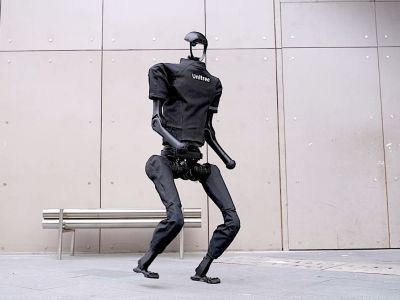
Unitree G1 vs Unitree H1
Head-to-head: Unitree G1 vs Unitree H1 compared on bipedal balance, AI learning, and real-world deployment.
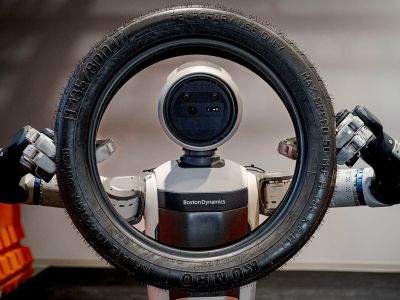
Optimus vs Atlas (Electric 2025)
In-depth comparison of Optimus and Atlas (Electric Atlas, 2025), covering hardware capabilities, teleoperation, and enterprise readiness.
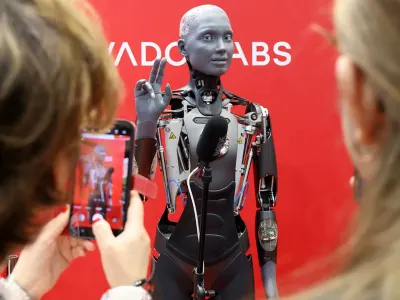

Ameca vs Moya
Which humanoid robot is better? Ameca vs Moya compared for dexterity, AI capabilities, and price.
Learn More About This Robot
Discover detailed specifications, reviews, and comparisons for Yogi.
View Robot Details →