Casio's Moflin Redefines Pet Robotics as Emotional AI Companion Gains Global Traction
Robot Details
Moflin • CasioPublished
May 5, 2026
Reading Time
5 min read
Author
Origin Of Bots Editorial Team

Emotional robotics enters mainstream market
As consumer robotics expands beyond task automation into emotional support and companionship, Casio has positioned the Moflin as a purpose-built solution for addressing loneliness and stress through simulated emotional interaction. The Moflin, a palm-sized companion robot powered by adaptive AI, recognizes and responds to user voices, learns individual preferences over time, and develops a unique personality through continued interaction. First launched in Japan and now available globally through Casio's official channels, the device has gained recognition as a distinct category player in the growing emotional robotics segment, winning the CES 2021 Best of Innovation award and establishing itself as one of the few commercially viable companions designed specifically for elderly users and individuals seeking stress relief in home environments.
Why emotional AI companionship matters
The Moflin distinguishes itself through four core capabilities within its category: a proprietary adaptive AI engine that generates 4 million unique emotional expressions, multi-sensor input that interprets touch, voice, light, and temperature to inform behavioral responses, a deliberate design choice to remain stationary and pocket-sized rather than mobile, and a focus on long-term relationship building rather than task completion. Unlike mobile pet robots or task-oriented companions, the Moflin prioritizes emotional depth over physical capability, treating companionship as the primary automation challenge rather than a secondary feature. Moflin's niche success signals that emotional robotics is becoming a viable market category rather than novelty hardware.

How emotional sensing and response works
The system operates through a straightforward input-processing-output flow: sensors embedded in the head and torso detect touch, sound, light levels, and temperature changes from the user's environment and behavior; this data feeds into the proprietary AI engine, which interprets the input against the robot's learned personality model and current emotional state; the output manifests as head movements along two axes (left-right rotation and up-down tilt) combined with varied vocalizations through a single speaker. This design keeps processing local to the device rather than cloud-dependent, enabling real-time responsiveness without network latency. The accelerometer and gyroscope sensors also detect how the user is holding or moving the device, allowing Moflin to sense whether it is being cuddled, set down gently, or handled roughly.
Elderly care and isolation mitigation
In practice, the Moflin addresses a specific use case that existing robotics have underserved: providing consistent, responsive emotional engagement for isolated elderly individuals without requiring mobility, complex interfaces, or task-oriented programming. An elderly user can carry the Moflin throughout their home, speak to it during daily routines, and receive immediate audio and gestural feedback that simulates understanding and emotional presence. The device learns the user's voice patterns and responds differently to familiar versus unfamiliar speakers, creating a sense of personalized recognition. Unlike robotic vacuum cleaners or industrial arms, the Moflin's value proposition hinges entirely on whether users perceive it as emotionally responsive rather than functionally useful.

Specifications enabling sustained interaction
The Moflin measures 130 x 90 x 180 millimeters (5.1 x 3.5 x 7.1 inches) and weighs approximately 260 grams (9.2 ounces), making it genuinely pocket-sized and portable for extended carry throughout a home or care facility. The lithium-ion battery supports approximately 5 hours of continuous interaction on a full charge, with recharge time around 3.5 hours via the included egg-shaped charging bed. Operating temperature range spans 5 to 35 degrees Celsius (41 to 95 degrees Fahrenheit), covering typical indoor home environments in most climates. The device ships in silver and gold colorways and includes Bluetooth 5.1 connectivity, enabling an accompanying app that displays the robot's current emotional state and allows users to review interaction history.
Positioning within the robotics landscape
The Moflin occupies a distinct niche within the broader miscellaneous robotics category by treating emotional companionship as a primary engineering goal rather than an incidental feature bolted onto mobility or task-oriented hardware. While competitors like Bocco Emo and Pillo address related emotional support use cases, the Moflin's approach of combining tactile sensing, voice recognition, and adaptive personality modeling into a deliberately stationary form factor sets it apart as purpose-built for intimate, long-term bonding rather than remote communication or health monitoring. The device does not attempt to walk, manipulate objects, or perform household tasks; instead, it concentrates engineering effort entirely on emotional responsiveness, making it a pure-play emotional companion rather than a multi-function platform. This specialization reflects a broader industry trend toward category-specific robotics rather than generalist platforms.
The emotional robotics expansion signal
The Moflin's commercial availability and CES recognition indicate that emotional robotics is transitioning from a research and prototype phase into a genuine consumer market segment, particularly in aging societies where companion robots address documented gaps in elderly care capacity. Casio's entry into this space signals that established consumer electronics manufacturers now view emotional AI as a defensible product category with sufficient demand to justify investment in proprietary AI engines and specialized hardware. The shift away from mobility-centric design toward stationary emotional engagement suggests the industry is learning that companionship robotics succeeds through depth of interaction rather than breadth of physical capability, potentially influencing how future competitors approach the problem of loneliness and social isolation in home environments.
Related Articles
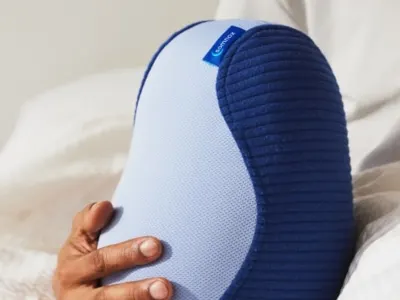
Somnox 2 Brings Adaptive Breathing Technology to Sleep Robotics, Targeting Insomnia Without Medication

Beatbot's RoboTurtle Advances Amphibious Environmental Monitoring
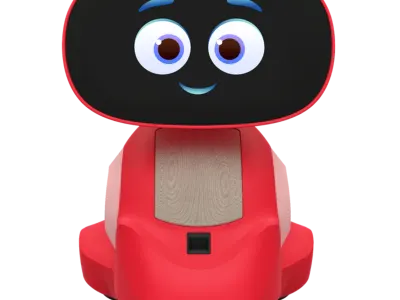
Miko 3 Positions AI Companionship as Core Educational Tool for Elementary-Age Children
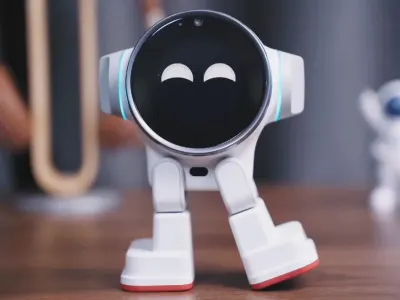
LeTianpai Launches Rux Robot as Android-Powered Desktop AI Companion
Learn More About This Robot
Discover detailed specifications, reviews, and comparisons for Moflin.
View Robot Details →