Galbot G1 pushes teleoperation-first humanoids toward retail, pharmacy, and warehouse work
Robot Details
Galbot G1 • Galbot RoboticsPublished
August 10, 2026
Reading Time
3 min read
Author
Origin Of Bots Editorial Team
A humanoid workhorse
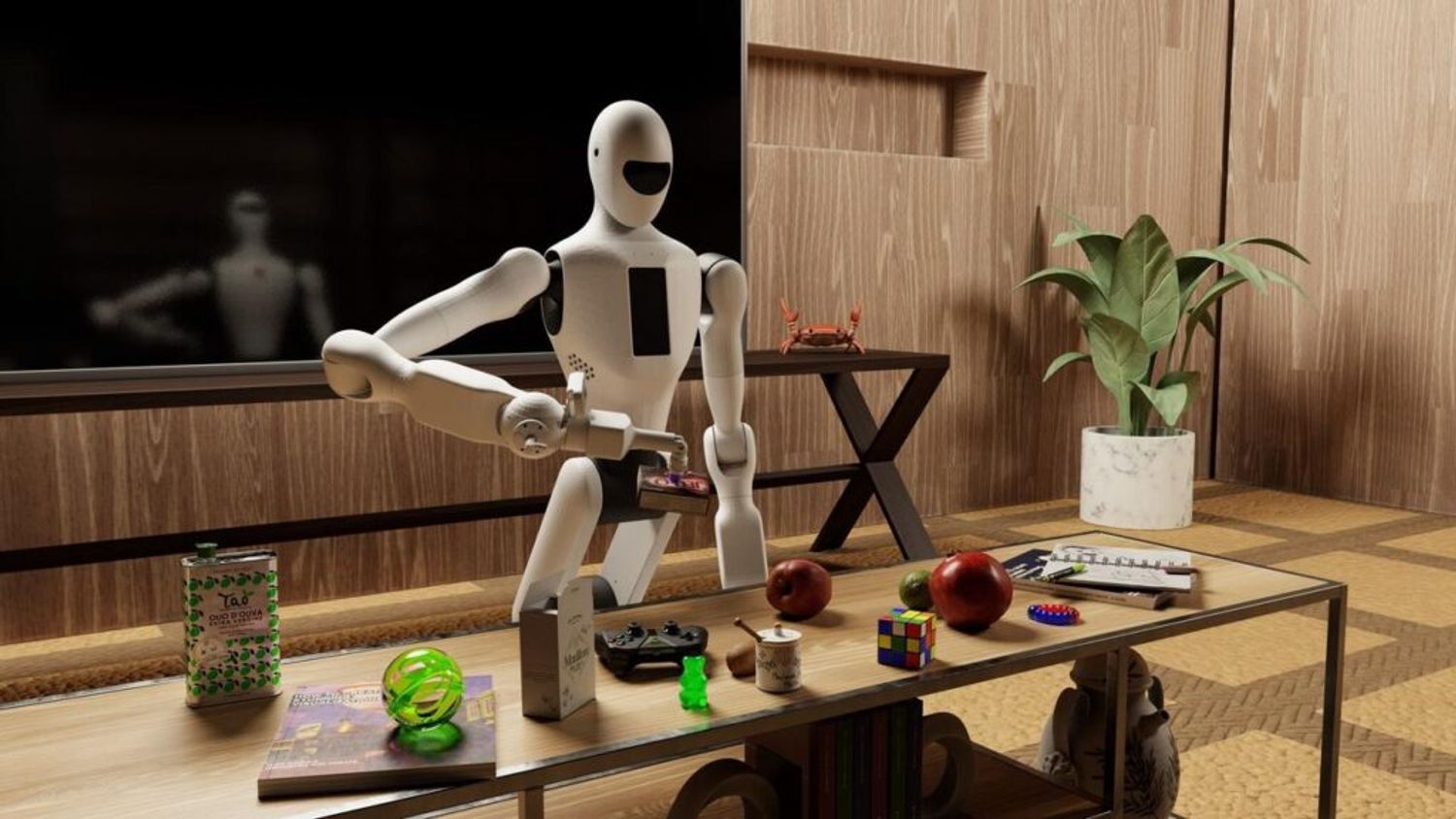
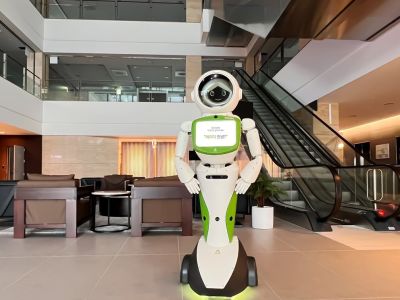
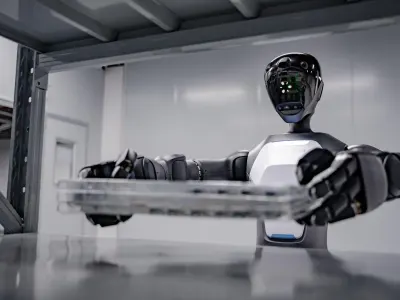
Galbot Robotics has positioned the G1 as a humanoid robot built for real-time motion, manipulation, and service tasks in human spaces, with official materials showing it handling delivery, retrieval, and front-end warehouse picking. The broader challenge for humanoids is not just walking, but coordinating body balance and dexterous arms fast enough to work around people without constant pre-programmed paths.
Why it stands out
What makes G1 notable is the combination of a humanoid upper body with wheeled mobility, pure visual navigation, tactile hand sensing, and a software stack that includes EmbOS with ROS2 support on NVIDIA Jetson Thor. That mix points to a robot designed less as a static automation cell and more as a teleoperated service machine that can adapt to shelves, counters, and corridors in retail or clinical settings. Its reported ability to switch between bipedal and wheeled modes also reflects a practical industry shift toward robots that trade some generality for more stable, faster work in human environments. Galbot G1 is best read as a control-and-manipulation platform first, and a walking machine second.
Human in, robot out
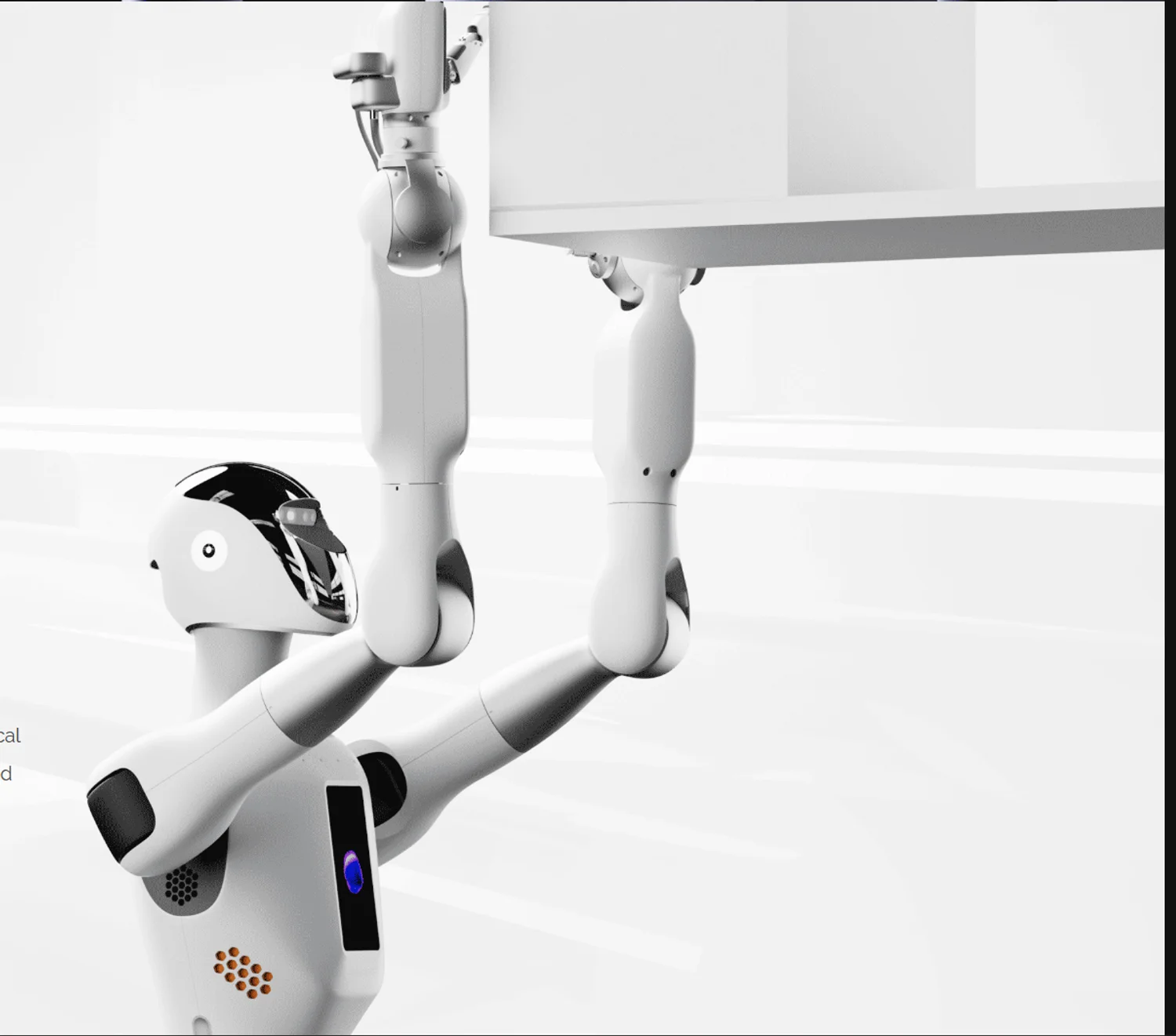
The system flow is straightforward for a humanoid: human motion input guides the task, the AI model processes the scene and command, and the robot converts that into joint actuation with balance correction. In practice, that means an operator can define what needs to be picked, moved, or delivered, while the robot uses visual and tactile feedback to complete the movement and adjust for contact or misalignment. This is the core technical logic behind teleoperation-first humanoids, where the robot extends human intent into places that are repetitive, cramped, or physically demanding.
Pharmacy floor logic
A realistic deployment scenario is pharmacy sorting and delivery inside a hospital or retail pharmacy, where a robot must move between shelves, identify packaged goods, and bring items to staff or service counters. Galbot’s stated healthcare use case fits that environment because the work depends on narrow aisles, frequent object changes, and careful handling rather than long-distance travel. In that setting, the value is not autonomy in the abstract, but reliable handoff between human staff and a machine that can keep up with routine logistics.
Specs as capability
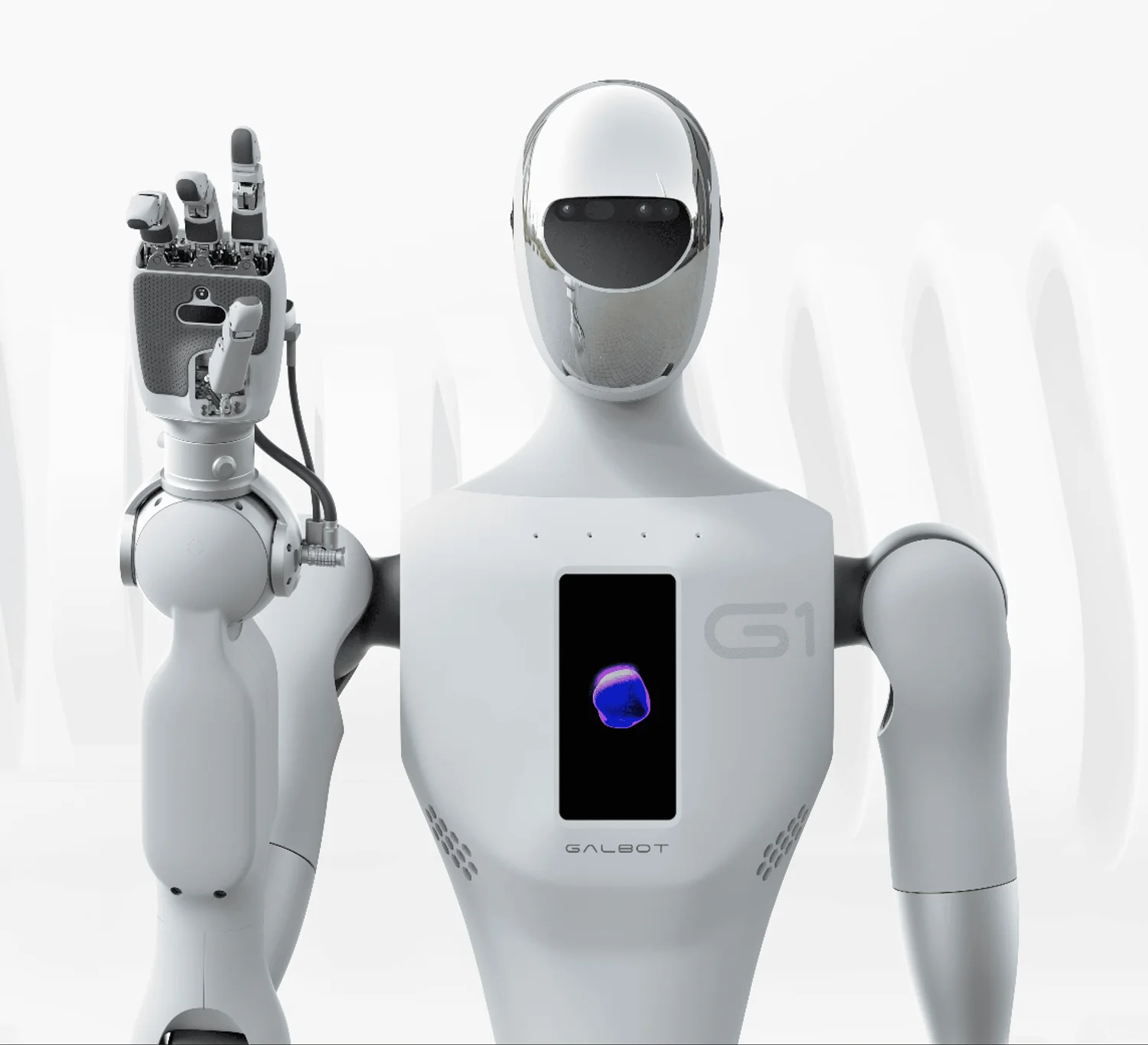
Reported specifications place G1 at 173 cm tall, with an arm span of 190 cm and a 65 cm torso lift that allows a vertical reach up to 240 cm, which is important for shelf access and counter-height tasks. The robot is listed at 85 kg, with movement speeds of up to 2 m/s / 4.5 mph in bipedal mode and up to 3 m/s / 6.7 mph in wheeled mode, suggesting a design tuned for indoor efficiency rather than outdoor terrain. Its sensor package includes RGB-D cameras, tactile hand sensors, a four-microphone array, and integrated vision, while safety features such as emergency stop, obstacle avoidance, collision detection, and force-limited joints are aimed at working near people.
Rivals Edge Check
| Robot | Key Advantage | Where Galbot G1 Wins | Target Use |
|---|---|---|---|
| Tiangong | Stronger emphasis on walking-capable humanoid motion | Better wheeled efficiency and teleoperation-oriented manipulation | Assisted service and indoor logistics |
| Forerunner K2 | Likely focused on mobile humanoid deployment flexibility | Stronger vision-first setup for shelf, counter, and handoff tasks | Retail and pharmacy workflows |
| Nylo | Emphasis on compact humanoid service performance | Higher reach and broader manipulation range for human-centric spaces | Warehouse and service delivery |
| ALICE 3 | Distinct humanoid form factor with service ambitions | More explicit software and sensor stack for real-world indoor operations | Healthcare and front-end operations |
What the market wants
The most important market signal from G1 is that humanoid robotics is moving toward deployments where human operators remain in the loop, at least for now. That matters because retail, pharmacy, and warehouse buyers usually care more about uptime, safety, and workflow fit than about whether a robot can perform a polished full-body gait demonstration. If this model of humanoid adoption holds, the next wave of winners will likely be the systems that can be supervised easily, not the ones that merely look the most human.
Explore Humanoids
Sources
Related Articles

UBTECH’s UWORLD U1 Lite puts humanoid interaction on a fixed base, not a walking frame

UBTECH’s UWORLD U1 Pro arrives as a full-size humanoid built for teleoperation and human-centered service

UBTECH’s UWORLD U1 Ultra marks a mass-production push into full-size humanoid companionship

AnyWit’s Annie puts the spotlight on expressive humanoid heads, not full-body autonomy
Related Comparisons
Compare Galbot G1 with similar robots

Optimus vs Unitree G1
Compare Optimus vs Unitree G1 for humanoid mobility, dexterity, autonomy, and payload capacity.
Unitree G1 vs Unitree H1
Head-to-head: Unitree G1 vs Unitree H1 compared on bipedal balance, AI learning, and real-world deployment.
Optimus vs Atlas (Electric Atlas, 2025)
In-depth comparison of Optimus and Atlas (Electric Atlas, 2025), covering hardware capabilities, teleoperation, and enterprise readiness.

Ameca vs Moya
Which humanoid robot is better? Ameca vs Moya compared for dexterity, AI capabilities, and price.
Learn More About This Robot
Discover detailed specifications, reviews, and comparisons for Galbot G1.
View Robot Details →