Lumos LUS2 Springs to Feet in One Second, Redefines Humanoid Agility
Robot Details
LUS2 • Lumos RoboticsPublished
January 24, 2026
Reading Time
3 min read
Author
Origin Of Bots Editorial Team
Breakthrough in Robotic Motion Control
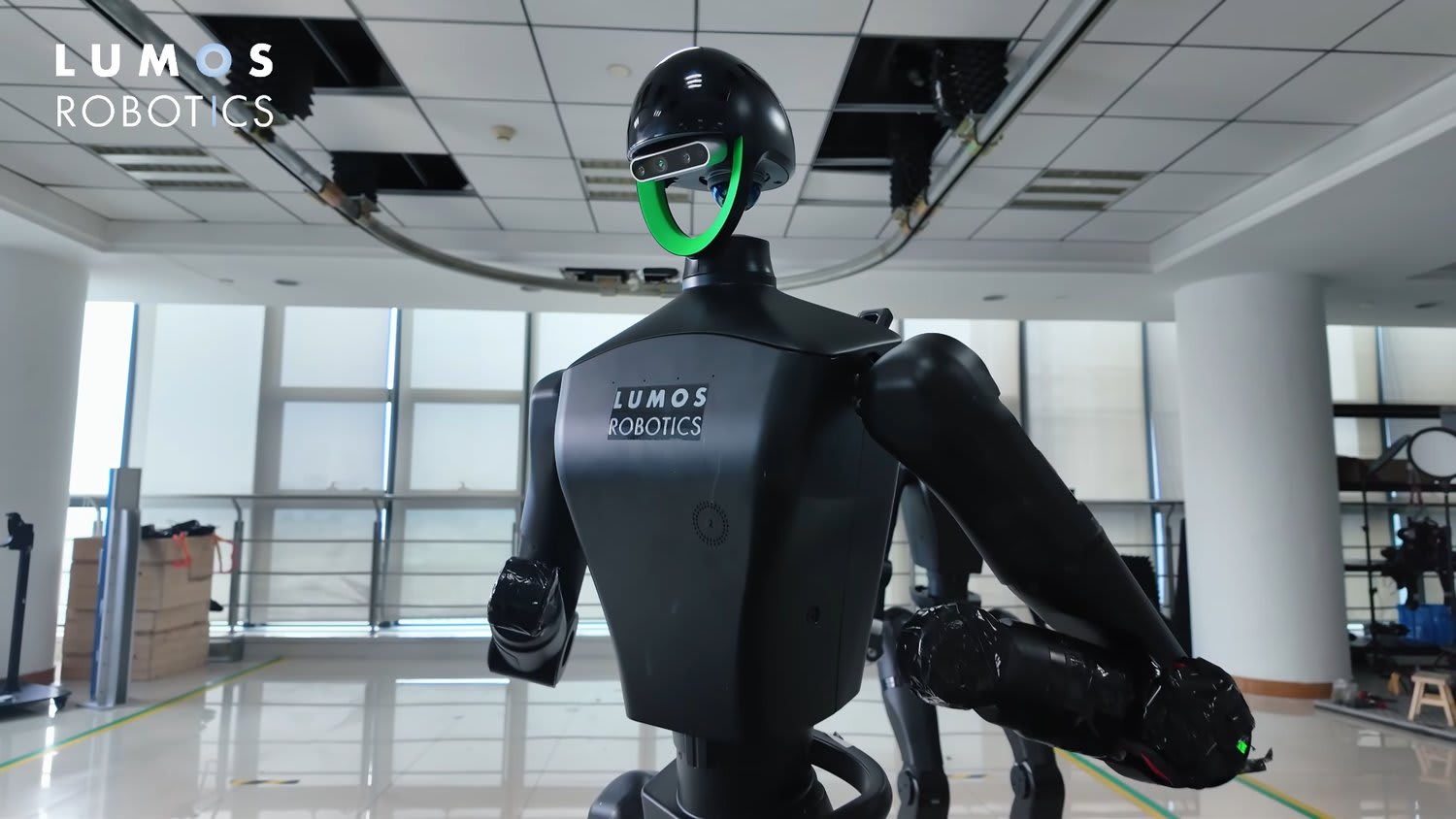
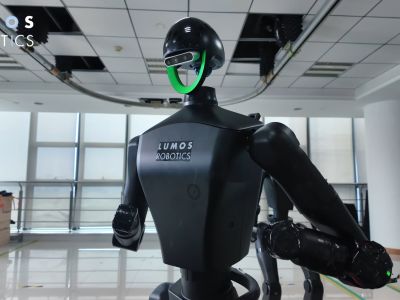
Shenzhen-based Lumos Robotics has unveiled a significant advancement in humanoid robotics with its LUS2 model, a full-size bipedal robot that demonstrates unprecedented agility through rapid sit-to-stand transitions and real-time motion adaptation. The robot's ability to spring from a horizontal position to upright stance in just one second marks a watershed moment in embodied AI development, achieved without cables, external assistance, or mechanical struggle. This breakthrough stems from high-power-density actuators working in concert with neural motion control systems that enable fluid, human-like movement previously confined to laboratory demonstrations.
Engineering Agility Into Motion
What distinguishes the LUS2 from conventional bipedal systems is its proprioceptive architecture—the robot processes real-time feedback from distributed sensors across its body to maintain balance, predict force distribution, and adjust movement dynamics instantaneously. This neural motion planning approach mimics human proprioception, allowing the robot to respond to surface variations, disturbances, and dynamic environmental changes with the responsiveness of a trained athlete. The smooth, silent quality of its movement resembles martial-arts-like precision rather than mechanical rigidity, opening possibilities for deployment in environments where human collaboration demands both capability and grace.
Sensor Intelligence Drives Responsiveness
The LUS2's performance foundation rests on integrated sensing and actuation that work in near-perfect synchronization. Full-body dynamic calculations process inertial measurement data, force feedback, and spatial awareness to coordinate movement across all 28 degrees of freedom. The robot's actuators generate sufficient power for rapid transitions while maintaining fine-grained control over motion trajectories. This technological maturity in motion control represents a departure from choreographed or pre-programmed movement patterns, enabling the robot to handle unpredictable, real-world scenarios where human-like reflexes provide genuine operational advantage.
Where Agility Meets Real-World Work
The LUS2's dynamic capabilities position it for deployment across industrial automation, healthcare assistance, search-and-rescue operations, and research environments where speed and adaptability determine mission success. In warehouses, the robot could navigate complex layouts and respond to unexpected obstacles. In hospitals, rapid movement and precise balance control enable safe patient interaction and equipment handling. Search-and-rescue teams could leverage its agility to traverse challenging terrain and reach victims in time-sensitive scenarios. These applications require more than raw speed—they demand the responsive, intuitive motion that the LUS2's neural control architecture delivers.
Skill Architecture & Capability Summary
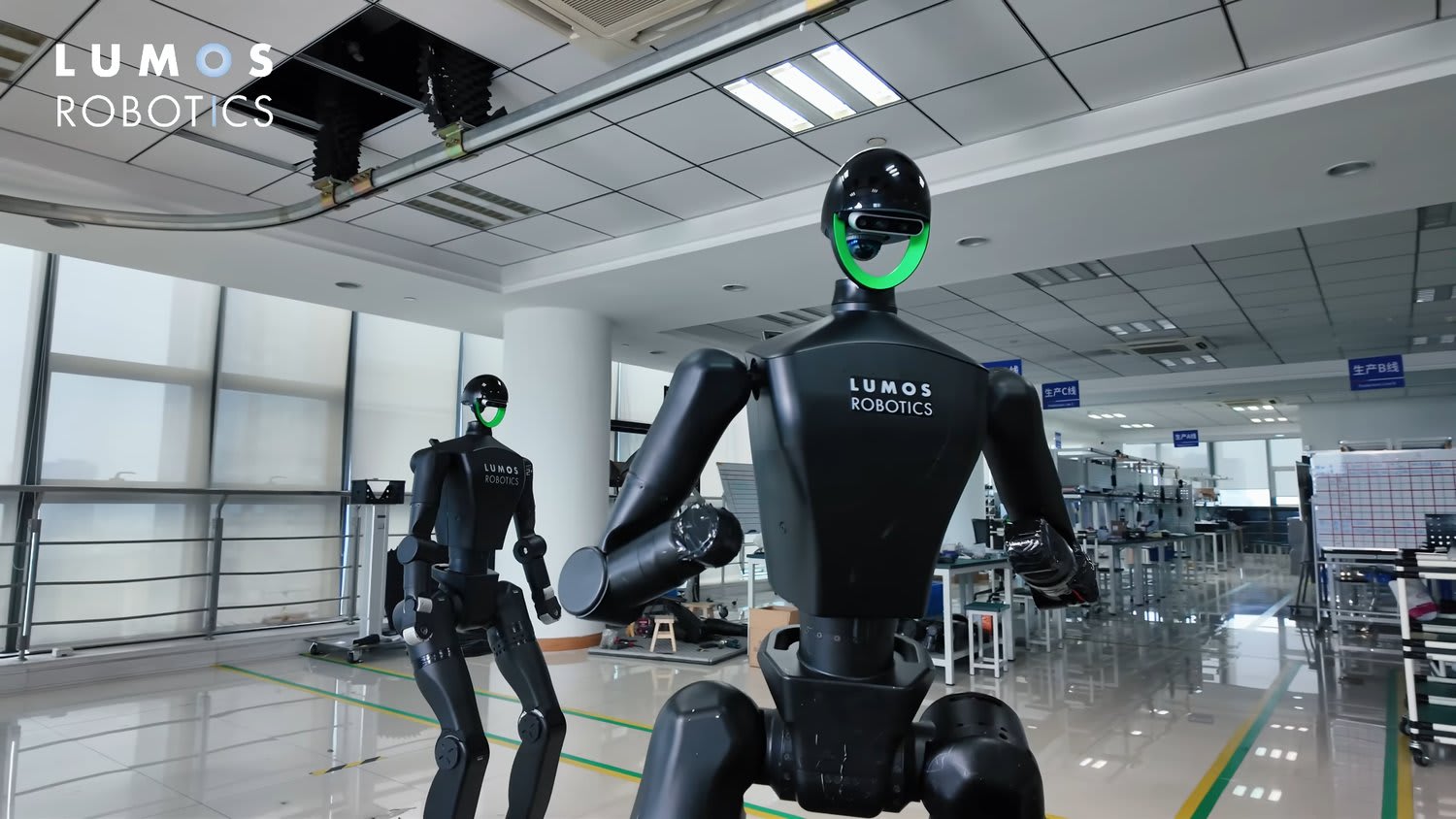
The LUS2 integrates a comprehensive sensor suite designed to enable dexterous interaction and environmental awareness. Its 28 degrees of freedom support manipulation of tools, packages, and precision instruments while maintaining safety through force-limiting and collision detection systems. The robot stands 160 centimeters tall, weighs 57 kilograms, and achieves walking speeds up to 4 kilometers per hour, enabling sustained operation in human environments. A three-year battery life supports extended interaction sessions without frequent recharging. Sensor integration includes tactile feedback in fingers and palms for delicate handling, 360-degree LiDAR for spatial mapping, visual SLAM for indoor navigation, and IMU systems for balance. The proprietary operating system runs ROS2-compatible software with Python and C++ APIs, enabling researchers to integrate large language models for conversational autonomy. These technical specifications translate into a platform capable of both physical dexterity and cognitive interaction—essential for roles requiring assistance with both task execution and human engagement.
Versus Rivals Breakdown
| Robot | Strengths over LUS2 | LUS2 Advantages | Weaknesses vs. LUS2 |
|---|---|---|---|
| AgiBot A2 | Specialized dexterity in fine manipulation tasks | Superior agility, rapid sit-to-stand transition, real-time balance control | Lower manipulation precision in extreme scenarios |
| Dex | Potentially higher payload capacity for industrial lifting | Advanced neural motion planning, responsive proprioceptive feedback, human-like movement fluidity | May sacrifice some raw lifting capacity for agility |
| AgiBot X2 | Possible advantages in specialized industrial applications | Exceptional real-time adaptability, martial-artist-like motion quality, three-year battery endurance | Less optimized for certain heavy-load industrial tasks |
| F-Series Robot | Potential advantages in specific niche deployments | Comprehensive sensor integration, LiDAR mapping, tactile feedback, LLM-ready architecture | Broader generalist approach vs. specialized alternatives |
Explore Humanoids
Sources
Related Articles

Semi-Humanoid D7 Achieves Full Commercialization Milestone 2025

RoboForce's TITAN Secures 11,000 Orders as NVIDIA Spotlight Accelerates Physical AI Adoption
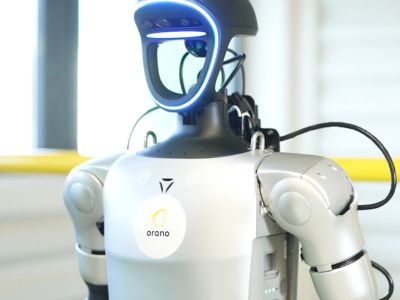
Capgemini, Orano Unleash Hoxo: Nuclear's First AI Humanoid

AheadForm's Elf-Xuan 2.0 Masters Microexpressions in NetEase Game Tie-Up
Related Comparisons
Compare LUS2 with similar robots
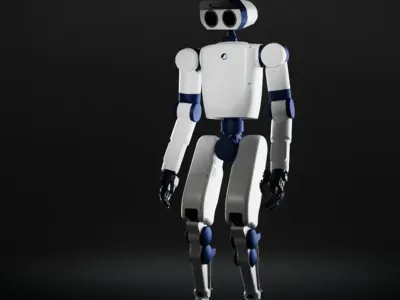
LUS2 vs P-73
Which humanoid robot is better? LUS2 vs P-73 compared for dexterity, AI capabilities, payload, and industrial use cases.
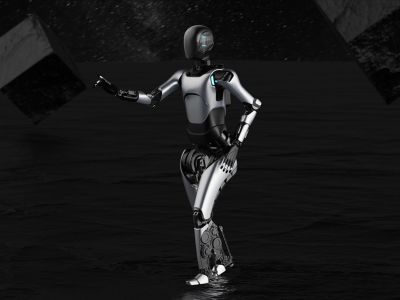
AgiBot A2 vs LUS2
Compare AgiBot A2 and LUS2. Detailed analysis of navigation, sensors, and battery life.

Alpha vs LUS2
Head-to-head: Alpha vs LUS2. Explore differences in navigation, battery, sensors, speed, and software.

LUS2 vs T800
Head-to-head: LUS2 vs T800. Explore differences in navigation, battery, sensors, mobility, and software.
Learn More About This Robot
Discover detailed specifications, reviews, and comparisons for LUS2.
View Robot Details →