Semi-Humanoid D7 Achieves Full Commercialization Milestone 2025
Robot Details
Pudu D7 • Pudu RoboticsPublished
January 24, 2026
Reading Time
2 min read
Author
Origin Of Bots Editorial Team
Commercialization Breakthrough Announced
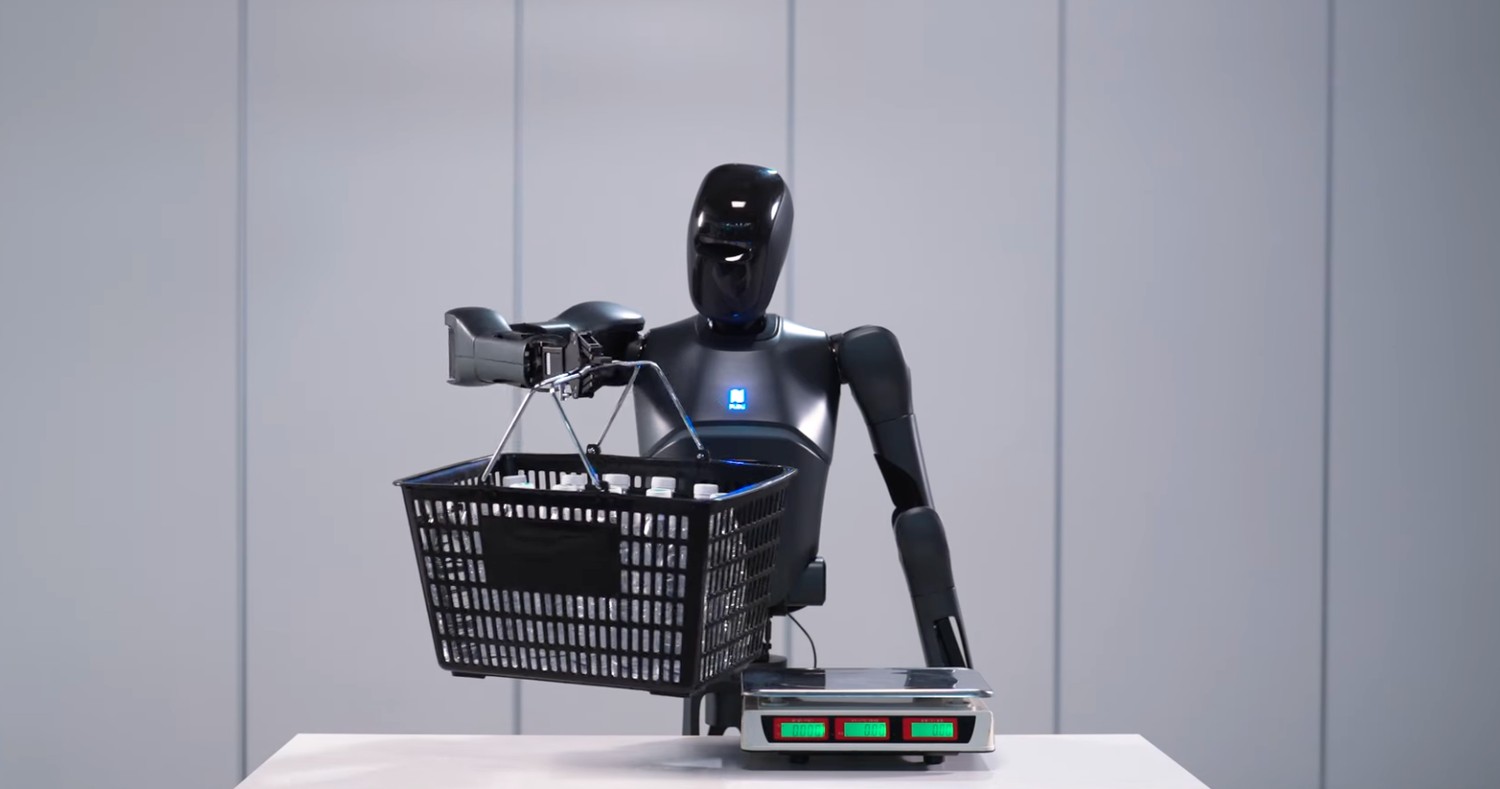
Pudu Robotics marks a pivotal moment in humanoid robotics by fully commercializing its D7 semi-humanoid robot, targeting widespread deployment starting in 2025. This launch transforms the D7 from prototype to production-ready platform, addressing surging demand for versatile automation in service and industrial sectors. Developed by Pudu's X-Lab, the robot's readiness for mass rollout promises to accelerate human-robot collaboration, slashing operational costs while boosting efficiency in dynamic environments. Industry watchers hail this as a game-changer, positioning Pudu at the forefront of accessible humanoid tech.
Bionic Arms Transform Tasks
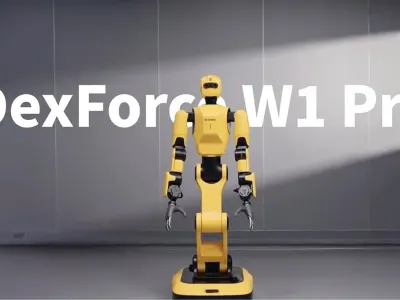
The D7's human-like upper body equips it with bionic arms reaching 65 cm, delivering 30 degrees of freedom that expand to 50 via dexterous hand attachments. This setup enables fluid, intuitive interactions, from grasping fragile items to navigating tight spaces alongside humans. Operators report seamless elevator button presses and precise sorting, mimicking human dexterity without fatigue. Such capabilities redefine service roles, fostering trust through natural movements that feel collaborative rather than mechanical.
AI Layers Drive Autonomy
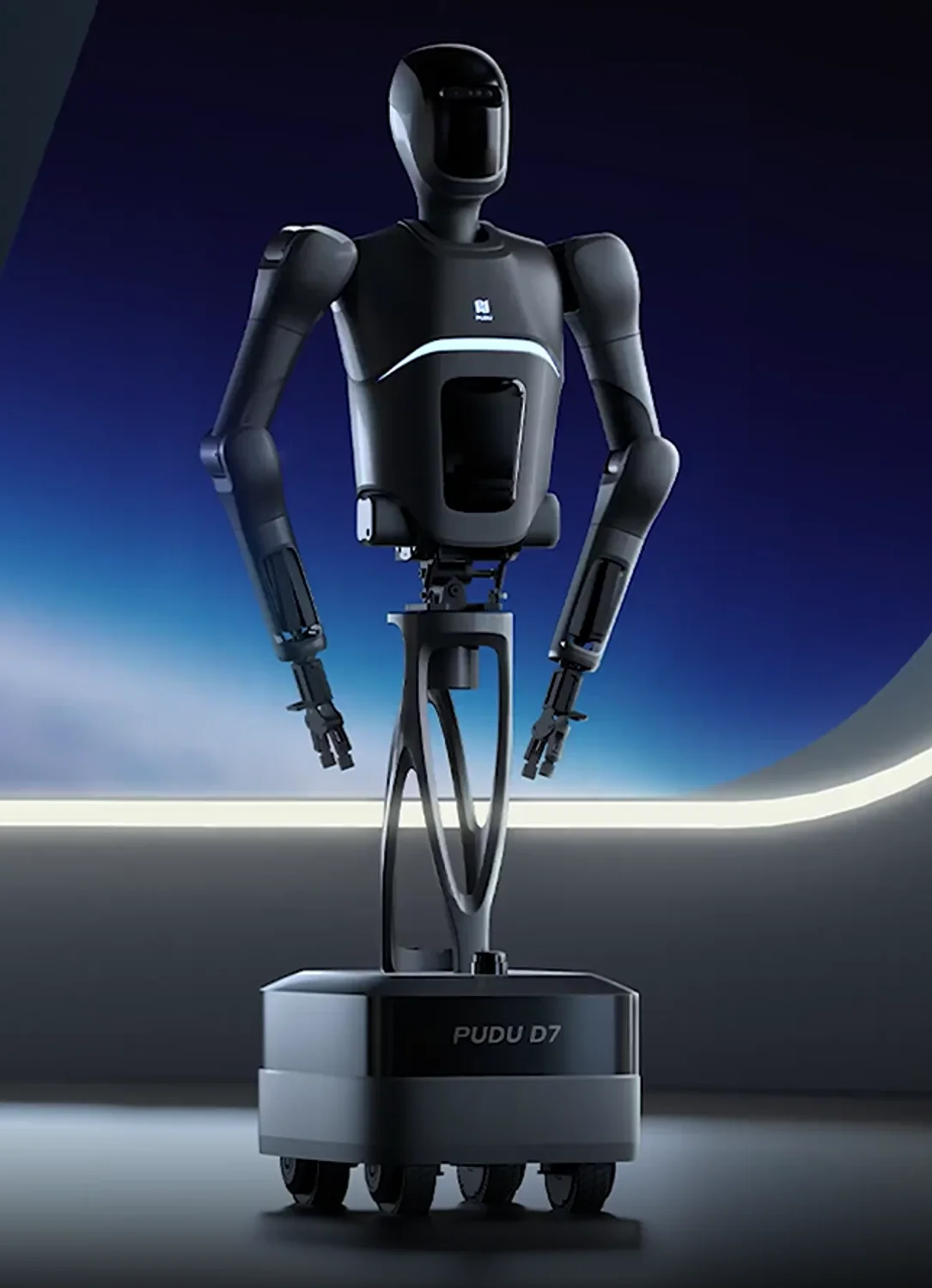
At the D7's core lies a multi-layered intelligence system blending high-level strategic planning with real-time sensory responses, powered by 200 TOPS computing. This hierarchical control lets the robot anticipate needs, adapt to disruptions, and learn from interactions continuously. Unlike rigid automation, it handles unpredictable scenarios like crowded floors or varying payloads, revolutionizing how machines integrate into human workflows with minimal oversight.
Deployment Scenarios Emerge
Factories deploy D7 for assembly line assistance, research labs leverage it for experiment handling, and logistics hubs use it for parcel sorting. Infrastructure teams send it for remote inspections in hazardous zones, while remote operations enable oversight in isolated sites. These applications highlight the robot's wheeled mobility and arm precision, yielding outcomes like 24/7 productivity and safer human environments across manufacturing, hospitality, and beyond.
Dexterity Enablers Detailed
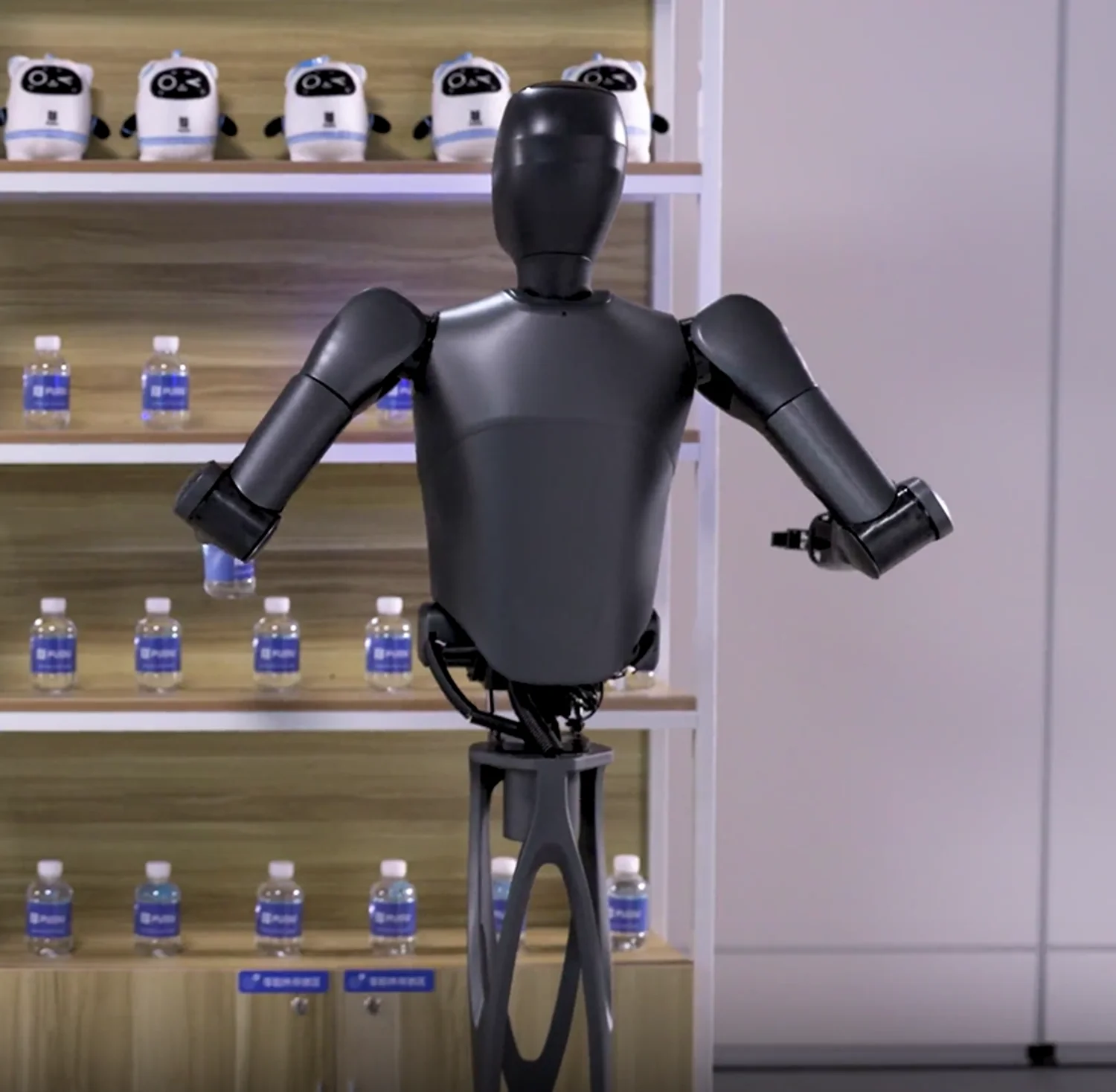
Standing 165 cm tall at 45 kg with omnidirectional wheels hitting 2 m/s, the D7's sensor suite including RGB cameras, depth sensing, LiDAR, IMU, and force feedback powers nuanced human interactions. These enable endpoint precision of 0.1 mm for delicate manipulations, like tool handling or collaborative demos lasting over 8 hours on a 1 kWh+ battery. Balance-assisted navigation ensures steady engagement during extended sessions, lifting 10 kg per arm to support prolonged assistance in dynamic settings.
Rivals Edge Examined
| Robot | Strengths over D7 | D7 Advantages | Weaknesses vs. D7 |
|---|---|---|---|
| KUAVO-MY | Higher full-body DoF for walking | Superior wheeled speed, 8+ hr runtime | Less precise endpoint (0.5 mm) |
| RB-Y1 | Lighter frame, cheaper base model | Longer arm reach (65 cm), AI layering | Slower max speed (1.5 m/s) |
| Astribot S1 | Advanced bipedal balance | Heavier payload (10 kg/arm), obstacle climb | Bulkier design limits tight spaces |
| GR-2 | More affordable sensors | Expandable DoF (to 50), multimodal learning | Shorter battery (4-6 hrs) |
Explore Humanoids


Sources
Related Articles

UBTECH Walker X Debuts in Aircraft Assembly Pilot
Leju's KUAVO-MY Ignites Torch Relay at National Games

Pudu D9 Humanoid Flexes 352Nm Torque, 20kg Payload
Little Sophia Redefines Educational Robotics for Young Learners
Related Comparisons
Compare Pudu D7 with similar robots


AgiBot G2 vs Pudu D7
AgiBot G2 vs D7: AgiBot's wheeled precision-assembly humanoid against Pudu's wheeled semi-humanoid, compared on size, mobility, sensors, AI and best uses.

Pudu D7 vs Walker Tienkung
D7 vs Walker Tienkung: Pudu's wheeled semi-humanoid against UBTECH's full-size research humanoid, compared on size, mobility, sensors, AI and best uses.

Pudu D7 vs AgiBot A2 Lite
D7 vs AgiBot A2 Lite: Pudu's wheeled semi-humanoid against AgiBot's performance humanoid, compared on size, mobility, sensors, AI and best uses.
Pudu D7 vs Green
D7 vs Green: Pudu's wheeled semi-humanoid with 8-hour runtime against Sber's 180 cm bipedal Green, compared on mobility, hands and uses.
Learn More About This Robot
Discover detailed specifications, reviews, and comparisons for Pudu D7.
View Robot Details →