Muks Robotics’ Spaceo Pro pushes humanoid robots toward teleoperation-first industrial work
Robot Details
Spaceo Pro • Muks RoboticsPublished
June 8, 2026
Reading Time
3 min read
Author
Origin Of Bots Editorial Team
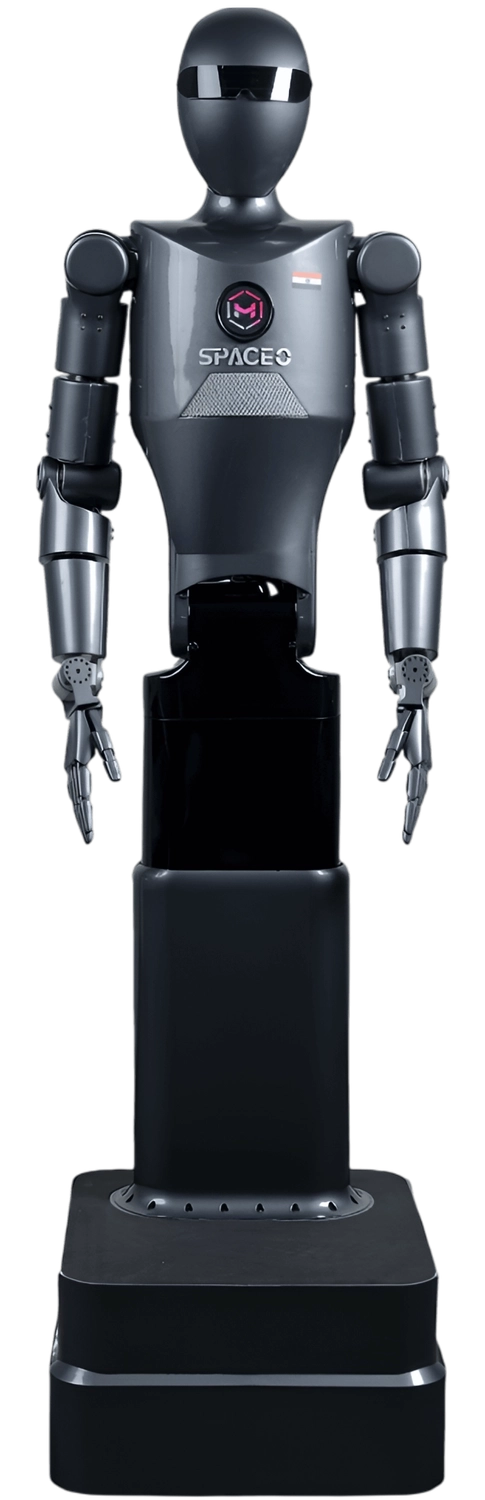
A humanoid workhorse
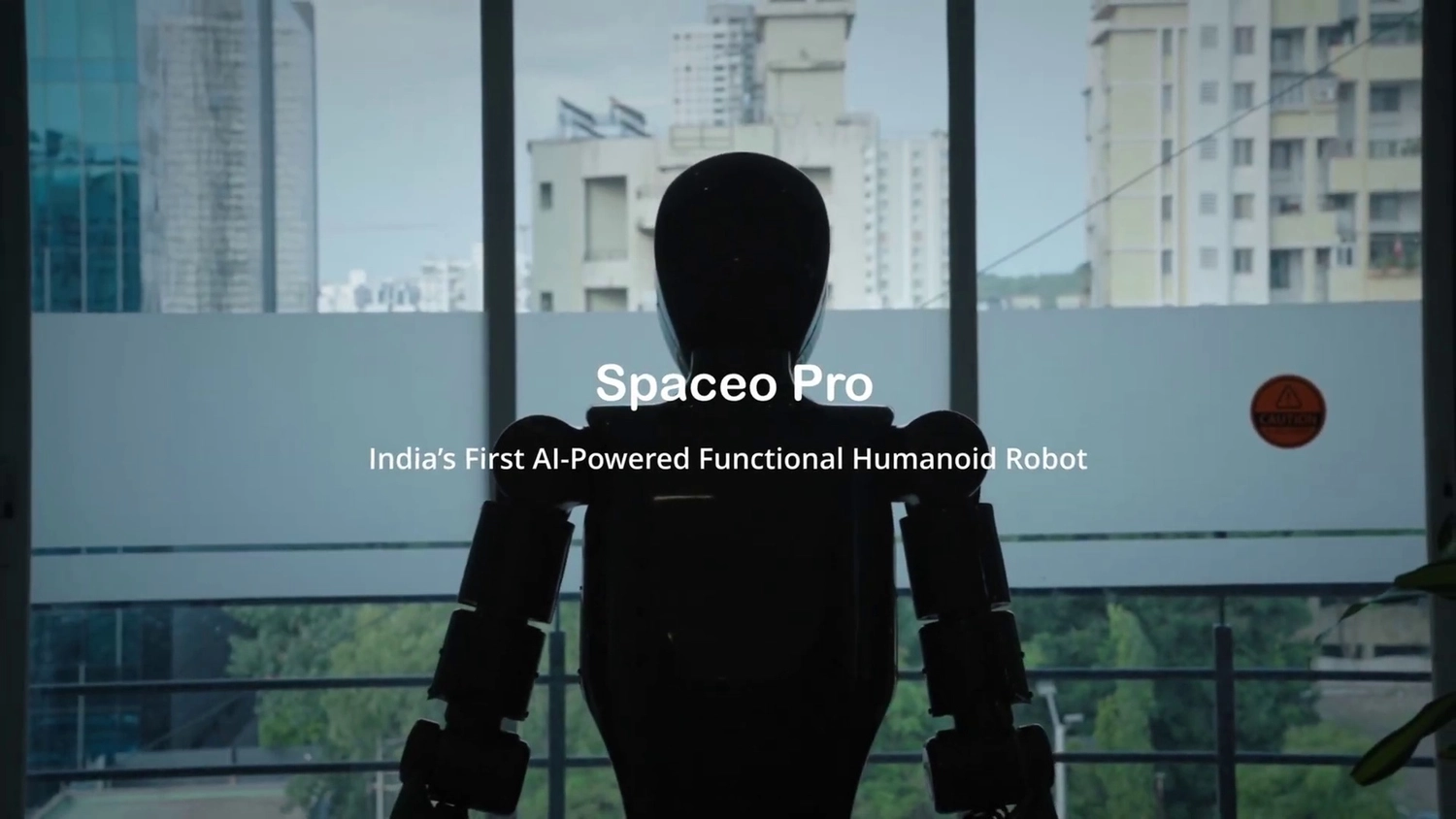
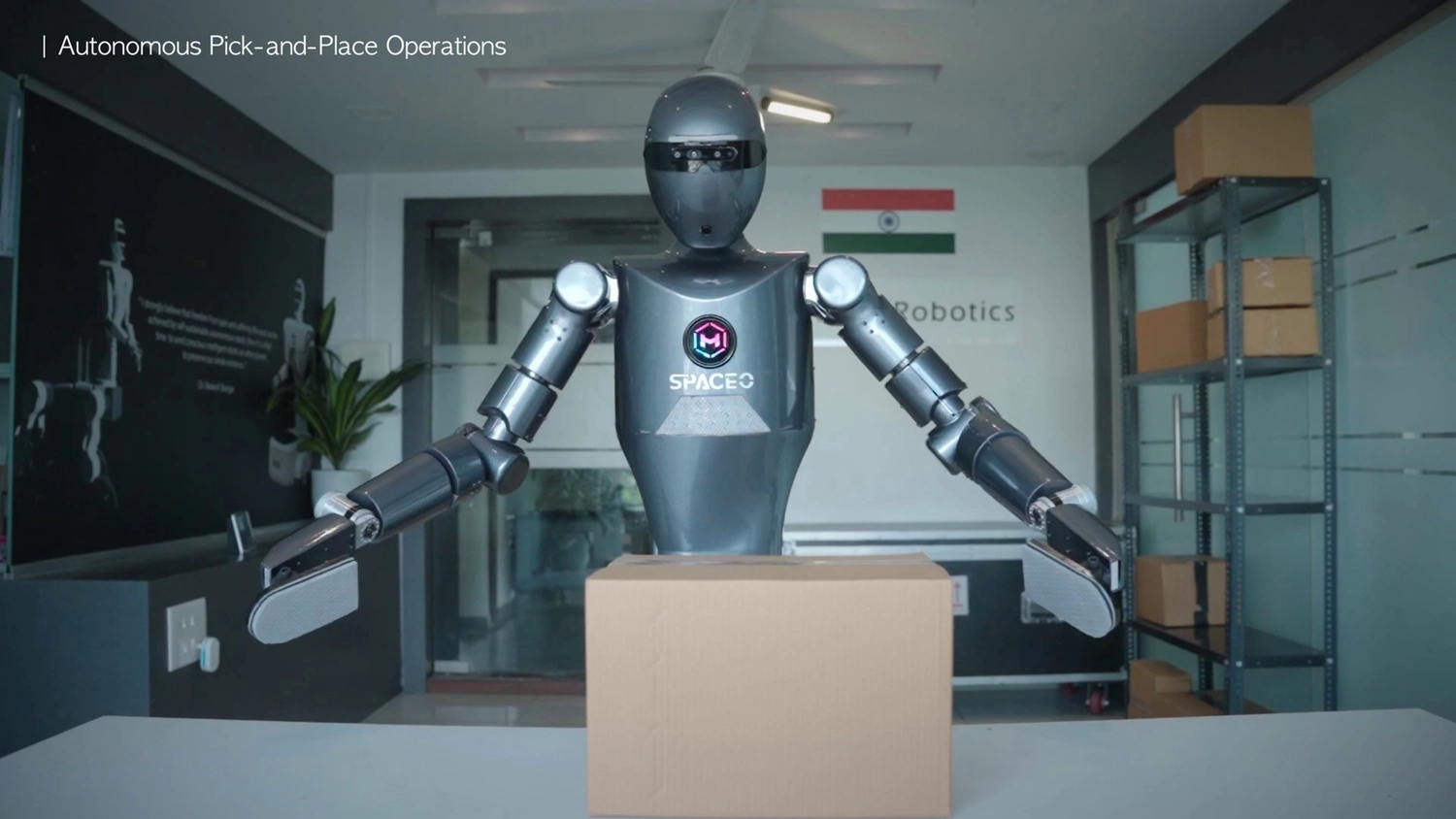
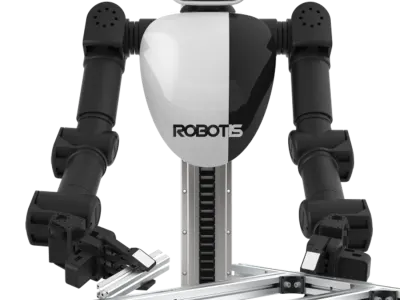
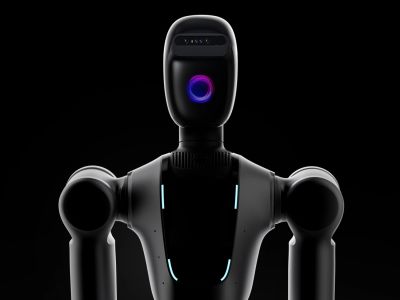
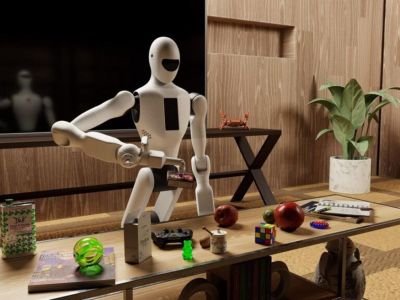
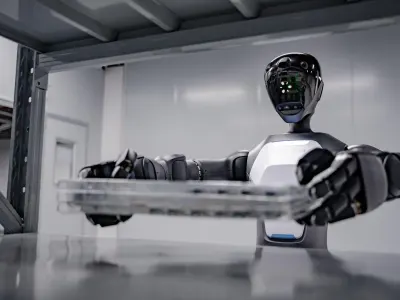
Humanoid robots are increasingly being designed to bridge a gap that conventional automation still struggles with: operating in spaces built for people, where balance, perception, and dexterous handling all matter at once. Muks Robotics’ Spaceo Pro is being presented as a humanoid platform for that environment, with its demo and product materials emphasizing autonomous navigation, pick-and-place work, and teleoperated task execution in human-centric settings.
Why this matters now
What sets Spaceo Pro apart is not just its height or mobility, but the way its software stack is framed around real-time interaction: FusionMax Omni-Modal AI, ROS2 compatibility, and Python and C++ APIs suggest a platform meant for integration rather than a sealed appliance. Its safety package, including force limiting, collision detection, proximity sensing, and an emergency stop, also points to a robot built for close-proximity work instead of isolated factory cells. The broader significance is that Spaceo Pro is being positioned less as a pre-scripted machine and more as a remotely supervised labor platform. Spaceo Pro’s real story is teleoperation layered on top of humanoid coordination.
How it works
The system flow is straightforward: human motion input or operator intent goes into the AI layer, FusionMax processes perception and task context, and the robot then drives joint actuation with balance correction as it moves through the environment. Its sensing stack combines 4D LiDAR, RGB-D depth vision, stereo cameras, a microphone array, IMU, gyroscope, joint force and torque sensing, and temperature monitoring to support that loop. In practice, that means the robot is designed to see, stabilize, and react continuously while handling objects or following a remote operator’s commands.
Remote handling focus
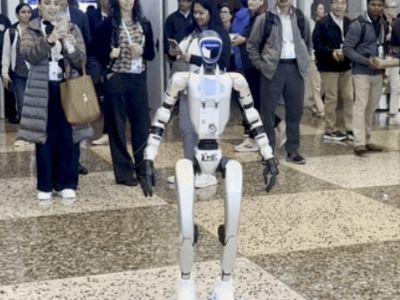
One realistic deployment scenario is luggage handling in an airport, where a humanoid form factor matters because carts, shelves, kiosks, and people all share the same space. Spaceo Pro’s navigation and perception stack is being marketed for complex environments, while its teleoperation mode gives staff a fallback for cases that require judgment, exception handling, or direct intervention. That combination fits the operational reality of airports better than a fully scripted robot that cannot respond well when the flow of people changes suddenly.
Capability in numbers
Spaceo Pro is reported at 210 x 60 x 45 cm, with an adjustable height up to 7 feet, or 2100 mm, which helps explain why it is being framed for human-scale work rather than fixed industrial stations. It is listed at 65 kg and 7.2 km/h, or 2 m/s, giving it the mass and pace needed for movement through busy indoor spaces without suggesting sprint-like behavior. The battery life is described as 3 to 5 years, which should be read as a lifecycle expectation for a lithium-ion system rather than an operating-time claim.
Rivals Edge Check
| Robot | Key Advantage | Where Spaceo Pro Wins | Target Use |
|---|---|---|---|
| Henry | Industrial humanoid positioning with general-purpose task focus | More explicit teleoperation and multimodal navigation stack | Assisted service and indoor industrial work |
| Quanta X2 | Task flexibility in human-designed spaces | Stronger emphasis on safety features and remote operation | Human-centric facilities and inspection |
| AIMY | Service-oriented humanoid interaction | Broader sensor fusion and task execution framing | Retail or service support |
| Tora One | Human-scale mobility and manipulation | More detailed AI, navigation, and integration story | Teleoperated support tasks |
Industry direction shifts
The deeper signal is that humanoid robotics is drifting toward teleoperation-first deployment models, especially in places where exception handling still matters more than perfect autonomy. Spaceo Pro fits that pattern by pairing a humanoid body with remote control, semantic mapping, and collaborative-speed safety behavior, which suggests vendors now see supervised work as the more practical route to revenue than waiting for general-purpose autonomy.
Explore Humanoids
Sources
Related Articles
Robot.com positions R Noid as a teleoperation-first humanoid for real work
Robot.com’s R Top highlights the shift toward teleoperated humanoids for fixed workstations
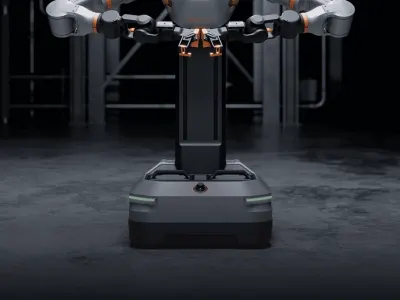
Galbot positions S1 for heavy factory work as wheeled humanoids push into production-line deployment
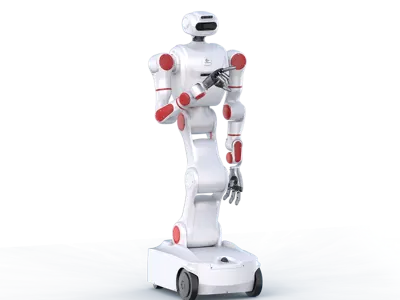
ChangingTek Robotics’ Universal Wheeled Humanoid Robot points to teleoperation-first humanoids for human workspaces
Related Comparisons
Compare Spaceo Pro with similar robots

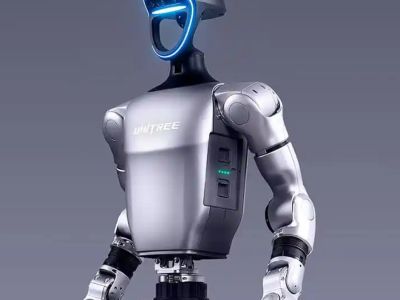
Optimus vs Unitree G1
Compare Optimus vs Unitree G1 for humanoid mobility, dexterity, autonomy, and payload capacity.
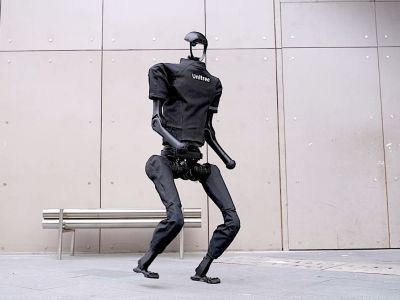
Unitree G1 vs Unitree H1
Head-to-head: Unitree G1 vs Unitree H1 compared on bipedal balance, AI learning, and real-world deployment.
Optimus vs Atlas (Electric 2025)
In-depth comparison of Optimus and Atlas (Electric Atlas, 2025), covering hardware capabilities, teleoperation, and enterprise readiness.
Ameca vs Moya
Which humanoid robot is better? Ameca vs Moya compared for dexterity, AI capabilities, and price.
Learn More About This Robot
Discover detailed specifications, reviews, and comparisons for Spaceo Pro.
View Robot Details →