ROBOTIS puts AI Worker forward as a teleoperation-first humanoid for industrial tasks
Robot Details
AI Worker • ROBOTISPublished
June 8, 2026
Reading Time
3 min read
Author
Origin Of Bots Editorial Team
Factory labor shift
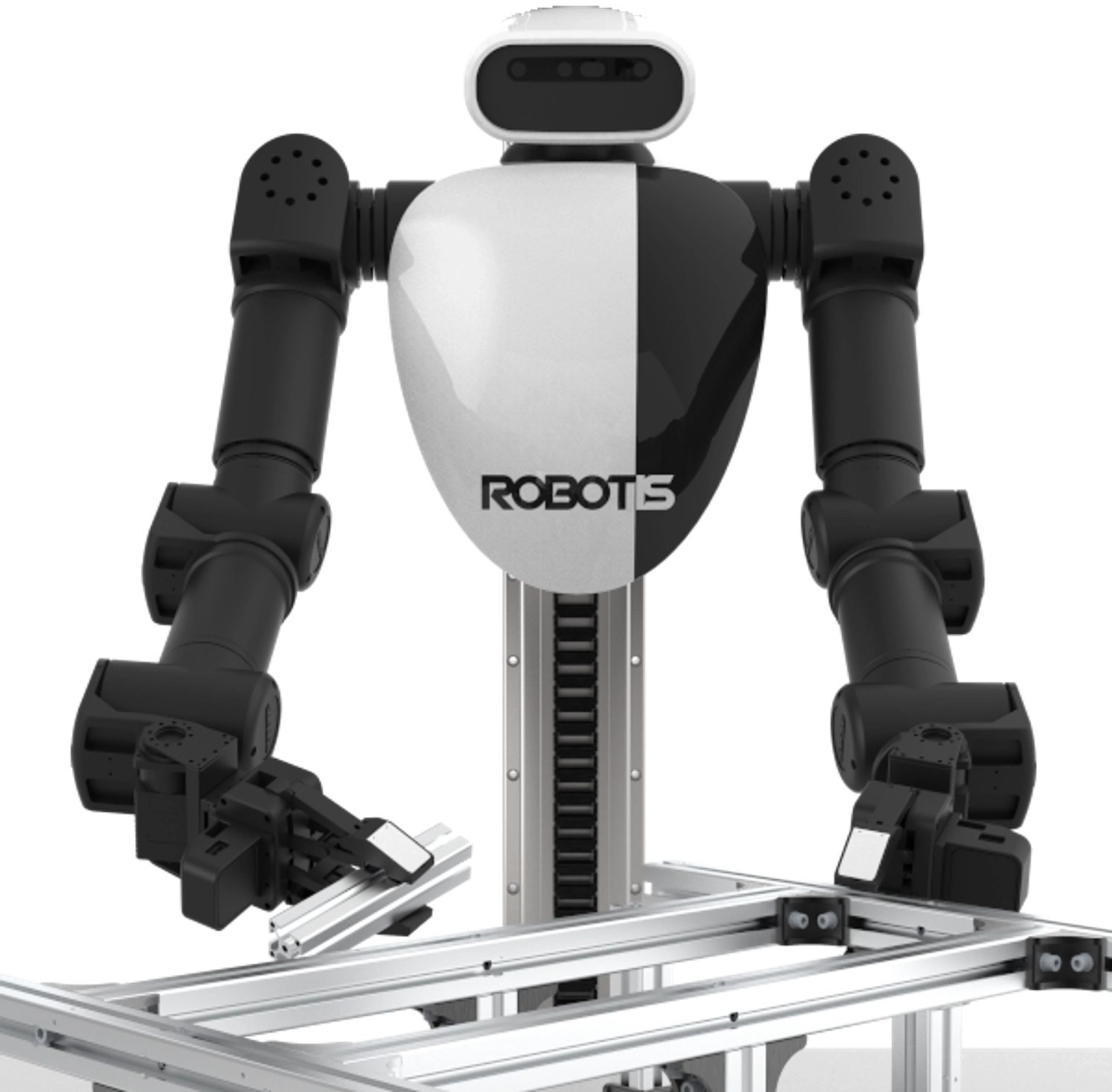
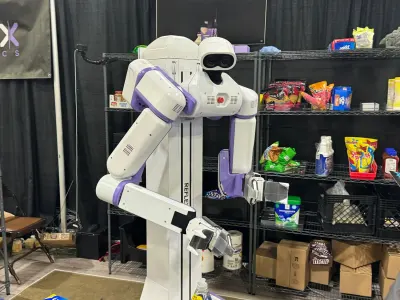
ROBOTIS has positioned AI Worker as a semi-humanoid industrial robot built to learn from human demonstrations and perform complex manipulation tasks in real-world workplaces. The system is being presented as a Physical AI platform for assembly, inspection, logistics, and other high-mix factory work, with ROS 2 support and transformer-based imitation learning at the center of the approach.
Why it stands out
AI Worker matters because it reflects a broader humanoid shift from pre-scripted motion toward teleoperation, imitation learning, and operator-guided skill transfer. Its appeal is not just balance or mobility, but full-body coordination, bimanual manipulation, and the ability to improve from demonstration data rather than fixed motion libraries. The platform is also aimed at human-centric spaces where natural interaction and remote operation matter more than raw autonomy. AI Worker is less about replacing workers outright than about making operator-led humanoids practical on the factory floor.
How it works
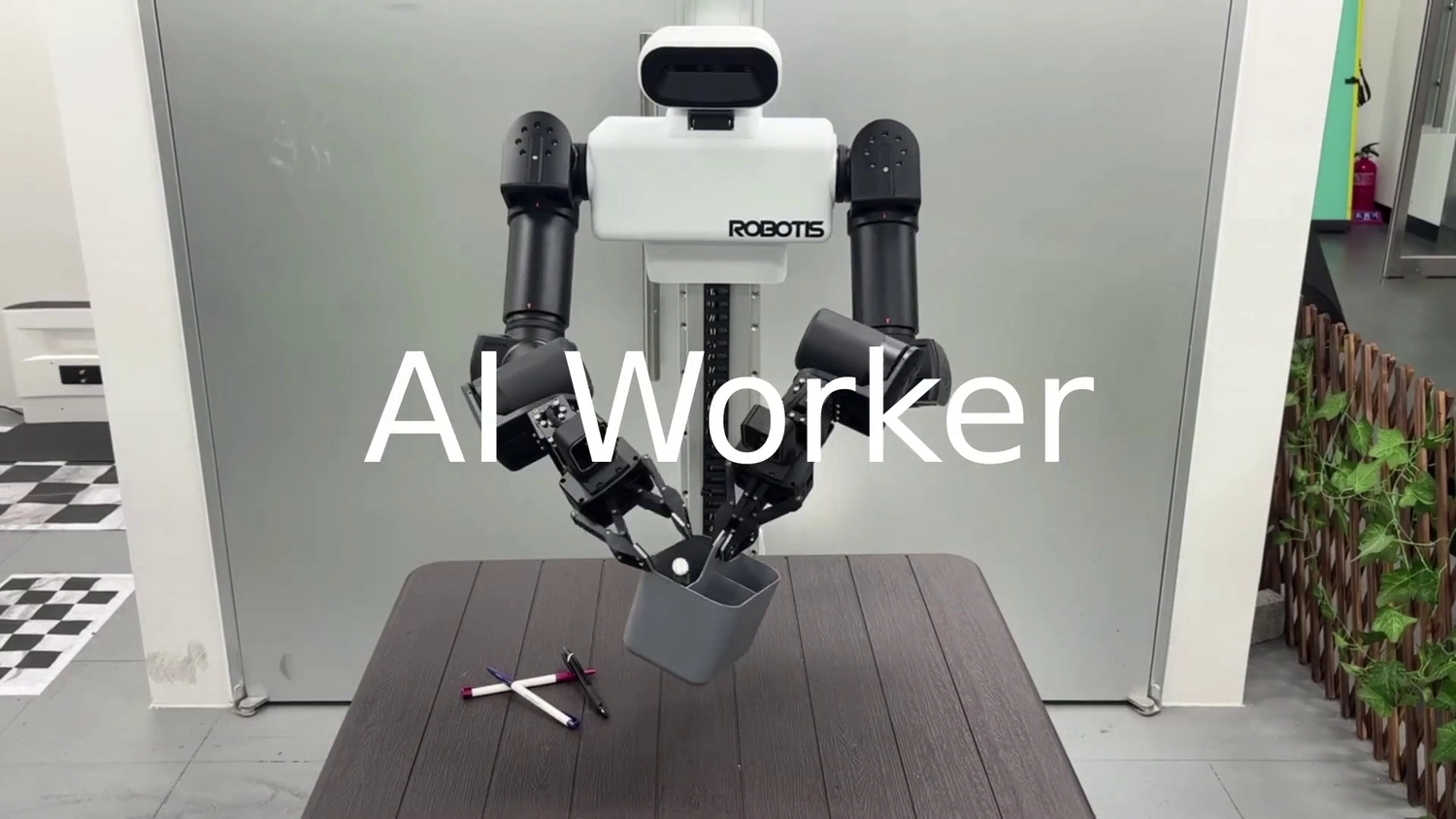
The technical flow is straightforward: human motion input is captured through teleoperation or demonstration, AI models process that behavior with imitation-learning and ACT-based policies, and the robot turns that into joint actuation with balance correction. ROBOTIS says the platform combines a mobile base, dual 7-DOF arms, hand-mounted depth cameras, and wider scene sensing so it can coordinate navigation and manipulation in one system. That architecture is meant to help the robot learn tasks first from people, then repeat them with increasing consistency.
Wiring harness focus
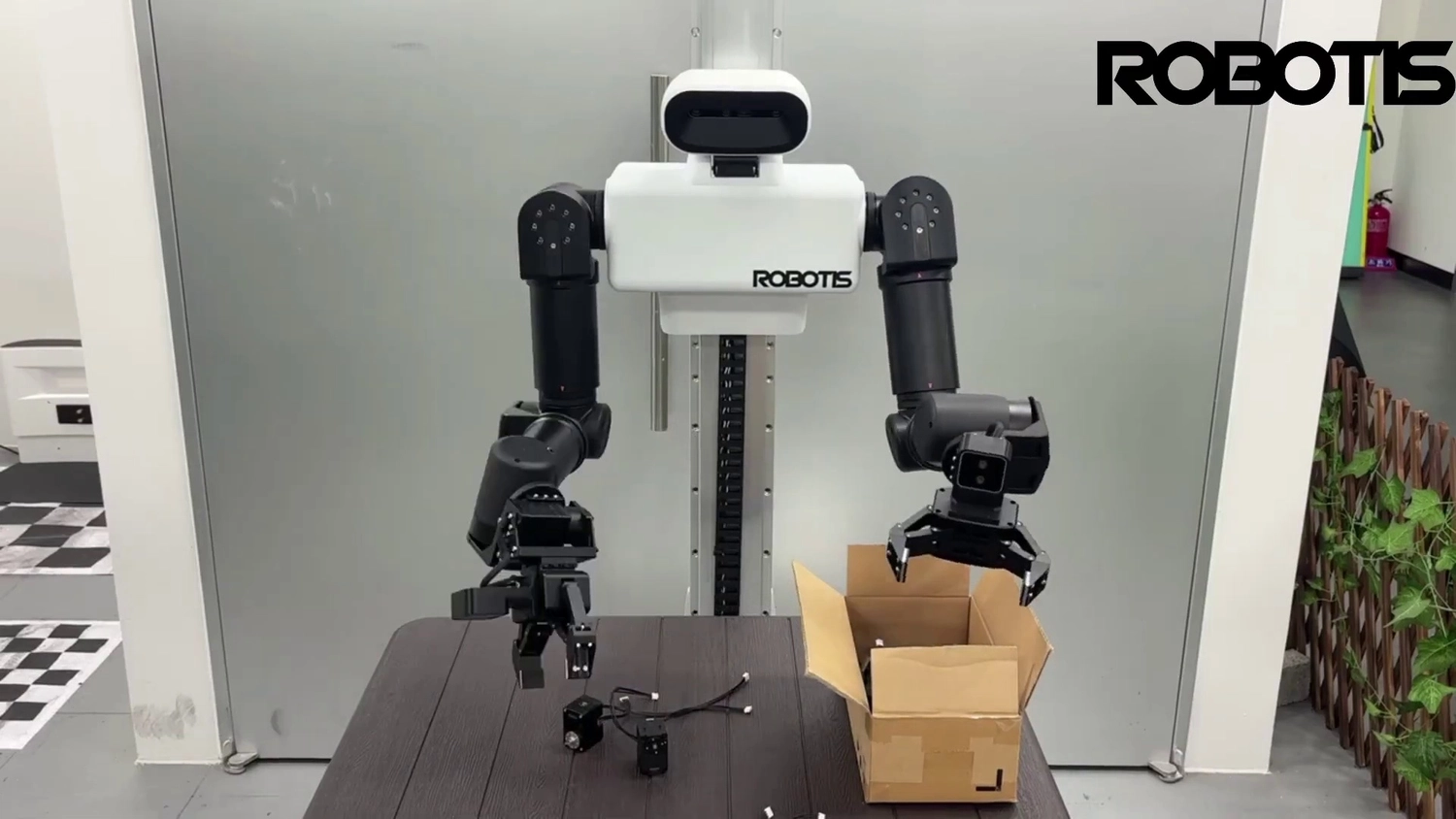
One realistic deployment scenario is wiring-harness assembly, where fine manipulation and repeatability matter more than speed alone. In that setting, AI Worker’s bimanual setup, close-range hand cameras, and force-aware sensing are intended to help it place, route, and handle parts while a human operator supervises or teaches the workflow. This is the kind of task where teleoperation-first humanoids can reduce strain on skilled technicians without requiring a fully autonomous system.
Capabilities in context
ROBOTIS describes AI Worker as a semi-humanoid platform with a body in the 19 DOF to 25 DOF range, dual 7-DOF arms, and a mobile base with swerve drive. The reported sensor suite includes RGB-D cameras, LiDAR, force-torque sensors, an IMU, and a gyroscope, while the software stack is built around ROS 2, Python, and ACT.
Rivals Edge Check
| Robot | Key Advantage | Where AI Worker Wins | Target Use |
|---|---|---|---|
| Phybot C1 | Likely emphasizes compact humanoid research flexibility | AI Worker is positioned more directly around industrial teleoperation and bimanual factory work | Human-centric manufacturing and inspection |
| Walker II (02) | Strong focus on full-body humanoid motion and locomotion | AI Worker is more task-specific for manipulation, learning from demonstrations, and ROS 2 workflows | General humanoid research and mobility |
| Skändä (Skanda) | Likely stresses autonomous humanoid experimentation | AI Worker’s edge is operator-guided imitation learning for industrial processes | Advanced robotics R&D |
| Walker S1 | Known for large-scale humanoid mobility and broader platform ambition | AI Worker targets near-term factory workflows and remote task execution | Industrial deployment and service tasks |
Industry direction
AI Worker also points to a commercial reality in humanoids: useful systems may arrive first as supervised tools rather than independent workers. ROBOTIS is framing the platform around human-in-the-loop skill transfer, which aligns with a wider industry push to make humanoids deployable in controlled indoor environments before they attempt more open-ended autonomy. The bigger signal is that manufacturers seem to be prioritizing teachability, not just walking, as the route to near-term adoption.
Explore Humanoids
Related Articles
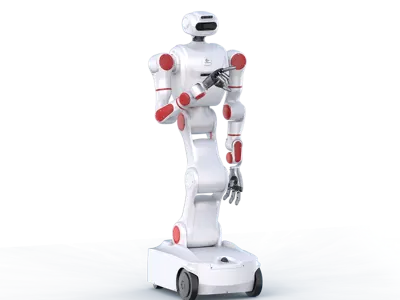
ChangingTek Robotics’ Universal Wheeled Humanoid Robot points to teleoperation-first humanoids for human workspaces
Muks Robotics’ Spaceo Pro pushes humanoid robots toward teleoperation-first industrial work
Muks Robotics’ Spaceo M1 Pushes a Teleoperation-First Humanoid Into Service Roles
ROBOTIS introduces AI Sapiens K0 as an open humanoid platform for Physical AI
Related Comparisons
Compare AI Worker with similar robots

Optimus vs Unitree G1
Compare Optimus vs Unitree G1 for humanoid mobility, dexterity, autonomy, and payload capacity.
Unitree G1 vs Unitree H1
Head-to-head: Unitree G1 vs Unitree H1 compared on bipedal balance, AI learning, and real-world deployment.
Optimus vs Atlas (Electric 2025)
In-depth comparison of Optimus and Atlas (Electric Atlas, 2025), covering hardware capabilities, teleoperation, and enterprise readiness.

Ameca vs Moya
Which humanoid robot is better? Ameca vs Moya compared for dexterity, AI capabilities, and price.
Learn More About This Robot
Discover detailed specifications, reviews, and comparisons for AI Worker.
View Robot Details →