Which one fits your use?
Based on the uses each robot is built and marketed for. Open a use to see the specs that matter for it.
| Comparing for… | AgiBot X2-N | Zerith Z1 |
|---|---|---|
| Suited | Suited | |
| Suited | Suited | |
| Suited | Not listed | |
| Not listed | Suited |
- Pick AgiBot X2-N for hospitality, retail and public-facing roles.
- Pick Zerith Z1 for hazardous or high-risk work.
- Both suit research labs and education and training, so compare the specs for that use.
AgiBot X2-N by AgiBot is included here as a representative industrial-grade humanoid focused on logistics and dynamic environments; it is compared because its sensor-minimal, proprioception-driven design and wheeled/bipedal mobility target applications requiring robust gait control and autonomous real-time adjustment. The X2-N is positioned toward practical field tasks with no published price and Linux/ROS-based software, differentiating itself by relying on internal proprioceptive sensors rather than external vision systems and emphasizing emergency-stop and real-time gait safety mechanisms.
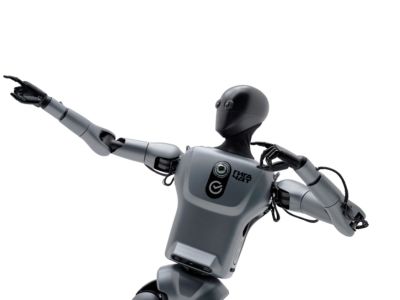
Zerith Z1 by Zerith is included as a contrasting humanoid platform that appears targeted at service, hospitality, and demonstration roles where onboard perception hardware is emphasized; it is compared to highlight differences in sensor suites, intended deployment contexts, and software models. The Zerith Z1 includes RGB and depth cameras plus LiDAR and IMU arrays, which distinguish it from the X2-N by providing richer external perception while other technical details are less completely specified.
Detailed Analysis
AgiBot X2-N
Design & Build Quality
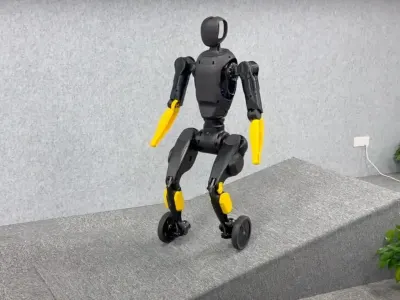
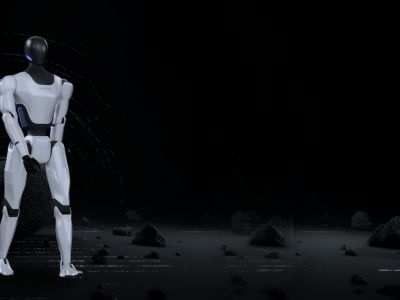
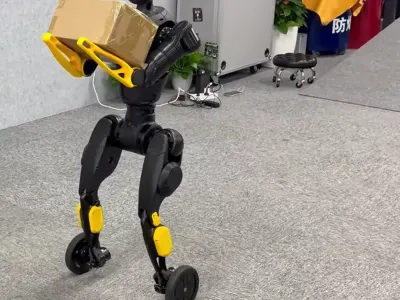
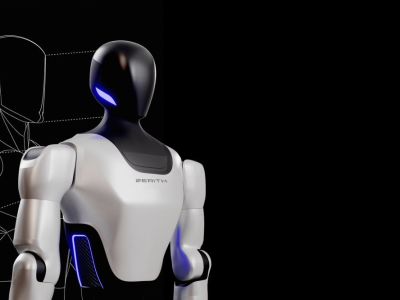
AgiBot X2-N is a shorter humanoid at 131 cm, built on the AgiBot X2 body (about 35 kg), described as having multiple degrees of freedom and robust joint torque for dynamic tasks and an industrial design focus; exposed components are wrapped per design reportage. Zerith Z1 is more compact at 145 x 50 x 22 cm with a lighter reported mass of 33 kg, indicating a smaller form factor optimized for service environments, though detailed construction and materials information for the Z1 are not available in the provided data.
Zerith Z1
Mobility & Navigation
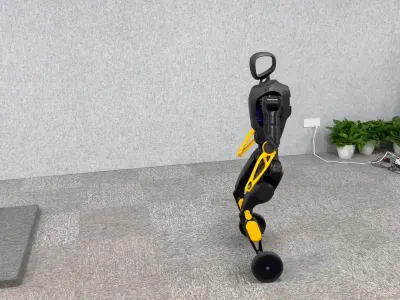
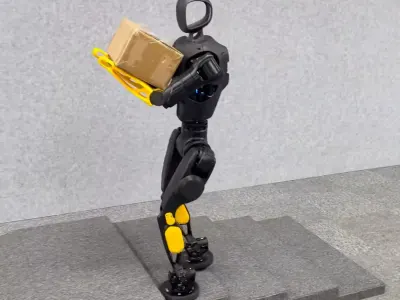
AgiBot X2-N combines bipedal and wheeled modes, walks at up to about 1.8 m/s (6.5 km/h) like the X2 it is based on, and specifically relies on proprioceptive feedback (joint torque, pressure, internal gyros) for balance and navigation rather than cameras or LiDAR, enabling stair-climbing and dynamic gait adjustments without external vision. Zerith Z1’s mobility specifics (top speed, gait modes) are not provided; the Z1 includes sensor hardware commonly used for navigation such as LiDAR and depth/RGB cameras and an IMU, implying capability for vision- and range-based navigation in service scenarios though precise navigation behavior and performance metrics are not specified.
AgiBot X2-N
Sensors & Perception
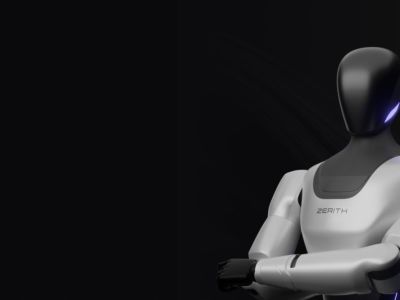
AgiBot X2-N's sensor suite is explicitly proprioceptive only—joint torque sensors, pressure sensors, and internal gyros—without cameras or external range sensors, meaning perception is driven by internal state and force/pose feedback rather than visual mapping. Zerith Z1 is reported to carry RGB cameras, a depth camera, LiDAR, and an IMU, providing multi-modal external perception suitable for visual SLAM, obstacle detection, and human interaction, but public technical details and sensor specifications for Z1 are limited in the provided information.
Zerith Z1
AI Capabilities
AgiBot X2-N is described as AI-autonomous with real-time control systems running on Linux/ROS, emphasizing closed-loop gait control and proprioception-driven decision making for dynamic terrain and load-bearing tasks. Zerith Z1 is described as having autonomous, AI-driven control with proprietary software; however, specifics about its onboard AI stack, ROS compatibility, or real-time gait control capabilities are not provided, limiting direct technical comparison of algorithmic capabilities.
AgiBot X2-N
Battery & Power Efficiency
Zerith Z1
Use-Case Suitability
AgiBot X2-N’s combination of proprioceptive-only perception, robust joint torque, wheeled/bipedal mobility, and Linux/ROS software targets logistics, search-and-rescue, and industrial automation where vision may be impaired and reactive physical control is critical. Zerith Z1’s sensor-rich payload and compact, lighter form factor align it with hotel operations, education, entertainment, and service-sector roles where visual interaction and environment mapping are important, though detailed deployment records and performance in complex terrains are not publicly detailed.
AgiBot X2-N
Software Ecosystem
AgiBot X2-N is reported to use a Linux/ROS-based software stack, which supports integration with common robotics tools, simulators, and developer workflows and assists in customizing perception and control loops. Zerith Z1 is noted as running proprietary AI-driven software; the closed or open nature of APIs, ROS compatibility, or third-party integration capabilities are not documented in the provided information, affecting integration flexibility for system integrators.

Zerith Z1
Safety Features
AgiBot X2-N documents explicit safety mechanisms including emergency stop, obstacle avoidance via proprioception, and real-time gait adjustment to maintain balance and reduce fall risk during dynamic tasks. Zerith Z1’s safety systems are not described in the available dataset, though the presence of LiDAR and cameras suggests hardware that could support active obstacle avoidance if implemented in software; no explicit safety certifications or features were provided.
Capabilities & Operational Tasks
Head-to-head comparison of what AgiBot X2-N and Zerith Z1 can do, their applications, and capabilities.
What Can AgiBot X2-N & Zerith Z1 Do?
135 tasks listed for both, 6 only for AgiBot X2-N, 2 only for Zerith Z1.
Technical Specifications
AgiBot X2-N and Zerith Z1 differ on 20 of the 29 specifications listed for both.
Functional Utility & Use Cases
4 Comparative Metrics
Manipulation & Load Capacity
4 Comparative Metrics
Kinematic Architecture & Dexterity
4 Comparative Metrics
Related Comparisons

Zerith Z1 vs Martian
Zerith Z1 or Martian? Compare specs, sensors, navigation, battery, and mobility performance.

AgiBot G2 vs AgiBot X2-N
AgiBot G2 or AgiBot X2-N? Compare specs, navigation, battery, and sensors.
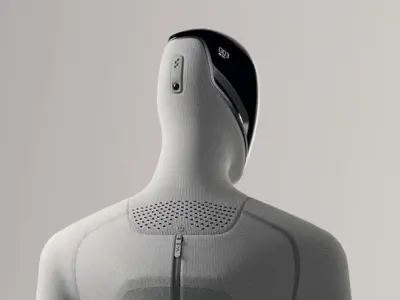
Figure 03 vs AgiBot X2-N
Compare Figure 03 and AgiBot X2-N. Detailed analysis of sensors, navigation, speed, and AI capabilities.
AgiBot X2-N vs Green
AgiBot X2-N vs Green: AgiBot's camera-free walk-and-roll robot against Sber's 180 cm GigaChat humanoid, compared on mobility, sensing and uses.
Verdicts reflect our research and opinion. Confirm specifications with the manufacturer before buying.