Which one fits your use?
Based on the uses each robot is built and marketed for. Open a use to see the specs that matter for it.
| Comparing for… | Agile ONE | GR-3 |
|---|---|---|
| Suited | Suited | |
| Suited | Suited | |
| Not listed | Suited | |
| Not listed | Suited | |
| Not listed | Suited | |
| Suited | Suited |
- Pick GR-3 for research labs, home help and elder care and healthcare settings.
- Both suit warehouse and logistics work, factory and manufacturing work and hazardous or high-risk work, so compare the specs for that use.
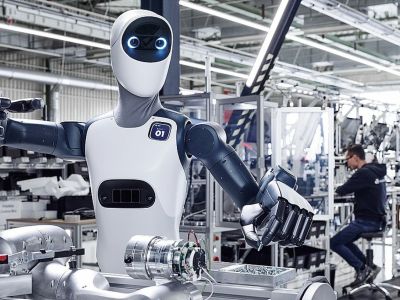
Agile ONE by Agile Robots is positioned for industrial applications, including factory floor material gathering, pick-and-place operations, machine tending, and precision assembly. It differentiates through its 174 cm height, 69 kg weight, 2.0 m/s speed, and advanced sensors like four head-mounted RGB cameras, LiDAR, and fingertip force sensors in every hand joint. The robot employs AgileCore proprietary AI with layered architecture for strategic reasoning, rapid response, and fine motor precision, enabling autonomous operation with natural language instructions.
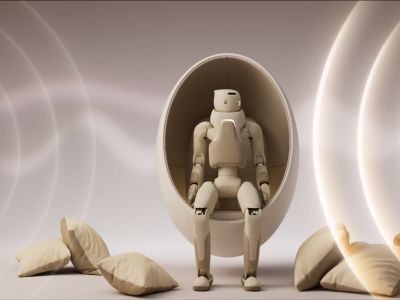
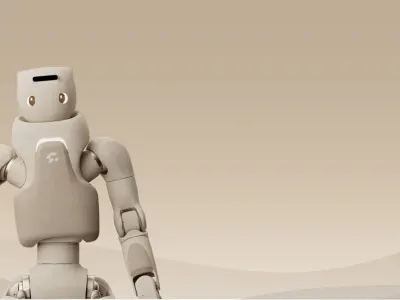
GR-3 by Fourier Intelligence targets service-oriented roles such as elderly care assistance, healthcare support, home companionship, and public space engagement. It stands at 165 cm height, 51.5 cm shoulder width, 32 cm depth, weighs 71 kg, and achieves 5 km/h speed with a 5-year battery life. Key differentiators include a structured-light camera, four-microphone array, 31 distributed pressure sensors, and control integrating autonomous operation, teleoperation, and LLM reasoning.
Detailed Analysis
Agile ONE
Design & Build Quality
Agile ONE measures 174 cm in height, approximately 50 cm shoulder width, 35 cm depth, and weighs 69 kg, providing a taller frame suited for industrial reach. GR-3 is slightly shorter at 165 cm height, 51.5 cm shoulder width, 32 cm depth, and 71 kg weight, offering a more compact profile for service environments. Both feature bipedal humanoid designs, but Agile ONE emphasizes dexterous hands with 21 DOF per hand for precision tasks.
GR-3
Mobility & Navigation
Agile ONE reaches 2.0 m/s speed using LiDAR-based spatial recognition and visual SLAM for real-time autonomous decision-making in dynamic industrial settings. GR-3 operates at 5 km/h with visual SLAM and dynamic tracking, suitable for indoor service navigation. Agile ONE's higher speed supports faster logistics operations, while GR-3 prioritizes stable movement in human-populated spaces.
Agile ONE
Sensors & Perception
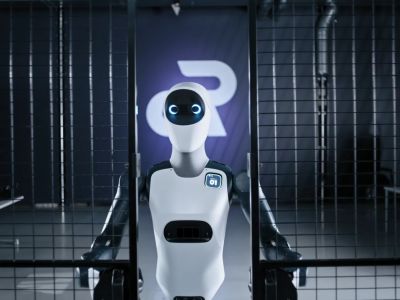
Agile ONE integrates four head-mounted RGB cameras, LiDAR, proximity sensors, fingertip force sensors, force-torque sensors in every hand joint, tactile sensors in palms, IMU, and gyroscope for comprehensive industrial perception. GR-3 employs an RGB camera, structured-light camera module, four-microphone array with echo cancellation, 31 distributed pressure sensors, IMU, and gyroscope, focusing on audio-visual interaction. Agile ONE's sensor suite excels in tactile and spatial precision, contrasting GR-3's emphasis on voice and pressure feedback.
GR-3
AI Capabilities
Agile ONE uses AgileCore with layered AI architecture for strategic reasoning, rapid response, fine motor precision, and natural language instruction processing from proprietary industrial datasets. GR-3 incorporates a proprietary system with large language model integration, rule-based control, learned behaviors, and teleoperation support. Agile ONE prioritizes autonomous task execution in factories, while GR-3 balances autonomy with remote assistance for care scenarios.
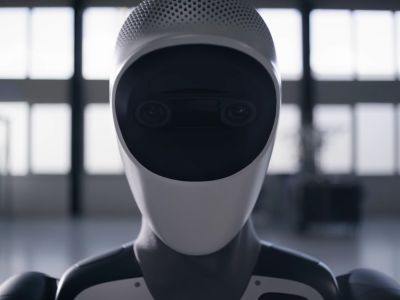
Agile ONE
Battery & Power Efficiency
Agile ONE offers 3-5 hours of continuous operation, supporting extended industrial shifts. GR-3 demonstrates longer-term power efficiency, whereas Agile ONE focuses on daily operational runtime.
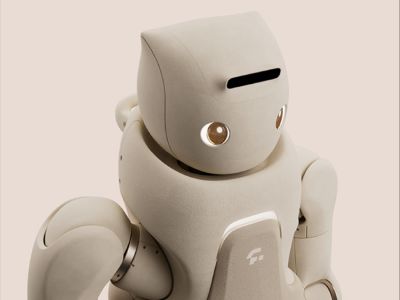
GR-3
Use-Case Suitability
Agile ONE excels in factory material transport, pick-and-place, machine tending, tool use, fine manipulation, precision assembly, and production line integration. GR-3 suits elderly care, healthcare support, home companionship, interactive education, public engagement, and teleoperated assistance. Agile ONE targets manufacturing efficiency, while GR-3 addresses human-centric service needs.
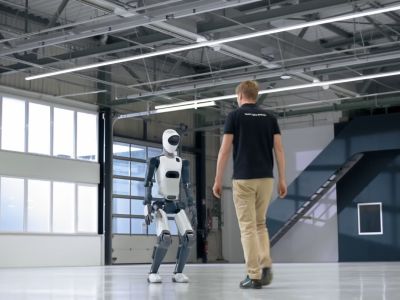
Agile ONE
Pricing & Value
Agile ONE is estimated at US$100,000, offering industrial-grade capabilities at a lower entry cost. GR-3 ranges from USD 150,000 to 250,000, reflecting its service-focused features and longer battery life. Price differences align with their respective industrial versus care-oriented applications.

GR-3
Safety Features
Agile ONE includes proximity sensors, force-limiting capability, collision detection, and human-aware displays on eyes and chest. GR-3 features collaborative design, force-limiting actuators, and collision detection. Both emphasize safe human interaction, with Agile ONE adding visual communication elements.
Capabilities & Operational Tasks
Head-to-head comparison of what Agile ONE and GR-3 can do, their applications, and capabilities.
What Can Agile ONE & GR-3 Do?
1714 tasks listed for both, 0 only for Agile ONE, 3 only for GR-3.
Technical Specifications
Agile ONE and GR-3 differ on 31 of the 45 specifications listed for both.
Functional Utility & Use Cases
4 Comparative Metrics
Manipulation & Load Capacity
4 Comparative Metrics
Kinematic Architecture & Dexterity
4 Comparative Metrics
Related Comparisons
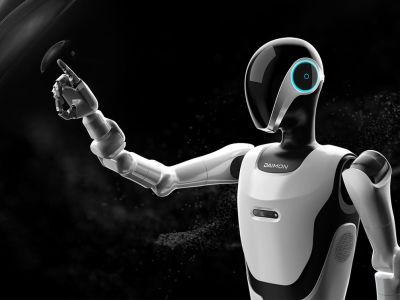
Daimon One vs GR-3
Head-to-head: Daimon One vs GR-3. Explore differences in navigation, sensors, battery, mobility, AI, and software.
Daimon One vs Agile ONE
Compare Daimon One and Agile ONE. Detailed analysis of navigation, battery, and sensors.
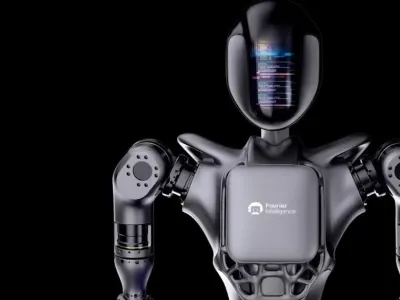
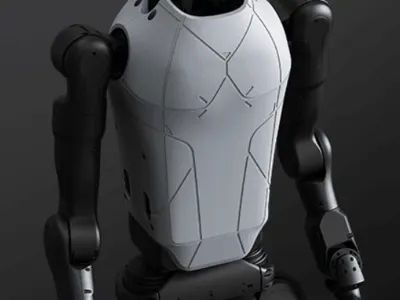
GR-1 vs Unitree H1-2
Head-to-head: GR-1 vs Unitree H1-2 compared on bipedal balance, AI learning, and real-world deployment for research and care.
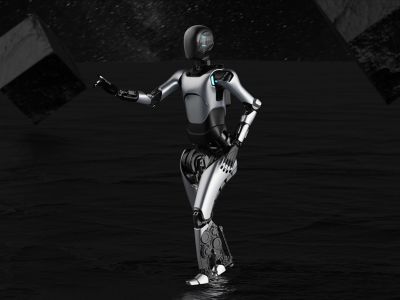

AgiBot A2 vs GR-2
Compare AgiBot A2 and GR-2. Detailed analysis of navigation, battery, sensors, mobility, AI, software, and pricing.
Verdicts reflect our research and opinion. Confirm specifications with the manufacturer before buying.