Pudu D7 vs Walker Tienkung at a glance
Pudu D7 lasts longer on a charge, about 8 hours against 3.5 hours for Walker Tienkung. Pudu D7 is lighter at 45 kg, compared with 73 kg for Walker Tienkung. Walker Tienkung has more degrees of freedom (42 against 30 for Pudu D7), which allows finer movement.
Which one fits your use?
Based on the uses each robot is built and marketed for. Open a use to see the specs that matter for it.
| Comparing for… | Pudu D7 | Walker Tienkung |
|---|---|---|
| Suited | Not listed | |
| Suited | Not listed | |
| Not listed | Suited | |
| Not listed | Suited | |
| Suited | Suited |
- Pick Pudu D7 for warehouse and logistics work and factory and manufacturing work.
- Pick Walker Tienkung for research labs and education and training.
- Both suit hospitality, retail and public-facing roles, so compare the specs for that use.
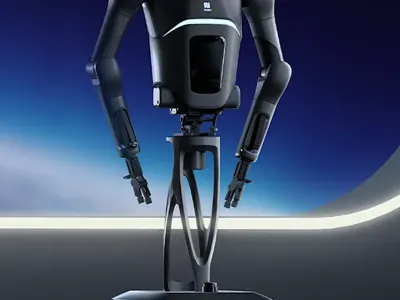
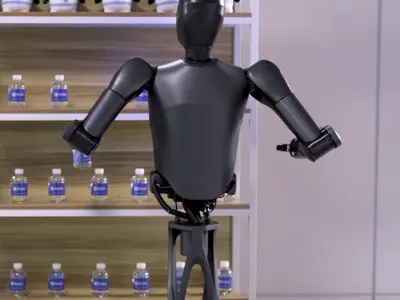
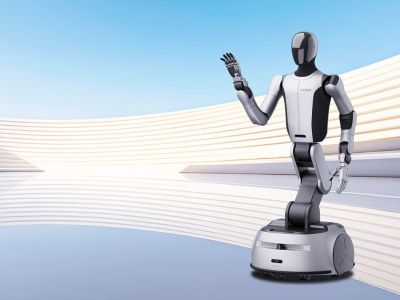
D7 is Pudu Robotics' first semi-humanoid: a human-like upper body with two arms on an omnidirectional wheeled base. It is 165 cm tall, weighs 45 kg, moves at up to 2 m/s and works for more than eight hours on a charge.
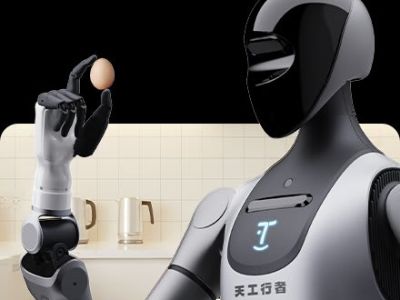
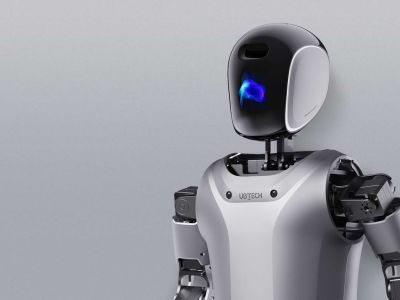
Walker Tienkung is UBTECH's full-size research and education humanoid. It is 172 cm tall and 73 kg, offers up to 42 degrees of freedom and keeps going for more than 3.5 hours thanks to quick-swap dual batteries.
Detailed Analysis

Pudu D7
Design & Build Quality
D7 is a 165 cm, 45 kg semi-humanoid on a wheeled base, with 30 degrees of freedom, or 50 with dexterous hands, in its arms and upper body. Walker Tienkung is a 172 cm, 73 kg biped with up to 42 degrees of freedom, including configurable 7-DoF arms. D7 is 28 kg lighter and its arms place their tips to within 0.1 mm across a 65 cm reach. Walker Tienkung spends more of its joints on legs, which lets it walk and climb.

Walker Tienkung
Mobility & Navigation
D7's 360° omnidirectional chassis reaches 2 m/s and copes with slopes of up to 10°. Walker Tienkung moves at up to 7 km/h, about 1.9 m/s, and is built to handle stairs, slopes and uneven ground. Their top speeds are almost the same. The difference is terrain: D7 needs flat floors and ramps, while Tienkung can take on stairs and rough ground.
Pudu D7
Sensors & Perception
Walker Tienkung combines RGB and stereo cameras, LiDAR, ultrasonic sensors, an IMU and force sensors. Pudu has not published a sensor list for D7. Tienkung is therefore the easier robot to assess and build on for perception research. Ask Pudu for D7's sensor details before comparing the two.
Walker Tienkung
AI Capabilities
D7 uses a hierarchical system in which high-level planning sets the strategy and low-level control reacts to sensor input in real time, and Pudu says it keeps refining its skills from data. Walker Tienkung can run autonomously or semi-autonomously, leaving research teams free to try their own control methods. D7 arrives with service skills such as lift operation. Tienkung is a platform for teams that want to develop their own.
Pudu D7
Battery & Power Efficiency
D7's battery of more than 1 kWh gives over eight hours of continuous work. Walker Tienkung lasts more than 3.5 hours per charge, quick-swaps between two batteries and recharges in 2 hours. D7 lasts more than twice as long on a charge. Tienkung's quick battery swap closes some of that gap for teams with a spare pack.
Walker Tienkung
Use-Case Suitability
D7 is meant for service spaces and industrial sites, where Pudu has it riding lifts, carrying items and sorting goods. Walker Tienkung is UBTECH's robot for scientific research, education, proof-of-concept projects, logistics trials and rescue research. D7 is a working service robot, while Tienkung is a research platform. Choose D7 for all-day service, lift operation and sorting on flat floors, or Walker Tienkung for research, education and proof-of-concept projects.
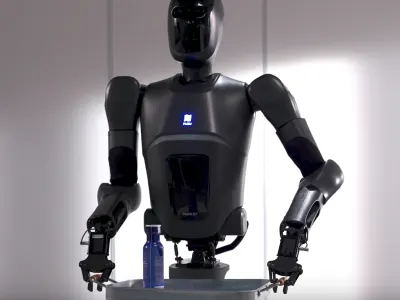
Pudu D7
Software Ecosystem
D7 runs Pudu's own embodied-AI system with high-level and low-level planning. Alongside UBTECH's own software, Walker Tienkung supports ROS 2, Python and C++. Tienkung is the clear choice for researchers who want to write their own code with standard tools. Pudu has not published D7's developer access.

Walker Tienkung
Pricing & Value
Walker Tienkung is priced at around $65,000 to $115,000, while D7 sits in the $100,000 to $150,000 range. Tienkung is the cheaper of the two at the low end. D7's higher price buys eight-hour endurance and arms that each lift 10 kg, against Tienkung's light-duty 1.5 kg arms. For research budgets Tienkung offers more; for working service roles D7 earns its premium.
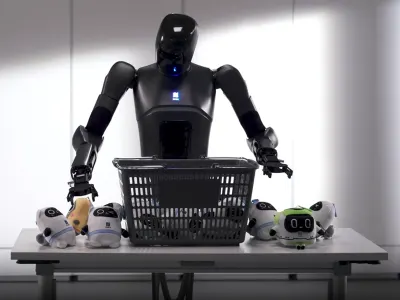
Pudu D7
Safety Features
For work near people, Walker Tienkung has force limiting, collision detection, an emergency stop and a collaborative mode. Pudu has not published D7's safety features. D7's wheeled base does not need to balance the way a walking robot does, which removes the risk of a fall on flat floors. Tienkung's published collaborative features make it easier to assess for shared spaces.
Capabilities & Operational Tasks
Head-to-head comparison of what Pudu D7 and Walker Tienkung can do, their applications, and capabilities.
What Can Pudu D7 & Walker Tienkung Do?
122 tasks listed for both, 7 only for Pudu D7, 3 only for Walker Tienkung.
Technical Specifications
Pudu D7 and Walker Tienkung differ on 42 of the 52 specifications listed for both.
Functional Utility & Use Cases
4 Comparative Metrics
Manipulation & Load Capacity
4 Comparative Metrics
Kinematic Architecture & Dexterity
4 Comparative Metrics
Related Comparisons
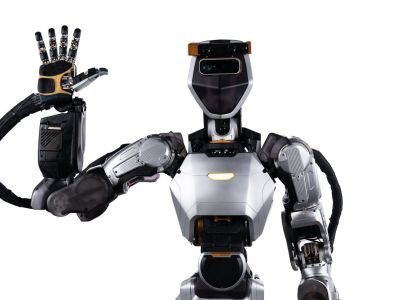
Phoenix vs Walker Tienkung
Compare Phoenix and Walker Tienkung. Detailed analysis of navigation, sensors, and speed.

AgiBot G2 vs Pudu D7
AgiBot G2 vs D7: AgiBot's wheeled precision-assembly humanoid against Pudu's wheeled semi-humanoid, compared on size, mobility, sensors, AI and best uses.
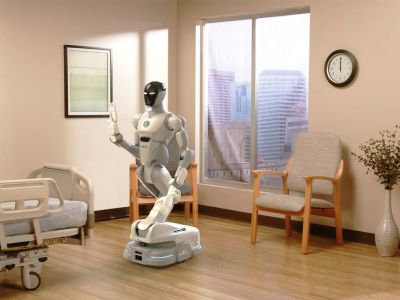
AlphaBot 2 vs Walker Tienkung
AlphaBot 2 vs Walker Tienkung: AI² Robotics' wheeled VLA humanoid against UBTECH's full-size research humanoid, compared on specs and uses.
Cruzr S2 vs Walker Tienkung
Cruzr S2 vs Walker Tienkung: UBTECH's wheeled assembly and service humanoid against UBTECH's full-size research humanoid, compared on specs and uses.
Verdicts reflect our research and opinion. Confirm specifications with the manufacturer before buying.