GR-2 vs Forerunner K2 at a glance
Forerunner K2 lasts longer on a charge, about 8 hours against 2 hours for GR-2. GR-2 is quicker, with a top speed of 1.4 m/s versus 1.1 m/s for Forerunner K2. GR-2 is lighter at 63 kg, compared with 75 kg for Forerunner K2.
| Key specs | GR-2 | Forerunner K2 |
|---|---|---|
| Price | $100,000–$150,000 | — |
| Height | 175 cm | — |
| Weight | 63 kg | 75 kg |
| Top speed | 1.4 m/s (stronger) | 1.1 m/s |
| Runtime | 2 hours | 8 hours (stronger) |
| Degrees of freedom | 53 | 52 |
| Payload | 3 kg | 15 kg (stronger) |
| Availability | — | Order via sales quote |
Last updated:
Which one fits your use?
Based on the uses each robot is built and marketed for. Open a use to see the specs that matter for it.
| Comparing for… | GR-2 | Forerunner K2 |
|---|---|---|
| Suited | Suited | |
| Suited | Suited | |
| Suited | Not marketed | |
| Suited | Not marketed | |
| Suited | Not marketed | |
| Suited | Not marketed | |
| Suited | Not marketed | |
| Suited | Suited |
- Only GR-2 is marketed for research labs, education and training, home help and elder care, hospitality, retail and public-facing roles and healthcare settings.
- Both suit warehouse and logistics work, factory and manufacturing work and hazardous or high-risk work, so compare the specs for that use.
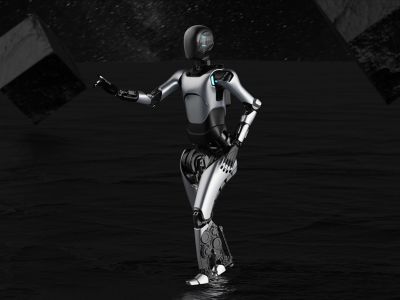
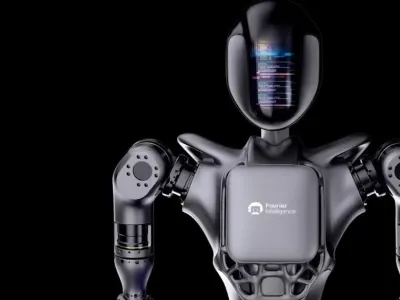
The GR-2 is the 2024 general-purpose humanoid from Fourier Intelligence, built for research labs, rehabilitation work and guidance roles. It stands 175 cm tall, weighs 63 kg and has 53 degrees of freedom, meaning 53 separate joint movements. Its 12-joint hands carry touch sensors, and it walks at 5 km/h while running on open tools such as ROS and NVIDIA Isaac Lab.
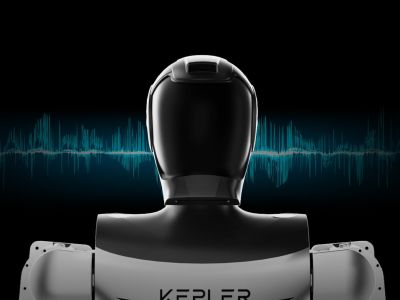
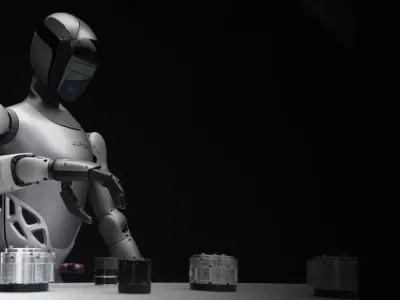
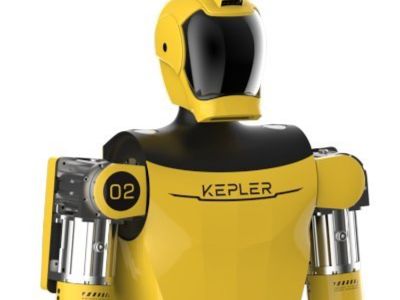
The Forerunner K2, nicknamed Bumblebee, is the 2025 industrial humanoid from Kepler Robotics, aimed at factories, logistics and inspection. It weighs 75 kg, has 52 degrees of freedom and lifts 15 kg per arm. Its battery is rated for 8 hours of work and can be swapped, and it was tested in a Shanghai car plant.
Detailed Analysis
Which should you choose, Fourier GR-2 or Kepler Forerunner K2?
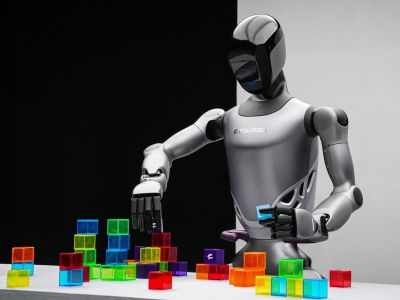
GR-2
Choose the Kepler Forerunner K2 if you need a robot that lifts and carries for a full shift, because it handles 15 kg per arm and runs for 8 hours. Choose the Fourier GR-2 if you run research, teaching or rehabilitation projects, because it walks faster at 5 km/h, has finer 12-joint hands and ships with open developer tools. The K2 is the newer machine by one year, launched in 2025 against 2024 for the GR-2. For factory work the K2 is the stronger fit; for labs the GR-2 is.
Which robot can carry more, GR-2 or Forerunner K2?
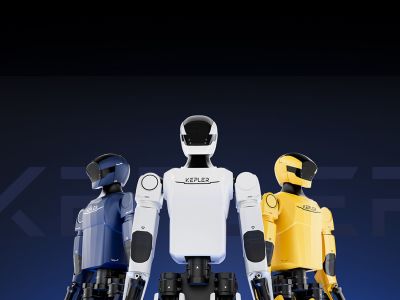
Forerunner K2
The Forerunner K2 carries far more, at 15 kg per arm against 3 kg per arm continuous for the Fourier GR-2. Its maximum deadlift is 25 kg, while the GR-2 is rated at 6 kg. In practice the K2 can move a full parts bin or a heavy tool with one arm, while the GR-2 suits light items such as sample tubes, small boxes and medical supplies. If your task involves lifting anything heavier than a few kilos, the GR-2 will not do it, and the K2 is the only one of the two that fits.
How long does each robot run, and can the battery be swapped?
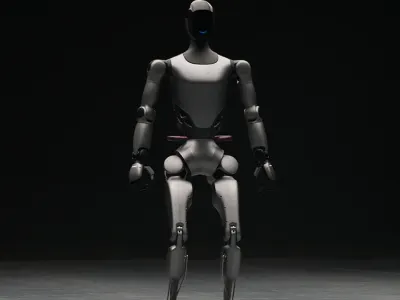
GR-2
The Forerunner K2 runs for 8 hours on a 2.33 kWh battery, while the Fourier GR-2 runs for 2 hours on a battery of about 2.3 kWh. Both packs can be swapped, so a spare battery keeps either robot working. The GR-2 recharges in 1.5 hours and the K2 in 2 hours. The gap matters most on a shift: the K2 can cover a morning without a stop, while the GR-2 needs a swap or a charge several times a day. For a lab demo the GR-2's two hours is usually enough.
Which robot has the better hands?
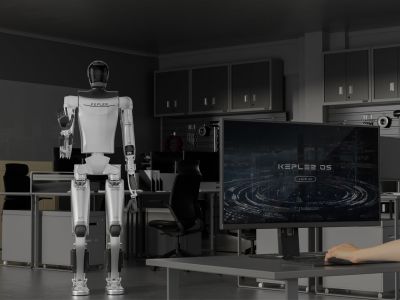
Forerunner K2
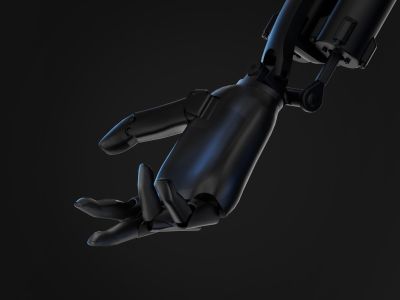
The Fourier GR-2 has the more articulated hands on paper, with 12 joints per hand in its enhanced version and 6 touch-sensor arrays that let it feel an object's shape. The Forerunner K2 has 11 joints per hand and tactile fingertips, and its hands are built to grip loads of up to 15 kg. The GR-2 hand is made for delicate tasks such as handling lab tools or guiding a patient's arm. The K2 hand is made for firm, repeatable grasps on factory parts. Joint count favours the GR-2; grip strength favours the K2.
Which robot walks faster, GR-2 or Forerunner K2?

GR-2
The Fourier GR-2 walks faster, at 5 km/h against up to 4 km/h for the Forerunner K2. Both are bipeds, meaning they walk on two legs, and both are designed for indoor floors. The 1 km/h gap is small in a lab or a showroom, but over a long plant corridor it adds up to a few extra minutes per trip. The K2 trades some speed for a heavier frame, at 75 kg against 63 kg, which helps it stay steady while carrying a load. Neither robot is meant for outdoor ground.
What software and developer tools do GR-2 and Forerunner K2 offer?
Forerunner K2
The Fourier GR-2 offers the more open toolkit, with ROS, Linux, NVIDIA Isaac Lab and MuJoCo support, which suits universities and teams that train their own motion models. The Forerunner K2 runs a Linux-based system that is ROS-compatible and adds proprietary programming interfaces from Kepler. Both learn through reinforcement learning, a method where the robot improves by trial and error in simulation. If you want to write and test your own behaviours, the GR-2 gives more room. If you want a working factory robot with less setup, the K2's package fits.
Which robot suits factories, and which suits labs and care work?
GR-2
The Forerunner K2 is aimed at materials handling, sample processing, patrol and quality control, and it has worked in a Shanghai car plant, moving material bins. The Fourier GR-2 is listed for rehabilitation help, patient guidance, light medical item transport and laboratory work, and Fourier reports trials in guidance, research, manufacturing and rehabilitation. Both are rated IP54, meaning they resist dust and splashes, and both run indoors. Pick by job: heavy, repeated shifts point to the K2, while careful hand work near people points to the GR-2.
Is the Kepler Forerunner K2 better value than the Fourier GR-2?
Forerunner K2
The Forerunner K2 is the better value on published numbers, with a listed price of $50,000 to $70,000 against USD 100,000 to 150,000 for the Fourier GR-2. For that lower price the K2 carries five times the load per arm and runs four times as long. The GR-2 costs more but gives finer hands and a more open software platform, which research teams may value above payload. A buyer who needs a worker gets more from the K2. A buyer who needs a research platform may still choose the GR-2.
Capabilities & Operational Tasks
Head-to-head comparison of what GR-2 and Forerunner K2 can do, their applications, and capabilities.
What Can GR-2 & Forerunner K2 Do?
1915 tasks listed for both, 1 only for GR-2, 3 only for Forerunner K2.
Both GR-2 and Forerunner K2
15Only GR-2
1Only Forerunner K2
3Technical Specifications
GR-2 and Forerunner K2 differ on 30 of the 35 specifications listed for both.
Manipulation & Load Capacity
3 Comparative Metrics
Kinematic Architecture & Dexterity
4 Comparative Metrics
Energy & Power Management
7 Comparative Metrics
Frequently Asked Questions
Do the Fourier GR-2 and Kepler Forerunner K2 work with ROS?
Yes. The GR-2 supports ROS, Linux, NVIDIA Isaac Lab and MuJoCo. The Forerunner K2 runs a Linux-based system that is ROS-compatible and adds Kepler's own programming interfaces, so developers can use familiar tools on either robot.
How many joints are in the hands of the GR-2 and the Forerunner K2?
The GR-2 has 6 joints per hand as standard and an enhanced 12-joint hand as an option, with touch-sensor arrays. The Forerunner K2 has 11 joints per hand with tactile fingertips and a load rating of 15 kg per arm.
Can the batteries of the GR-2 and Forerunner K2 be swapped?
Yes, both robots use a swappable battery. The GR-2 runs for 2 hours and recharges in 1.5 hours. The Forerunner K2 is rated for 8 hours and recharges in 2 hours, so it needs far fewer swaps in a shift.
What safety features do the GR-2 and Forerunner K2 have?
Both list an emergency stop, obstacle detection and collision avoidance. Both are rated IP54 against dust and splashes and are designed for indoor use, so people can work near them with the usual precautions.
Are the GR-2 and Forerunner K2 fully autonomous?
Neither is fully autonomous. Both are listed as semi-autonomous, combining AI automation with remote control. The GR-2 adds force-sensitive rehabilitation assistance, while the K2 handles set tasks such as moving goods and tools.
How do the GR-2 and Forerunner K2 find their way around?
Both use SLAM, meaning they build a map while locating themselves in it. The GR-2 combines SLAM with LiDAR and vision, while the Forerunner K2 uses LiDAR, SLAM and visual odometry, which tracks movement from camera images.
Which is lighter, GR-2 or Forerunner K2?
GR-2 is lighter at 63 kg, compared with 75 kg for Forerunner K2.
Which uses is each robot marketed for, GR-2 or Forerunner K2?
Only GR-2 is marketed for research labs, education and training, home help and elder care, hospitality, retail and public-facing roles and healthcare settings. Both suit warehouse and logistics work, factory and manufacturing work and hazardous or high-risk work, so compare the specs for that use.
How much does GR-2 cost?
GR-2 is listed at $100,000–$150,000.
Where can I buy Forerunner K2?
Forerunner K2 is sold through Kepler Robotics's sales team; request a quote.
Related Comparisons
AgiBot A2 vs GR-2
Compare AgiBot A2 and GR-2. Detailed analysis of navigation, battery, sensors, mobility, AI, software, and pricing.
GR-1 vs Unitree H1-2
Head-to-head: GR-1 vs Unitree H1-2 compared on bipedal balance, AI learning, and real-world deployment for research and care.
K2 Bumblebee vs Green
K2 Bumblebee vs Green: Kepler's 52-DOF industrial humanoid against Sber's GigaChat-powered Green, compared on hands, sensors, battery and price.
Agile ONE vs GR-3
Agile ONE or GR-3? Compare specs, sensors, navigation, battery, and speed for industrial vs service humanoid performance.
Verdicts reflect our research and opinion. Confirm specifications with the manufacturer before buying.