Hiva Haiwa vs RobotEra Q5 at a glance
RobotEra Q5 is quicker, with a top speed of 1.5 m/s versus 0.6 m/s for Hiva Haiwa. RobotEra Q5 has more degrees of freedom (44 against 28 for Hiva Haiwa), which allows finer movement.
Which one fits your use?
Based on the uses each robot is built and marketed for. Open a use to see the specs that matter for it.
| Comparing for… | Hiva Haiwa | RobotEra Q5 |
|---|---|---|
| Not listed | Suited | |
| Not listed | Suited | |
| Suited | Suited | |
| Suited | Suited | |
| Suited | Not listed | |
| Suited | Not listed | |
| Suited | Not listed |
- Pick Hiva Haiwa for home help and elder care, hospitality, retail and public-facing roles and healthcare settings.
- Pick RobotEra Q5 for warehouse and logistics work and factory and manufacturing work.
- Both suit research labs and education and training, so compare the specs for that use.
Hiva Haiwa by Haier targets household automation with a focus on domestic tasks like cleaning, laundry folding, cooking assistance, and appliance management in smart homes. Positioned in the mid-range price segment of $50,000-$70,000, it offers a 165 x 50 x 40 cm frame weighing 70 kg, supporting remote teleoperation, AI-assisted autonomy, and app control. Key differentiators include its Linux-based OS with ROS integration and specialized navigation via SLAM and visual odometry, making it suitable for structured home environments.
Q5 by Robot Era serves broader applications including elder care, child interaction, retail service, research labs, logistics, and hospitality, priced at $75,000-$95,000. It matches Hiva Haiwa's 165 cm height and 70 kg weight in a deeper 165 x 50 x 52 cm frame and provides a higher speed of 1.5 m/s. Distinct features encompass advanced sensors with LiDAR, ROS2 and proprietary OS support, and navigation through indoor SLAM, visual SLAM, and LiDAR mapping for versatile deployment.
Detailed Analysis

Hiva Haiwa
Design & Build Quality
Both robots share identical height of 165 cm and weight of 70 kg, with Hiva Haiwa at 40 cm depth and Q5 at 52 cm. Hiva Haiwa emphasizes dexterous hands for household tasks like floor washing and ironing, supported by 44 degrees of freedom reaching up to 2 meters. Q5 maintains similar build for multi-domain use, though specific degrees of freedom are not detailed, enabling applications from elder care to logistics.
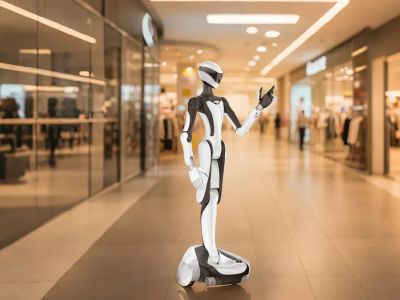
RobotEra Q5
Mobility & Navigation
Hiva Haiwa achieves 2 km/h (0.56 m/s) speed using SLAM, visual odometry, and IMU for home navigation. Q5 offers superior 1.5 m/s speed with indoor SLAM, visual SLAM, and LiDAR mapping, enhancing performance in varied settings like retail and hospitality. Both integrate IMU and gyroscope, but Q5's LiDAR provides denser mapping for complex environments.
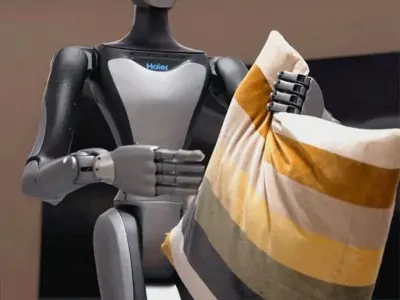
Hiva Haiwa
Sensors & Perception
Hiva Haiwa includes RGB cameras, stereo cameras, ultrasonic, IMU, gyroscope, force sensors, and temperature sensors. Q5 adds LiDAR to this array, plus ultrasonic sensors, IMU, gyroscope, force, and temperature sensors for comprehensive perception. The extra LiDAR on Q5 supports precise 3D mapping, while both share core visual and inertial sensing.

RobotEra Q5
AI Capabilities
Hiva Haiwa employs AI-assisted autonomous control alongside remote teleoperation and app control for task execution. Q5 features autonomous operation with learned behaviors and teleoperation, indicating model-based learning for adaptive interactions. Both leverage AI for independence, but Q5's learned behaviors suit dynamic scenarios like child interaction.
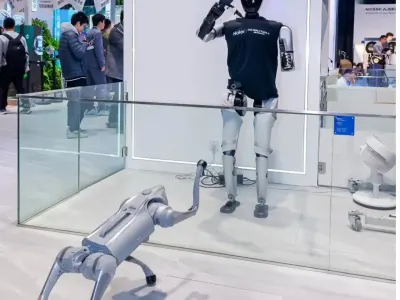
Hiva Haiwa
Battery & Power Efficiency
Both robots provide a 4-year battery life, indicating comparable power systems for extended operation. No differences in capacity or recharge methods are specified, suggesting equivalent efficiency for continuous household or service tasks. This longevity supports long-term deployments without frequent maintenance.
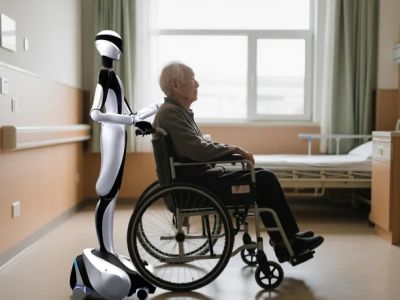
RobotEra Q5
Use-Case Suitability
Hiva Haiwa specializes in household cleaning, laundry folding, cooking assistance, and smart home appliance management. Q5 covers elder care, child interaction, retail service, research labs, logistics, and hospitality. Hiva Haiwa fits dedicated home automation, while Q5 offers flexibility across service and research domains.
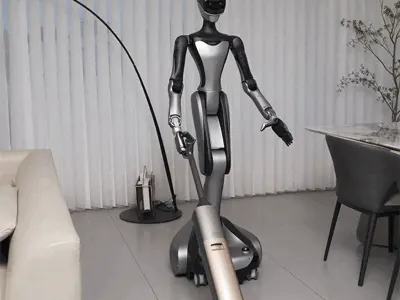
Hiva Haiwa
Software Ecosystem
Hiva Haiwa runs Linux-based OS with ROS integration and Python/C++ APIs for development. Q5 uses ROS2, proprietary OS, and Python/C++ APIs, providing updated ROS framework. Both enable extensible programming, with Q5's ROS2 offering improved real-time performance.

RobotEra Q5
Safety Features
Hiva Haiwa includes emergency stop, obstacle avoidance, and collision detection. Q5 adds force limiting and collaborative mode to emergency stop and collision detection. Q5's force limiting enhances human-robot interaction safety in care and hospitality uses.
Capabilities & Operational Tasks
Head-to-head comparison of what Hiva Haiwa and RobotEra Q5 can do, their applications, and capabilities.
What Can Hiva Haiwa & RobotEra Q5 Do?
136 tasks listed for both, 4 only for Hiva Haiwa, 3 only for RobotEra Q5.
Technical Specifications
Hiva Haiwa and RobotEra Q5 differ on 28 of the 54 specifications listed for both.
Functional Utility & Use Cases
4 Comparative Metrics
Manipulation & Load Capacity
4 Comparative Metrics
Kinematic Architecture & Dexterity
4 Comparative Metrics
Related Comparisons
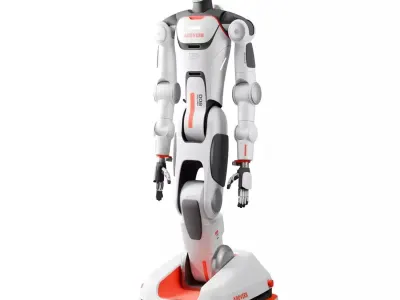
RobotEra Q5 vs ELIXIS W
Compare Q5 by Robot Era and ELIXIS W by Addverb Technologies. Detailed analysis of sensors, navigation, battery, and price.
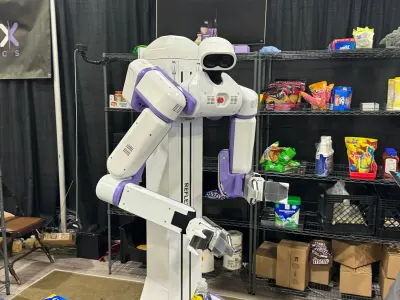
RobotEra Q5 vs Reflex Humanoid
Which robot wins? Q5 vs Reflex Humanoid compared across sensors, navigation, battery, speed, and price.
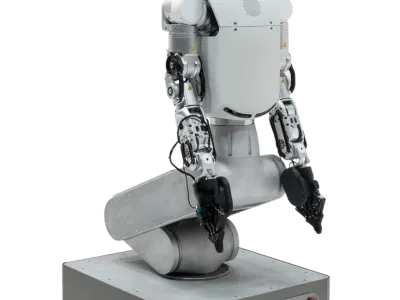
RobotEra Q5 vs HMND 01 Alpha Wheeled
Q5 or HMND 01 Alpha Wheeled? Compare specs, speed, sensors, navigation, and battery for service vs industrial performance.
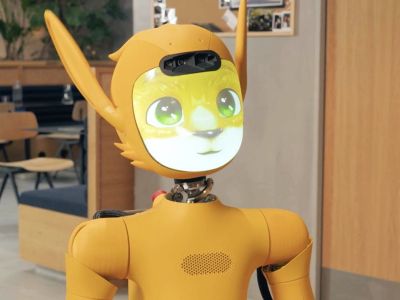
Hiva Haiwa vs Mirokaï
In-depth comparison of Hiva Haiwa by Haier and Mirokaï by Enchanted Tools. Analyze sensors, navigation, battery, and mobility differences.
Verdicts reflect our research and opinion. Confirm specifications with the manufacturer before buying.