LUS2 vs P-73 at a glance
P-73 lasts longer on a charge, about 6 hours against 2 hours for LUS2. LUS2 is lighter at 57 kg, compared with 75 kg for P-73. P-73 has more degrees of freedom (32 against 28 for LUS2), which allows finer movement. P-73 is quicker, with a top speed of 1.3 m/s versus 1.1 m/s for LUS2.
Which one fits your use?
Based on the uses each robot is built and marketed for. Open a use to see the specs that matter for it.
| Comparing for… | LUS2 | P-73 |
|---|---|---|
| Suited | Suited | |
| Suited | Suited | |
| Suited | Suited | |
| Suited | Not listed |
- Pick LUS2 for education and training.
- Both suit warehouse and logistics work, factory and manufacturing work and research labs, so compare the specs for that use.
LUS2 by Lumos Robotics is positioned as a versatile full-size humanoid for industrial automation, healthcare assistance, search-and-rescue, and research. It differentiates through 38 degrees of freedom, 10 kg carrying capacity per arm, and 50 kg deadlift, enabling robust manipulation in dynamic environments. Autonomous navigation with integrated perception and motion control supports complex tasks. Its sensor suite includes Intel RealSense D435i, 360° LiDAR, tactile sensors, and force sensors for precise interaction.
P-73 by Blue Robin targets factory automation, dual-arm manipulation, care assistance, and object handling research as a semi-autonomous humanoid. It stands taller at 173 cm with a price range of USD 80,000-150,000 for enterprise and pilot units. Key differentiators include a 3-5 year battery life and 4.5 km/h speed, suited for structured environments. Sensors cover RGB, stereo, and depth cameras alongside IMU and force sensors for basic perception.
Detailed Analysis
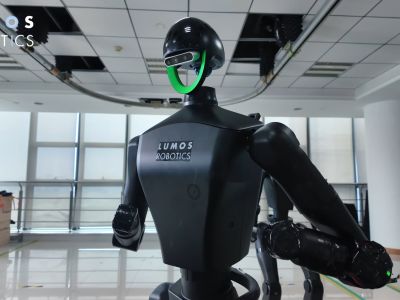
LUS2
Bipedal Mobility & Balance
LUS2 achieves 4 km/h speed with advanced sensors like 360° LiDAR, IMU, and gyroscope for stable navigation in dynamic settings. P-73 offers slightly higher 4.5 km/h speed but relies on basic IMU and gyroscope without LiDAR, limiting unstructured terrain performance. LUS2's lighter 57 kg weight versus P-73's 75 kg aids agility. Both support collaborative modes, but LUS2's sensor density enhances balance recovery.
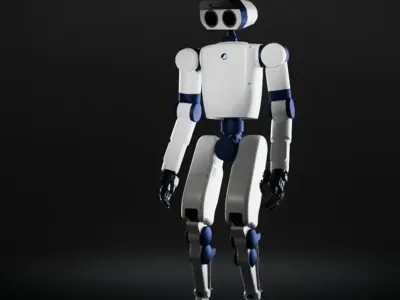
P-73
Dexterity & Manipulation (Focus on hands/arms)
LUS2 provides 28 DoF overall with finger and palm tactile sensors, enabling precise handling of up to 3 kg per arm. P-73 has 32 DoF and force sensors but lower capacities at 5 kg carrying per arm. LUS2's tactile feedback supports delicate tasks in healthcare and rescue. P-73 focuses on dual-arm factory manipulation with less granularity.
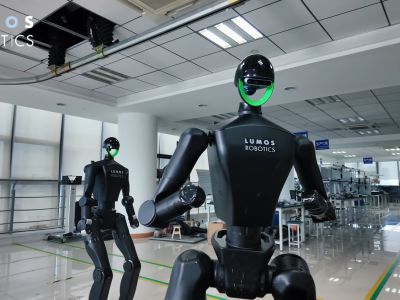
LUS2
AI, Autonomy & Learning Capabilities
LUS2 operates at full autonomous navigation and task execution with proprietary OS, ROS2, Python, C++, and LLM APIs for advanced integration. P-73 is semi-autonomous using ROS2 and Python APIs without full task autonomy. LUS2's comprehensive perception drives independent operation in varied environments. P-73 requires more human oversight for complex scenarios.
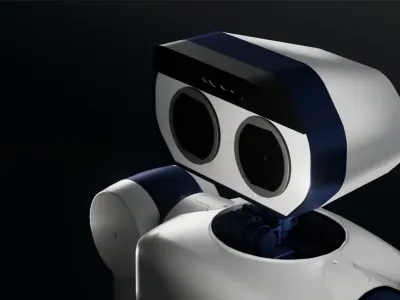
P-73
Payload & Lifting Capacity
LUS2 excels with 10 kg per arm carrying and 50 kg deadlift, ideal for heavy industrial loads. P-73 limits to 5 kg per arm and 10 kg deadlift maximum, suited for lighter object handling. LUS2's higher capacities stem from robust arm design and force sensing. P-73 prioritizes precision over strength in factory settings.
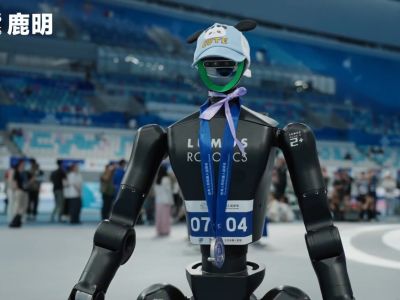
LUS2
Battery Runtime & Power Efficiency
Actual runtime depends on task load, but neither specifies hours per charge. LUS2's lighter build may improve efficiency in motion-intensive use. P-73's range accommodates varied enterprise pilots.
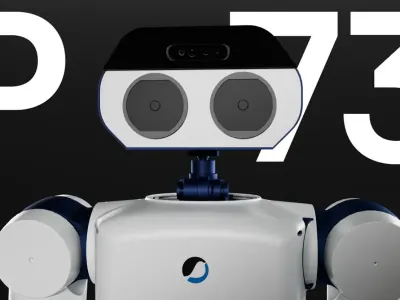
P-73
Real-World Use Cases (Industrial vs General Purpose)
LUS2 targets industrial automation, healthcare, search-and-rescue, and R&D with dynamic environment adaptability. P-73 focuses on factory automation, care assistance, and manipulation research in controlled spaces. LUS2's autonomy suits unstructured tasks like rescue. P-73's semi-autonomy fits repetitive factory operations.
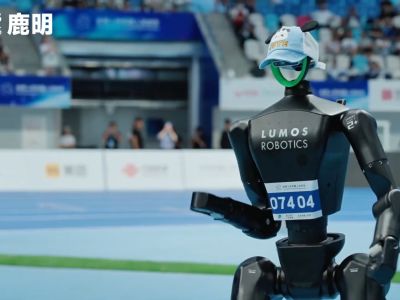
LUS2
Sensor Suite & Vision Systems
LUS2 integrates Intel RealSense D435i, 360° LiDAR, ultrasonic, tactile, and temperature sensors for comprehensive environmental awareness. P-73 uses RGB, stereo, depth cameras, IMU, gyroscope, force, and temperature sensors without LiDAR. LUS2 enables superior 360° perception for navigation. P-73 suffices for structured visual tasks.
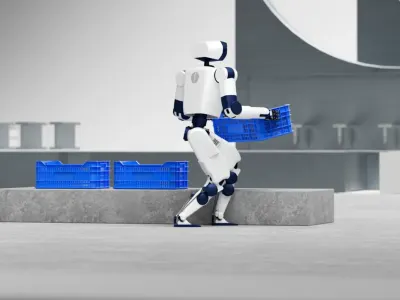
P-73
Which humanoid robot is better for industrial manufacturing?
LUS2 outperforms P-73 in industrial manufacturing with 50 kg deadlift, 10 kg arm capacity, and full autonomy for dynamic tasks versus P-73's 10 kg limit and semi-autonomy. LUS2's LiDAR and tactile sensors support versatile handling. P-73 fits lighter factory automation. For heavy-duty manufacturing, LUS2 is the stronger choice.
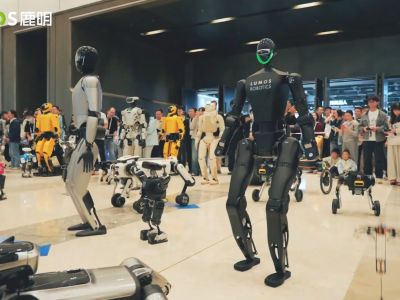
LUS2
Which robot offers better payload for manipulation tasks?
LUS2 provides superior payload with 10 kg per arm and 50 kg deadlift compared to P-73's 5 kg per arm and 10 kg maximum. This enables LUS2 for demanding lifts in automation and rescue. P-73 handles lighter objects in research. LUS2 is preferable for high-payload manipulation needs.
Capabilities & Operational Tasks
Head-to-head comparison of what LUS2 and P-73 can do, their applications, and capabilities.
What Can LUS2 & P-73 Do?
76 tasks listed for both, 1 only for LUS2, 0 only for P-73.
Technical Specifications
LUS2 and P-73 differ on 25 of the 52 specifications listed for both.
Functional Utility & Use Cases
4 Comparative Metrics
Manipulation & Load Capacity
4 Comparative Metrics
Kinematic Architecture & Dexterity
4 Comparative Metrics
Frequently Asked Questions
What is the payload and deadlift capacity of LUS2 versus P-73 humanoid robots?
LUS2 offers 10 kg carrying per arm and 50 kg deadlift. P-73 provides 5 kg per arm and 10 kg maximum deadlift.
How does the autonomy level of LUS2 compare to P-73 for task execution?
LUS2 achieves full autonomous navigation and task execution. P-73 operates at semi-autonomous level requiring oversight.
What are the walking speeds and stability features of LUS2 and P-73?
LUS2 reaches 4 km/h with 360° LiDAR and IMU for stability. P-73 attains 4.5 km/h using IMU and gyroscope.
What dexterity and hand sensor capabilities do LUS2 and P-73 provide?
LUS2 has 28 DoF with finger/palm tactile sensors. P-73 features 32 DoF and force sensors for manipulation.
Which robot is suitable for search-and-rescue operations LUS2 or P-73?
LUS2 suits search-and-rescue with autonomy, high payload, and LiDAR for dynamic environments.
Is P-73 or LUS2 better for factory automation deployment readiness?
P-73 targets factory automation with dual-arm focus and enterprise pricing for pilot units.
Related Comparisons
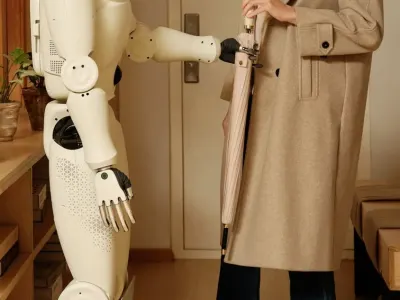
Jupiter vs P-73
Head-to-head: Jupiter vs P-73. Explore differences in speed, sensors, navigation, and software.
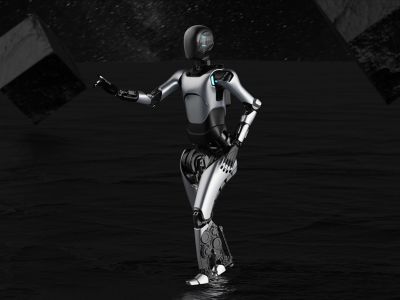
AgiBot A2 vs LUS2
Compare AgiBot A2 and LUS2. Detailed analysis of navigation, sensors, and battery life.
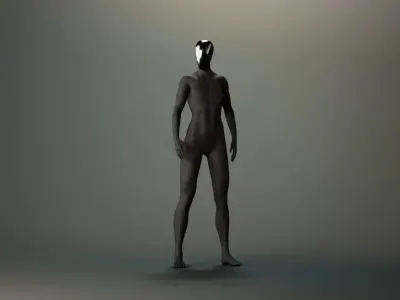
Alpha vs LUS2
Head-to-head: Alpha vs LUS2. Explore differences in navigation, battery, sensors, speed, and software.
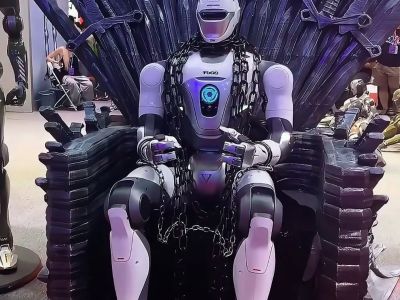
LUS2 vs T800
Head-to-head: LUS2 vs T800. Explore differences in navigation, battery, sensors, mobility, and software.
Verdicts reflect our research and opinion. Confirm specifications with the manufacturer before buying.