NEO Home Robot vs T800 at a glance
NEO Home Robot is quicker, with a top speed of 6.2 m/s versus 2 m/s for T800. NEO Home Robot is lighter at 30 kg, compared with 75–85 kg for T800. NEO Home Robot is the more affordable option at $20,000, while T800 costs $25,000–$80,000. NEO Home Robot has more degrees of freedom (75 against 25–46 for T800), which allows finer movement.
Which one fits your use?
Based on the uses each robot is built and marketed for. Open a use to see the specs that matter for it.
| Comparing for… | NEO Home Robot | T800 |
|---|---|---|
| Suited | Suited | |
| Suited | Suited | |
| Suited | Not listed | |
| Suited | Not listed | |
| Suited | Not listed | |
| Not listed | Suited |
- Pick NEO Home Robot for home help and elder care, hospitality, retail and public-facing roles and healthcare settings.
- Pick T800 for hazardous or high-risk work.
- Both suit research labs and education and training, so compare the specs for that use.
1X's NEO Home Robot is a 167.6 cm, 29.94 kg humanoid made for living rooms and kitchens. Soft covers, compliant joints and an 842 Wh battery with about four hours of runtime make it a safe, quiet helper for chores and fetching items. NEO costs $20,000 or $499 a month.
EngineAI's T800 is a 173 cm, 75 to 85 kg humanoid built for heavy-duty industrial work and even robot combat events. Depending on the edition it has 25 to 46 degrees of freedom, along with LiDAR and stereo vision, and it runs for three to five hours. Prices range from about $25,000 for the base model to $80,000 for the top configuration.
Detailed Analysis

NEO Home Robot
Design & Build Quality
T800 is a heavy, full-size machine at 173 cm and 75 to 85 kg, with an aluminum alloy body built to absorb impacts. NEO is 167.6 cm and only 29.94 kg, with soft-touch covers over compliant joints. T800 is tougher for industrial abuse, while NEO is far lighter and safer around people.

T800
Mobility & Navigation
T800 moves at 2 m/s or more and maps its surroundings with visual SLAM and LiDAR. NEO walks at 1.4 m/s, runs at up to 6.2 m/s and navigates with visual SLAM fused with depth. T800 has more robust mapping for large sites, while NEO is nimble enough for cluttered homes.
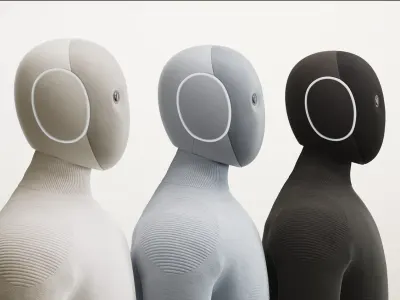
NEO Home Robot
Payload & Strength
T800 is rated for a 100 kg deadlift, with 5 kg tactile hands for careful handling. NEO carries up to 25 kg, lifts up to 70 kg and handles 8 kg per arm. T800 is the stronger robot for heavy lifting, while NEO is remarkably strong for its weight.
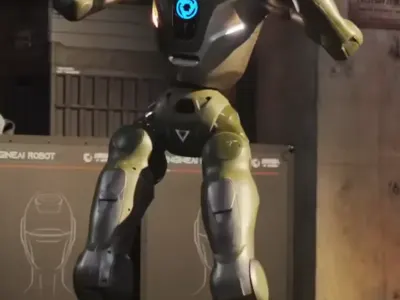
T800
Sensors & Perception
T800 combines RGB and stereo cameras, LiDAR, ultrasonic sensors and force sensing. NEO uses dual 8.85 MP stereo fisheye cameras, four beamforming microphones and force sensors in its joints and hands. T800 has the broader industrial sensor suite, while NEO focuses on vision and conversation.

NEO Home Robot
Battery & Power Efficiency
T800 runs for three to five hours and recharges in about two hours. NEO runs for about four hours on its 842 Wh pack and also charges in two hours. Runtime is comparable, so the choice comes down to the job rather than the battery.

T800
Use-Case Suitability
T800 suits heavy-duty industrial tasks, logistics, retail demonstrations and robot boxing events. NEO suits household chores, object retrieval, elder assistance and telepresence. Choose T800 for demanding commercial work and NEO for everyday help at home.

NEO Home Robot
Pricing & Value
NEO costs $20,000 or $499 a month, a clear consumer price. T800 ranges from about $25,000 to $80,000 depending on configuration. NEO is the better value for households, while T800's higher tiers buy the extra strength and dexterity businesses may need.

T800
Safety Features
NEO is designed around safety in the home, with soft covers, passive joint compliance, obstacle detection and an emergency stop. T800 offers force limiting, collision detection, a collaborative mode and an emergency stop, suited to supervised industrial use. NEO is the safer robot to share a home with.
Capabilities & Operational Tasks
Head-to-head comparison of what NEO Home Robot and T800 can do, their applications, and capabilities.
What Can NEO Home Robot & T800 Do?
136 tasks listed for both, 6 only for NEO Home Robot, 1 only for T800.
Technical Specifications
NEO Home Robot and T800 differ on 35 of the 54 specifications listed for both.
Functional Utility & Use Cases
4 Comparative Metrics
Manipulation & Load Capacity
4 Comparative Metrics
Kinematic Architecture & Dexterity
4 Comparative Metrics
Frequently Asked Questions
Which is stronger, NEO Home Robot or T800?
T800 is rated for a 100 kg deadlift. NEO carries up to 25 kg and lifts up to 70 kg.
Which robot is better for home use?
NEO Home Robot. It weighs 29.94 kg, has soft covers and compliant joints and is designed for household chores. T800 is a heavy industrial robot.
How much do NEO Home Robot and T800 cost?
NEO costs $20,000 or $499 per month. T800 ranges from about $25,000 to $80,000 depending on the edition.
How long do their batteries last?
NEO runs for about four hours and T800 for three to five hours. Both recharge in about two hours.
How big are they?
NEO is 167.6 cm tall and weighs 29.94 kg. T800 is 173 cm tall and weighs 75 to 85 kg.
Related Comparisons

NEO Home Robot vs ELIXIS
NEO Home Robot or ELIXIS? See which humanoid robot performs better for manufacturing, logistics, and research.
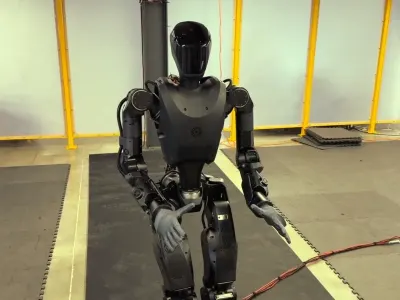
T800 vs Phantom MK1
Compare T800 by EngineAI vs Phantom MK1 by Foundation for humanoid mobility, dexterity, autonomy, payload, and industrial vs defense use cases.
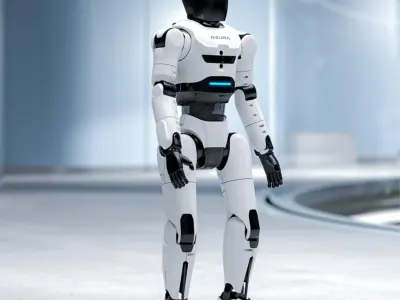
T800 vs 4NE-1 Mini
T800 or 4NE-1 Mini? See which humanoid robot performs better for manufacturing, logistics, and research with comparisons on dexterity, autonomy, and payload.
NEO Home Robot vs 4NE-1 Mini
1X NEO Home Robot vs NEURA 4NE-1 Mini: size, payload, battery, AI, price and which humanoid suits household help or classrooms and labs.
Verdicts reflect our research and opinion. Confirm specifications with the manufacturer before buying.