Next-Gen IRON vs Bolt at a glance
Bolt is quicker, with a top speed of 10 m/s versus 1.9 m/s for Next-Gen IRON. Next-Gen IRON has more degrees of freedom (82 against 40 for Bolt), which allows finer movement.
| Key specs | Next-Gen IRON | Bolt |
|---|---|---|
| Price | — | $50,000–$150,000 |
| Height | 178 cm | 175 cm |
| Weight | 70 kg | 75 kg |
| Top speed | 1.9 m/s | 10 m/s (stronger) |
| Runtime | 4 hours | — |
| Degrees of freedom | 82 (stronger) | 40 |
| Payload | — | 20 kg |
Last updated:
Which one fits your use?
Based on the uses each robot is built and marketed for. Open a use to see the specs that matter for it.
| Comparing for… | Next-Gen IRON | Bolt |
|---|---|---|
| Suited | Suited | |
| Suited | Suited | |
| Suited | Not marketed | |
| Not marketed | Suited |
- Only Next-Gen IRON is marketed for hospitality, retail and public-facing roles.
- Only Bolt is marketed for hazardous or high-risk work.
- Both suit research labs and education and training, so compare the specs for that use.
Next-Gen IRON by XPENG positions as a versatile humanoid robot for industrial and service applications, leveraging automotive-derived AI for human-like interaction. Its 178 cm height, 70 kg weight, and advanced specs like 82 degrees of freedom with 22 DoF hands enable precise manipulation and stable bipedal locomotion. Key differentiators include a 4-year battery life from solid-state technology, comprehensive sensor suite with 720-degree vision, and full autonomy powered by 3,000 TOPS Turing AI chips. Compared to Bolt, Next-Gen IRON prioritizes dexterity and environmental adaptability over raw speed.
Bolt by MirrorMe Technology targets dynamic, high-speed humanoid applications in sports, logistics, and unstructured environments. At 175 cm tall and 75 kg, it features over 40 DoF, exceptional 36 km/h speed, and superior payload capacities of 20 kg dynamic and 40 kg static carrying, plus 80 kg deadlift. Differentiators include fully autonomous operation with teleoperation overrides and ROS2-based software supporting Python/C++. In contrast to Next-Gen IRON, Bolt excels in power and speed for physically demanding tasks.
Detailed Analysis

Next-Gen IRON
Bipedal Mobility & Balance
Next-Gen IRON achieves stable bipedal locomotion at 7 km/h with 82 degrees of freedom, including advanced gait control for human-like balance and dynamic stability in human environments. Bolt reaches 36 km/h (10 m/s), enabling high-speed navigation suited for logistics, though its balance under such velocity in unstructured settings remains unbenchmarked against IRON's catwalk-like grace. Both employ IMU, gyroscope, and force sensors for stability. IRON's solid-state battery supports prolonged mobility, while Bolt's design favors rapid traversal. Overall, Bolt leads in speed, IRON in fluid, safe human-coexistence walking.
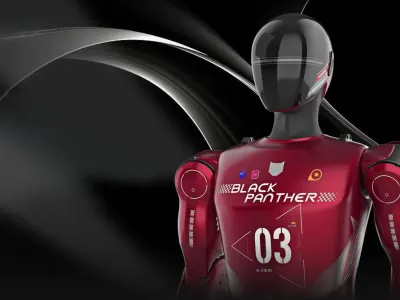
Bolt
Dexterity & Manipulation (Focus on hands/arms)
Next-Gen IRON's hands offer 22 degrees of freedom each with tactile sensors, enabling fine motor control for tasks like tool handling and object manipulation. Bolt specifies over 40 total DoF but lacks detailed hand metrics, implying standard arm dexterity for 20 kg dynamic carrying. IRON's bionic muscles and 15-22 DoF per hand provide superior precision for delicate operations. Both integrate force and touch sensors. IRON's design outperforms in complex grasping scenarios.
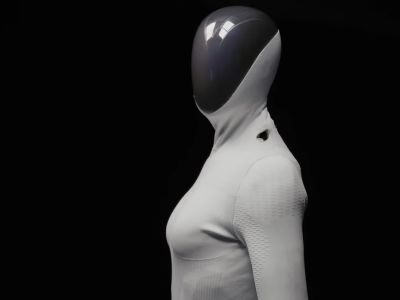
Next-Gen IRON
AI, Autonomy & Learning Capabilities
Next-Gen IRON delivers full autonomy via three Turing AI chips at 3,000 TOPS, running VLA/VLT models for real-time perception, decision-making, and adaptation without teleoperation. Bolt offers fully autonomous operation with teleoperation overrides, using ROS2 but no specified compute power. IRON's 30 billion parameter models enable continuous learning from vision-language-action integration. Both claim high autonomy levels. IRON's on-board AI gives it an edge in independent task execution.
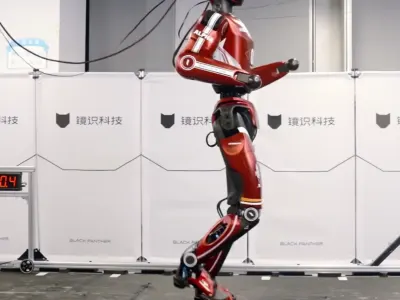
Bolt
Payload & Lifting Capacity
XPENG has not published Next-Gen IRON's payload or lifting capacity. Bolt handles 20 kg dynamic and 40 kg static carrying with 80 kg deadlift, far exceeding IRON for heavy logistics. Capacities reflect design priorities: IRON for precision, Bolt for strength. Both use force-limiting safety. Bolt dominates heavy payload applications.

Next-Gen IRON
Battery Runtime & Power Efficiency
Next-Gen IRON uses an all-solid-state battery. IRON's technology prioritizes lightweight, safe power for long-duration tasks. Both emphasize endurance. IRON edges in consistent runtime.
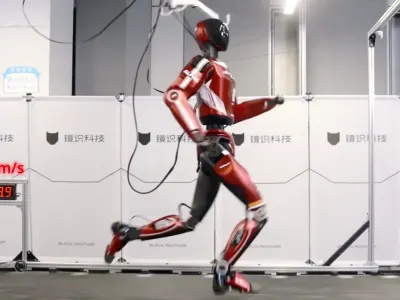
Bolt
Real-World Use Cases (Industrial vs General Purpose)
Next-Gen IRON suits customer guidance, sales, inspection, research, and healthcare with human-like interaction and precision. Bolt targets sports training, dynamic research, high-speed logistics, and collaboration in unstructured environments. IRON aligns with service-industrial hybrids, Bolt with high-mobility physical tasks. Overlaps exist in research. Use case fit depends on speed vs. dexterity needs.

Next-Gen IRON
Sensor Suite & Vision Systems
Next-Gen IRON integrates RGB/stereo cameras, LiDAR, ultrasonic, IMU, gyroscope, force/temperature/touch sensors, plus 720-degree vision. Bolt includes similar RGB/stereo cameras, LiDAR, IMU, gyroscope, force, ultrasonic, temperature sensors. IRON adds embedded skin touch sensors and millimeter-wave radar. Both enable robust perception. IRON's suite supports finer environmental awareness.
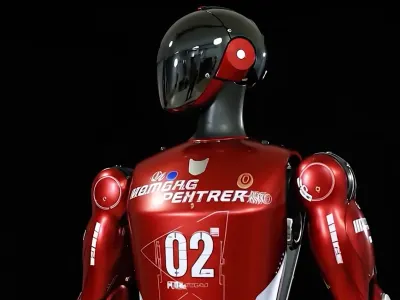
Bolt
Which humanoid robot is better for industrial manufacturing?
Next-Gen IRON excels in precision manipulation with 22 DoF hands and stable 7 km/h mobility for assembly lines, while Bolt's 80 kg deadlift and 36 km/h speed suit heavy, fast-paced logistics over fine tasks. IRON's AI handles adaptive inspection better. Bolt fits dynamic material handling. For most manufacturing, Next-Gen IRON by XPENG is the better choice due to dexterity and safety.

Next-Gen IRON
Which robot offers better payload for logistics tasks?
Bolt by MirrorMe Technology outperforms with 20 kg dynamic/40 kg static carrying and 80 kg deadlift versus Next-Gen IRON's 10 kg per arm and 20 kg deadlift. Bolt's high speed complements heavy loads in logistics. IRON prioritizes light, precise handling. For payload-intensive logistics, Bolt is recommended.
Capabilities & Operational Tasks
Head-to-head comparison of what Next-Gen IRON and Bolt can do, their applications, and capabilities.
What Can Next-Gen IRON & Bolt Do?
106 tasks listed for both, 2 only for Next-Gen IRON, 2 only for Bolt.
Technical Specifications
Next-Gen IRON and Bolt differ on 29 of the 33 specifications listed for both.
Manipulation & Load Capacity
3 Comparative Metrics
Kinematic Architecture & Dexterity
3 Comparative Metrics
Energy & Power Management
7 Comparative Metrics
Frequently Asked Questions
What is the deadlift capacity of Next-Gen IRON by XPENG versus Bolt by MirrorMe Technology?
XPENG has not published Next-Gen IRON's deadlift; Bolt achieves 80 kg. Bolt handles heavier lifts for industrial tasks.
Does Bolt by MirrorMe Technology support teleoperation alongside full autonomy?
Yes, Bolt offers fully autonomous operation with teleoperation overrides. Next-Gen IRON provides full autonomy without mentioned overrides.
How does walking speed compare between Next-Gen IRON and Bolt humanoid robots?
Next-Gen IRON reaches 7 km/h for stable bipedal motion; Bolt achieves 36 km/h, prioritizing high-speed locomotion over deliberate stability.
What are the hand dexterity capabilities of Next-Gen IRON versus Bolt?
Next-Gen IRON features 22 degrees of freedom per hand with tactile sensors; Bolt specifies over 40 total DoF without detailed hand metrics.
Which robot is suitable for healthcare support and customer guidance applications?
Next-Gen IRON by XPENG targets healthcare support and customer guidance with human-like interaction and precise manipulation.
Is Bolt by MirrorMe Technology ready for high-speed logistics deployments?
Yes, Bolt supports high-speed logistics at 36 km/h with 20 kg dynamic carrying in unstructured environments.
Which uses is each robot marketed for, Next-Gen IRON or Bolt?
Only Next-Gen IRON is marketed for hospitality, retail and public-facing roles. Only Bolt is marketed for hazardous or high-risk work. Both suit research labs and education and training, so compare the specs for that use.
Related Comparisons
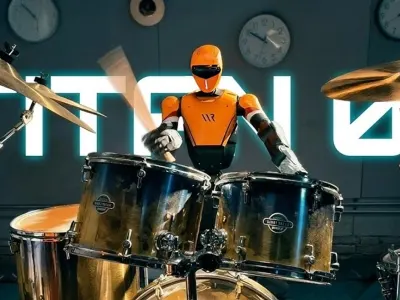
Bolt vs Titan 01
Head-to-head: Bolt vs Titan 01 compared on bipedal balance, AI learning, payload capacity, and real-world deployment for enterprise robotics decisions.
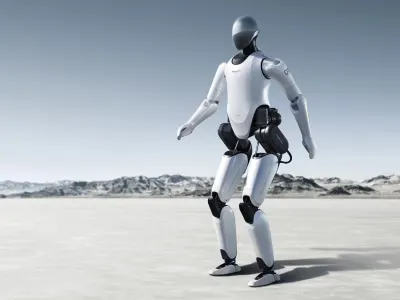
Bolt vs CyberOne 2026 Version
Bolt by MirrorMe Technology or CyberOne 2026 Version by Xiaomi Robotics Lab? See which humanoid robot performs better for manufacturing, logistics, and research.
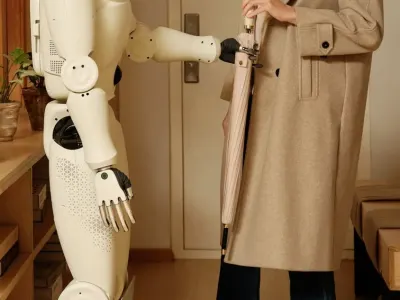
Next-Gen IRON vs Jupiter
Which humanoid robot is better? Next-Gen IRON vs Jupiter compared for dexterity, AI autonomy, payload, and industrial use cases.

Next-Gen IRON vs Moya
In-depth comparison of Next-Gen IRON by XPENG and Moya by DroidUp, covering hardware capabilities, teleoperation, and enterprise readiness.
Verdicts reflect our research and opinion. Confirm specifications with the manufacturer before buying.