Optimus vs Phantom MK1 at a glance
Optimus is the more affordable option at $20,000–$50,000, while Phantom MK1 costs $100,000–$150,000. Optimus has more degrees of freedom (40 against 19 for Phantom MK1), which allows finer movement. Optimus is lighter at 57 kg, compared with 80 kg for Phantom MK1. Optimus is quicker, with a top speed of 2.2 m/s versus 1.7 m/s for Phantom MK1.
Which one fits your use?
Based on the uses each robot is built and marketed for. Open a use to see the specs that matter for it.
| Comparing for… | Optimus | Phantom MK1 |
|---|---|---|
| Suited | Not listed | |
| Suited | Not listed | |
| Not listed | Suited | |
| Not listed | Suited |
- Pick Optimus for warehouse and logistics work and factory and manufacturing work.
- Pick Phantom MK1 for research labs and hazardous or high-risk work.
Tesla's Optimus positions itself as a versatile humanoid robot for broad commercial deployment in manufacturing, logistics, and research. Its market role emphasizes scalability through Tesla's AI ecosystem, targeting labor-intensive tasks with high autonomy. Key differentiators include 40+ degrees of freedom for full-body dexterity, 68 kg deadlift capacity, and 8-hour battery life, enabling semi-autonomous to fully autonomous operations at a projected price of $20,000-$50,000.
Foundation's Phantom MK1 targets defense, reconnaissance, and specialized industrial applications like urban warfare support and CBRN operations. It stands out for rugged durability in harsh environments, backed by a 5-year battery warranty and modular design. Differentiators encompass 19 DoF focused on upper body torque, NVIDIA Jetson Orin compute at 2000+ TOPS, and semi-autonomous teleoperation, priced at $100,000-$150,000 for enterprise and military leases.
Detailed Analysis
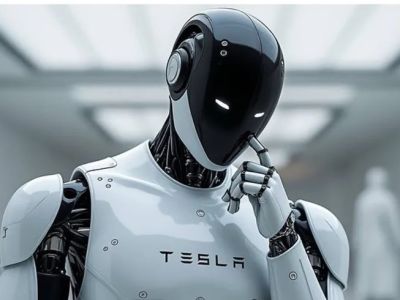
Optimus
Bipedal Mobility & Balance
Tesla Optimus achieves a maximum speed of 8 km/h with dimensions optimized for human-like navigation, supported by IMU, gyroscope, and accelerometers for balance. Phantom MK1 reaches 1.7 m/s (6.1 km/h) using multi-camera vision and 3D infrared on the lower body for stability in rugged terrains. Optimus's lighter 57 kg frame and lowered center of gravity enhance efficiency on flat surfaces, while Phantom's 80 kg steel-heavy build prioritizes durability in uneven or combat environments. Both demonstrate human-scale walking, but Optimus edges in speed for logistics, whereas Phantom excels in obstacle-heavy scenarios.
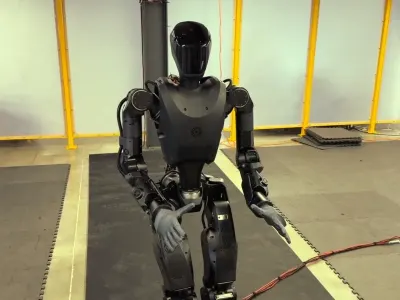
Phantom MK1
Dexterity & Manipulation (Focus on hands/arms)
Optimus features 40+ DoF across the full body, including dexterous hands for precise manipulation, backed by force and torque sensing and tactile fingertips. Phantom MK1 limits to 19 DoF with upper-body focus, employing cycloidal actuators delivering 160 Nm peak torque for strength over finesse. Optimus supports complex tasks like assembly via full dexterity, while Phantom's five-fingered hands handle human tools in high-torque scenarios like defense logistics. This architecture suits Optimus for versatile grasping, contrasting Phantom's reliability in forceful operations.
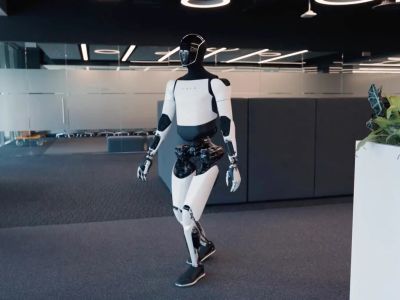
Optimus
AI, Autonomy & Learning Capabilities
Optimus leverages Tesla's custom OS with FSD integration for semi-to fully autonomous operation, emphasizing AI-driven learning from vast datasets. Phantom MK1 offers semi-autonomous teleoperation via proprietary OS, ROS2, Python APIs, and LLMs, powered by 2000+ TOPS NPU cluster. Optimus prioritizes end-to-end autonomy for general tasks, while Phantom supports remote control in dynamic, unpredictable settings. Compute differences highlight Optimus's scalability versus Phantom's real-time edge processing.
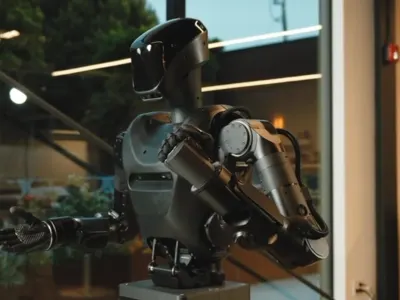
Phantom MK1
Payload & Lifting Capacity
Both robots share 20 kg carrying capacity, but Optimus deadlifts 68 kg compared to Phantom MK1's 20 kg limit. Optimus's lighter weight enables higher relative lifting ratios for manufacturing loads. Phantom's heavier frame and torque-focused actuators sustain payloads in rugged conditions like reconnaissance. This disparity positions Optimus for heavier dynamic lifts, Phantom for sustained modular payloads.
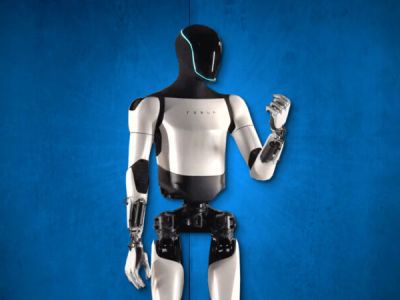
Optimus
Battery Runtime & Power Efficiency
Optimus provides approximately 8 hours of operational use from its battery, optimized for lightweight efficiency. Optimus suits extended shifts in controlled environments, while Phantom emphasizes warranty-backed reliability for intermittent military tasks. Actual runtime varies by load, but Optimus offers clearer daily endurance metrics.
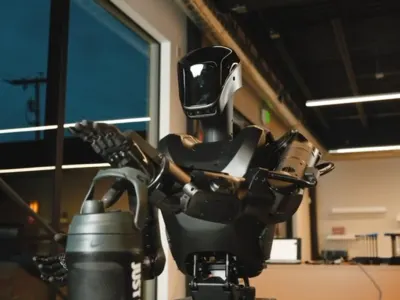
Phantom MK1
Real-World Use Cases (Industrial vs General Purpose)
Optimus targets manufacturing, logistics, infrastructure inspection, and research with general-purpose autonomy. Phantom MK1 focuses on defense logistics, reconnaissance, urban warfare, beverage manufacturing, and CBRN zones via teleoperation. Optimus fits scalable factory automation, whereas Phantom thrives in high-risk, modular operations. Overlap exists in logistics, but domain specialization drives selection.
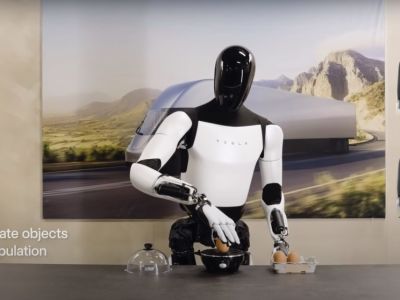
Optimus
Sensor Suite & Vision Systems
Optimus perceives the world mainly through cameras, backed by an IMU, tactile sensing in its fingers and force and torque sensing in its feet and joints. Phantom MK1 uses multi-camera optical suite, IMU, joint torque encoders, and 3D infrared for lower body navigation. Optimus's camera-based vision maps structured spaces such as factories, while Phantom's infrared sensing helps it move in low light. Both enable obstacle avoidance, with Optimus broader for autonomy.
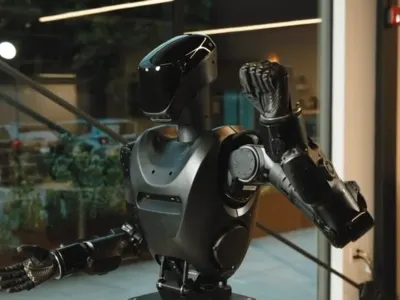
Phantom MK1
Pricing & Availability?
Optimus prices at $20,000-$50,000, targeting mass production for commercial scalability. Phantom MK1 ranges $100,000-$150,000 with lease options, suited for defense contracts. Optimus offers lower entry for enterprises, Phantom justifies premium via rugged specialization. For budget-driven buyers, Optimus provides better value; defense needs favor Phantom's proven modularity.
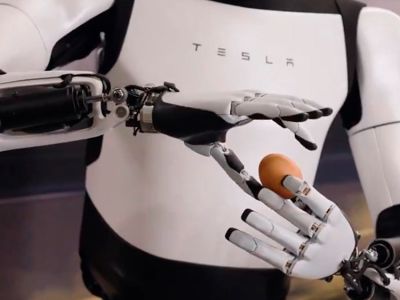
Optimus
Which humanoid robot is better for industrial manufacturing?
Optimus outperforms Phantom MK1 in industrial manufacturing due to 40+ DoF for dexterous assembly, 68 kg deadlift for heavy parts, and full autonomy integration with Tesla AI. Phantom's 19 DoF and teleoperation suit glass/beverage lines but lag in speed and lift for high-volume tasks. Optimus's lower price and 8-hour runtime enable scalable deployment. Recommendation: Select Optimus for manufacturing efficiency.
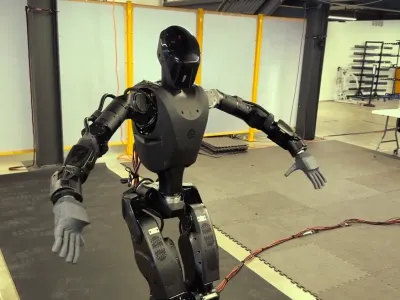
Phantom MK1
Which robot offers better autonomous learning capabilities?
Optimus demonstrates superior autonomous learning via Tesla FSD and custom AI OS, progressing to fully autonomous operations. Phantom MK1 relies on semi-autonomous teleoperation with LLMs for specific missions. Optimus's data-driven approach scales across use cases, while Phantom excels in supervised harsh environments. Recommendation: Choose Optimus for advancing autonomy.
Capabilities & Operational Tasks
Head-to-head comparison of what Optimus and Phantom MK1 can do, their applications, and capabilities.
What Can Optimus & Phantom MK1 Do?
121 tasks listed for both, 7 only for Optimus, 4 only for Phantom MK1.
Technical Specifications
Optimus and Phantom MK1 differ on 27 of the 46 specifications listed for both.
Functional Utility & Use Cases
4 Comparative Metrics
Manipulation & Load Capacity
4 Comparative Metrics
Kinematic Architecture & Dexterity
4 Comparative Metrics
Frequently Asked Questions
What is the deadlift capacity of Tesla Optimus versus Foundation Phantom MK1?
Tesla Optimus deadlifts 68 kg, while Foundation Phantom MK1 deadlifts 20 kg. Both carry 20 kg payloads.
What autonomy levels do Tesla Optimus and Foundation Phantom MK1 support?
Tesla Optimus ranges semi-autonomous to fully autonomous. Foundation Phantom MK1 is semi-autonomous with teleoperation.
How do walking speeds and stability compare in Tesla Optimus vs Foundation Phantom MK1?
Tesla Optimus reaches 8 km/h max speed with IMU balance. Foundation Phantom MK1 hits 6.1 km/h using 3D infrared for rugged stability.
What dexterity and hand capabilities define Tesla Optimus compared to Foundation Phantom MK1?
Tesla Optimus has 40+ DoF for full-body dexterity. Foundation Phantom MK1 offers 19 DoF with five-fingered hands for tool use.
Which robot is suitable for manufacturing use cases like Tesla Optimus or Foundation Phantom MK1?
Tesla Optimus fits general manufacturing and logistics. Foundation Phantom MK1 targets beverage/glass manufacturing and defense logistics.
What deployment readiness do Tesla Optimus and Foundation Phantom MK1 offer for research?
Tesla Optimus supports research via high DoF and autonomy. Foundation Phantom MK1 enables reconnaissance research with modular sensors.
Related Comparisons
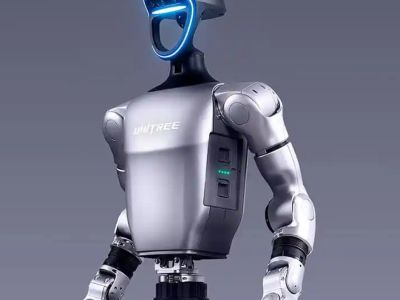
Optimus vs Unitree G1
Compare Optimus vs Unitree G1 for humanoid mobility, dexterity, autonomy, and payload capacity.
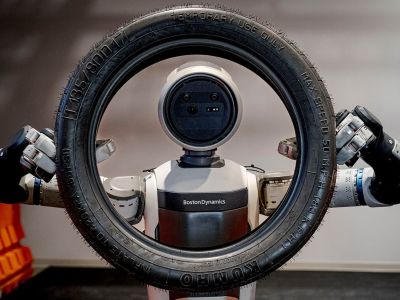
Optimus vs Atlas (Electric 2025)
In-depth comparison of Optimus and Atlas (Electric Atlas, 2025), covering hardware capabilities, teleoperation, and enterprise readiness.
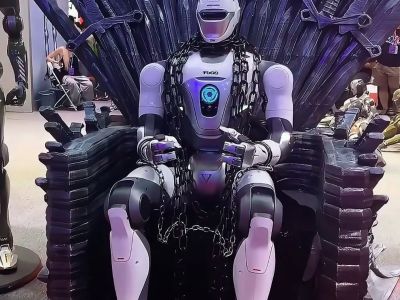
T800 vs Phantom MK1
Compare T800 by EngineAI vs Phantom MK1 by Foundation for humanoid mobility, dexterity, autonomy, payload, and industrial vs defense use cases.
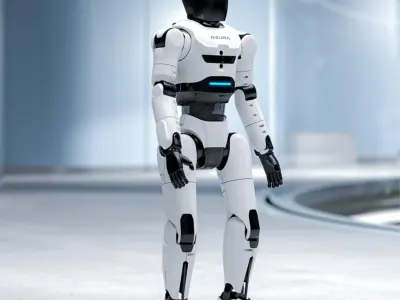
Optimus vs 4NE-1 Mini
Which humanoid robot is better? Optimus vs 4NE-1 Mini compared for dexterity, AI capabilities, payload, and industrial vs research use cases.
Verdicts reflect our research and opinion. Confirm specifications with the manufacturer before buying.